Best Lens Effects for AI Anime Prompts: Depth of Field, Bokeh, Motion Blur & More
How to use bokeh, shallow depth of field, fish-eye, bloom, motion blur, anamorphic flare, and zoom blur to make AI anime feel like it was shot through a real lens.
Lens effects are one of the most underused layers in AI anime prompting. Most generators default to a flat, neutral camera view: everything in focus, no optical artifacts, no sense that a physical lens stood between the subject and the viewer. The result is technically fine and emotionally inert. Real anime cinematography uses lenses the way a director of photography does: to isolate subjects with shallow depth of field, to create kinetic momentum with motion blur, to signal intimacy or menace with wide-angle distortion, and to build atmosphere with bloom and anamorphic light streaks. Specifying these effects in your prompts is the difference between an anime scene and an anime screenshot.
Bokeh and shallow depth of field: isolating your subject from the world.
Bokeh is the visual quality of out-of-focus areas in an image: the soft, rounded circles of light and color that appear when a lens with a wide aperture renders background elements outside its focal plane. In anime, bokeh is most associated with romantic scenes, quiet character moments, and any shot where the emotional intention is intimacy. When a character is rendered in sharp detail against a soft wash of blurred environmental light, the viewer's attention has nowhere to go except the character's face. That narrowing of focus is a tool, not a decoration.
Shallow depth of field is the technique bokeh belongs to. A shallow depth of field means the range of distances that appear acceptably sharp in the frame is narrow: the subject is crisp, and everything a few feet in front or behind them softens into blur. In contrast, a deep depth of field keeps most of the scene in focus, which is why wide environmental shots in anime tend to feel grounded and real while close-up emotional shots feel close and private.
For AI anime prompting, specifying bokeh works best when you also describe the light sources that will produce it. A dark background does not generate visible bokeh. A background with identifiable points of light, lanterns, stage lights, window glass, candles, city lights at night, does. Name those light sources and the model has something to blur.
Romantic two-shot with bokeh prompt: shoujo anime art style, two characters standing close in a softly lit shrine courtyard at dusk, the foreground subject rendered in sharp focus with detailed eyes and fabric texture, the background character slightly soft, stone lanterns in the background rendered as warm amber bokeh circles against a deep blue twilight, shallow depth of field with a wide-aperture quality, the overall feeling intimate and slightly breathless, the palette coral and deep blue, the bokeh circles large and evenly distributed across the midground.
Portrait with creamy foreground blur: slice-of-life anime art style, a girl sitting at a cafe window table in sharp focus, holding a coffee cup, outside the window the street scene rendered as soft streaks and bokeh in warm afternoon gold, a blurred flower arrangement in the extreme foreground creating a frame within the frame, the depth of field progression from foreground blur through sharp subject to background blur suggesting a 50mm lens at f/1.8, the palette warm and natural.
Fish-eye and wide-angle distortion: warping space to shift emotional register.
A fish-eye lens captures an extremely wide field of view by bending straight lines into curves: walls bow outward at the edges, floors seem to tilt, and subjects in the center of the frame appear slightly larger relative to everything around them. In live-action film, fish-eye lenses appear in skate videos, music videos, and psychological thriller sequences. In anime, the effect carries the same associations: subjectivity, disorientation, intensity, and environments that press in on a character rather than simply containing them.
The practical use cases for fish-eye in AI anime prompting fall into three categories. First, confrontation shots: two characters facing each other in a narrow space feel charged and claustrophobic when shot through a fish-eye rather than a standard lens. Second, POV shots from an unusual perspective, looking up from floor level, looking through a door from outside, looking down into a crowd. Third, stylized energy sequences where the environment itself needs to feel like it is physically reacting to what is happening in the scene.
Wide-angle distortion without the full fish-eye curve is a subtler version of the same effect. Specifying a "wide-angle lens" with "slight barrel distortion" produces compositions that feel slightly larger-than-life without the obvious curvature of a full fish-eye. This version works better for action scenes where you want kinetic scale without the visual distraction of heavily curved edges.
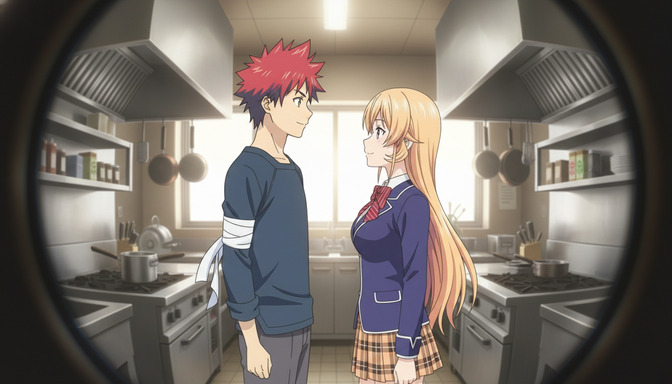
Fish-eye confrontation prompt: seinen anime art style, two characters facing each other in a narrow school hallway, shot through a fish-eye lens with visible barrel distortion at the frame edges, the hallway ceiling and floor curving slightly toward the viewer, the characters centered and slightly enlarged relative to the warped corridor around them, fluorescent overhead lighting, the color palette institutional and cool, the framing creating a sense of compressed space and unavoidable confrontation, the linework precise and the faces emotionally restrained.
Motion blur, zoom blur, and speed lines: making still frames feel like they are moving.
Motion blur appears in anime when a subject or the camera moves fast enough that the image cannot freeze the action cleanly. A running character's legs blur at the edges. A sword strike leaves a translucent smear across the frame. The camera pans too fast for the background to resolve. These blurs are not technical failures: they are kinetic information. They tell the viewer where the energy is going, how fast things are moving, and where to look next.
In AI anime prompting, directional motion blur is specified by naming the subject, the direction of movement, and the blur type. A horizontal blur on a running character reads as speed. A vertical blur on a falling character reads as descent. A radial blur spreading outward from an impact point reads as explosive force. The directional specificity is what separates useful motion blur from a vague smearing of the image.
Zoom blur is a specific variant where all blur vectors radiate outward from a single focal point at the center of the frame, as if the camera zoomed quickly toward the subject during the exposure. The effect creates an immediate sense of dramatic arrival: the subject appears to rush toward the viewer, or the scene to rush toward a specific point of focus. Zoom blur is common in attack sequences, transformation reveals, and emotional climax shots where the scene needs to feel like it is suddenly closing in.
Speed lines are the hand-drawn version of motion blur, a formalized visual convention in manga and anime where radiating lines indicate velocity and direction. Unlike photographic blur, speed lines are graphic rather than optical: they exist as deliberate marks layered over the image. In AI prompting, specifying both speed lines and motion blur in the same frame produces a hybrid output that reads as anime-specific rather than photographic, which is usually the correct register for shonen action scenes.
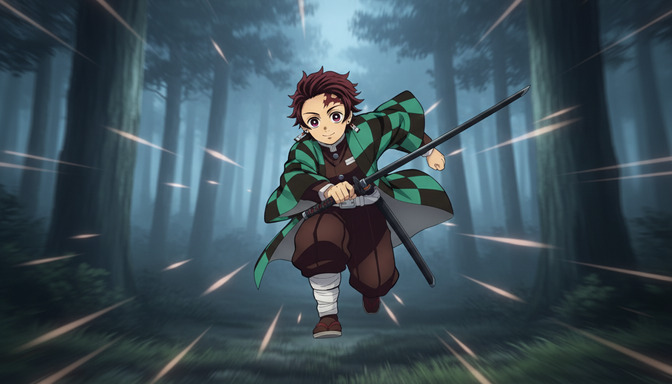
Action scene with zoom blur prompt: shonen anime art style, a young swordsman sprinting through a dark cedar forest, zoom blur radiating outward from the character's center mass giving the impression of explosive forward momentum, radial speed lines layered over the blurred environment reinforcing the direction of movement, the character's outfit and weapon rendered in relative sharpness against the blurred surroundings, motion trails on the edges of the figure suggesting velocity, the palette deep forest blue-green with moonlight breaking through the canopy in pale silver, the energy of the frame entirely forward-directed.
Combat motion blur prompt: shonen anime style, a fighter's arm mid-punch, the forearm and fist rendered with horizontal directional motion blur suggesting extreme striking speed, the impact point at the edge of the frame generating a radial energy burst, the rest of the character's body in sharp focus establishing the stable base of the technique, speed lines radiating from the fist's trajectory in the graphic convention of classic shonen manga, the palette high-contrast with the motion blur elements slightly desaturated against a sharp vivid background.
Bloom, anamorphic flare, and light artifacts: what happens when the lens encounters the light.
Bloom is the optical effect where bright light sources bleed into surrounding areas, creating a soft glow that extends beyond the physical boundary of the light. In real photography, bloom happens when a sensor or film is overexposed in a local area: the bright point spills over. In anime, bloom is used to make light feel warm, sacred, or overwhelming. Sunrise scenes glow. Magical attacks bloom outward from their point of impact. A character's eyes fill with light at a moment of emotional breakthrough. The effect signals that this light is not just illumination: it is meaning.
For AI prompting, bloom is most effective when you specify both the light source and the bloom behavior. "Soft bloom spreading from the lantern light into the surrounding night air" produces a different result than "hard lens flare on a direct light source." Bloom that spreads softly reads as warmth and beauty. Bloom that spikes or pulses reads as intensity and power. The emotional valence of the effect depends on how it spreads.
Anamorphic lens flare is a more specific artifact: the horizontal blue or cyan streak that appears across the frame when a bright light source hits an anamorphic cinema lens directly. It is the signature optical effect of Christopher Nolan and J.J. Abrams productions in live action, and it appears in anime that aims for a cinematic, high-production register. Anamorphic flares do not occur with spherical lenses: they are a direct signal that the scene was "shot" with a specific class of cinema glass, which immediately elevates the visual register of the frame. In AI anime generation, naming "anamorphic lens flare" produces this horizontal streak effect across any bright point in the scene, adding a production-quality optical artifact that reads as cinematic rather than animated.
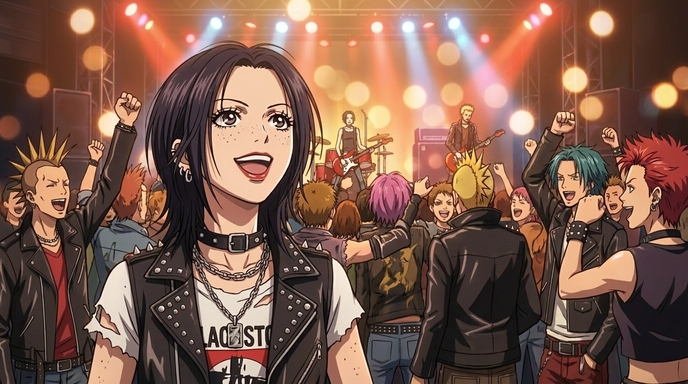
Concert scene with bloom and flare prompt: shonen anime art style, a punk girl with dark hair and a studded leather jacket standing at the front of a concert crowd, the stage lights behind her generating heavy warm bloom that bleeds outward and softens the crowd into an energetic blur, anamorphic lens flares in horizontal cyan and blue streaks crossing the frame from the stage spotlights, the foreground character rendered sharp and detailed against the glowing atmospheric background, the palette built around warm amber stage light against cool night air, the overall effect a high-production concert shot that feels like it was captured with cinema glass.
Magical attack with bloom prompt: fantasy anime art style, a mage releasing a concentrated energy technique at close range, the release point generating an overexposed bloom burst that radiates outward and washes the near-field environment in white light, the character's face partially bloomed by the reflected output, the edges of the bloom fading from white through gold into the surrounding darkness, the bloom intensity at the center communicating that this is not a contained effect but something at its physical limit, rendered in the style of a climactic release sequence from a high-budget fantasy anime production.
Stacking lens effects: how to combine them without producing visual noise.
The most effective AI anime shots usually combine two or three lens effects that belong to the same visual logic. Shallow depth of field and bokeh always work together because they are the same optical phenomenon described from two angles. Motion blur and zoom blur combine naturally in kinetic action shots. Bloom and anamorphic flare belong to the same high-production, cinema-lens register. These pairs and triplets reinforce each other rather than competing.
The combinations to approach with more care are those that mix photographic blur effects with graphic speed lines. Both describe motion, but speed lines are the manga convention and motion blur is the photographic one. In a heavily stylized shonen frame, both can coexist because the graphic elements of anime style already include hand-drawn visual conventions. In a more cinematic or painterly frame, mixing them produces a tonal inconsistency because speed lines break the photographic fiction.
When building a multi-effect prompt, order matters. Specify the lens effect that establishes the camera type first, because it sets the expectation for everything that follows. "Wide-angle lens with barrel distortion" sets a different tonal baseline than "telephoto lens with compressed perspective and shallow depth of field." Everything else in the prompt, the lighting, the subject, the color grade, will be interpreted inside the camera type you named first.
The guide on close-up shots in AI anime covers how shallow depth of field interacts with face-forward framing specifically, and the guide on the ultimate AI anime prompt formula shows how lens effects fit into the full seven-layer prompt stack alongside style, lighting, and emotion.
Frequently asked questions about lens effects in AI anime prompts.
What is bokeh in anime and how do I prompt it?
Bokeh is the soft, out-of-focus rendering of background light sources that appears when a lens with a wide aperture is used at close focusing distance. In anime, it creates the characteristic blurred circles of light behind a sharp subject. To prompt it reliably, name the background light sources that will blur (lanterns, stage lights, city lights, candles), specify "shallow depth of field," and describe the bokeh circles by their size and color. "Large soft amber bokeh circles in the background" gives the model more to work with than "bokeh background."
What is the difference between motion blur and zoom blur?
Motion blur records the trajectory of a moving subject or camera across the frame during the exposure period. The blur follows the direction of movement: a running character's legs blur horizontally, a falling object blurs vertically. Zoom blur is a specific variant where the blur vectors all radiate outward from a single point at the center of the frame, as if the camera zoomed rapidly toward the subject during the shot. Motion blur describes direction. Zoom blur describes approach. For action scenes, motion blur communicates speed in a specific direction; zoom blur communicates that the scene is intensifying and closing in.
What is anamorphic flare and when should I use it in anime prompts?
Anamorphic lens flare is the horizontal blue or cyan streak that crosses the frame when a bright light source hits an anamorphic cinema lens directly. It is associated with high-production cinematic photography and appears in anime that targets an elevated visual register. Use it when you want the scene to feel like it was shot with cinema glass rather than a standard lens: concert shots, dramatic exterior scenes, and any frame where a bright practical light source is visible in the shot. Specify "anamorphic lens flare" along with the light source position and the flare will appear as a horizontal streak across the frame.
How do I add bloom to a magical attack or power release scene?
Bloom in power release scenes works best when you describe it in physical terms: what is overexposing, how far the bloom spreads, and what color it transitions through. "A bloom burst at the point of impact radiating outward from white at the center through gold and into the surrounding darkness" gives the model a clear physical description to render. Also specify whether the bloom affects nearby characters or surfaces: "the bloom reflecting off the character's face and hands" grounds the effect in the scene rather than making it feel like a post-process overlay.
Can I use fish-eye and shallow depth of field together?
Yes, and the combination works particularly well for POV shots and close-range character interactions. Fish-eye establishes the lens type and the spatial distortion; shallow depth of field adds a second layer by keeping only the nearest element sharp while the curved environment falls off into blur. The result reads as intimate and slightly disorienting, which suits confrontation shots, first-person perspective sequences, and any frame where you want the viewer to feel like they are physically inside the scene rather than observing it from outside.
What lens effect is best for action and fight scenes?
For pure kinetic speed, directional motion blur combined with speed lines produces the most immediately legible action energy. For dramatic impact moments, zoom blur at the point of contact conveys explosive force. For fight scenes that need cinematic weight rather than graphic speed, a wide-angle lens with slight barrel distortion and shallow depth of field on the lead character creates a physically present, grounded feel. The choice depends on whether the scene should feel fast, powerful, or serious: motion blur for fast, zoom blur for powerful, wide-angle depth-of-field for serious.
Do lens effects work better with specific anime art styles?
Yes. Bokeh and shallow depth of field align naturally with shoujo and slice-of-life styles because all three prioritize emotional intimacy and subject isolation. Fish-eye and wide-angle distortion work well with seinen and cyberpunk styles because both tolerate and reward visual tension and spatial compression. Motion blur and speed lines are native to shonen style. Bloom and anamorphic flare work across painterly, cyberpunk, and fantasy styles because all three operate in a register that accepts elevated production artifice. The further the lens effect is from the native visual logic of the art style, the more explicitly you need to specify it.
Related Blog Posts
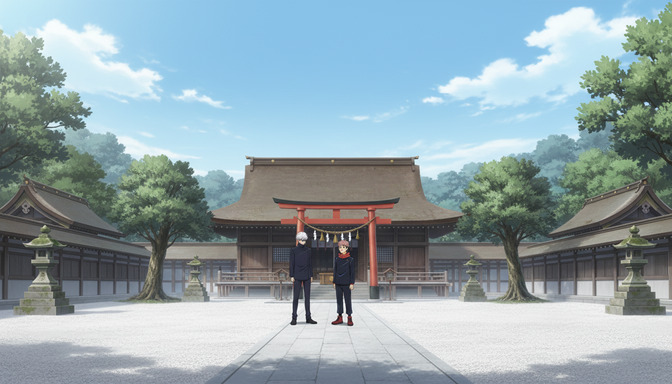
How to Create Long Shots in AI Anime
The prompting structure that places your character fully inside a world — and why most long shot attempts drift into medium shots or get swallowed by the environment.
Learn how to prompt long shots in AI anime — frame the full character, build the environment as co-subject, use negative space, and let AutoWeeb's prompt analysis catch what's missing.
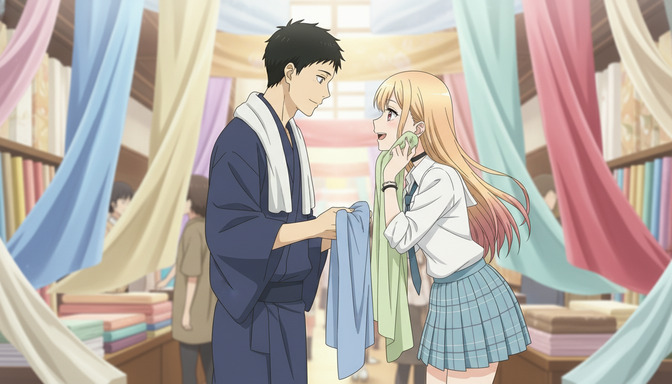
Best AI Anime Lighting Prompts: Cinematic Soft, Neon, and Emotional Scenes
How the right light source transforms an ordinary anime scene into something that actually feels like something — and the exact prompt language to get there.
The best AI anime lighting prompts for every mood: soft sunlight, golden hour, cyberpunk neon, moody rain, candlelight, and volumetric light. Templates included.
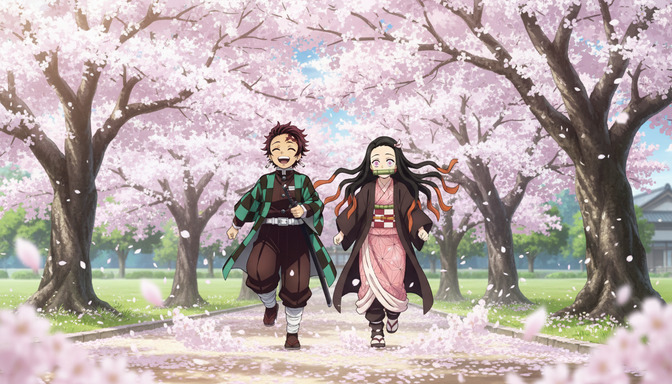
How to Add Atmosphere to AI Anime Prompts (Rain, Fog, Magic, Smoke)
The environmental effects that turn a technically correct anime scene into one that actually feels like being inside it.
Learn how to add atmosphere to AI anime prompts: rain, fog, cherry blossoms, snowfall, smoke, sparks, magical particles, and full weather systems. Prompt templates included.
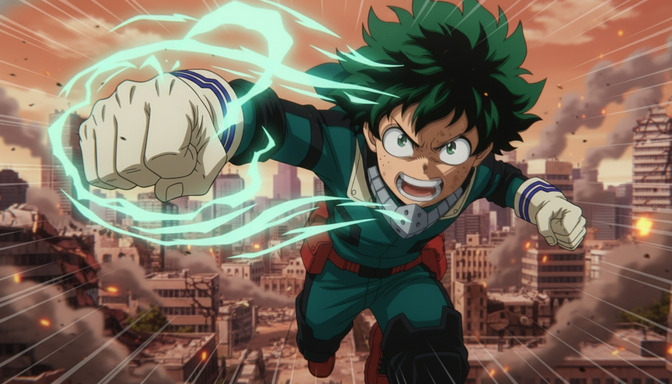
How to Create Motion Blur Lines in AI Anime
The prompting structure that makes movement feel fast, forceful, and impossible to look away from.
Learn how to prompt motion blur lines in AI anime for images and video. Direction, intensity, secondary effects, and how AutoWeeb's prompt analysis catches what's missing.
Explore AutoWeeb
Jump into the tool that fits your creative step.
AI Anime Video Generator
Animate storyboard shots into cinematic clips with Seedance 2 and consistent characters.
Anime Character Creator
Design original characters with consistent sheets across every scene.
AI Anime Image Generator
Generate cinematic anime stills anchored to your character library.
Anime Filters
Upload any photo and apply AI anime filters to turn it into stunning anime art in seconds.
AI Anime Location Generator
Create a location set once, then generate reference images from every angle.
AI Anime Storyboarding
Describe your idea, pick your characters, and let AI draft the script and scenes.
AI Anime Prompt Agent
Turn a rough idea into a cinematic Seedance 2 prompt with the AI Director.