Best AI Anime Facial Expression and Pose Prompts for Emotional Scenes
How to prompt joy, rage, sadness, determination, embarrassment, and every major pose type to make AI anime characters feel emotionally alive.
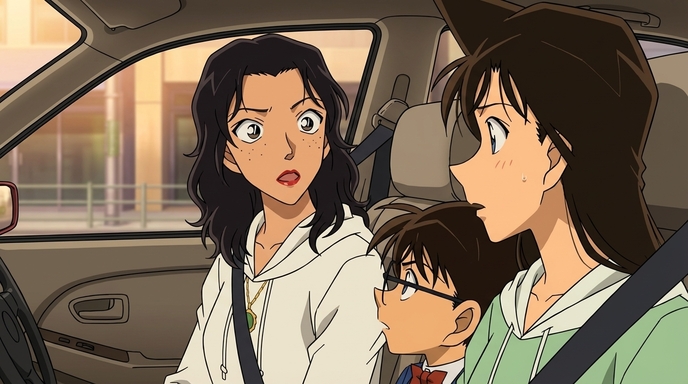
Facial expressions and body language are where AI anime prompts either succeed or collapse. A beautifully lit scene with perfect color grading still reads as empty if the character's eyes are neutral and their shoulders have nothing to say. Real anime communicates emotion through a precise visual vocabulary: the angle of the brow, the tightness of the jaw, whether a character's weight is forward or pulled back, what their hands are doing when they think no one is watching. Learning to name these elements in a prompt is the difference between generating an anime character and generating an anime moment.
Joy: open bodies, upward energy, and light that spills over.
Joy in anime is physically expansive. Characters take up more space than usual: arms open, chins lifted, weight on the balls of the feet or fully airborne. The face does specific things. Eyes curve upward into crescents, reducing the visible iris but increasing the emotional warmth. The mouth opens wide enough to show teeth, sometimes with exaggerated stylistic details like sparkles or the anime-specific light dots that appear when a moment tips into pure happiness. Joy is the one emotion where even the hair participates: it lifts, bounces, or fans outward as if the energy is escaping the character's body.
For prompting joy, name the physical specifics rather than the emotion itself. "Joyful anime girl" produces generic happiness. "Anime girl with crescent-shaped eyes, wide open mouth showing teeth, arms thrown outward above her shoulders, weight fully off the ground in a spontaneous jump, hair fanning upward, afternoon sunlight catching the strand details" gives the model a scene to construct.
Reunion joy prompt: shoujo anime art style, two characters at an airport arrivals gate, one of them running toward the other with both arms thrown wide, crescent-curved joyful eyes, an open laughing expression with tears at the inner corners, their coat flaring out behind them from the speed of the run, the other character reaching forward with a stunned then overwhelmed expression transitioning into a smile, warm soft-focus background of blurred travelers, the palette golden afternoon light with soft bloom at the windows.
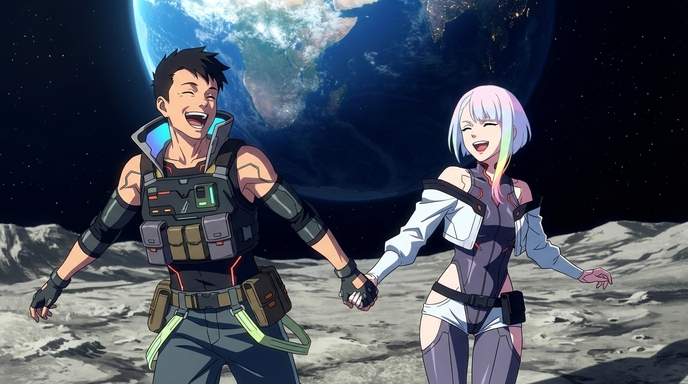
Rage: compressed bodies, sharp geometry, and energy directed outward.
Rage in anime operates by compression before release. The brow slams down over the eyes, creating hard shadows and narrowing the visible iris to something small and intense. The jaw sets. The mouth tightens or opens in a snarl. Veins appear at the temple in more stylized renders. The body pulls inward before going rigid: fists clenched at the sides or raised, shoulders raised and forward, head slightly lowered so the character is looking up through the brow rather than straight on. This posture, the lowered head with upward glaring eyes, is one of the most immediately recognizable rage signals in all of anime.
When prompting rage, specify both the face and the physical tension that extends through the whole frame. "Anime character with a crossed vein mark at the temple, furrowed brow casting shadow over narrowed glaring eyes, jaw clenched, fists raised and trembling at waist height, body pulled forward with weight on the front foot, the air around them crackling with visible heat distortion or energy lines, the background rendered in high-contrast reds and blacks that pulse outward from the character" captures the full physical signature.
Cold, controlled rage prompt: seinen anime art style, a male character standing with a perfectly straight spine and shoulders pulled back, arms at his sides with fists half-closed, eyes narrowed to near slits with a cold and deliberate intensity rather than explosive anger, jaw set, the expression communicating that the decision has already been made, no visible energy artifacts or exaggerated stylization, the scene lit in a cool desaturated palette that emphasizes the silence before consequence.
Sadness: downward everything, weight, and the specific language of tears.
Sadness in anime is a study in downward force. Eyebrows tilt inward and upward at the inner corners, which is the single most legible sadness signal in human facial anatomy. Eyes drop to half-closed. The chin lowers toward the chest. Shoulders slope downward and slightly inward. The whole silhouette contracts and settles, as if the character is heavier than usual. Hands either hang at the sides or reach up toward the face, and the position of the hands matters: a hand pressed flat over the heart reads as grief; fingers curled over the mouth read as suppressed crying; arms wrapped around the own torso read as the absence of someone who used to be there.
Tears have their own vocabulary. Single tears running cleanly down one cheek read as quiet, dignified sadness. Eyes full of pooling tears that have not yet fallen read as the precise moment before breakdown. Tears streaming from both eyes with a distorted crying face read as the moment containment failed. All three are different prompts, all three are different scenes.
Rain grief prompt: slice-of-life anime art style, a girl standing alone on a wet train platform at night, shoulders curved inward and downward, chin toward her chest, one hand pressed flat against the center of her jacket, eyes half-closed with tears running down both cheeks catching the yellow station light, the rain falling straight down around her without her seeming to notice it, the platform otherwise empty, the palette cold blue with warm yellow station light as the only warmth in the frame.
Determination: locked jaw, forward lean, and eyes that will not look away.
Determination reads as resolved tension. The jaw sets but does not clench into rage. The eyes are wide open and fixed on a specific off-screen point, pupils sharp and clear, the brow pulled slightly downward but not into an angry configuration. The body leans forward, weight shifted onto the front foot, one hand often raised or reaching toward the target. In shonen specifically, determination carries physical effects that extend into the environment: hair whipping backward as if pushed by the character's own forward energy, clothes pressing flat against the front and billowing behind, light catching the figure from a slightly below angle that makes them appear to rise.
Determination prompt: shonen anime art style, a teenage fighter standing in the rain at the edge of a tournament arena, eyes wide open and locked forward with a hard unwavering expression, jaw set, one hand raised with fist clenched at shoulder height, weight shifted forward onto the front foot, the rain pressing the character's hair flat on the forehead while the back flares outward, a slight low-angle framing so the character appears to rise against a stormy gray sky, the energy of the image entirely forward-directed.
Embarrassment: heat, retreat, and the body that betrays what the words do not say.
Embarrassment in anime is one of the most codified emotional expressions in the medium. The face flushes, usually rendered as a soft wash of pink or red across the nose and cheeks. The eyes cut sideways or drop to the floor, unable to meet the other character's gaze. The mouth tightens or presses into a thin line, or alternatively opens into a flustered protest expression. Steam sometimes rises from the ears or top of the head in more comedic registers. The body pulls inward: shoulders up, chin down, arms crossed or hands raised to cover the face.
The physical retreat is as important as the facial flush. A character who has just been told something they did not want to acknowledge will turn slightly sideways rather than face the scene directly. A character caught in an embarrassing situation will try to make themselves smaller, which creates a specific curved-spine, lowered-head posture that is the physical signature of "I wish I were not here right now."
Flustered confession scene prompt: shoujo anime art style, a girl standing with her shoulders raised to her ears, chin tucked toward her chest, both hands raised to cover her reddening cheeks, a visible pink blush spreading across the bridge of her nose and under her eyes, her gaze cutting sharply sideways away from the person she is talking to, hair slightly disheveled as if she moved suddenly, the framing close enough to see the shine of embarrassed tears collecting at the inner corners, the background softened into warm-toned bokeh.
Action poses: kinetic geometry and the physics of frozen motion.
Action poses in anime work by compressing the physics of movement into a single still frame. The body forms a clear directional shape: a striking character's torso rotates toward the target, the striking arm extends, the supporting leg anchors into the ground. The geometry of the silhouette should be readable as a single decisive line even when reduced to a thumbnail. This is the underlying principle: if you cannot read the action from the silhouette alone, the pose is not doing its job.
For AI prompting, action poses benefit from specifying the diagonal. Diagonal compositions carry more energy than horizontal or vertical ones because the eye has to work along an unstable axis. A sword strike that runs from the lower left to the upper right of the frame feels faster than one that runs horizontally. A kick that sends the character's body at a forty-five degree angle reads as more committed than one where the figure is upright.
High-impact strike prompt: shonen anime art style, a fighter mid-punch with the striking fist at full extension toward the lower right of the frame, the entire torso rotated into the strike, the back leg planted and driving power through the hip, horizontal motion blur on the forearm and fist, radial speed lines emanating from the impact point, the supporting leg providing a strong diagonal anchor, the overall silhouette readable as a clear rotational strike gesture, high-contrast lighting from above that cuts sharp shadows into the figure's form.
Idle poses: what a character does when they do not know anyone is watching.
Idle poses are more revealing than action ones. A character in motion is executing a task. A character at rest is just being themselves, and that "being" communicates more about who they are than anything they could do in a fight scene. The detail to look for in anime idle poses is what the hands and the weight do by default. A confident character stands with weight evenly distributed and arms loose at the sides. An anxious one shifts their weight to one foot, fidgets, crosses their arms slightly. A melancholic character gazes at something the viewer cannot see, positioned at a three-quarter turn away from the lens.
Idle poses also carry genre signals. Slice-of-life and shoujo idle poses lean toward natural, relaxed stances: a character sitting with one knee pulled up, leaning against a window, or standing with their hands tucked lightly into pockets while looking out at something quiet. Shonen idle poses retain more physical readiness: the fighter at rest still has slightly bent knees and squared shoulders. The idle reveals the baseline from which the character operates.
Contemplative window pose prompt: slice-of-life anime art style, a boy standing at a classroom window in the late afternoon with his weight on one hip, his arms crossed loosely with one hand touching his own chin, his gaze directed out through the glass at a distance, expression quiet and slightly absent, the golden late-afternoon light cutting across him from the left, the classroom behind him empty and slightly out of focus, the overall posture communicating that he is somewhere else in his mind while his body holds still.
Romance poses: proximity, touch, and the language of almost.
Romance in anime is often communicated through the distance that does not yet close. Two characters standing six inches closer than the scene requires. A hand that reaches toward the other person and stops. Eye contact that lasts three beats too long. The emotional content of a romance pose is not necessarily in what the characters are doing but in what they are almost doing, and the body holds the tension of that almost in specific ways: a slight forward lean, a shoulder turned in, a gaze that drops from the eyes to the lips and back.
Physical contact in romance scenes carries its own vocabulary. Fingers brushing while passing an object reads as electricity that was not expected. A hand placed on the other character's shoulder from behind reads as protection and closeness without crossing into something more. A forehead-to-forehead pose, both characters with eyes closed and foreheads touching, is the highest-density intimacy pose in the entire anime visual lexicon. Each contact type implies a different stage of relationship and a different emotional register.
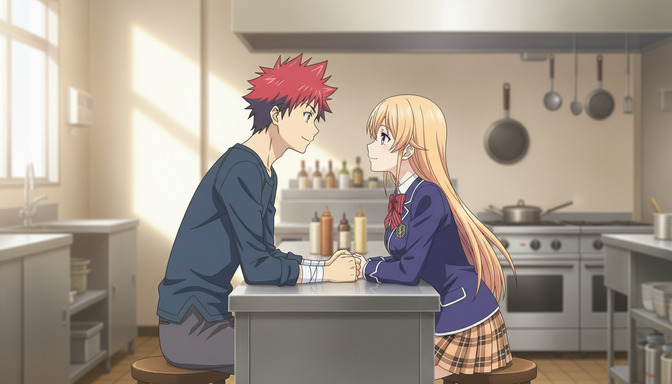
Quiet kitchen romance prompt: slice-of-life anime art style, two characters sitting across a small kitchen counter from each other, both leaning slightly forward so their faces are closer than the counter's width would normally allow, one with a soft half-smile and the other with an expression that has not fully decided what it is yet, their hands both resting on the counter surface a few inches apart without touching, warm morning light coming through the window behind them, the scene quiet and domestic with no dramatic framing, the tension entirely in the lean and the proximity and the fact that neither one has looked away.
Cinematic body language: how posture communicates before the face catches up.
The most sophisticated layer of anime emotional expression is body language that runs ahead of or contradicts the face. A character who says they are fine while their arms wrap around their own torso. A character whose face shows calm while their hands have balled into fists at their sides. A character who turns their whole body toward someone they claim not to care about. The disconnection between stated emotion and physical reality is where the most interesting character work happens, and it is entirely available to AI anime prompting.
Cinematic body language prompts work best when you specify the contradiction explicitly. "A character whose expression is composed and neutral but whose hands are gripping the edge of the table hard enough to whiten the knuckles" gives the model two contradictory signals to hold in the same frame. "A character turned fully toward the door with one hand on the handle, their face turned back over their shoulder with an expression they did not intend to show" creates the visual beat of someone who almost left but did not.
Contradictory body language prompt: seinen anime art style, a woman standing in a doorway with her back half-turned to the room, her face in three-quarter view showing an expression that she did not intend anyone to see, something between longing and resolution, her hand on the door frame rather than the handle so she has not committed to leaving, her weight distributed evenly rather than shifted toward exit, the room behind her softly lit and domestic, the hallway ahead of her darker and undefined, the entire frame built around the tension of the threshold.
The guide on the ultimate AI anime prompt formula shows how expression and pose layers fit into the full seven-layer prompt stack alongside lighting, camera, and art style. The guide on AI anime lighting prompts covers how light placement changes what an expression communicates, which is the next layer to control once the pose vocabulary is in place.
Frequently asked questions about facial expression and pose prompts for AI anime.
How do I prompt a specific facial expression in AI anime without just saying the emotion name?
Describe the physical components of the expression instead of naming it. Rather than "sad expression," specify "eyebrows tilted upward at the inner corners, eyes at half-mast, lips pressed lightly together, chin angled slightly downward." Rather than "angry," specify "brow slammed low over narrowed eyes, jaw set, a vein mark at the left temple." The physical description gives the model structural information to render rather than an emotional category to interpret however it defaults.
What is the difference between rage and determination in an anime expression?
Rage compresses and then releases. The brow is hard, the jaw clenches, and the energy radiates outward in environmental effects like heat distortion, energy crackle, or color shifts in the background. Determination is resolved tension without the explosion: the jaw sets but does not clench, the eyes are wide and locked forward rather than narrowed, and the body leans toward the goal rather than pulling inward. Rage looks at the obstacle. Determination looks past it.
How do I prompt embarrassment in anime to make it read as genuine rather than generic?
The key is specifying where the character's gaze goes and what their body retreats into. Generic embarrassment prompts produce a pink blush and nothing else. Specific embarrassment prompts describe the sideways eye cut that cannot meet the other person, the raised shoulders, the chin angled toward the chest, the hands reaching up toward the face. The body's retreat is what makes embarrassment read as real. Pair it with a specific cause if possible: a character who walked in on something will hold the door frame; a character who was complimented will press their hands against their own cheeks.
What poses work best for romance scenes in AI anime?
The most effective romance poses in AI anime are built around proximity and orientation rather than contact. Two characters whose bodies are angled toward each other with less space between them than the scene demands. A forward lean that reduces the distance without closing it. An interrupted gesture, a hand reaching toward the other person that has stopped mid-air. The forehead-to-forehead pose is the highest-intimacy option in the anime visual vocabulary when you do want contact. For stages earlier in a relationship, near-touch and directed gaze communicate more than anything physical.
How do I make idle poses feel character-specific rather than generic?
Specify the default physical habit of the character type. A cautious character defaults to weight on one foot with a slightly closed stance. A confident character stands square with loose arms. A melancholic character turns at a three-quarter angle away from the viewer. A warm character has slightly open arms and a body angled toward whoever else is in the scene. Give the idle pose a thought: "the character's gaze is directed at something specific off-frame that they are thinking about" adds a layer of inner life that distinguishes a character from a figure standing in a neutral position.
What is cinematic body language and how do I prompt it?
Cinematic body language refers to posture that communicates emotion independently of or in contrast to the character's facial expression. The most powerful examples are contradictions: a composed face paired with clenched hands, a calm voice implied by still posture paired with a foot quietly turned toward the exit. To prompt it, specify both the facial expression and the physical contradiction in the same description. Name what the hands are doing, where the weight sits, which direction the body faces relative to the scene's emotional center of gravity. The contradiction is the story.
Can I combine emotion types in one prompt, like sadness and determination?
Yes, and the combination is where some of the most compelling anime expressions live. Sadness-with-determination reads as the character who has decided to do the hard thing despite the cost: the tilted inner brows and glistening eyes of sadness paired with a squared jaw and forward-facing body of determination. Specify the face and the body separately and let them contradict each other. "Tears at the inner corners of the eyes that have not yet fallen, the brow showing the inner tilt of grief, but the jaw locked and the body turned toward the exit rather than curled inward" describes a character in the exact moment of choosing.
Related Blog Posts
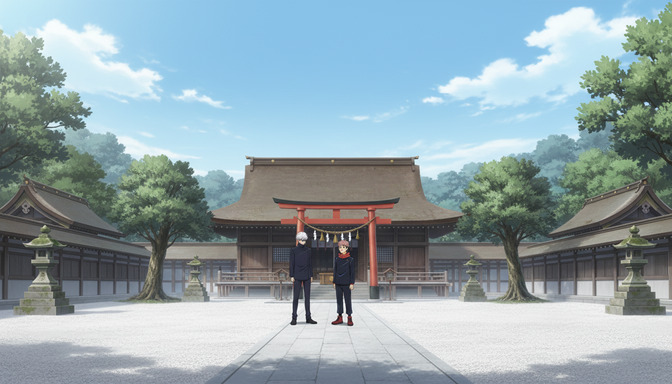
How to Create Long Shots in AI Anime
The prompting structure that places your character fully inside a world — and why most long shot attempts drift into medium shots or get swallowed by the environment.
Learn how to prompt long shots in AI anime — frame the full character, build the environment as co-subject, use negative space, and let AutoWeeb's prompt analysis catch what's missing.
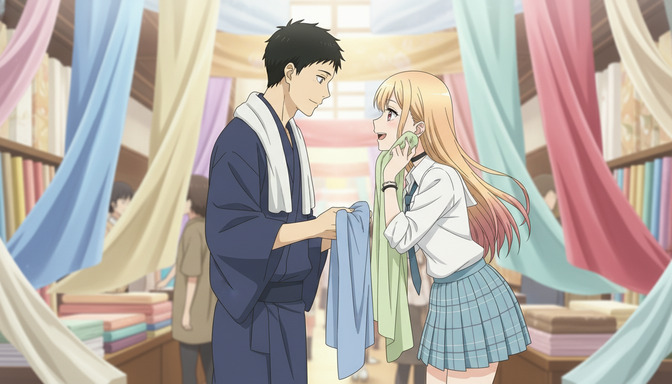
Best AI Anime Lighting Prompts: Cinematic Soft, Neon, and Emotional Scenes
How the right light source transforms an ordinary anime scene into something that actually feels like something — and the exact prompt language to get there.
The best AI anime lighting prompts for every mood: soft sunlight, golden hour, cyberpunk neon, moody rain, candlelight, and volumetric light. Templates included.
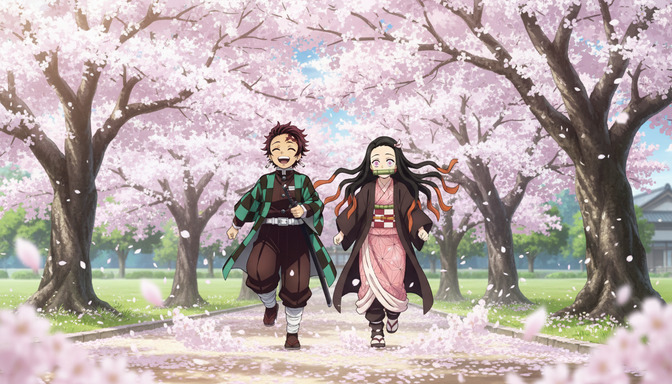
How to Add Atmosphere to AI Anime Prompts (Rain, Fog, Magic, Smoke)
The environmental effects that turn a technically correct anime scene into one that actually feels like being inside it.
Learn how to add atmosphere to AI anime prompts: rain, fog, cherry blossoms, snowfall, smoke, sparks, magical particles, and full weather systems. Prompt templates included.
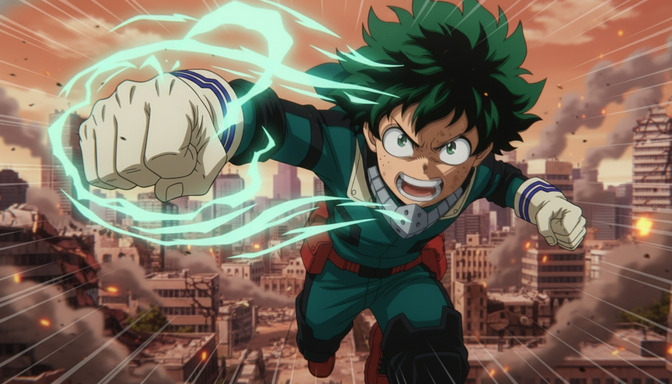
How to Create Motion Blur Lines in AI Anime
The prompting structure that makes movement feel fast, forceful, and impossible to look away from.
Learn how to prompt motion blur lines in AI anime for images and video. Direction, intensity, secondary effects, and how AutoWeeb's prompt analysis catches what's missing.
Explore AutoWeeb
Jump into the tool that fits your creative step.
AI Anime Video Generator
Animate storyboard shots into cinematic clips with Seedance 2 and consistent characters.
Anime Character Creator
Design original characters with consistent sheets across every scene.
AI Anime Image Generator
Generate cinematic anime stills anchored to your character library.
Anime Filters
Upload any photo and apply AI anime filters to turn it into stunning anime art in seconds.
AI Anime Location Generator
Create a location set once, then generate reference images from every angle.
AI Anime Storyboarding
Describe your idea, pick your characters, and let AI draft the script and scenes.
AI Anime Prompt Agent
Turn a rough idea into a cinematic Seedance 2 prompt with the AI Director.