Best AI Anime Lighting Prompts: Cinematic Soft, Neon, and Emotional Scenes
How the right light source transforms an ordinary anime scene into something that actually feels like something — and the exact prompt language to get there.
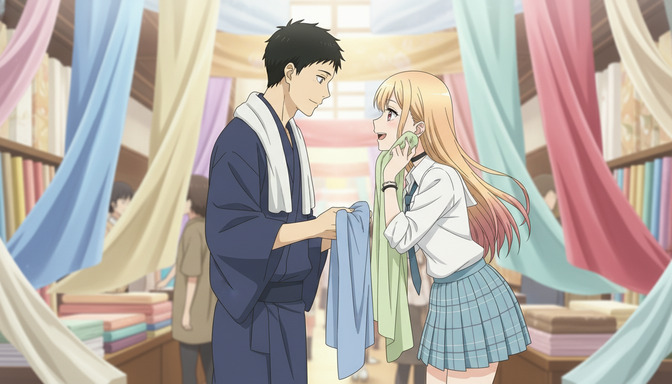
Most anime prompts name a setting and describe a character. They forget the light. The model fills that gap with its most statistically common training distribution: bright, even, directionless illumination that renders the scene technically correct and emotionally neutral. You get a character who exists in a place. You don't get a scene that feels like anything.
Lighting is the fastest emotional lever in a prompt. Warm amber from paper lanterns signals belonging. Cold fluorescent overhead light signals exposure and pressure. Cyberpunk neon from competing signs signals urban isolation with an electric edge. You can write the same character into the same location and produce six completely different emotional readings just by changing the light source, its direction, and its color temperature. This guide covers the best anime lighting prompts for eight distinct moods, with prompt templates you can use directly or adapt.
👉 Generate Your First Cinematic Anime Scene on AutoWeebWhy lighting works as emotional positioning, not just illumination.
In traditional animation, lighting is a post-production decision made by compositors and color graders who know exactly what emotional register a scene needs. In AI anime prompting, you are that compositor. The model doesn't interpret mood first and then choose a matching light. It interprets the light you named and infers mood from it. Which means if you don't name the light, the mood is whatever the model's default setup implies, usually something between "afternoon indoor scene" and "neutral outdoor daylight."
Three variables define a lighting setup: the source (what is producing the light), the color temperature (warm amber, cool blue-white, saturated neon), and the direction (from above, from the side, backlighting, rim light from behind). Specify all three and the model has a complete lighting brief. Specify one and it infers the other two from its training data, which may or may not match your scene. The prompt templates in this guide name all three for each mood. That's what makes them work reliably rather than occasionally.
For a deeper look at how lighting fits into the full structure of a high-performing prompt, the guide on the complete AI anime prompt formula covers it as one of seven layers that each do a distinct job.
Soft sunlight and golden hour: warmth, romance, and the ache of a moment passing.
Soft sunlight and golden hour are related but emotionally distinct. Soft sunlight, the light of mid-morning through sheer fabric or filtered by overcast sky, is even and non-directional. It implies calm domesticity, safety, and the quiet comfort of a space where nothing is at risk. Golden hour light is directional and fleeting. It comes from a specific angle, casts long horizontal shadows, and carries the specific weight of a beautiful thing that is almost gone. Two completely different emotional registers that happen to share warm color temperatures.
Soft sunlight prompt: soft morning sunlight filtering through sheer white curtains, diffused warm light falling evenly on both characters, no hard shadows, pale gold color temperature, the kind of light that makes everything feel unhurried and close.
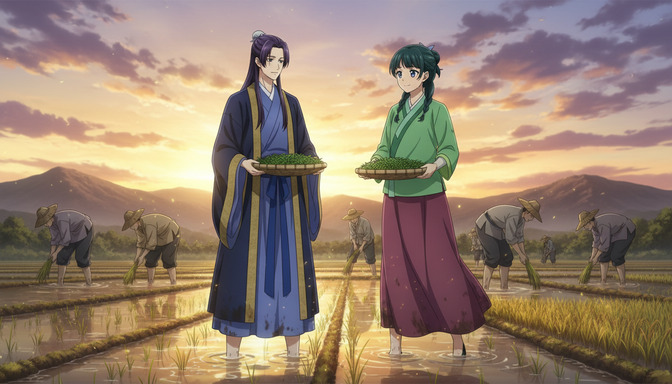
Golden hour prompt: golden hour backlight from the low evening sun, warm amber and deep coral coming from the left, long horizontal shadows stretching across the ground, the characters partially silhouetted against a pale orange sky, the light making everything feel beautiful and already ending.
Moody rain and dramatic shadows: grief, confrontation, and the weight of the unspoken.
Rain changes the physics of light completely. An overcast sky becomes a giant soft box that eliminates all directional shadows and flattens the world into muted, desaturated tones. Wet surfaces turn every nearby light source into a reflection pool. Neon signs that would be sharp and saturated in dry air become blurred, refracted, bleeding into the ground in distorted color. This is why rain in anime almost always signals emotional weight: the light itself becomes heavy, fragmented, and unresolved.
Moody rain prompt: heavy rain at night, overcast city street with no direct light source, the characters lit by the diffused glow of wet asphalt reflecting neon signs from storefronts, cold blue-gray ambient light, the background a blur of colored light refracted through water, the scene's colors muted except for the reflections.
Dramatic shadows prompt: a single hard practical light source from low on the left, strong shadow geometry across the character's face and body, the unlit side falling into deep blue-black shadow with almost no detail, the contrast sharp enough to divide the face into distinct light and dark halves, the background mostly dark.
These two can stack. A character standing under a single streetlamp in the rain produces both: the hard directional light of the lamp, the diffused ambient glow from wet surfaces, and the dramatic shadow geometry of a point source cutting through overcast conditions. Name both sources and both directions separately, and the model has enough information to combine them.
Cyberpunk neon and rim lighting: electric isolation and the city that never actually sees you.
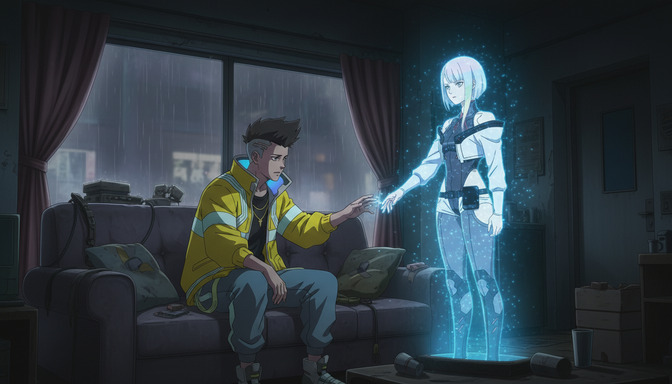
Cyberpunk neon lighting works through conflict. The emotional register comes from multiple saturated light sources in different colors fighting for dominance on the same surface. Magenta from an advertisement on the right, cyan from a holographic display on the left, a character caught in the middle with both colors competing across their face and jacket. The scene is bright and vivid and somehow communicates total loneliness, because all that light is ambient, environmental, and indifferent. Nobody turned it on for you.
Rim lighting is the complement to neon in cyberpunk scenes but also works on its own in any genre. A rim light separates a character from a dark background by outlining their silhouette with a thin edge of directional light. It adds dimensionality and signals that the character is in a specific spatial relationship to a light source behind them, which implies depth and environment even when the background itself is unrendered or abstract.
Cyberpunk neon prompt: competing neon light sources, magenta from a large advertisement sign on the right, cyan from a holographic storefront display on the left, the character's face and clothing catching both colors in unresolved conflict, wet urban street behind them, the city's background a layered depth of electric signage and rain-blurred light.
Rim lighting prompt: strong rim light from directly behind the character, deep electric blue outlining the full silhouette, the front of the character's face lit faintly by the warm amber of a practical interior light source, the contrast between the blue rim and the warm front light creating a sense of standing between two worlds.
Candlelight and volumetric light: intimacy, the sacred, and light you can almost touch.
Candlelight is the most intimate light source in anime prompting because it implies closeness, fragility, and the specific vulnerability of a space that only exists as long as the flame does. It flickers, which means the shadows are never fully stable. It casts from below, which reverses the usual directional conventions and makes faces look warmer and stranger simultaneously. It doesn't reach far, which means whatever is beyond the candlelight doesn't exist within the scene's emotional space.
Candlelight prompt: a single candle as the only light source, warm amber-orange light casting soft uneven shadows that move slightly, the character's face lit from below and to the side, the lit half warm and close, the shadow half fading into warm darkness, the space beyond the candle's reach dark and indistinct, the scene intimate and slightly fragile.
Volumetric light (god rays) does the opposite: it makes light monumental. Shafts of pale light descending through apertures in a ceiling or canopy, catching dust or atmospheric particles, landing in visible pools on a surface. The source is typically large, distant, and overhead. The emotional register is reverence, supernatural presence, or the specific feeling of arriving somewhere that matters.
Volumetric light prompt: shafts of pale white volumetric light descending from high openings in an ancient stone ceiling, the god rays catching suspended dust particles and making the light itself visible, soft pools of illumination on the floor around the character, the surrounding space in cool shadow, a sense of sacred or otherworldly weight to the environment.
Combining light sources for emotional complexity.
The most memorable anime lighting moments use two sources in tension. The warm interior practical light of a lamp against the cold blue of a rainy window. The soft domestic sunlight of a room interrupted by the hard shadow of a figure standing in the doorway. The flickering candlelight of a quiet dinner table undercut by the distant neon spill from the street below. Two sources create a visual argument the scene hasn't resolved yet, which is exactly the kind of visual complexity that reads as emotional depth.
When combining sources, name them in order of dominance: the primary source first, the secondary source second. Then specify what each source is doing to which part of the scene. The model can hold two lighting instructions simultaneously if they're spatially assigned rather than left to inference.
Two-source prompt example: primary light from warm amber paper lanterns hanging overhead, casting soft even glow on the characters' upper faces and shoulders, secondary cold blue light from a rain-streaked window behind them on the right, the blue light catching their profiles and the edge of the table surface, the two colors in unresolved contrast across the space between the characters.
For video prompts in Seedance 2, lighting consistency across the clip matters as much as the initial instruction. Name whether the light is static or moving: a flickering candle implies subtle animation, a static neon sign should stay consistent. If the camera moves, specify whether the lighting follows the character or stays fixed to the environment.
👉 Build Cinematic Anime Scenes with Precise Lighting on AutoWeebFrequently asked questions about AI anime lighting prompts.
What are the best anime lighting prompts for romantic scenes?
The most reliable romantic lighting prompts use warm, diffused, and close sources: soft sunlight through sheer curtains, warm practical light from paper lanterns or a table lamp, or golden hour backlight that wraps both characters in the same amber glow. The key is non-competitive light, meaning one source, soft edges, and warm color temperature. Avoid hard shadows and cool tones in romantic scenes unless the story specifically calls for tension or separation. A prompt phrase like warm amber practical light from a low lamp, diffused and even, no hard shadows, both characters inside the same pool of light reliably produces the proximity and warmth that romantic scenes need.
How do I write cyberpunk neon lighting in AI anime prompts?
Name at least two competing colored light sources and assign them to different sides of the frame. The conflict between the colors is what produces the cyberpunk atmosphere. Magenta from signage on the right, cyan from a holographic display on the left, the character's face splitting the two colors works well. Add wet surfaces if you want the light to bleed and refract, which reinforces the urban density. For style reinforcement, add a line about the city's depth: the background a layered stack of electric signage receding into fog and rain. That's the environment doing as much emotional work as the lighting.
What is rim lighting and how do I prompt it in anime?
Rim lighting is a thin edge of directional light that outlines a character's silhouette from behind or from behind-left or behind-right. It separates the character from the background by creating a bright outline against a darker field, which adds dimensionality and makes the figure read as spatially distinct from its environment. To prompt it: name the rim as a light source, specify its position behind the character, name its color, and then name the front-facing light (usually weaker and warmer) separately. Example: strong deep blue rim light from directly behind the character, the front face lit faintly by warm ambient interior glow, the contrast between the two sources making the character feel simultaneously present and apart.
How do I get moody rain lighting to work in anime prompts?
Rain prompts need two things to produce genuine moodiness: the quality of light that rain creates (diffused, muted, with no direct source shadows) and the reflective surfaces that make urban rain distinctive (wet asphalt, windows, puddles). Specify the overcast sky as the ambient source, remove directional shadows explicitly if needed (no hard shadows, everything soft and flat), and add reflection sources for any nearby light. Cold blue-gray ambient light from an overcast sky, neon signs from nearby storefronts bleeding into the wet street below, the rain itself visible in the air as fine diffused particles is a complete moody rain lighting brief that produces consistently atmospheric results.
Can I use multiple light sources in a single anime prompt?
Yes, and two well-chosen sources generally produce better results than one, because the interaction between them is where visual and emotional complexity lives. The key is to specify each source separately and assign it a spatial position in the frame. Primary source first, secondary source second, with each one named by type, color temperature, and direction. Where they overlap creates the most interesting areas of the scene, which is usually wherever the characters are. Three or more sources get harder for the model to resolve consistently, so most effective prompts use two sources in deliberate contrast rather than trying to build a fully realized lighting rig.
What lighting prompts work best for dramatic or tense anime scenes?
Hard single-source lighting with strong shadow geometry is the most reliable prompt choice for dramatic tension. A single practical light from low on one side, casting hard shadows that divide the character's face, with the unlit half falling into deep shadow, produces the visual contrast that reads as tension before any other story element registers. Cold color temperatures (blue-white, steel gray) reinforce it. For confrontation scenes between two characters, two hard opposing sources, one warm on one character, one cold on the other, can communicate conflict visually through the lighting alone. Hard cold white light from above right, deep shadow on the left side of the face, the background dark and undefined, no ambient fill light is a reliable template for a scene that needs to feel dangerous or unresolved.
Does lighting affect how Seedance 2 generates anime video?
Yes, significantly. Seedance 2 uses your lighting description both for the initial frame and as a consistency constraint across the clip. Static light sources like a lamp, a neon sign, or an overcast sky produce stable, consistent illumination throughout. Dynamic sources like firelight, flickering screens, or moving vehicles will produce subtle animation in the light itself, which is often desirable but needs to be named explicitly if you want it controlled. For video prompts, add a note about whether your light source is static or animated, and whether the camera movement changes the character's relationship to the light source as the clip progresses. A slow push-in toward a candle-lit character will make the candle grow in frame, which may or may not be what you want.
Lighting is the layer of a prompt that rewards the most specific language. The guides on the full seven-layer AI anime prompt formula and on motion and energy in AI anime scenes show how lighting sits alongside composition and movement to build prompts where every element is working in the same direction.
Related Blog Posts
How to Create a Bird's-Eye View Shot in AI Anime
The prompting structure that makes your scene look like it was captured from the sky — for both still images and video.
Learn how to prompt bird's-eye view shots in AI anime for images and video. Camera position, scale, atmosphere, lighting, and aerial motion — step-by-step guide.
How to Create the Rule of Thirds for AI Anime Composition
The grid that turns a random-feeling scene into one that looks intentionally framed — for both image and video prompts.
Learn how to use the rule of thirds in AI anime prompts for images and video. Place subjects, balance environments, and direct motion along the compositional grid.
How to Create a Close-Up Shot in AI Anime
The prompting structure that puts your character's emotion front and center — for both still images and video.
Learn how to prompt close-up shots in AI anime for images and video. Framing, expression, depth of field, lighting, and camera motion — step-by-step guide.
How to Create a Low Angle Shot in AI Anime
The prompting structure that makes your character look unstoppable — and how to use the same technique for both images and video.
Learn how to prompt low angle shots in AI anime for images and video. Camera position, power cues, atmosphere, and movement — step-by-step prompting guide.
Explore AutoWeeb
Jump into the tool that fits your creative step.
AI Anime Video Generator
Animate storyboard shots into cinematic clips with Seedance 2 and consistent characters.
Anime Character Creator
Design original characters with consistent sheets across every scene.
AI Anime Image Generator
Generate cinematic anime stills anchored to your character library.
Turn Photo Into Anime
Upload any photo and watch AI turn it into stunning anime art in seconds.
AI Anime Location Generator
Create a location set once, then generate reference images from every angle.
AI Anime Storyboarding
Describe your idea, pick your characters, and let AI draft the script and scenes.
AI Anime Prompt Agent
Turn a rough idea into a cinematic Seedance 2 prompt with the AI Director.