Best Anime Story Structures for Beginners: 5 Frameworks That Actually Work
Hero's journey, tournament arc, school-life episodic, revenge arc, and found-family — each with a working template and pacing strategy
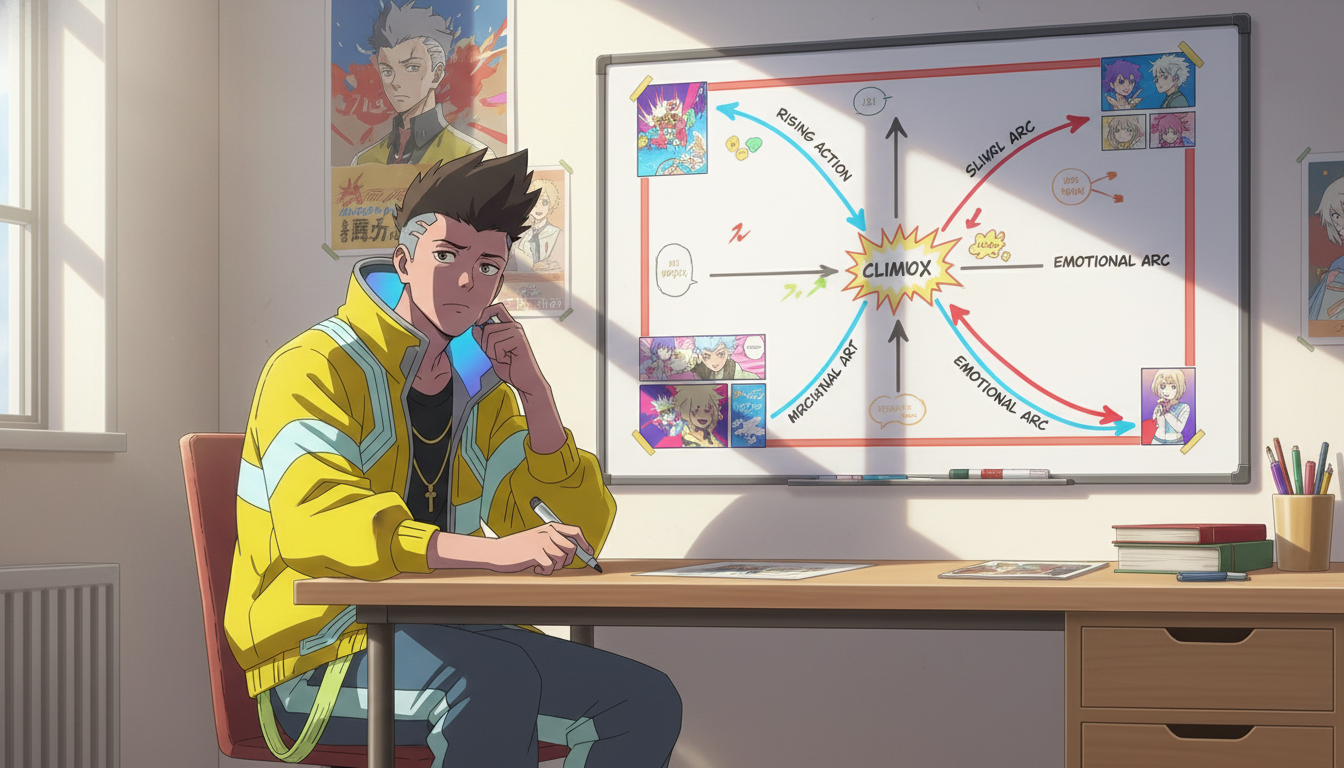
Knowing you want to write an anime story and knowing how to structure one are two different skills. Most beginners have the first and stall on the second. They have a character, a cool power, a vague sense of the world, and then nothing — no shape to hang any of it on. The structure problem is a logistics problem, and logistics problems have solutions.
The five frameworks below are the most reliable structural patterns in anime storytelling. Each one has a template, a pacing strategy, and a note on where beginners most often go wrong inside it. Choose the one that fits your story's emotional register, not the one that sounds most impressive. Structure is scaffolding. What you build on it is still yours.
👉 Visualize Your Anime Story Characters and Scenes with AutoWeebFramework 1: The Hero's Journey is the most beginner-friendly structure because it maps every major story beat to a character decision.
The hero's journey is the backbone of most shonen anime, and for good reason: it's a framework that ties every external event to an internal choice. Naruto, My Hero Academia, Demon Slayer — each one runs a version of this structure, and each one works because the external escalation and the internal growth move in sync.
Hero's journey template for an anime season.
- Ordinary world: Show your protagonist's life before disruption. Reveal their wound through behavior, not explanation.
- Call and initial refusal: Something arrives that demands change. They resist it — convincingly, not just as a delay.
- Mentor and threshold crossing: A guide gives them the first tool they need. They commit. There's no going back.
- Tests, allies, and enemies: The middle stretch. This is where supporting characters define themselves and the protagonist's ghost gets tested repeatedly.
- Ordeal: The protagonist fails or nearly loses. The ghost reaches crisis. This is the emotional center of the season.
- Return and resolution: The protagonist comes back changed. The resolution shows (not tells) what's different about them.
Pacing the hero's journey so the ordeal lands with full emotional weight.
The most common pacing failure in beginner hero's journeys is a short, rushed ordeal. If your protagonist nearly breaks in Episode 10 of 12 and recovers by Episode 11, the resolution feels cheap. The ordeal should begin no later than the two-thirds mark of your season and last long enough that the viewer genuinely wonders whether the protagonist will recover. The doubt has to be real. A two-episode crisis produces a two-episode resolution. Three episodes minimum for an ordeal to land with full weight.
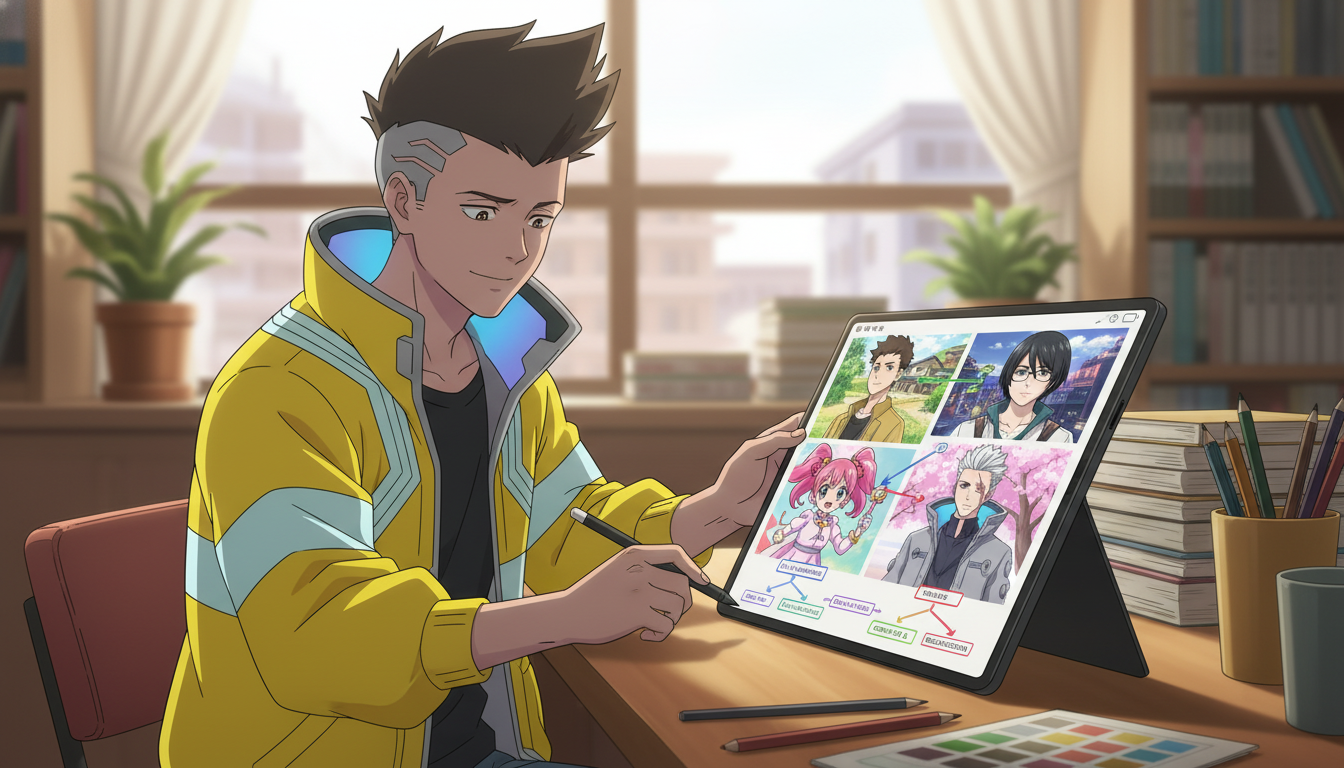
Framework 2: The tournament arc is a reliable mid-season structure that gives you a built-in pacing clock and natural escalation.
The tournament arc works because competition creates external stakes with a built-in deadline. Each round is a mini-story. Each opponent is an opportunity to reveal something new about your protagonist — not a new power, but a new aspect of their character under pressure. Hunter x Hunter's Heaven's Arena arc, My Hero Academia's Sports Festival, Yu Yu Hakusho's Dark Tournament: they all use the same structural logic. The bracket is the clock. The emotional arc is what runs inside it.
Tournament arc template structured around character function rather than fight choreography.
- Qualification: Establish who gets in and who doesn't. Use this to set the power ceiling and introduce rivals who matter.
- Early rounds: Low-stakes fights relative to the protagonist's ability. Use them to build the world, deepen supporting cast, and show the protagonist's default approach — the one that will have to change.
- Elimination rounds: The protagonist meets someone who exposes a limit. They have to adapt or lose. This is where the ghost starts getting tested.
- Semifinals: A personal confrontation. The opponent represents something directly related to the protagonist's wound — a mirror, a foil, or someone who embodies what they might become.
- Final: External and internal conflict peak at the same time. Winning or losing the match matters less than what the protagonist proves to themselves.
The tournament arc pacing mistake that makes final fights feel hollow.
Most beginner tournament arcs resolve the internal conflict in the semifinals and leave the final as pure external spectacle. The protagonist has their emotional breakthrough in round three, and the championship fight is just choreography. Avoid this. Save the internal resolution for the final confrontation. Let the emotional clarity arrive at the same moment the fight reaches its peak. That convergence is the entire reason tournament arcs work.
Framework 3: The school-life episodic structure builds character depth through accumulated small moments rather than escalating external pressure.
School-life and slice-of-life episodic structures ask a different question than shonen frameworks: what if the ordinary is the story? K-On!, My Teen Romantic Comedy SNAFU, Toradora, Barakamon — these stories don't have tournaments or power systems. Their stakes are internal, social, and seasonal. The drama is subtle. The pacing is emotional, not plot-driven. This structure is not "easier" than action frameworks. It's differently difficult: you can't hide weak character work behind a fight scene.
School-life episodic template organized around a school year's natural emotional calendar.
- Establishment arc (episodes 1-3): Introduce the core group through a shared situation that forces proximity. Club recruitment, new transfer, shared project. Show each character's surface and hint at what's underneath.
- Routine episodes: Small conflicts, small resolutions. A misunderstanding. A festival preparation. A bad test. Each episode reveals one character detail that accumulates over the season.
- Seasonal turning point: A school event (culture festival, sports day, graduation rehearsal) that puts the group's dynamic under pressure. Someone says something they can't take back. Or doesn't say something they should have.
- Low point: The group splinters or a relationship cracks. Low stakes externally. Devastating internally.
- Resolution: Growth shown through behavior, not a speech. The protagonist handles a situation differently than they would have in episode one. No fanfare. The change is the resolution.
Pacing school-life stories means treating seasonal time as an emotional instrument, not a calendar.
Summer episodes carry a specific emotional weight in anime: warmth, possibility, the feeling that time is both infinite and running out. Winter carries grief and clarity. Use the season your characters are in as an emotional amplifier, not just a backdrop. A conversation that happens under a summer festival sky means something different than the same conversation in an empty winter classroom. If your school-life story could take place in any season without changing, you're not using the structure fully.
Framework 4: The revenge arc is one of anime's most powerful structures, and one of the most dangerous for beginner storytellers to attempt without the doubt phase.
Vinland Saga, Demon Slayer, Code Geass: revenge arcs produce some of anime's most emotionally consuming stories. They also produce some of its flattest when the protagonist never meaningfully questions whether the vow was worth it. A revenge arc without doubt is not a character arc. It's a grudge with episodes attached.
Revenge arc template built around the doubt that makes the vow meaningful.
- The wound event: What happened, and to whom. Make it specific. Vague tragedy produces vague motivation.
- The vow: What they swear to do and why. This is the protagonist's ghost in its most explicit form: the belief that justice is achievable through this specific act.
- Preparation and early victories: They get stronger, closer, harder. Each step costs something small — a relationship, an opportunity, a version of themselves they could have kept.
- The doubt phase: Someone or something makes them question whether the vow was right. This is not optional. This is the entire engine of the arc.
- Convergence: They reach the object of the revenge. What happens there — whether they follow through, and what it costs — is the story's answer to the question the doubt phase raised.
- Aftermath: Who are they now? The wound that started the arc is still there. What's different is their relationship to it.
The doubt phase is not a detour in the revenge arc — it is the arc.
Build at least a full episode block around your protagonist's doubt. Let them sit with it. Let them encounter someone who chose differently after a similar wound and see what that life looks like. Let the cost of the path they're on become visible. If the protagonist never wavers, the vow was never a choice. And if it was never a choice, the resolution can't feel earned.
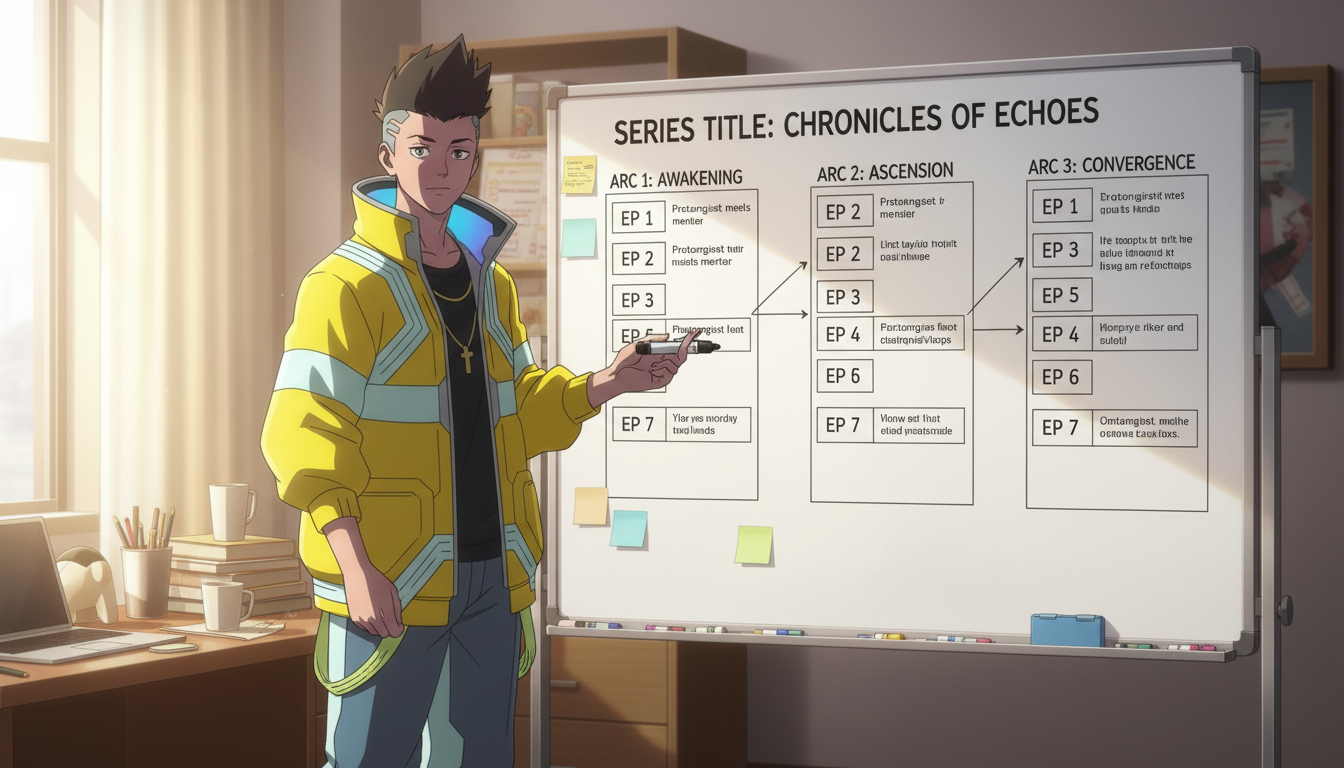
Framework 5: The found-family progression is the most reliably satisfying beginner structure because the emotional logic is universal and the character work is distributed.
One Piece, Fairy Tail, Fruits Basket, Spy x Family, Fullmetal Alchemist: found-family progressions work because the story is not just the protagonist's. Every member of the group carries their own wound and their own ghost, and the group's formation is the process of each of those wounds finding a place where they're safe. When it works, the "family" moment arrives and the viewer feels it because they've seen every member earn it. This structure requires more character work upfront, but the payoff is proportional.
Found-family progression template organized around each member's wound and the group's break point.
- Loner protagonist: They're isolated by choice, circumstance, or belief. They don't need anyone — or they've decided not to.
- First reluctant ally: Forced proximity, not chosen connection. They don't trust each other yet. The distrust is specific.
- Group formation under pressure: A shared threat or goal brings more members in. Each arrival reveals a new wound. Each member's reason for joining the group tells you who they are.
- The break: External pressure cracks the group. Someone leaves, betrays, or disappears. This is the test that the family has to survive.
- Individual wound reveals: In the break's aftermath, each character's backstory becomes visible — not as exposition, but as explanation for their behavior during the crisis.
- Reunion and defense: The group chooses to come back together, knowing exactly who everyone is now. They fight, protect, or stand for each other at full cost.
- Family solidified: Not announced. Shown. A scene where the protagonist, once isolated, makes a choice that only a person with family would make.
The single pacing rule that makes the found-family's emotional peak feel earned rather than scripted.
Don't let the group call themselves a family. Let the viewer do it. The moment you write a speech where the protagonist declares the group his family, you've robbed the audience of the experience of feeling it for themselves. Every member needs one moment where they prove, through action not words, that they'd choose the group over the safer alternative. When those moments have all landed, the viewer knows. You don't need to announce it.
Common beginner mistakes that break story structures regardless of which framework you choose.
Starting with the framework before the protagonist's internal architecture is the most common structure mistake.
A hero's journey with a protagonist who has no wound produces twelve episodes of plot. A tournament arc with a protagonist who has no ghost produces twelve episodes of fights. The framework only works when the protagonist has somewhere to go internally. Build the wound and the ghost first. The framework is just the path the protagonist walks to confront them.
Confusing episode quantity with pacing means your story will feel either rushed or padded at the worst moments.
Pacing is not about how many events happen per episode. It's about whether each event lands with the weight it deserves. A twelve-episode season that puts its ordeal in episodes 8 through 10 has room for the resolution to breathe. The same season that tries to fit four major arcs and a full backstory reveal into twelve episodes will feel like a highlight reel, not a story. Count the emotional beats, not the plot events.
Resolving the internal conflict before the external climax peaks is the structural error that makes endings feel anticlimactic.
If your protagonist has their emotional breakthrough in episode 9 and the final battle is episode 12, episodes 10 through 12 will feel like an epilogue rather than a story. The internal and external conflicts should reach their peak at the same point. The protagonist's emotional clarity and the story's external crisis should converge in the same scene, or the same episode. That convergence is what produces the "this is exactly what the whole thing was building toward" feeling. Separate them and you get two half-climaxes instead of one full one.
How AutoWeeb helps you move from a story framework to a visual prototype of your world and characters.
Once you've chosen a framework and mapped your protagonist's wound and ghost against it, the next step that clarifies everything else is visual. A story that lives only in an outline stays abstract. The moment you can see your protagonist, a specific face with a specific color palette in a specific art style, decisions about tone, costume, setting, and scene composition become instinctive rather than analytical.
AutoWeeb's anime character creator takes your text description and generates a character image you can reference for every scene you write. If your found-family lead is a closed-off young woman with a history of betrayal and a formal combat background, try something like: "Tall young woman with short silver hair, sharp amber eyes, military-cut coat over practical clothes, guarded expression, slightly exhausted, Spy x Family art style." The specificity of your character work translates directly into the specificity of the output. Vague characters produce vague images; specific characters produce images you can actually react to.
For world-building, AutoWeeb's photo packs place your character into curated anime environments: isekai towns, Japanese festival streets, school corridors, training grounds, city rooftops at dusk. This is scene prototyping before the script exists — a way to test whether the character and the world feel right together before you've written a line of dialogue. Build the character, place them in the world, save a Character Sheet for consistency across every scene you generate afterward.
👉 Build Your Anime Characters and See Your Story Structure Come to LifeFrequently asked questions about anime story structures for beginners.
Which anime story structure is the easiest to start with as a complete beginner?
The hero's journey is the most beginner-accessible because every beat maps to a character decision, which means you always know what scene comes next. If your protagonist is at the ordeal, the next scene is recovery or collapse — the structure tells you. Found-family is also forgiving because the character work is distributed across the group, so no single character has to carry the full emotional load. Revenge arcs are the hardest for beginners because the doubt phase requires the most nuanced writing and is the one most often skipped or underdeveloped.
Can I combine multiple anime story structures in one series?
Yes, and most long-running anime do exactly this. A hero's journey arc runs across a full season; a tournament arc runs inside it as a mid-season structure; a found-family progression builds in parallel throughout. The key is knowing which framework is the primary emotional spine. The other frameworks are scaffolding within it. If you're a beginner, get comfortable executing one framework cleanly before layering a second one. A well-executed single framework produces a stronger story than three partially executed ones.
How many episodes does each framework need to work properly?
The hero's journey and found-family frameworks work well with 12 to 13 episodes — the standard single-cour anime season. A tournament arc can run in 4 to 6 episodes if embedded within a larger structure, or as a full 12-episode season if the fights carry enough character weight. School-life episodic runs best as a 12-episode season with a two-cour follow-up, because the slow accumulation of character moments needs time to compound. Revenge arcs work in any length, but shorter seasons (12 episodes or fewer) require a tighter doubt phase with less room for detour.
What's the difference between a story structure and a plot outline, and which should I create first?
A story structure is the emotional architecture: the sequence of internal and external pressures that forces your protagonist to change. A plot outline is the specific events that embody that architecture: Episode 4, the protagonist is challenged at the training grounds by the rival from Episode 2. You need the structure first because the plot outline should be derived from it. If you write a plot outline without a structure, you have a list of events. With a structure, each event has a purpose, and you can test whether it belongs by asking what it does to the protagonist's wound and ghost.
My anime concept doesn't fit neatly into any of these five frameworks. Does that mean the concept is wrong?
Not at all. These five are the most common beginner-accessible patterns, not an exhaustive list. Mystery structures, survival structures, sports-underdog structures, and psychological thriller structures each have their own logic. If your concept isn't fitting a framework cleanly, the most useful question is: what does your protagonist need to go through internally for the story to feel complete? Start from the internal arc and work backward to the external events that create it. The framework that matches those events is the right one, even if it doesn't have a name yet.
How do I avoid making my anime story feel like a copy of an existing series?
Framework similarity at the structural level is universal and unavoidable. Every hero's journey anime uses the same structural bones as every other. What distinguishes them is the specific wound and ghost of the protagonist, the specific way the world puts pressure on those things, and the emotional register of the execution. Your protagonist's internal architecture is yours. The feeling you're trying to create is yours. Build from those two things and the story that emerges from a shared framework will still be original, because the character it happens to is specific to you.
When should I stop planning and start actually writing the first episode?
When you know your protagonist's wound, their ghost, and which framework your story lives in. That's enough. You don't need a complete season outline, a fully built world, or a locked supporting cast. Write the first episode with what you have. Most of what you don't know yet will reveal itself inside the writing — story problems that feel like planning problems almost always turn out to be writing problems, and they only become visible once you're in a scene. Outline as much as gives you confidence. Then write before you're ready.
For a deeper look at protagonist design and how to build the wound and ghost that make any framework work, the beginner's framework for creating your own anime story covers those elements in full. If you want AI to help you generate plot ideas, character arcs, and episode concepts once your structure is mapped, the guide to using AI to generate anime plot ideas has prompt templates and a four-step episode generation workflow you can run immediately.
Related Blog Posts
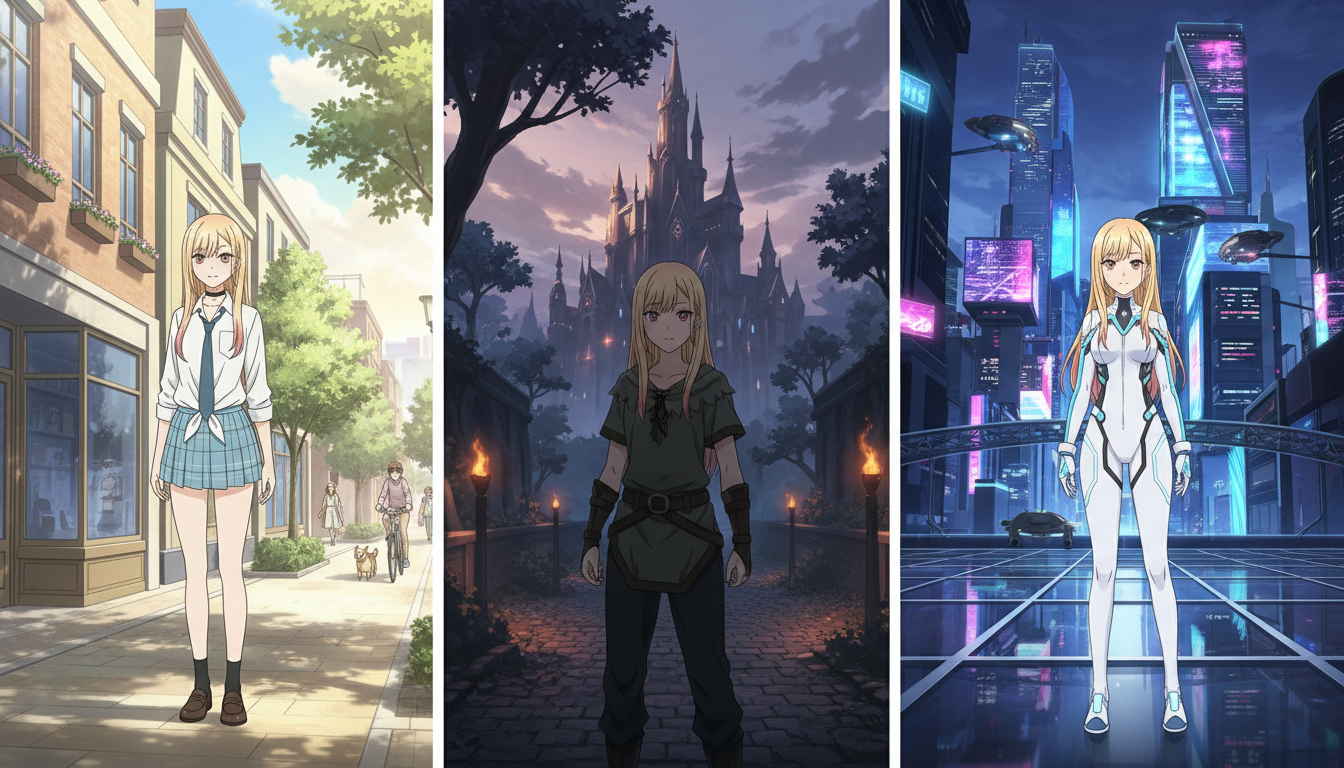
How to Build an Immersive Anime World: Geography, Power Systems, Culture, and Visual Identity
Your world isn't the backdrop — it's the pressure system that makes every conflict feel inevitable
Learn how to build an immersive anime world from scratch. Covers geography, power systems, culture, factions, tone, and visual identity for fantasy, sci-fi, slice-of-life, and dystopian genres.
How to Create Your Own Anime Story: A Beginner's Framework from Idea to First Episode
You don't need a complete world or a perfect plot — you need a protagonist worth following and a problem worth solving
Learn how to create your own anime story from scratch. A step-by-step framework covering genre, protagonist, conflict, world-building, and first episode structure for beginners.
How to Use AI to Generate Anime Plot Ideas, Character Arcs, and Episode Concepts Instantly
Writer's block isn't a creativity problem — it's a starting point problem, and AI solves that in seconds
Learn how to use AI to generate anime plot ideas, build worlds, design character arcs, and outline episode concepts. Templates, prompts, and AutoWeeb workflow inside.
Photo to Anime That Actually Looks Like You: A Guide for Black People
How AutoWeeb preserves dark skin tones, natural Black hair, and Afrocentric features in every conversion
Turn your photo into anime while preserving your dark skin tone, natural hair, and features. AutoWeeb's photo to anime AI is built to represent Black people authentically.
Explore AutoWeeb
Jump into the tool that fits your creative step.
AI Anime Video Generator
Animate storyboard shots into cinematic clips with Seedance 2 and consistent characters.
Anime Character Creator
Design original characters with consistent sheets across every scene.
AI Anime Image Generator
Generate cinematic anime stills anchored to your character library.
Turn Photo Into Anime
Upload any photo and watch AI turn it into stunning anime art in seconds.
AI Anime Location Generator
Create a location set once, then generate reference images from every angle.
AI Anime Storyboarding
Describe your idea, pick your characters, and let AI draft the script and scenes.
AI Anime Prompt Agent
Turn a rough idea into a cinematic Seedance 2 prompt with the AI Director.