
How to Add Atmosphere to AI Anime Prompts (Rain, Fog, Magic, Smoke)
The environmental effects that turn a technically correct anime scene into one that actually feels like being inside it.
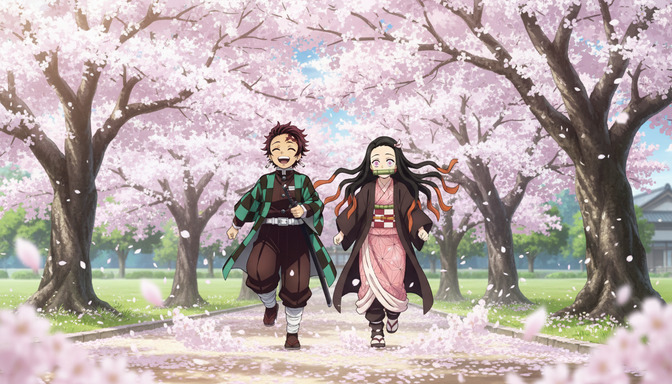
Environmental effects are the layer that separates a scene that exists from a scene you can inhabit. You can get the characters right, the composition right, the lighting right, and still produce something that feels inert — a technically correct frame where nothing is actually in the air between the subjects. Fog, rain, cherry blossoms, smoke: these aren't decoration. They're information. A curtain of fog that erases the background turns the visible foreground into the whole world. Rain that drives horizontally tells you the wind is fierce before you've read a single character's expression. Sparks rising from a campfire tell you the fire is alive and the night is close. This guide covers eight atmospheric effects, how each one changes a scene's emotional register, and the exact prompt language that makes them work.
👉 Generate Atmospheric AI Anime Scenes on AutoWeebStep 1: Prompt rain for its emotional weight, not just its presence.
Rain in anime is not a neutral weather condition. It almost always signals something: grief that can't be spoken, a confrontation that has been building, a quiet moment of transition from one emotional state to another. The prompting mistake is treating rain as a single effect. Heavy downpour and soft drizzle are completely different atmospheric states with different visual qualities and different emotional registers, and prompting them the same way produces the same output regardless of what you need.
Heavy rain is physical. The drops are large enough to see individually catching available light sources. Puddles on the ground show concentric ripple circles from continuous impact. Clothing is soaked and clinging. Hair is plastered. The background is progressively obscured by water density in the air. The light is cold, gray, and directionless because the overcast sky is acting as a giant diffuser.
Heavy dramatic rain: heavy rainfall, large individual drops visible against the dark tree line catching the ambient gray light, the ground a surface of reflective puddles with active ripple circles from continuous impact, the character's jacket soaked and clinging to his shoulders, hair plastered flat against his forehead, the forest background dissolved to a blurred gray-green field by the rain's density in the air, the scene's ambient light cold and flat with no directional shadows.
Soft melancholic drizzle reads differently. The rain is present but not overwhelming. Surfaces have a fine wet sheen rather than standing water. The light is diffused and slightly silver. The character might be standing in it without urgency, which implies a kind of surrender to the mood rather than physical struggle against it.
Soft drizzle: light rain barely visible in the air, a fine silver mist against the darkened cedar hedge behind her, the stone path covered in a thin reflective sheen, the character's hair lightly dotted with drops but not soaked, her expression still and turned slightly upward, the ambient light diffused and soft as if the sky itself has moved close.
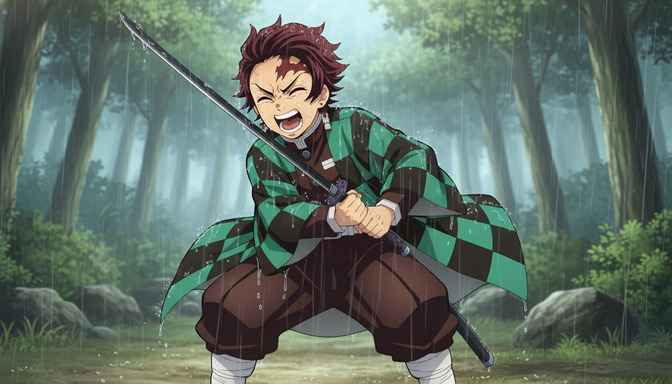
Step 2: Use fog and mist to control what the scene reveals.
Fog is a narrative tool disguised as weather. What it obscures becomes as important as what it reveals. A character standing in a forest with low morning fog at knee height — tree trunks rising out of white, the forest floor invisible — is in a space that feels ancient and liminal and slightly dangerous. The same character in the same forest without fog is just in some trees. The fog is doing the world-building.
The most effective fog prompts specify height (ground-hugging, mid-body, or full aerial), density (thin haze, moderate mist, or dense obscuring fog), and what it does to the visible objects at different distances. Near objects remain sharp. Mid-distance objects soften and lose color saturation. Far objects dissolve into the fog entirely, which gives the scene depth through subtraction rather than addition.
Low forest mist: low morning fog clinging to the forest floor from ground level to knee height, the bases of the trees and all ground detail below the fog line invisible, the character visible from the waist up rising out of the mist, the tree trunks rising from the white fog like columns in a space without a floor, the upper branches in soft focus through lighter mist, the light cool and diffused as if the sun hasn't reached this spot yet.
Urban night fog: fog rolling through a rain-wet city street at night, the nearest pavement and storefronts visible in sharp wet detail, the mid-distance buildings progressively dissolving from their lower floors up into pale gray-white, the far background an indistinct pale field with only the suggestion of lit windows and building height, the nearest streetlamp producing a diffused halo rather than a defined beam.
Step 3: Prompt cherry blossoms and snowfall as particle systems with direction and scale.
Cherry blossoms and snowfall both fill the air with particles, but they carry opposite emotional weights and need completely different prompt logic. Cherry blossoms signal ephemerality: the brief beautiful season, the awareness that what you're looking at is already ending. Snowfall signals stillness, isolation, and the specific quietness of a world that has gone hushed under accumulation.
Cherry blossoms
The key to prompting cherry blossoms that read as atmospheric rather than decorative is scale distribution and drift direction. Petals near the camera should be large and individually detailed. Mid-distance petals should be smaller and overlapping. Far petals should be nearly indistinct pale flecks. A light horizontal drift from wind makes them behave like real petals rather than confetti dropped from directly above. Accumulation on surfaces — a few petals landed on a shoulder, a soft carpet on the path below — grounds the falling petals in physical consequence.
Cherry blossom scene: pale pink cherry blossom petals falling in a loose cascade, the nearest petals large and individually detailed with visible translucent veining, the mid-distance petals smaller and layering over each other, the far petals nearly indistinct flecks of pale pink-white, all petals drifting slightly left on a gentle wind, a few resting on the character's dark hair and shoulders, the path below scattered with a soft carpet of already-fallen petals, the sky beyond the canopy a clear pale blue.
Snowfall
Snowfall needs three things to read correctly: visible individual flakes of varying size, the cold color cast it creates in ambient light (bluer and slightly desaturated compared to a clear night), and physical accumulation on surfaces — the thin white layer building on a shoulder, a wall edge, the top of a lantern. Breath visible as small clouds in the cold air is one of the most effective secondary details for selling the temperature without stating it.
Snowfall scene: light snowfall in the early evening, large individual flakes visible in the foreground catching the warm glow of a paper lantern, smaller flakes drifting through the mid-distance, a thin white layer accumulating on the character's coat shoulders and the stone wall behind her, breath just visible as a faint pale cloud in the cold air, the ambient light cooler and slightly desaturated compared to the lantern's warmth, the background softened by the falling snow's density.
Step 4: Prompt smoke and sparks for their physical behavior, not their appearance.
Smoke and sparks are among the most commonly under-described atmospheric effects. A prompt that says "smoke rising from the fire" tells the model to put some gray above the flames. It doesn't tell the model how the smoke behaves — whether it rises straight in still air or drifts with a current, whether it's thick and opaque at the base or immediately translucent, whether it catches backlight from the fire to show its volume and texture.
Sparks are a detail that rewards specificity. The size of the sparks relative to the flame, the arc of their trajectory upward, the brief illumination they cast as they rise, the altitude at which they extinguish — these are the details that make a fire feel live and present rather than illustrated.
Campfire with smoke and sparks: smoke rising from a campfire in a column, pale gray at the base where the density is highest and thinning to translucent wisps four feet above the flames, curling slightly to the right where a draft catches the upper column, small orange sparks rising from the fire inside the smoke column and extinguishing within eighteen inches of the flame, the smoke's base edge lit amber-warm from below by the fire, the background pine trees visible through the thinning upper smoke.
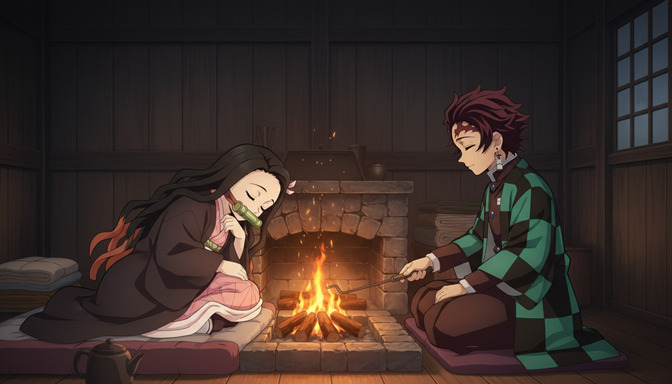
For explosion or combat smoke, the emotional register is the opposite of a campfire. The smoke is dark, fast-expanding, and directionally violent. Its leading edge is thick and opaque, its outer layers thin into gray wisps, and its interior may still be lit from below by residual flame.
Combat explosion smoke: thick black-gray smoke billowing outward from the impact point in all directions, the nearest edge dense and opaque, the outer layers thinning to translucent gray wisps, the interior of the smoke column lit from below by residual orange flame visible as a deep amber glow through the lower center, fine gray ash and debris particles drifting at the smoke's upper edge, the surrounding air hazy from dispersal.
Step 5: Define magical particles by their behavior and origin, not just their glow.
Magical particles are atmospheric effects that function as world-building. What the particles look like communicates what kind of magic produced them before any other story element provides context. Gentle spirit energy drifts upward in soft rounded forms. A combat aura produces sharp, fast-moving, angular fragments that orbit the character under force. A dissolving barrier releases geometric translucent shards falling downward. A curse spreading outward uses asymmetric dark wisps that move against the natural direction.
The most reliable magical particle prompts describe: the particle's shape (round, angular, crystalline, wisp-like), its size, its behavior (drifting, orbiting, falling, spreading), its speed (slow and peaceful suggests passive magic; fast and erratic suggests active or violent power), and the light it produces on nearby surfaces. That last detail, the faint collective glow cast by thousands of small particles onto the character's face and the environment around them, is what makes magical effects feel embedded in the scene rather than composited over it.
Spirit energy: hundreds of small luminous particles drifting upward around the character, each approximately the size of a firefly and glowing soft pale blue-white, the particles rising at irregular speeds and dispersing gradually as they ascend, the densest concentration near the character's outstretched hands, each particle casting no individual shadow but the collective field producing a faint blue-white glow on the character's face and the stone floor beneath her.
Combat aura: sharp bright golden particles orbiting the character in tight erratic arcs, each fragment angular and crystalline and catching the light as it rotates, the fastest particles leaving brief gold light trails at the edges of their paths, the density highest within a foot of the character's body and thinning toward an outer radius of about three feet, the character at the center of the field with their posture low and arms raised.
Step 6: Build a weather system by making all atmospheric effects obey the same physics.
A weather system is what happens when multiple atmospheric effects are active simultaneously and all of them are physically consistent with each other. Rain and fog together: the fog softens the visible rain into a general silver haze in the middle distance. Snow with wind: the flakes fall at an angle rather than straight down, and loose fabric moves in the same direction as the snow's drift. Cherry blossoms and smoke: both respond to the same air current, so they should curve the same direction.
Inconsistency breaks immersion immediately. Cherry petals falling straight down in a scene where rain is driving at a horizontal angle tells the model there are two unresolved weather states competing in the same frame. The output will default to whichever had the stronger prompt language, or it will blend both incorrectly. The fix is to name the wind direction once and apply it to every effect that should respond to it.
Full storm system with magical element: a violent storm at night, driving rain angling from the upper left at approximately forty-five degrees, the rain so dense the mid-distance treeline is a blurred gray-green field and the far background entirely obscured, the sky a dark overcast with only the lightning providing sharp white contrast across the upper frame, wind visible in the character's coat pressed back against his left side and his hair driven to the right, a thin coil of blue-white magical energy around his raised left hand, the scene desaturated and cold except for the blue of the magic and the brief white of the lightning.
The governing principle is simple: pick the dominant weather condition first, specify its direction and intensity, and then make every other atmospheric effect in the prompt respond to the same conditions. A scene where all the particles, precipitation, and smoke obey the same environment feels like a place. A scene where each effect follows its own rules feels like a studio set where someone forgot to brief the effects department.
For a complete understanding of how atmosphere fits alongside lighting, composition, and character in a fully layered prompt, the guide on the ultimate AI anime prompt formula covers atmosphere as one of seven layers that each do a specific job. Lighting and atmosphere interact closely — the guide on AI anime lighting prompts covers how rain, fog, and smoke each change the physics of light in a scene.
👉 Start Building Atmospheric AI Anime Scenes on AutoWeebFrequently asked questions about atmosphere in AI anime prompts.
How do I prompt cherry blossom petals in AI anime without them looking like confetti?
The confetti problem almost always comes from treating the petals as a uniform pattern rather than a particle system with scale and behavior. Three adjustments fix it reliably. First, specify the scale gradient: large individual petals near the camera, progressively smaller and overlapping in the mid-distance, near-invisible pale flecks at the far field. Second, add a drift direction from a gentle wind rather than letting them fall straight down — horizontal drift of even a slight angle reads as natural rather than dropped. Third, add accumulation evidence: a few petals landed on the character's hair or shoulder, and a soft carpet of already-fallen petals on the ground. The landed petals ground the falling ones in physical consequence, which is what separates atmospheric cherry blossoms from a decorative overlay.
What is the difference between fog and mist in anime prompts?
In practical prompt terms, fog is denser and more obscuring — it removes background detail, softens middle-distance objects, and flattens the color temperature of the entire scene toward cool gray. Mist is lighter and more translucent, often appearing in specific locations (clinging to a water surface, gathering in a low valley, rising from warm ground in cold air) without obscuring the full scene. For atmospheric prompts, the distinction matters because fog implies a scene enclosed within its own visible range, while mist implies a specific physical condition in one part of the environment. If you want the background gone and the foreground isolated, use fog. If you want a specific mystical or natural texture in part of the frame without losing the full environment, use mist.
How do I make rain look heavy and dramatic versus soft and melancholic in AI anime?
Heavy dramatic rain needs three things: large individually visible drops catching available light, continuous ripple circles on all wet surfaces, and progressive background obscuring from the rain's density in the air. The character should be visibly affected — soaked clothing, plastered hair, a forward lean against the force of it. Soft melancholic rain is the opposite: a fine silver mist rather than drops, a wet sheen on surfaces rather than standing puddles, and a character who is present in the rain without struggling against it. The posture difference is the tell. A character standing still with closed eyes in light rain reads as emotional surrender or contemplation. A character with their head down moving through heavy rain reads as endurance and isolation. Name the rain type, the surface response, and the character's physical response to it.
How do I prompt magical particles that look intentional rather than random sparkle effects?
Random sparkle effects happen when the prompt names the visual result without specifying the physical behavior that produces it. "Magical particles around the character" gives the model no information about what kind of magic, what the particles are doing, or what they're responding to. The fix is to treat the particles as a physical system: name their shape (round, angular, crystalline), their motion (drifting, orbiting, spreading, falling), their speed, and their density distribution. Where the particles are densest is where the magic is most active, which should be spatially specific. Adding the light the particles cast on nearby surfaces — a faint collective glow on the character's face, reflected light on the floor below — embeds them in the scene physically rather than placing them as a visual filter over it.
Can I combine multiple weather effects in a single anime prompt?
Yes, and combined effects produce some of the most atmospheric results available. The rule is that all effects in a combined weather system must obey the same physics. If there's a wind, every particle and precipitation element should move in the same direction it implies. If it's foggy, rain in the same scene should lose definition at distance and blend into the general haze rather than remaining crisply visible at mid-range. The practical approach is to name the dominant condition first — heavy rain, dense fog, strong wind — and then describe each additional effect as responding to it. A scene where rain drives at an angle and smoke drifts in the same direction and a character's hair blows the same way is a weather system. A scene where those three effects each go their own direction is three separate prompts that the model can't fully reconcile.
Why does smoke look flat or static in my AI anime prompts?
Flat smoke almost always comes from describing the appearance of smoke rather than its behavior. "Gray smoke rising from the fire" gives the model a color and a direction. It doesn't tell the model whether the smoke is thick at the base and thinning upward, whether it catches the light of the fire at its lower edge giving it warmth and volume, whether it drifts with a current or rises straight in still air, or whether fine ash particles are suspended in its upper layers. Smoke is volumetric — it has interior lighting from whatever fire or heat source produced it, a density gradient from base to tip, and edges that thin into translucency rather than stopping abruptly. Name the base density, name the edge behavior, name the light source below it, and add one secondary detail like drift direction or particle content. That's the difference between a smoke texture and a smoke effect.
How do atmospheric effects work in Seedance 2 video prompts?
In Seedance 2, atmospheric effects become animated by their nature: rain falls continuously, smoke drifts, particles move, snowflakes descend. This is an advantage when the effect is specified well, because the model will animate the behavior you described. It becomes a problem when the effect is underspecified, because the model fills the gap with its default animation for that effect — which may not match the intensity or direction you intended. For video prompts, the most important additions are motion rate (how fast the rain falls, how quickly the smoke drifts) and whether the effect interacts with a camera move. A slow push-in through heavy fog should show the fog progressively surrounding the camera. A wide shot pulling back from a cherry blossom scene should show the petals growing denser in the foreground as the trees fill the frame. Specify the atmospheric effect's behavior at the start of the clip and at the end, and Seedance 2 has the temporal structure to animate the transition between them.
Atmosphere is the layer that tells the viewer what the air feels like between the objects in a scene. For the complete layered prompting structure that places atmosphere alongside subject, lighting, camera, and emotion, the guide on the full AI anime prompt formula covers how every layer interacts. For the character at the center of these atmospheric scenes, the AutoWeeb character creator lets you build a consistent character who carries into every environment you put them in.
Related Blog Posts
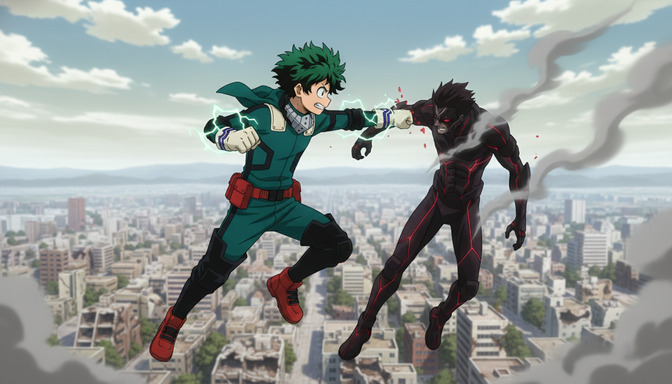
How to Create a Bird's-Eye View Shot in AI Anime
The prompting structure that makes your scene look like it was captured from the sky — for both still images and video.
Learn how to prompt bird's-eye view shots in AI anime for images and video. Camera position, scale, atmosphere, lighting, and aerial motion — step-by-step guide.
How to Create the Rule of Thirds for AI Anime Composition
The grid that turns a random-feeling scene into one that looks intentionally framed — for both image and video prompts.
Learn how to use the rule of thirds in AI anime prompts for images and video. Place subjects, balance environments, and direct motion along the compositional grid.
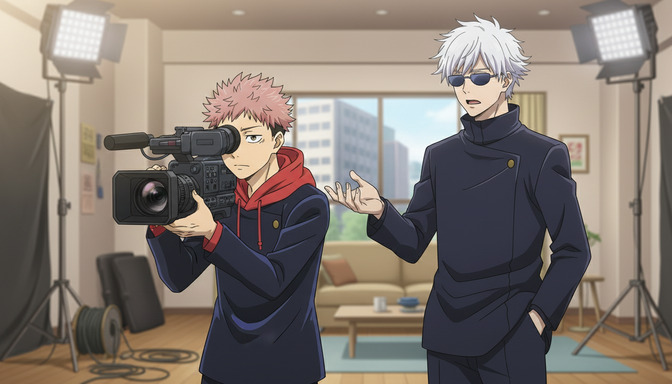
How to Create a Close-Up Shot in AI Anime
The prompting structure that puts your character's emotion front and center — for both still images and video.
Learn how to prompt close-up shots in AI anime for images and video. Framing, expression, depth of field, lighting, and camera motion — step-by-step guide.
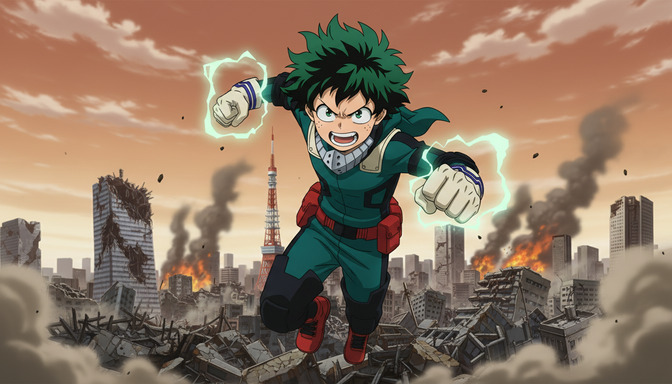
How to Create a Low Angle Shot in AI Anime
The prompting structure that makes your character look unstoppable — and how to use the same technique for both images and video.
Learn how to prompt low angle shots in AI anime for images and video. Camera position, power cues, atmosphere, and movement — step-by-step prompting guide.
Explore AutoWeeb
Jump into the tool that fits your creative step.
AI Anime Video Generator
Animate storyboard shots into cinematic clips with Seedance 2 and consistent characters.
Anime Character Creator
Design original characters with consistent sheets across every scene.
AI Anime Image Generator
Generate cinematic anime stills anchored to your character library.
Turn Photo Into Anime
Upload any photo and watch AI turn it into stunning anime art in seconds.
AI Anime Location Generator
Create a location set once, then generate reference images from every angle.
AI Anime Storyboarding
Describe your idea, pick your characters, and let AI draft the script and scenes.
AI Anime Prompt Agent
Turn a rough idea into a cinematic Seedance 2 prompt with the AI Director.