
How to Build a Slice-of-Life Anime Series: Character Chemistry, Cozy Pacing, and the Art of Small Moments
Slice-of-life isn't plotless — it's a genre where characters do the heavy lifting and every quiet scene earns its place
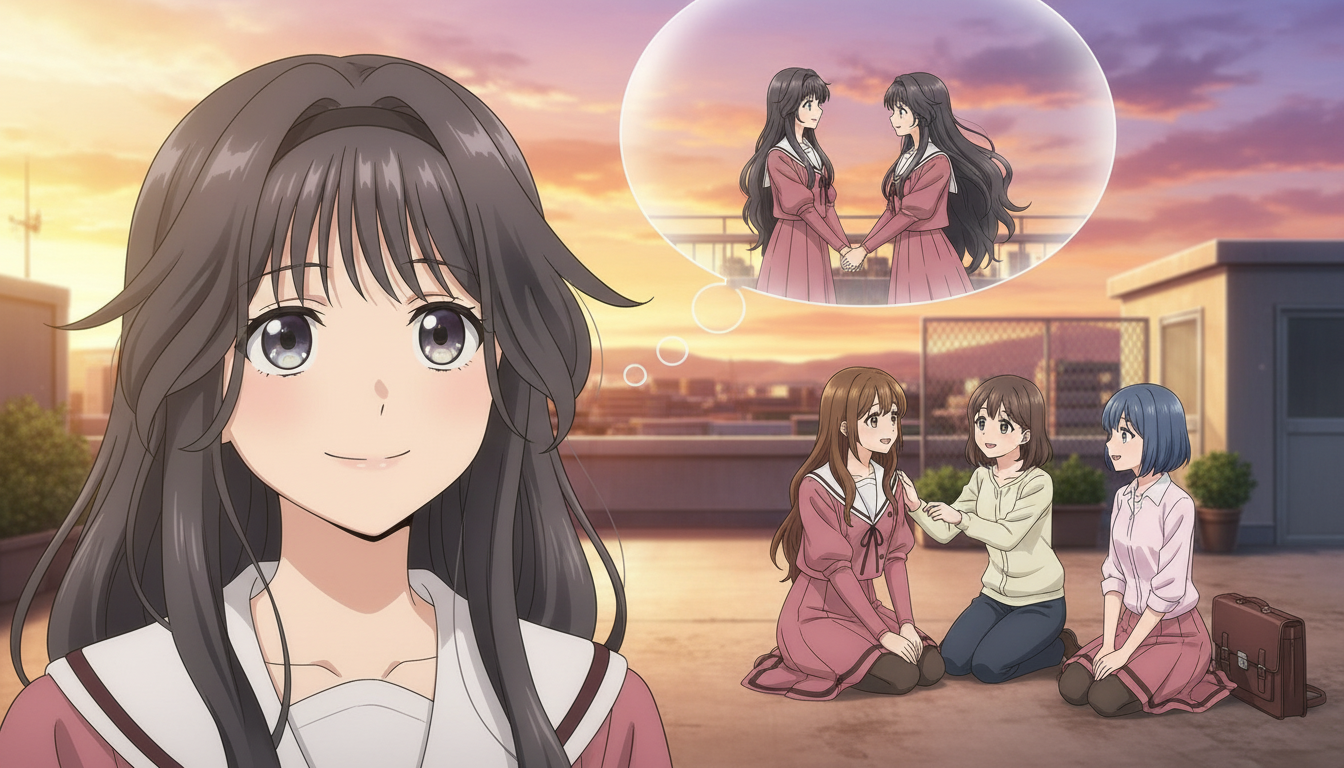
Slice-of-life anime is often described as "nothing happens" anime, which is one of the more misleading characterizations in all of fandom. Plenty happens. A friendship forms over bad weather and shared study sessions. A creative ambition quietly reshapes a group dynamic. A romance builds through glances, proximity, and the exact wrong moment to say something true. The difference between slice-of-life and other genres isn't the absence of story. It's the scale at which the story operates.
K-On!, Barakamon, Toradora, Horimiya, Yotsuba, A Silent Voice: these series work because their characters feel like people you've met, their settings feel like places you've been, and their small conflicts feel like the ones you've survived. That feeling is not accidental. It's constructed, carefully, from character chemistry, setting specificity, recurring emotional motifs, and a pacing instinct that trusts quiet scenes to do real work.
👉 Build Your Slice-of-Life Characters and Scenes with AutoWeebSlice-of-life works because it locates drama at the human scale, where every small thing carries outsized emotional weight.
The emotional logic of slice-of-life is compression, not escalation. In shonen, the stakes expand outward: a tournament becomes a war becomes the fate of a world. In slice-of-life, the stakes compress inward: a misread text becomes a question about whether a friendship is real, which becomes a question about whether the protagonist is capable of being known. One conversation. One moment of misunderstanding. Everything riding on it.
This is why slice-of-life requires more precise character work, not less. When there are no fight scenes or power systems to carry a scene forward, the characters carry it entirely. A protagonist who feels vague or underspecified destroys a slice-of-life story faster than any structural problem would. The reader needs to feel what the character feels, and that only happens when the character is specific enough to feel real.
The genre works best when the central question is one the viewer has lived: Can I keep this friendship if I change? Will saying how I actually feel destroy the thing I'm most afraid to lose? Is what I love worth the cost of pursuing it seriously? These questions don't need a villain or a tournament bracket. They need characters real enough that watching them try to answer those questions feels like watching someone you know.
Character chemistry is built through specific friction, earned familiarity, and the details that only these two people would know about each other.
The most common mistake in slice-of-life character writing is building chemistry through proximity alone. Two characters who spend time together are not automatically interesting together. What creates chemistry is the texture of how they interact: the specific thing one says that only lands because of what the other one carries, the running reference that means nothing to anyone outside the pair, the one topic they avoid that the viewer knows they're both thinking about.
Build your core relationships around asymmetry rather than similarity. The most resonant slice-of-life pairings are often between characters who want the same thing through completely different instincts. A friendship between a character who expresses affection through action and one who expresses it through words will generate friction on its own. A creative partnership between someone who works fast and messily and someone who can't show anything unfinished produces conflict without ever needing an external catalyst. The asymmetry is the engine.
How to build specific chemistry between characters who feel genuinely different from each other.
- Give each character one thing they can't say directly. The gap between what they feel and what they say is where every slice-of-life scene lives.
- Create a shared history before the story starts. A reference to something that happened before episode one tells the viewer this relationship has weight they haven't seen yet.
- Let one character be wrong about the other in a specific way. Not morally wrong, just mistaken. When the misread surfaces, it produces more drama than most external conflicts could.
- Give them one private language. A nickname, an inside joke, a shared phrase that marks them as a pair. Chemistry is visible in the shorthand between people.
- Make the friction thematic, not incidental. The thing they clash over should connect to what they each want most from the story. Random friction is noise. Thematic friction is drama.
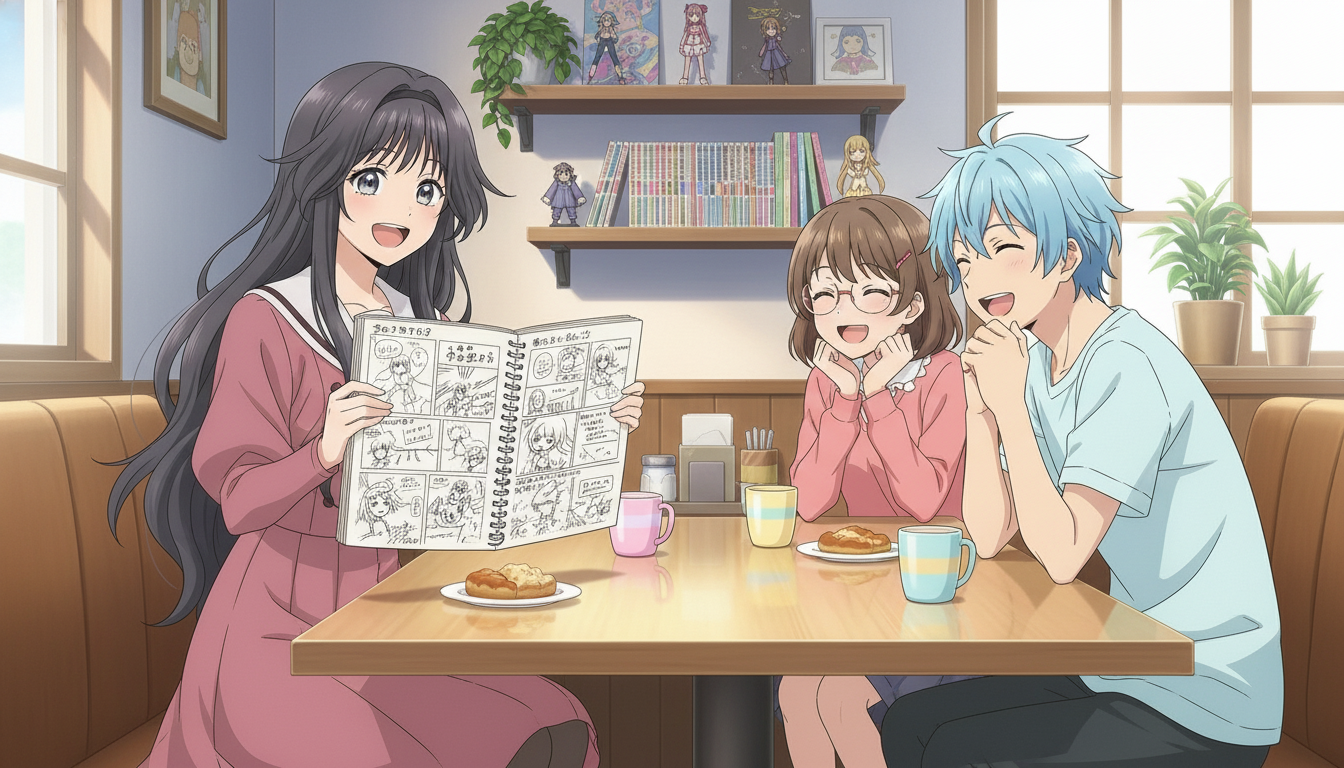
Settings that feel lived-in do more emotional work than settings that are merely described, because specificity creates atmosphere.
A school hallway is generic. A school hallway where someone always leaves a coffee can on the windowsill by the third-floor staircase, and your protagonist notices when it's gone, is a setting. The specificity is the atmosphere. Slice-of-life settings should carry evidence of the characters who inhabit them.
The most reliably effective settings in the genre share a few qualities: they're small enough to feel intimate, they have emotional histories that predate the story, and they change meaning over time. The club room in K-On! is just a room at the start. By the end of the series, every object in it carries the weight of everything that happened there. Your setting becomes emotionally legible when it accumulates meaning across the story, not when it's described in detail at the opening.
Settings that carry built-in emotional register for slice-of-life stories.
- School clubs and classrooms: Built-in proximity, seasonal deadlines (culture festivals, graduations), and the constant low-grade pressure of being seen by people you can't avoid.
- A shared apartment or family home: Morning routines, shared kitchens, the intimacy and tension of not having anywhere to retreat.
- A part-time job: External obligation that forces the protagonist into contact with people they'd never choose, often producing the series' most interesting secondary relationships.
- A craft or creative space: A pottery studio, a music room, a manga artist's desk. Creative ambition is inherently slice-of-life compatible because the work itself carries stakes without needing external pressure.
- A neighborhood or small town: The geography of familiarity. Everyone knows everyone's name. Reputation matters. Leaving and returning both carry weight.
Low-stakes conflict is a technical choice, and it requires more precision than high-stakes conflict because there's no spectacle to absorb the slack.
Low-stakes conflict is not the same as low-tension conflict. A character waiting to hear back after confessing their feelings is low-stakes. It is not low-tension. The tension in slice-of-life comes from the gap between what the character wants and what they're willing to do to get it, not from the magnitude of the consequence if they fail.
The most common low-stakes conflict types in the genre: a misunderstanding that could be resolved with one honest conversation neither character will have; a friendship shifting under the pressure of individual growth; creative doubt that makes the work feel impossible; romantic feeling acknowledged internally but not externally; the quiet grief of something ending that wasn't supposed to end yet. None of these require a villain. All of them require characters specific enough that the viewer understands why the easy solution isn't available to them.
Cozy pacing is what allows low-stakes conflict to breathe. A scene that lingers in the aftermath of a small moment, that lets the character sit with what just happened before moving to the next thing, gives the viewer permission to feel it. Cutting too quickly to the next scene signals that the moment didn't matter. Holding on it signals that it does. Trust your small moments enough to stay in them.
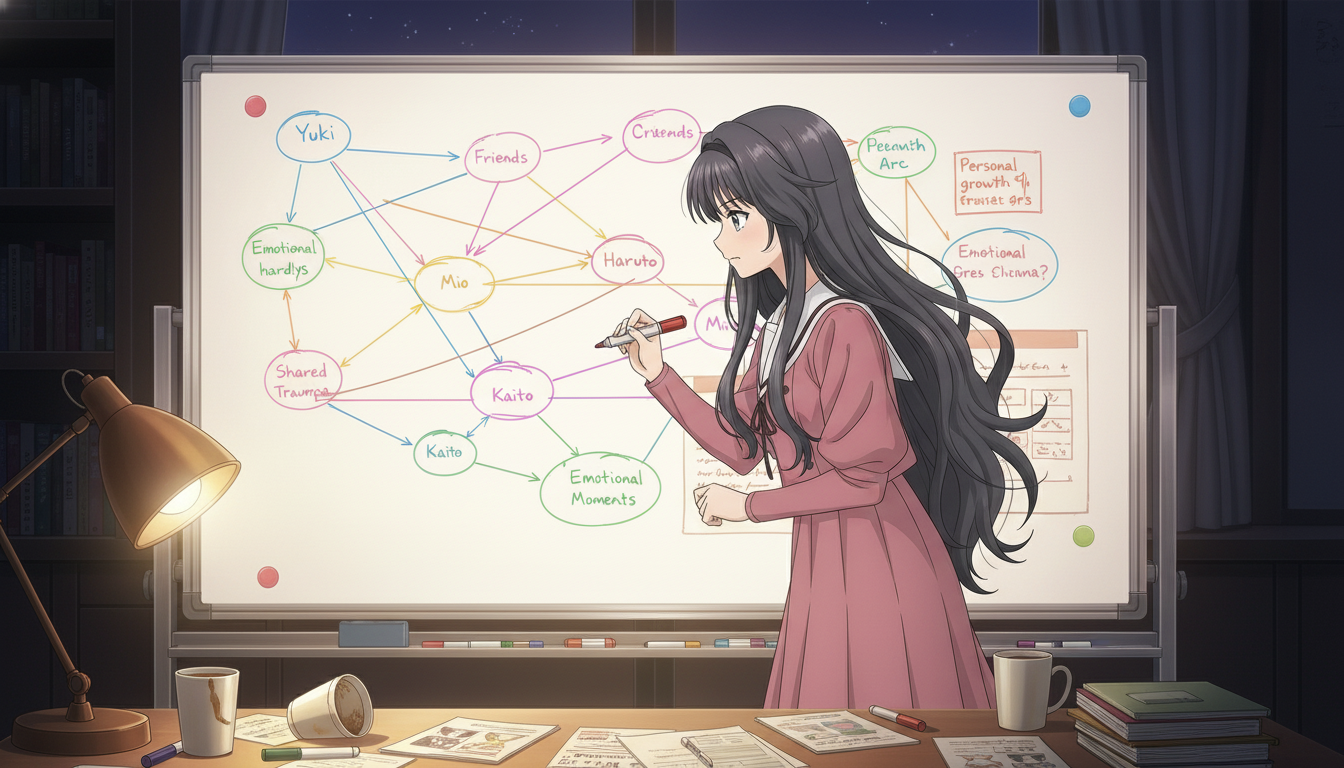
Recurring themes and motifs give a slice-of-life series its emotional texture and make individual episodes feel like part of something larger.
A theme is what your story is actually about beneath the surface events. A motif is the recurring image, object, or phrase that carries that theme visually and structurally. Slice-of-life series need both, because without them, a series of small moments is just a series of small moments. With them, those moments accumulate into meaning.
Consider a story about a group of friends in a high school art club, each of them working through a different relationship to creative ambition. The theme might be: what does it cost to take something you love seriously? The motifs might be: unfinished sketches left on tables, the specific light in the club room at the end of the day, the running argument about whether it's better to finish something imperfect or wait until it's right. None of these elements are loud. All of them are doing thematic work every time they appear.
Recurring seasonal markers serve the same function. Summer in slice-of-life carries warmth and the particular anxiety of time that feels limitless but isn't. Autumn carries transition and loss. Winter carries clarity and quiet. A scene staged in an autumn rain means something different than the same scene in summer heat, and your story should use that difference intentionally rather than leaving it to chance.
How AutoWeeb helps you move from a slice-of-life concept to a visual cast you can actually write to.
Slice-of-life character work is specific by definition, and the fastest way to test whether a character is specific enough is to describe them visually and see what comes back. A character who exists only as a set of personality traits is still abstract. A character with a face, a color palette, a posture, and a context is a person you can write.
AutoWeeb's anime character creator takes text descriptions and generates character images you can reference across every scene you write. For a slice-of-life protagonist, try something like: "Teenage girl with wavy brown hair and reading glasses, wearing an oversized school cardigan, holding a half-finished sketchbook, expression caught between focus and daydream, slice-of-life art style, warm afternoon light." Specificity in the description produces specificity in the output. The character who comes back from a prompt like that has a personality you can feel before you've written a word of dialogue.
For settings, AutoWeeb's photo packs place your characters directly into the kinds of environments slice-of-life lives in: school hallways, Japanese festival streets, cozy apartments, seaside towns, café interiors. Seeing your character in the setting before you write the scene is not decoration. It's worldbuilding. It tells you whether the character and the world feel right together, and that feeling shapes every writing decision afterward. Save a character sheet for each person in your core cast so their look stays consistent across every scene you generate.
👉 Start Building Your Slice-of-Life Characters and World with AutoWeebFrequently asked questions about building a slice-of-life anime series.
What makes a slice-of-life anime actually interesting to watch, rather than just quiet and pleasant?
The most engaging slice-of-life series are built around characters who want something specific that the story's circumstances make difficult to have. It doesn't have to be dramatic: wanting to stay close to someone who is obviously growing away from you, wanting to take your creative work seriously without admitting how much it matters, wanting a friendship to survive a revelation that changes how both people see each other. The quietness of the genre is the container. The specific, frustrated want is what fills it.
How many main characters should a slice-of-life series have?
Three to five characters in the core group is a reliable range. Fewer than three and the story starts to feel like a two-hander with no room to breathe. More than five and you run out of episode time to develop each character to the point where the viewer genuinely cares what happens to them. The best slice-of-life series tend to have four people at the center, each of whom has a distinct relationship to the group's shared theme, and a rotating cast of secondary characters who put pressure on those four from the outside.
Does a slice-of-life series need a romantic subplot?
No, but romantic feeling is one of the genre's most reliable engines for low-stakes tension, and most slice-of-life series use at least a trace of it. The reason is that romantic uncertainty produces exactly the kind of internal conflict the genre thrives on: a feeling that's present, acknowledged privately, and not acted on. That gap between acknowledgment and action is extremely productive narrative territory. If your series doesn't have romance, make sure you have an equivalent source of acknowledged-but-unspoken feeling: creative envy, unspoken grief, a friendship one character values more than the other does.
How do I prevent my slice-of-life series from feeling meandering or without direction?
Give the season a seasonal shape. A school year, a summer break, the lead-up to a specific event: these provide a natural container for episodic content without requiring a traditional plot arc. The viewer understands that time is passing and something will end, which creates forward momentum even when individual episodes are self-contained. Within each episode, every scene should reveal one thing about a character that wasn't visible before. If a scene ends without teaching the viewer anything new about someone, it's doing decoration work, not story work.
What's the difference between cozy pacing and just making things slow?
Cozy pacing is deliberate. Every pause, every extended quiet moment, every lingering shot of an empty room after a character has left serves the emotional argument of the scene. Scenes are slow because they are doing something during that slowness: letting a feeling settle, letting the viewer sit with an ambiguity, letting a character's silence communicate what their words can't. Pacing that's merely slow is pacing that hasn't made that choice yet. If you're asking whether a slow scene is cozy or just long, the test is: what is the viewer feeling during it? If the answer is nothing in particular, the scene needs to be cut or restructured.
What are some good themes for a slice-of-life anime that aren't overused?
The classics are classic for a reason, so don't avoid themes like "what it means to grow up" or "whether love is worth the risk" just because they've been done. What makes a theme feel fresh is the specificity of the characters living it. Some underused areas in the genre: the particular loneliness of being the most competent person in your friend group; what happens to a creative ambition when it stops being a hobby and starts being something you might actually pursue; the way a group dynamic shifts when one member visibly outgrows the others; the grief of a friendship that ended without a fight, just a slow drift. These carry the emotional texture of slice-of-life without requiring you to reinvent the genre's basic emotional logic.
For a deeper look at how to structure any anime series, including school-life and episodic arcs, the guide to anime story structures for beginners has templates and pacing strategies for every major framework. If you want to develop the characters at the center of your slice-of-life story, the beginner's framework for creating your own anime story covers protagonist design, wound and ghost construction, and how to give your cast the internal architecture that makes every small scene feel like it matters.
Related Blog Posts
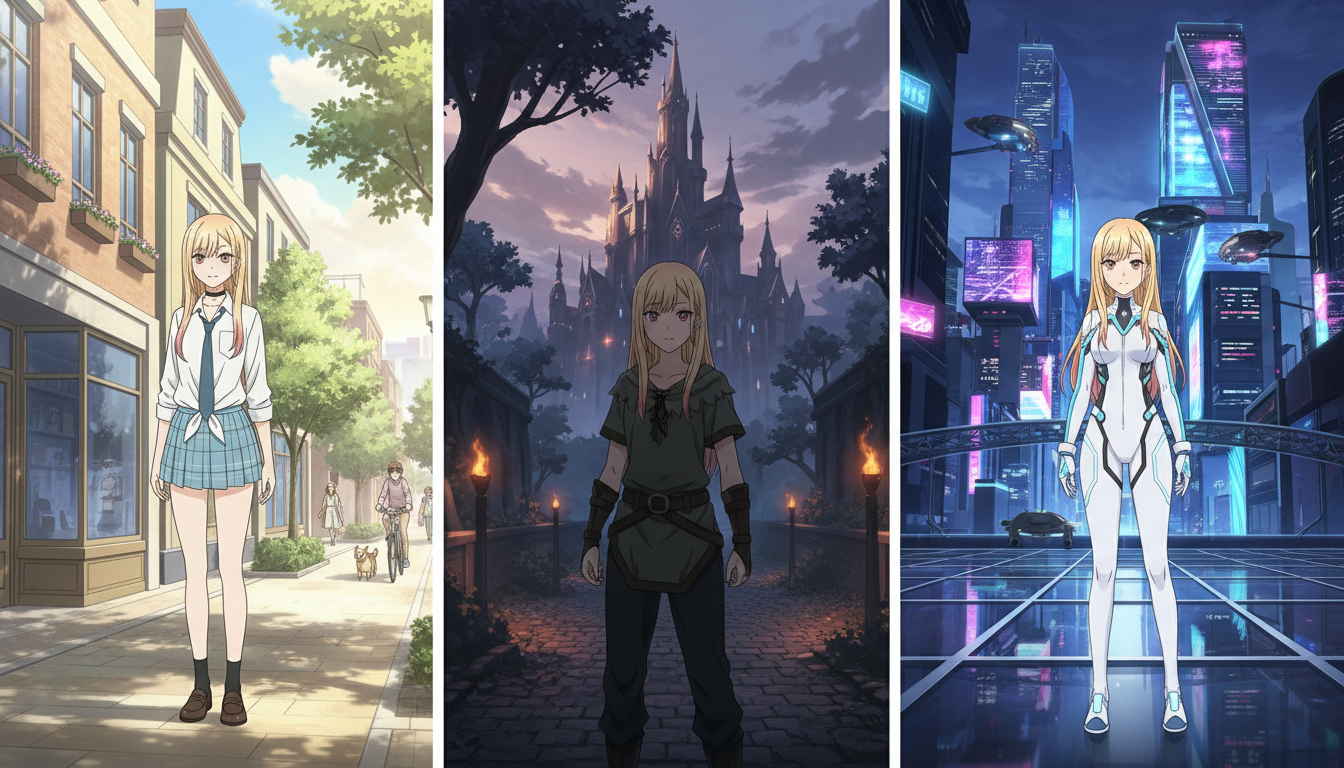
How to Build an Immersive Anime World: Geography, Power Systems, Culture, and Visual Identity
Your world isn't the backdrop — it's the pressure system that makes every conflict feel inevitable
Learn how to build an immersive anime world from scratch. Covers geography, power systems, culture, factions, tone, and visual identity for fantasy, sci-fi, slice-of-life, and dystopian genres.
How to Create Your Own Anime Story: A Beginner's Framework from Idea to First Episode
You don't need a complete world or a perfect plot — you need a protagonist worth following and a problem worth solving
Learn how to create your own anime story from scratch. A step-by-step framework covering genre, protagonist, conflict, world-building, and first episode structure for beginners.
How to Use AI to Generate Anime Plot Ideas, Character Arcs, and Episode Concepts Instantly
Writer's block isn't a creativity problem — it's a starting point problem, and AI solves that in seconds
Learn how to use AI to generate anime plot ideas, build worlds, design character arcs, and outline episode concepts. Templates, prompts, and AutoWeeb workflow inside.
Photo to Anime That Actually Looks Like You: A Guide for Black People
How AutoWeeb preserves dark skin tones, natural Black hair, and Afrocentric features in every conversion
Turn your photo into anime while preserving your dark skin tone, natural hair, and features. AutoWeeb's photo to anime AI is built to represent Black people authentically.
Explore AutoWeeb
Jump into the tool that fits your creative step.
AI Anime Video Generator
Animate storyboard shots into cinematic clips with Seedance 2 and consistent characters.
Anime Character Creator
Design original characters with consistent sheets across every scene.
AI Anime Image Generator
Generate cinematic anime stills anchored to your character library.
Turn Photo Into Anime
Upload any photo and watch AI turn it into stunning anime art in seconds.
AI Anime Location Generator
Create a location set once, then generate reference images from every angle.
AI Anime Storyboarding
Describe your idea, pick your characters, and let AI draft the script and scenes.
AI Anime Prompt Agent
Turn a rough idea into a cinematic Seedance 2 prompt with the AI Director.