How to Write the Best AI Anime Video Prompts (Beginner to Pro Guide)
A well-structured prompt is the difference between a clip that looks generic and one that feels like it was pulled from an actual episode.
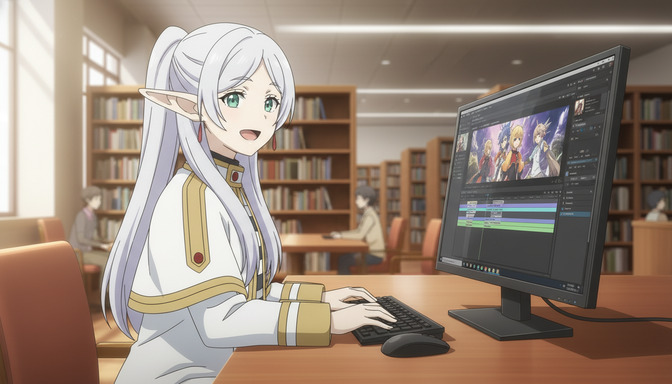
The most common complaint beginners have with AI anime video generators is that the output doesn't match the image in their head. The scene feels flat, the character moves wrong, the atmosphere is off. In almost every case, the problem isn't the model. It's the prompt. A vague input produces a vague result. A structurally weak prompt leaves the model to fill in blanks with whatever is statistically most common in its training data, which is rarely the specific, cinematic anime moment you were imagining.
Writing AI anime video prompts well is a learnable skill. It follows a consistent structure: character, action, camera, lighting, style, and scene detail. Each layer you add constrains the output toward your intent. This guide covers every layer, explains why each one matters, walks through the mistakes that silently kill otherwise good prompts, and gives you templates you can use immediately alongside advanced examples to aim for as you build skill.
The anatomy of a strong anime video prompt: six layers that control everything.
Think of an anime video prompt as a camera brief handed to a director. The more specific the brief, the more the director can execute your vision rather than improvise their own. The six layers below correspond directly to the decisions any anime production would make before filming a scene.
Layer 1: Character
Describe the character appearing in the shot. Include hair color and length, eye color, clothing, and any distinguishing features. The model cannot infer these from context, so anything you leave out will be guessed. A description like young woman with long silver hair, violet eyes, wearing a white and gold knight's uniform gives the model enough to anchor the character's appearance consistently. Without it, you'll get a generic anime female figure that looks different in every generation.
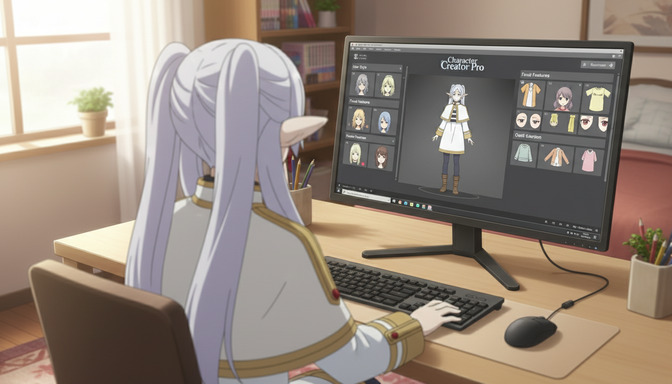
If you're working with a saved character in AutoWeeb's character library, the system anchors the generation to your character's reference automatically. You still benefit from including a short character note in the prompt, but you're not starting from zero with every clip.
Layer 2: Action
Specify what the character is doing and how. "Running" is under-specified. "Sprinting through rain-soaked cobblestones, coat flying behind her, head down against the wind" is a scene. Anime motion has a specific vocabulary: held tension before a strike, slow-motion particle effects mid-impact, a single sharp speed line cutting across the frame. When you want anime-native motion rather than generic video motion, name it explicitly: dramatic slow zoom in on her face as she raises her sword, energy crackling along the blade reads to the model very differently than she lifts her sword.
Layer 3: Camera Movement
Camera language is one of the most under-used layers in beginner prompts and one of the highest-value additions. The same action shot with different camera direction produces entirely different emotional results. A slow push-in creates tension and intimacy. A low-angle upward shot makes a character feel powerful. A tracking shot from behind creates momentum and forward drive. A static wide shot establishes scale.
Useful camera terms to include directly in your prompts: slow zoom in, low angle looking up, tracking shot from behind, Dutch angle, wide establishing shot, close-up on face, over-the-shoulder, crane shot pulling back to reveal. You don't need all of these in a single prompt. Pick one camera move per clip and commit to it.
Layer 4: Lighting
Lighting defines mood more than almost any other element. Anime uses lighting conventions that are specific and recognizable: the warm golden-hour backlight of a peaceful slice-of-life scene, the cold blue ambient light of a tense night encounter, the harsh overhead fluorescence of an interrogation, the flickering firelight of a campfire confession. Name the lighting condition directly: backlit by a setting sun, silhouette forming at the edges or cold moonlight casting long shadows across the courtyard. Color temperature and light source both belong in your prompt.
Layer 5: Art Style
Without a named art style, most AI models will default to a generalized "anime aesthetic" that doesn't commit to any particular visual language. Named styles anchor the output to a specific set of production conventions: line weight, color saturation, shading approach, and character proportion. AutoWeeb supports over a dozen named styles. Naming one directly in your prompt, Demon Slayer art style or Ghibli naturalism or cyberpunk neon aesthetic, produces dramatically more consistent and recognizable results than leaving it unspecified.
Layer 6: Scene Detail
Scene detail covers the environment, the atmospheric conditions, and the background elements that make the world feel inhabited. A character standing in "a forest" is underspecified. A character standing in a bamboo forest at dusk, mist rising between the stalks, soft amber light filtering through the canopy above is a scene. These details don't just improve visual quality. They signal context to the model that shapes how every other element is rendered, from color palette to motion quality to emotional register.
Beginner templates: copy, fill in, generate.
These templates cover the most common anime video scene types. Fill in the bracketed sections with your specifics. They're designed to be complete enough to produce a strong result without requiring you to build a prompt from scratch.
Template 1: Emotional moment / slow scene
[Character description], standing in [location], [what they're doing physically], [emotional state visible in posture or expression]. [Camera movement]. [Lighting condition]. [Art style]. Cinematic hold.
Filled in: Young woman with long silver hair and a white knight's uniform, standing at the edge of a cliffside overlooking a fog-covered valley, hands at her sides, head slightly bowed. Slow push-in toward her face. Cold blue morning light, mist catching the early dawn. Ghibli art style. Cinematic hold.
Template 2: Action / combat scene
[Character description] engaged in [action], [specific motion detail]. [Camera movement]. [Lighting and atmosphere]. [Style reference]. [Speed or pacing note].
Filled in: Teenage boy with dark spiky hair and a torn red jacket, charging forward with both hands glowing, energy trailing behind him. Low angle tracking shot. Dramatic storm lighting, lightning flashing behind him. Demon Slayer art style. Fast cuts between motion and held frame on impact.
Template 3: Environmental / establishing shot
Wide establishing shot of [location in detail], [atmospheric conditions], [time of day]. [Character position if present]. [Camera movement]. [Art style]. No dialogue.
Filled in: Wide establishing shot of a rain-soaked Japanese street at night, neon signs reflected in the wet pavement, steam rising from a ramen cart. A lone figure in a dark coat visible at the far end of the street. Slow crane pull-back to reveal the full street. Cyberpunk anime style. No dialogue.
Template 4: Character reveal / dramatic entrance
Slow reveal of [character description], [context of the moment]. Camera starts on [partial detail] and [reveals the full character or scene]. [Lighting]. [Art style]. [Emotional tone].
Filled in: Slow reveal of a white-haired elf girl in golden armor, stepping out of a portal of light into a ruined battlefield. Camera starts on her boots landing on cracked stone and slowly tilts up to her face, expression calm and determined. Warm ethereal backlight, golden particles drifting through the air. Frieren art style. Quiet gravitas.
Advanced examples: what a fully-built prompt looks like.
Advanced prompts don't just add more words. They use specific anime motion language, layer lighting and atmosphere together, and control pacing explicitly. The difference between a beginner prompt and an advanced one is precision, not length.
Advanced example 1: Festival confession scene
Close-up on a girl with dark brown eyes and long black hair tied back, her face lit by soft lantern light from above, a yukata with indigo floral pattern visible at the collar. She looks slightly off-camera, lips parted, expression caught between surprise and something warmer. Behind her, bokeh of festival lights and distant fireworks. Handheld gentle sway. Warm amber and gold lighting, deep blue sky at dusk. Slice-of-life anime style. Hold on her face for four seconds, then a single tear forms at the corner of her eye.
Advanced example 2: Pre-battle tension
Two-shot, wide angle, two warriors standing twenty meters apart in a barren wasteland. The protagonist, silver-haired woman in black coat, holds her blade at her side. The antagonist, tall cloaked figure, has no visible face. Neither moves. A single dust devil crosses the space between them. Camera holds completely still. Harsh midday sun directly above, no shadows except directly below each figure. Stark, minimal palette: white sky, sand-colored ground, black coats. Dramatic pause before the charge. Ufotable cinematic style.
Advanced example 3: Training sequence montage beat
Low-angle upward shot of a teenage girl with a red ribbon in her hair, performing a precise sword form on a rooftop at sunrise. She moves through the stance slowly at first, then with accelerating speed as the camera tilts up with her final strike to frame her against the rising sun. Wind catches her hair and the loose fabric of her training gi. Warm orange and pink sunrise palette. Dynamic zoom into her eyes at the moment of the final strike. My Hero Academia art style. High energy, triumphant tone.
Common mistakes that quietly ruin otherwise good prompts.
Vagueness masquerading as description
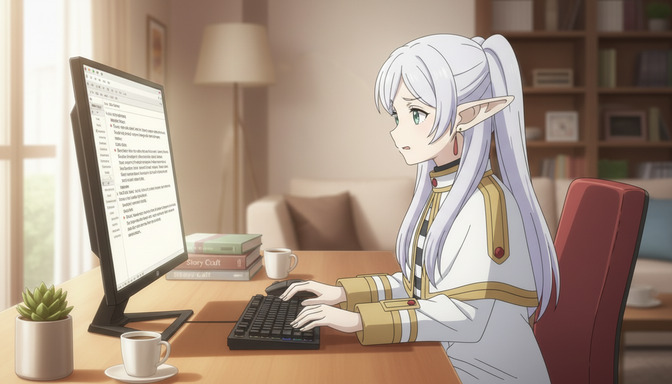
"A cool anime fight scene" tells the model almost nothing. Every word in that phrase is unspecified: what does "cool" mean visually, what kind of fight, what characters, where, in what art style, with what camera. The model will produce something, but what it produces is its best statistical guess at "anime fight scene," not your specific vision. Every noun in your prompt should be able to answer the question: compared to what? "Dark forest" compared to what kind of dark, what kind of forest? "Dark pine forest at midnight, mist at knee level, single shaft of moonlight breaking through the canopy" is specific.
Contradiction between elements
Including elements that fight each other forces the model to choose, and the choice is unpredictable. "Cheerful summer festival scene with ominous dark clouds and a threatening atmosphere" is a tonal contradiction. You can have dramatic tension in a festival scene, a character's internal conflict against a bright backdrop, but the prompt needs to direct how those elements interact rather than simply listing them side by side. Decide which emotion leads and let the other elements serve it.
Skipping camera direction entirely
Without camera direction, the model picks a default framing that tends toward medium shots with minimal movement. That's not inherently wrong, but it means you're giving up one of the most powerful tools available to you. A single camera direction line is enough to dramatically change the output. If you do nothing else after reading this guide, start adding one camera instruction to every prompt you write.
Overloading a single clip with too many events
A single AI anime video clip is typically four to eight seconds long. Trying to include a character entering a scene, engaging in combat, and having an emotional reaction in one prompt will produce a result that rushes through all of it badly. One clip should have one primary action or beat. If your scene needs multiple events, plan them as separate clips in a storyboard sequence. Three clean clips assembled in sequence will always outperform one overcrowded prompt.
Using anime series names as style proxies without specifics
Prompting "in the style of Naruto" is weaker than naming what you actually want from that style: bold ink outlines, high-contrast shadow fill, dynamic speed lines on action beats, warm earth tone palette. Named series are useful shorthand, but the model's interpretation of what "Naruto style" means varies. When you need precision, name the specific visual qualities you want rather than the series name alone.
How AutoWeeb's video agent handles prompting for you.
Everything in this guide is the underlying logic that AutoWeeb's video agent applies automatically when you describe a scene. You tell the agent what you want in plain English, a confrontation in the rain, a quiet moment before a decision, a training sequence at dawn, and the agent builds the full structured prompt from your description. It adds camera direction, style anchoring, motion language, and pacing notes based on the scene type you describe.
For beginners who are still developing their prompting instincts, this produces strong results immediately while you're learning. For experienced users, it's a fast baseline you can edit and refine. The agent doesn't replace your creative judgment. It handles the technical construction of the prompt so your judgment can go entirely toward the story and the scene. If you want to learn the skill yourself alongside using the agent, these templates and examples are the framework the agent works from. You can start applying them in your own manual prompts after any session.
Frequently asked questions about writing AI anime video prompts.
What should every AI anime video prompt include?
At minimum: a character description, what the character is doing, a camera direction, lighting conditions, and an art style. Scene detail, pacing notes, and emotional tone all improve results significantly. A five-element prompt (character, action, camera, lighting, style) will consistently outperform a one-sentence description. Each layer you add moves the output closer to your intent.
How do I describe character appearance in an anime video prompt?
Include hair length, hair color, eye color, and the most visible clothing item. You don't need an exhaustive physical description, but you do need enough that the model isn't guessing. Young man with short dark blue hair, amber eyes, wearing a black school uniform with a red armband is a sufficient anchor for most shots. For close-up shots, add facial features. For full-body shots, include clothing details.
Which camera movements work best for anime action scenes?
Low-angle tracking shots emphasize speed and power. Slow push-ins build tension before a strike. Static wide shots establish scale for arena-style confrontations. Dutch angles add disorientation or threat. For the moment of impact specifically, a sudden cut to a close-up on the face, or a brief hold on a wide shot with speed lines, matches how anime frames that beat more faithfully than continuous camera motion.
What lighting terms should I use for cinematic anime prompts?
Lighting terms that translate well to anime video prompts: golden hour backlight, cold moonlight, harsh overhead fluorescence, flickering firelight, neon ambient glow, storm diffuse light, dawn rim lighting, lantern warm scatter. Pair a light source with a color temperature and the model has two anchors to work with. "Warm amber lantern light casting soft shadows upward" is more actionable than "warm lighting."
How do I keep my anime character looking the same across multiple video clips?
The most reliable method is to use AutoWeeb's character library. Once your character is saved from a photo-to-anime conversion or the character creator, every subsequent video generation uses that saved reference to anchor the character's appearance. For manual prompting outside of AutoWeeb, include the same character description verbatim in every clip prompt and use a style reference image each time. The saved character approach is significantly more consistent, especially across four or more clips.
Why does my anime video prompt keep getting rejected or producing blank results?
Content filters on AI video generators are sensitive to specific word combinations common in anime: impact language in fight scenes, darkness and weapon descriptions in atmospheric scenes, and intense emotional framing in confrontations. Rephrasing rather than removing the element usually works. Instead of "violent fight scene with heavy impact," try "intense combat sequence with dramatic energy exchange." AutoWeeb's video agent is aware of these patterns and phrases prompts in ways that avoid common filter triggers while keeping the scene intention intact.
How long should an AI anime video prompt be?
For a four-to-eight second clip, sixty to one hundred twenty words is a practical range. Short enough to stay focused on a single beat, long enough to include all six structural layers. Prompts shorter than thirty words usually leave too much unspecified. Prompts longer than one hundred fifty words for a single clip risk introducing contradictions or overloading the clip with too many competing elements. If your prompt is getting long, consider whether you're describing one clip or two.
What's the difference between a beginner anime prompt and an advanced one?
Precision. Beginners describe what they want at the category level: "fight scene," "emotional moment," "forest setting." Advanced prompts describe the specific instance: which character feature is in frame, what direction the camera is traveling, what the light is doing, what the character's hands are doing at the moment the clip holds. The structure is the same at both levels. What changes is how specifically each layer is filled in.
Do I need to include an art style in every prompt?
Yes, unless you're working in a system that anchors style automatically, like AutoWeeb with a style pre-selected. Without a named art style, the model defaults to a generic anime approximation that tends to drift across generations. Named styles, Ghibli, Demon Slayer, Cyberpunk, Slice of Life, My Hero Academia, anchor not just the visual look but the motion conventions, color palette logic, and line quality that make a clip feel like it belongs to a specific world.
For more on turning these prompts into multi-clip sequences with a narrative shape, the guide to the best AI anime video generator for beginners in 2026 covers storyboarding, shot sequencing, and how to plan scenes that hold together across multiple clips. If you want to start with a character that looks like you before writing a single prompt, the guide on how to turn yourself into an anime video with AI walks through the photo-to-anime conversion workflow from upload to first generated clip.