Storytelling and Worldbuilding in AI Anime: How to Build Worlds That Feel Real
From establishing the visual logic of a world to building characters with history — how to use AI anime to create stories that live beyond a single image.
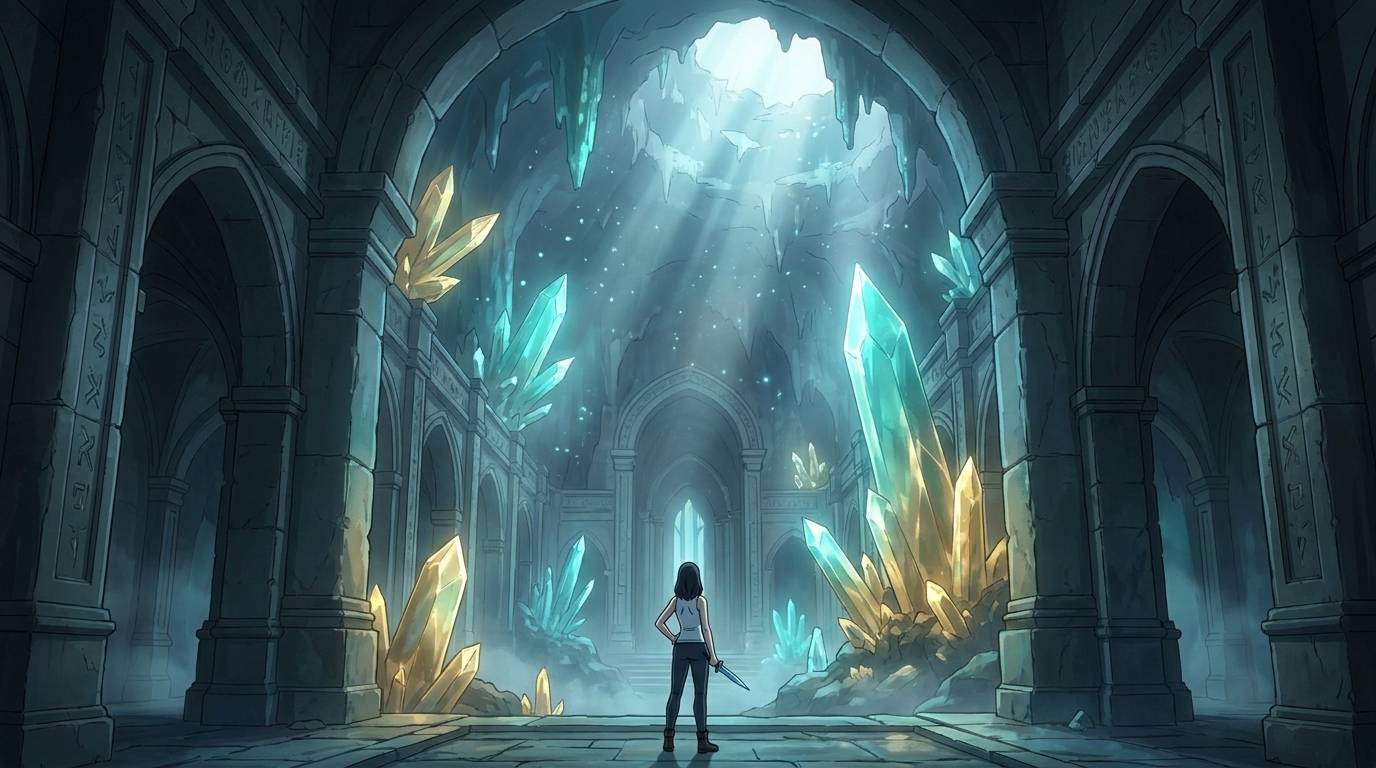
There is a difference between generating anime images and building an anime world. The first produces scenes. The second produces a place. When you look at a great anime series, the world feels like it existed before the protagonist arrived and will continue after the credits roll. The streets of Yharnam carry centuries of architectural rot in every alley. The corridors of Hogwarts have ghosts for the same reason the walls are thick: something very old happened here. The feeling is not magic. It is consistency — a set of visual, atmospheric, and narrative rules applied across every frame until the world solidifies into something the viewer can navigate from memory.
AI anime storytelling and worldbuilding work by the same logic. The goal is not a beautiful single image. It is a coherent visual system: an environment with a recognizable atmosphere, characters with a legible history, and scenes that advance a narrative rather than simply illustrate one. This guide covers how to build that system from the ground up, starting with the world itself.
👉 Start building your own anime world on AutoWeebWhat separates a world from a backdrop.
Most AI anime prompts describe a backdrop: a cherry blossom park, a neon city at night, a mountain village in winter. These are settings. They provide visual context for a character and enough information for the model to generate a plausible scene. But they are not worlds. A world implies persistence, consequence, and a logic that operates whether or not a character is in frame.
The shift from backdrop to world starts with three elements: environmental specificity, atmospheric consistency, and evidence of time. Environmental specificity means the details of your setting are particular, not generic. Not "a medieval village" but "a fishing village built on stilts over a fog-covered estuary, with lanterns strung between the houses and nets drying on every porch." Atmospheric consistency means the light, color palette, and weather feel like they obey the same seasonal and physical rules across every image you generate in that world. Evidence of time means the world shows signs of having existed before this moment: worn stone steps, faded paint, a market with a crowd that has its own business to conduct.
When prompting for a world rather than a backdrop, include all three. Name the specific architecture, the specific light quality, the specific state of repair or disrepair. Give the space a history in the prompt itself, even if that history is implied rather than stated: "a courtyard that has not been tended since the kingdom changed hands" tells the model more about the world than "a royal courtyard."
Establishing the visual logic of a world: environment, atmosphere, and recurring rules.
Every believable world has a visual grammar. In a dark fantasy world, the grammar might be: cold desaturated palette, architecture that combines organic and industrial forms, light sources that are always warm and always scarce. In a slice-of-life high school world, the grammar is: soft ambient light, warm color temperature, lived-in domestic spaces, characters in casual clothing with small personal details. Once you establish the grammar, every new scene you generate follows it, and the viewer's brain begins to recognize the world rather than simply encounter it.
To establish your world's visual grammar, define five things before you begin generating images:
- The dominant color palette (two or three specific color families, named precisely: "muted teal and amber" rather than "cool and warm")
- The lighting conditions (time of day, quality of light, typical weather, whether artificial light plays a role)
- The architecture and material language (stone, wood, metal, organic growth, glass, ruin, or new construction)
- The level of human presence (crowded, sparse, abandoned, or formally structured like a military encampment)
- The emotional register of the world (melancholy, tense, hopeful, eerie, cozy, epic)
Once these are defined, include them in every environment prompt as a consistent descriptor block. It functions like a style guide for your world: no matter what scene you are generating, the palette, light, and material language remain recognizable. The viewer does not need to be told they are still in the same world. They feel it.

Building characters who carry the story: consistency, contradiction, and visual shorthand.
Characters in a worldbuilt story are not illustrations of their own description. They are people shaped by the world they live in, and their appearance should reflect that. A warrior who has been in the field for three weeks looks different from one who just left the capital barracks. A scholar who works by lamplight has different posture and different eyes than one who spends their time outdoors. These differences are not cosmetic: they are narrative information rendered visually, and they are what separate a character from a costume.
For AI anime storytelling, character consistency across scenes requires two things: a fixed visual anchor and a flexible emotional register. The fixed anchor is the character's core description — their hair color and length, eye color, build, the specific items or clothing that define them visually. These remain constant across every scene because they are how the viewer recognizes the character. The flexible emotional register is the element that changes: their expression, their posture, their proximity to other characters, the state of their clothing. This is what advances the story.
Visual contradiction as character depth.
The most memorable anime characters carry a visible contradiction: something in their appearance that is in tension with their stated role or emotional state. The cold strategist with slightly too-long bangs that fall over one eye and obscure what they are actually looking at. The cheerful healer whose hands are always slightly too still, a tell they cannot control. The ruthless commander who still wears a handmade bracelet on their left wrist. These details are not random quirks. They are visual evidence of a character's inner life — the thing the story knows that the character wishes it did not.
When prompting characters for a worldbuilt story, include one visual contradiction. It does not need to be explained in the prompt. A veteran soldier in worn campaign armor with perfectly maintained insignia — everything dusty and battle-scarred except the rank pin over her heart, which is polished to a mirror finish. The contradiction is the character's relationship to what that rank pin represents. The viewer does not know the story, but they sense that something about it matters.
Visual shorthand: the recurring detail that carries meaning.
Anime uses recurring visual shorthand to build emotional vocabulary across episodes: the color of a specific character's aura, the particular way they hold their weapon when they are afraid rather than aggressive, the item they always carry that eventually gets lost or destroyed. In AI anime worldbuilding, you build that shorthand deliberately through consistent prompting. If your protagonist always wears a specific scarf, include it in every prompt. If your antagonist's color is deep violet, that color should appear in every scene they are in or referenced from. Over time, those repeated details accumulate into emotional weight without requiring a single word of dialogue.
Scene sequencing: how to advance a narrative frame by frame.
A worldbuilt AI anime story is not a single image. It is a sequence of images that, taken together, create the sense of a narrative unfolding. Each image is a scene, and scenes need to do work: they need to establish, develop, turn, or resolve something. An image that simply shows a character standing in the world is an establishing shot. An image that shows a character's expression changing in response to something offscreen is a turning point. The sequence of establishing, complicating, and resolving is the same structure that every story uses, and it works at the scale of individual images.
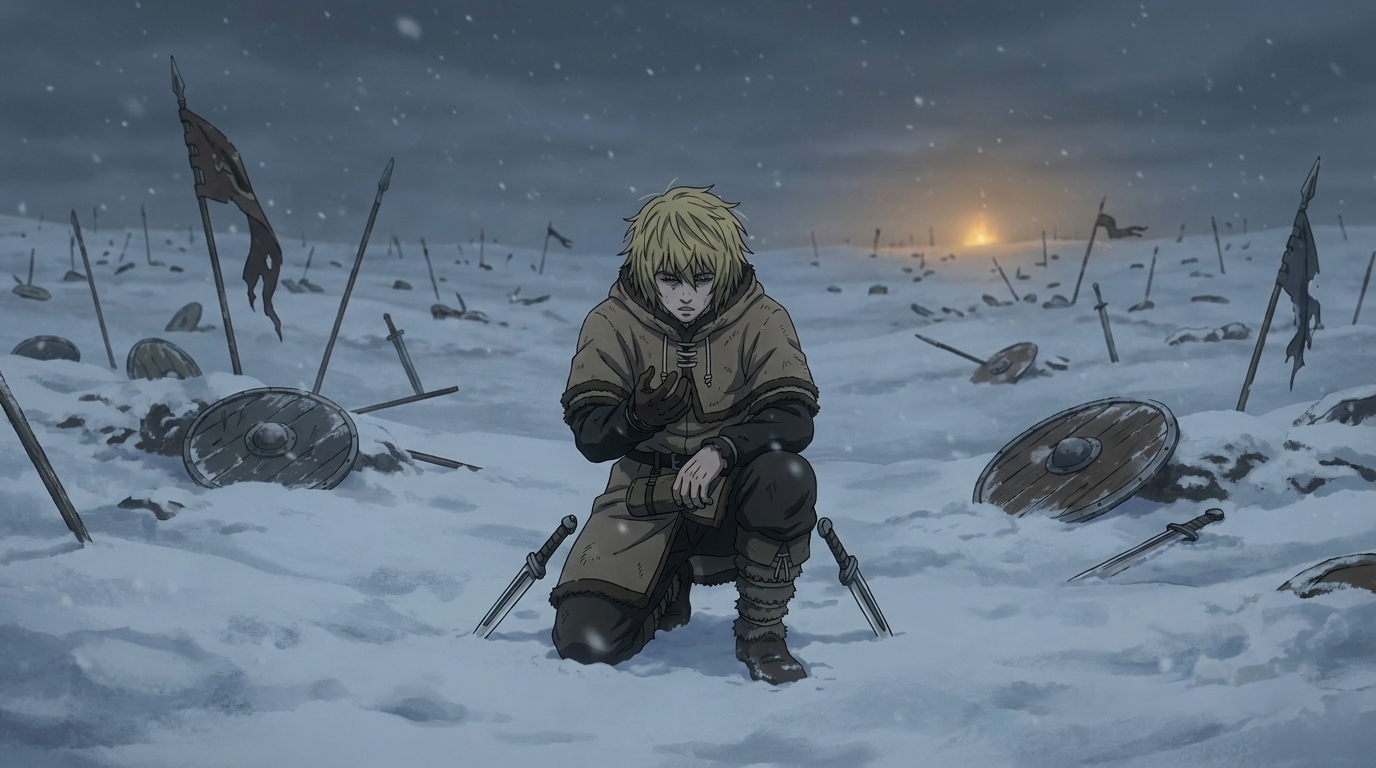
When planning a sequence of images, map the narrative function of each scene before you write the prompt. Ask: what does the viewer know at the end of this image that they did not know at the beginning? What changes? If the answer is "nothing changes, the character is just in the scene," revise the prompt to include a specific emotional beat or visual development that moves something forward.
Prompting for scene transitions: matching light, color, and geography.
For a sequence to read as a single story rather than a collection of unrelated images, scenes need to share visual anchors across the transitions. If the first scene is lit by late afternoon sun casting long shadows left, and the next scene showing the same characters is lit by cold blue overcast light, the viewer's brain registers a temporal or tonal shift. That shift may be intentional — a time jump or an emotional turn — or it may be unintentional. Either way, it registers.
To control scene transitions, prompt each image in a sequence with a consistent light descriptor and color grade. For scenes that should feel continuous: same warm amber late-afternoon light, long shadows from the left, dust in the air, the same weathered stone courtyard visible at the edges. For scenes that should mark a tonal break: change the light quality deliberately and completely. The jump from warm amber to cold blue is a narrative statement. Use it when you mean it.
The establishing-complicating-resolving structure in three images.
A minimal worldbuilt story can be told in three images: one that establishes the world and the character's place in it, one that introduces a complication or turning point, and one that shows the aftermath. The establishing image is wide: a long shot that shows the world and the character's scale within it. The complicating image is tighter: a medium shot or close-up that shows the character's response to something specific. The resolving image returns to a wider frame but changed: the geography is the same, but something in the character's relationship to it is different.
This three-image structure works at any scale. Three images for a small character moment. Three images for an arc. Three images for a world. The structure is not a formula — it is the minimum viable story, and once you understand it, you can expand it in any direction: more complication images, more establishing images for different parts of the world, more close-up character moments between the wider beats.
Using symbolic detail and recurring motifs to build depth.
The deepest worldbuilding in anime rarely happens through exposition. It happens through recurring visual details that accumulate meaning over time. A specific kind of flower that appears in scenes of loss. A recurring architectural motif that marks the boundary between two factions. A light source that is always warm in scenes of memory and always cold in scenes of the present. These motifs are not explained. They are placed consistently until the viewer's pattern recognition does the explanatory work for you.
In AI anime worldbuilding, you build motifs through deliberate repetition in your prompts. If you want rain to carry a specific narrative weight — to appear only in scenes of loss or transition — prompt for rain in those scenes and never in the scenes you want to read as stable or resolved. If you want a specific color to signal a character's presence even when they are not in frame (a violet light through a window, a violet cloth in the background), include it consistently when their influence is felt.
The key is that motifs must be intentional and consistent. An accidental repetition does not become a motif — it becomes visual noise. A deliberate one, placed consistently enough that the viewer begins to anticipate it, becomes emotional grammar: the language the world speaks when words are not enough.
For more on prompting character expression and emotional specificity, see the guide on AI anime facial expression and pose prompts. For how to use framing and shot composition to tell the story visually, see extreme close-up shots in AI anime. If you are building a character to anchor your world, the AutoWeeb character creator lets you generate and save consistent characters to use across every scene in your story.
👉 Build your anime world and story on AutoWeebFrequently asked questions about storytelling and worldbuilding in AI anime.
How do I keep my AI anime world visually consistent across multiple images?
Define your world's visual grammar before you start generating: a fixed color palette, a consistent light quality, a named architectural and material language, and a consistent emotional register. Include these as a descriptor block in every prompt you generate within that world. The model does not have memory between generations, so the consistency has to live in your prompts. When two images share the same palette, the same light quality, and the same environmental details, the viewer's brain accepts them as belonging to the same world without being told.
How do I keep a character consistent across different scenes?
Identify the character's fixed visual anchor — the specific, named details that define them: exact hair color and length, eye color, distinctive clothing items or accessories. Include all of these in every scene prompt for that character. AutoWeeb's character system lets you save a character and reference them across generations, which handles a significant part of this automatically. On top of that, vary only the elements that should change: expression, posture, context, and the emotional state visible in their body language. Everything structural stays fixed. Everything emotional evolves.
What makes an AI anime scene feel like it advances a story rather than just illustrates one?
A scene advances a story when something changes within it: the viewer knows something at the end of the image that they did not know at the beginning. That change can be informational (a new location is established), emotional (a character's state shifts), or relational (two characters' proximity or dynamic shifts). When prompting scenes for a narrative, ask what the image is doing rather than just what it is showing. If the answer is only "showing the character in the world," add a specific emotional beat or visual development that moves something forward.
How do I use environment to tell story without dialogue?
Environment carries story when it shows evidence of what has happened rather than simply providing a backdrop for what is happening. A destroyed room tells a different story than a pristine one. A room that is partly destroyed and partly carefully preserved tells a more specific story than either. In your prompts, describe the state of the environment as narrative information: the wear patterns on the stone floor that suggest decades of specific foot traffic, the particular objects left behind and the ones conspicuously absent, the quality of light that suggests a specific time of day and therefore a specific context for the scene.
How many images do I need to tell a complete AI anime story?
Three is the functional minimum: one establishing, one complicating, one resolving. A complete short story can be told in six to twelve images with enough room for character development, environmental depth, and a turning point that lands with full weight. The number is less important than the narrative function of each image. Every image in a sequence should do something specific: establish, develop, complicate, reveal, or resolve. If an image in your sequence does none of those things, it is not advancing the story — it is pausing it.
What is the best anime art style for worldbuilding and storytelling prompts?
The best style is the one whose visual vocabulary matches the emotional register of your world. Seinen anime style suits worldbuilding with moral weight and realistic consequence: its harder linework and desaturated palettes make environments feel physically real and historically contingent. Shoujo style suits worlds built around internal emotional experience and relationship: its luminous palette and soft atmosphere make the world feel like it is being filtered through a character's perception. Dark fantasy and epic fantasy worlds often benefit from a style that combines the environmental detail of seinen with the scale and color drama of shonen. The guide on choosing the best anime art style for AI anime covers each tradition's visual vocabulary in detail.
Related Blog Posts
Best AI Anime Facial Expression and Pose Prompts for Emotional Scenes
How to prompt joy, rage, sadness, determination, embarrassment, and every major pose type to make AI anime characters feel emotionally alive.
Learn the best AI anime facial expression and pose prompts for joy, rage, sadness, determination, embarrassment, romance, and cinematic body language. With prompt examples.
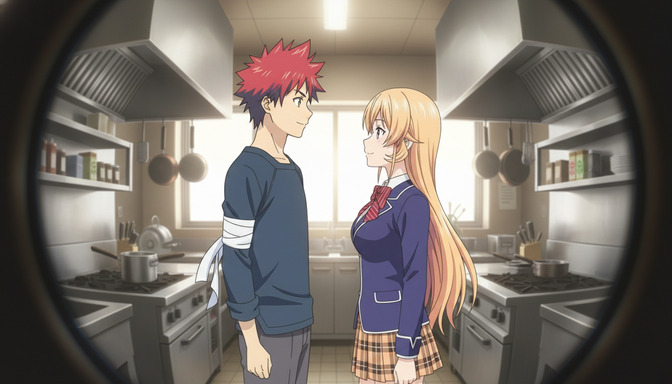
Best Lens Effects for AI Anime Prompts: Depth of Field, Bokeh, Motion Blur & More
How to use bokeh, shallow depth of field, fish-eye, bloom, motion blur, anamorphic flare, and zoom blur to make AI anime feel like it was shot through a real lens.
Learn how to add bokeh, depth of field, fish-eye, motion blur, zoom blur, bloom, and anamorphic flare to AI anime prompts. Practical examples for every lens effect.

Extreme Close-Up Shots Explained: How to Create Powerful Emotional Scenes in AI Anime
How and when to use extreme close-up framing to isolate the details that carry the most emotional weight in AI anime.
Learn how and when to use extreme close-up shots in AI anime emotional scenes. Includes prompt examples for eyes, hands, lips, and detail inserts that make scenes land.
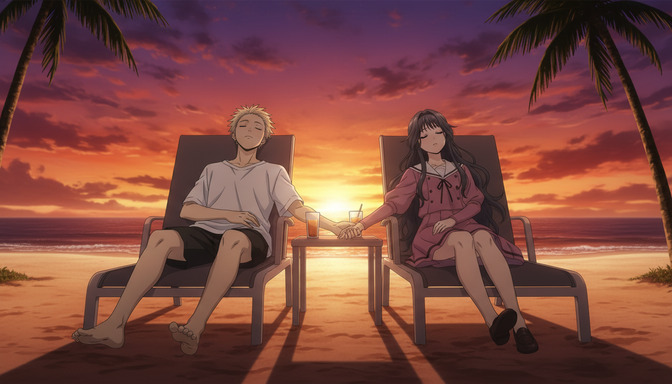
How Color Grading Makes AI Anime Look Professional (Cinematic Prompt Guide)
The palette language that separates a flat AI anime output from one that looks like it belongs in a theatrical release.
Learn how color grading terms like pastel tones, teal-orange, muted cinematic, vaporwave, and nostalgic warmth change the emotional tone of AI anime prompts. Cinematic prompt guide.
Explore AutoWeeb
Jump into the tool that fits your creative step.
AI Anime Video Generator
Animate storyboard shots into cinematic clips with Seedance 2 and consistent characters.
Anime Character Creator
Design original characters with consistent sheets across every scene.
AI Anime Image Generator
Generate cinematic anime stills anchored to your character library.
Anime Filters
Upload any photo and apply AI anime filters to turn it into stunning anime art in seconds.
AI Anime Location Generator
Create a location set once, then generate reference images from every angle.
AI Anime Storyboarding
Describe your idea, pick your characters, and let AI draft the script and scenes.
AI Anime Prompt Agent
Turn a rough idea into a cinematic Seedance 2 prompt with the AI Director.