AI Anime Video Hooks for YouTube Shorts
The first three seconds are not a trim decision. They are a beat you storyboard, generate, and edit on purpose.
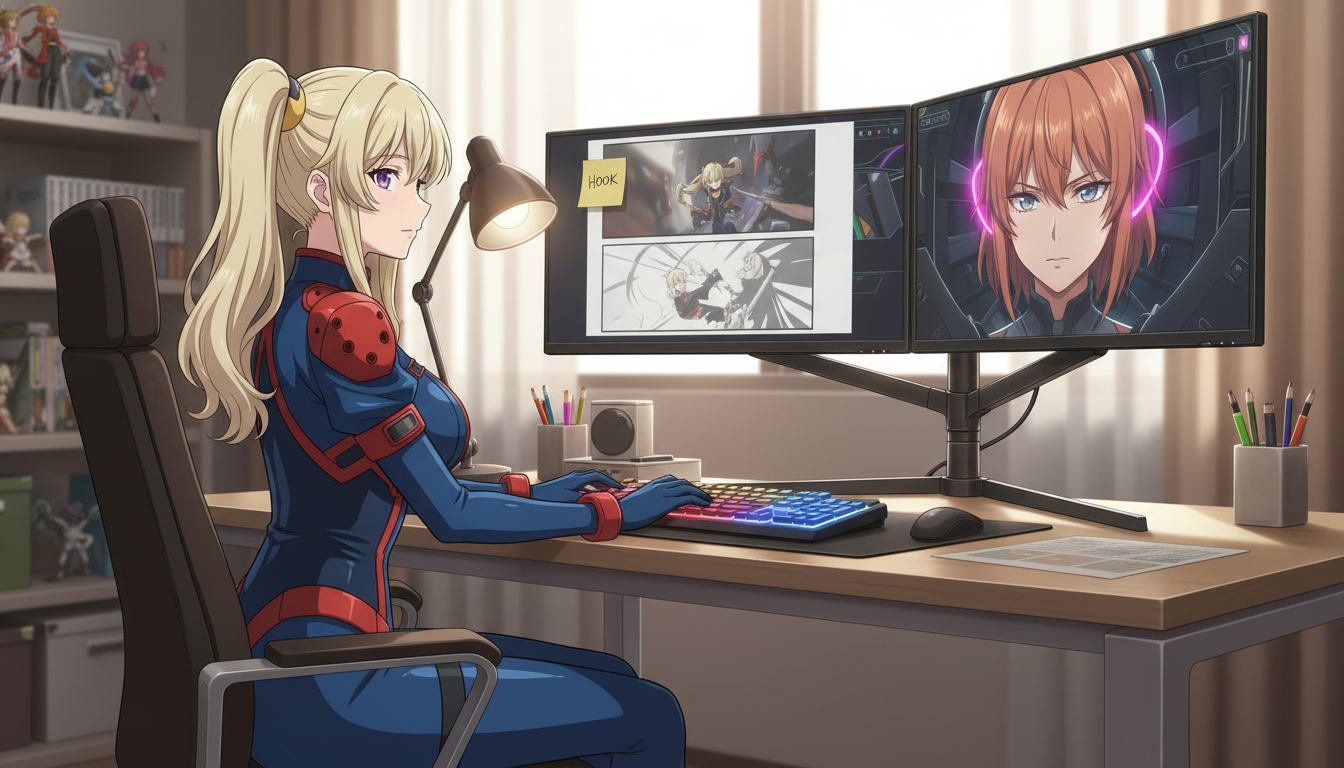
AI anime video hooks are the reason a fifteen-second ai anime video earns watch time or dies in the scroll. Video creators on YouTube, TikTok, and Reels often treat the opening as whatever the anime video generator happened to render first. That is backwards. The hook is a beat with its own Purpose line, its own motion pass, and often its own sound hit. Editing can tighten rhythm after generation, but editing cannot invent a readable face at frame one if you storyboarded a wide establish as the opener.
This guide is for creators who already lock a protagonist and run three-beat Shorts. It covers hook-first planning, one-action openers, prompt patterns that read at phone scale, and how hooks connect to thumbnails and series titles. If your OC still drifts upload to upload, read original character creations for video creators before you optimize the first three seconds for a stranger.
What counts as a hook in AI anime Shorts (and what does not).
A hook is not a louder version of your establish beat. It is the smallest unit of story that creates a question or feeling before the viewer's thumb moves. For serialized channels, the hook often reuses recognition: the same copper-haired runner, the same neon alley, a new threat in frame two. For discovery uploads, the hook might be a single visual contradiction: a peaceful festival stall, then a shadow crossing the lantern light.
What fails as a hook: slow camera drift with no subject action, two gestures in one Seedance pass, a wide shot where the protagonist is a silhouette smaller than a fingernail, or a face that does not match the thumbnail you uploaded. Those are packaging bugs, not algorithm mysteries.
Think in seconds, not panels. YouTube Shorts reward completion on the first loop. If the hook lands at second four, you already lost viewers who decide at second two. Target hook clarity by second one, escalation by second three, handoff to the turn beat by second five on a twenty-second upload.
Hook-first storyboard notes before you generate.
On storyboard day, label the opening line Hook separately from Establish. Many creators merge them and get beautiful wides that never stop the scroll. A clean split looks like this on your five-line panel block:
- Purpose (Hook): Viewer recognizes the protagonist and feels tension within two seconds.
- Action (Hook): One verb only: eyes snap to camera, hand catches a falling charm, rain silhouette enters frame right.
- Duration (Hook): Three to five seconds trimmed, not the full six to eight you might allow on the turn.
- Thumbnail? Often yes on the hook if the hook is a close-up; see AI anime YouTube thumbnails for video creators.
Example hook annotation for "Alley Run #12":
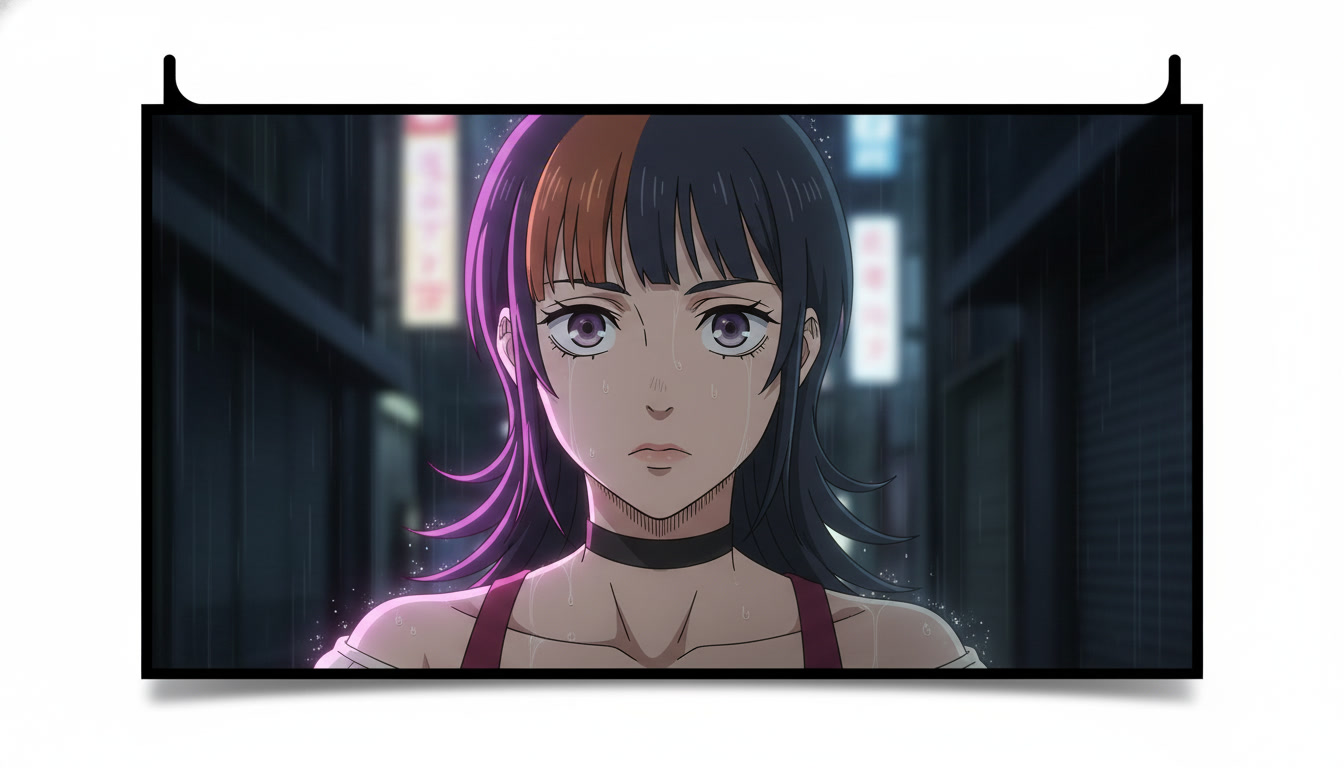
Hook: medium close-up, saved protagonist, steel gray eyes, wet copper hair, listener expression, neon magenta rim light, background soft bokeh alley — motion: she turns head toward off-screen footstep, one beat only.
Full pre-production habits live in storyboarding AI anime pre-production. Hooks are where that paperwork pays off: you are not guessing which frame to trim in the NLE.
Generating hook motion with one action per pass.
Treat the hook as its own motion generation, not the first six seconds of a combined establish-plus-turn clip. The model behaves better when the prompt describes a single onset: head turn, fingers tightening on a rail, cloak snapping in wind. Stack a still from your scene pass as the first frame when the tool allows it, using the same location notes as video and scene generation for YouTube creators.
Example hook motion prompts (pair with your saved OC and location bible):
Medium close-up, heroine with copper hair and steel gray eyes, slow head turn toward camera, rain on shoulders, neon rim light, subtle breathing only, cinematic anime, 24fps feel.
Close-up on hands releasing a paper charm into wind, festival lanterns blurred behind, single gesture, no second character enters frame.
If the generator adds a wave, a second location, or a smile you did not storyboard, reject the take. Hooks are cheap to re-roll compared to rebuilding audience trust after a bait-and-switch thumbnail.
Prompt discipline for Seedance-specific habits pairs with writing prompts for Seedance 2 anime videos and mistakes to avoid in Seedance 2 anime videos.
Sound, silence, and the handoff to the turn beat.
Silent cinematic Shorts can hook with a single diegetic sound: heel on wet asphalt, charm paper flutter, distant train brake squeal. Place that transient on the frame where the action peaks, not two seconds earlier. If you use music, start after the hook lands or duck the bed under the hook so the face reads.
Silence is a hook tool. Half a second of room tone before the turn cut makes the next motion feel intentional. Voiceover hooks work when the VO line is one sentence that matches the on-screen emotion; write VO after picture lock, as noted in editing AI anime video for YouTube creators.
The handoff rule: the hook promises a question; the turn beat answers part of it and deepens stakes. If the hook is "she heard footsteps," the turn is not another wide of the alley. It is the medium that reveals who stepped into frame or what she found on the ground.
Hook patterns that fit serialized and discovery uploads.
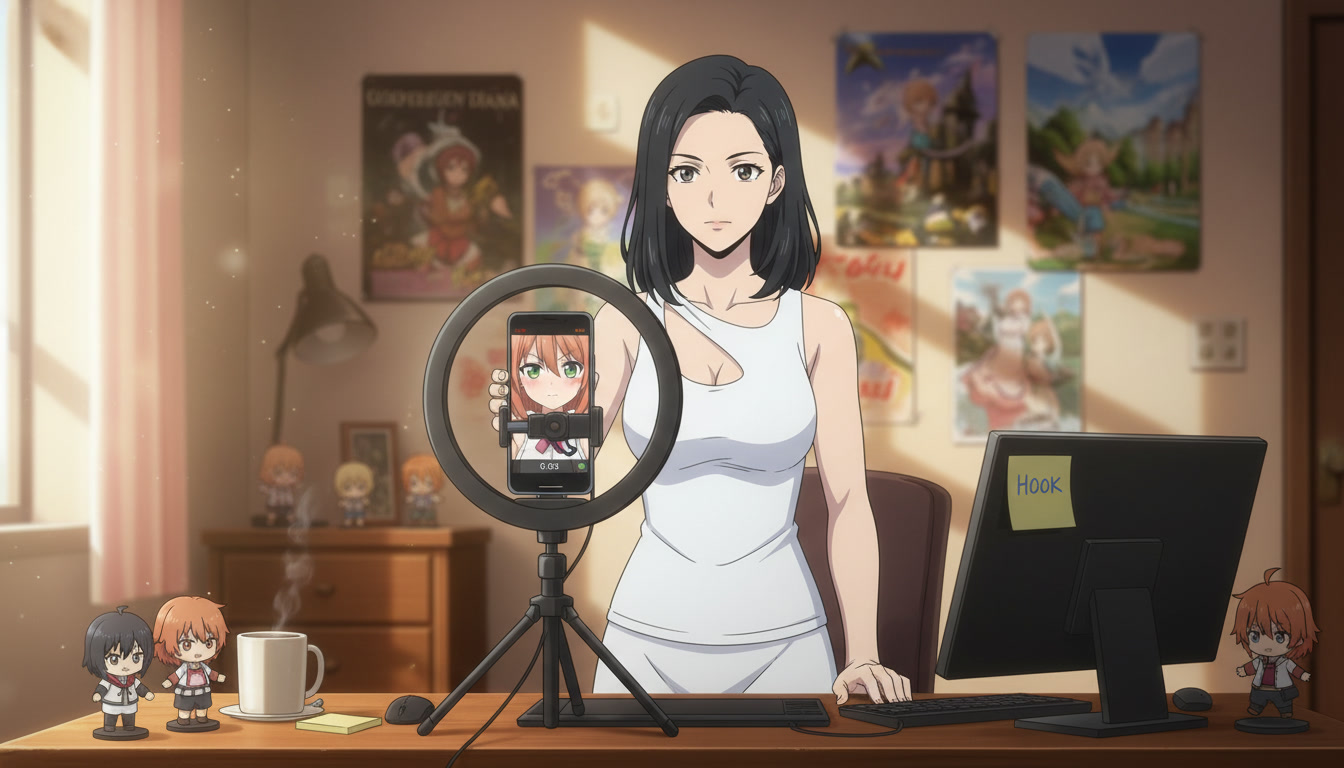
Serialized channels lean on recognition hooks: same protagonist, new stakes. "Rooftop Watch #8" can open on the heroine already in frame, because subscribers know her silhouette. Discovery uploads lean on contrast hooks: festival peace versus shadow, classroom quiet versus crack in the window. Both still obey one-action motion and thumbnail honesty.
Common patterns worth A/B testing across three uploads:
- Reaction hook: close-up, eyes widen, sound hit, cut to turn reveal.
- Intrusion hook: stable frame, one object or silhouette enters, no camera wander.
- Contradiction hook: cheerful still frame, single detail breaks the mood (cracked charm, torn ribbon).
Track retention in YouTube analytics at five-second and ten-second marks. If five-second retention is weak but ten-second is strong, your hook is late. If both are weak, check thumbnail-to-video alignment before you blame the model.
Titles, series numbers, and avoiding hook bait.
Titles should describe the hook emotion viewers will see, not a spoiler from the land beat. "She heard something behind her" matches a listener close-up hook. "The villain reveals their plan" when the Short only shows a shadow is clickbait that tanks trust.
Series numbering belongs in the title line viewers scan in the feed: "Alley Run #12" plus a short hook phrase. That pairs with channel packaging from creating an AI anime YouTube channel. Gaming-adjacent creators adapting quest tension into anime hooks can borrow mood framing from turning video game moods into anime for YouTube without copying copyrighted characters.
When a hook experiment wins retention, copy the rhythm into your storyboard template: same duration band, same framing class, same sound punctuation. That is how how to make anime video with ai becomes a repeatable show opener instead of a lucky clip.
Hooks sit upstream of editing and downstream of character lock. Nail the face, the one action, and the honest thumbnail, then let editing AI anime video tighten the handoff into the turn and land beats. For the full still-to-motion pipeline, continue with video and scene generation for YouTube creators.
Related Blog Posts
How to Turn Video Game Aesthetics Into Anime Videos for YouTube
RPG dungeons, boss arenas, and creator setups — a workflow for game-adjacent anime Shorts without copying IP
Learn how to turn video game aesthetics into AI anime videos for YouTube. Build original characters, prompt RPG scenes, and animate clips with Seedance 2 on AutoWeeb.
Creating an AI Anime YouTube Channel: From First Character to Published Shorts
A channel is not a folder of clips — it is a protagonist, a rhythm, and a reason to come back next week.
Learn how to create an AI anime YouTube channel with consistent characters, Shorts-ready clips, and a repeatable upload workflow using AutoWeeb and Seedance 2.
How to Turn Video Game Characters Into Anime Videos for YouTube
Gaming channels already have the stories — anime-style video is how you make them look like a show instead of a screenshot montage.
Turn video game characters into anime videos for YouTube. A workflow for gaming creators: OC design, scene prompts, Seedance 2 clips, and Shorts-ready pacing.
Storytelling and Worldbuilding in AI Anime: How to Build Worlds That Feel Real
From establishing the visual logic of a world to building characters with history — how to use AI anime to create stories that live beyond a single image.
Learn how to use AI anime generation for storytelling and worldbuilding — covering environment design, character consistency, narrative sequencing, and the visual grammar that makes worlds feel lived-in.
Explore AutoWeeb
Jump into the tool that fits your creative step.
AI Anime Video Generator
Animate storyboard shots into cinematic clips with Seedance 2 and consistent characters.
Anime Character Creator
Design original characters with consistent sheets across every scene.
AI Anime Image Generator
Generate cinematic anime stills anchored to your character library.
Anime Filters
Upload any photo and apply AI anime filters to turn it into stunning anime art in seconds.
AI Anime Location Generator
Create a location set once, then generate reference images from every angle.
AI Anime Storyboarding
Describe your idea, pick your characters, and let AI draft the script and scenes.
AI Anime Prompt Agent
Turn a rough idea into a cinematic Seedance 2 prompt with the AI Director.