AI Anime Wardrobe Bible for YouTube Video Creators
Jackets change color between beats when outfits are vibes, not codes. A wardrobe bible is how serialized Shorts keep the same protagonist dressed like one person.
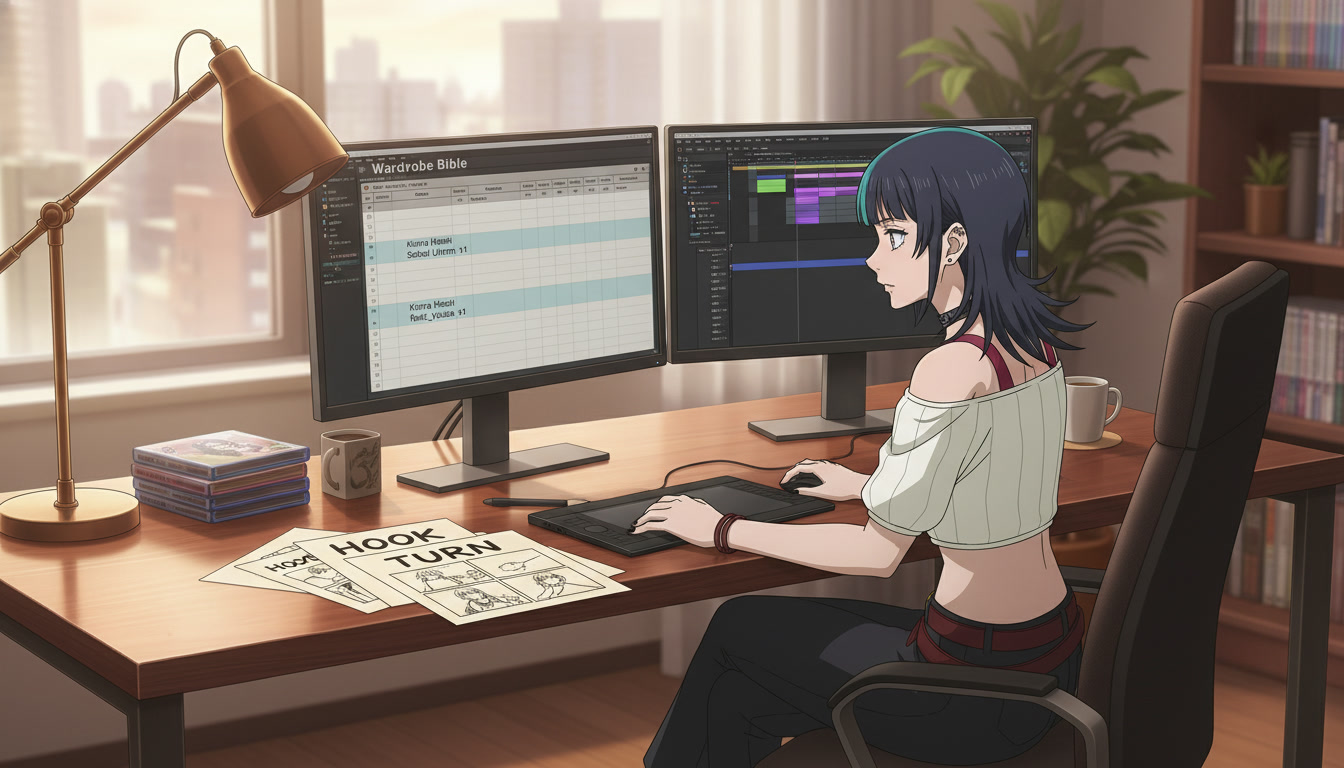
An AI anime wardrobe bible is the layer between locking a protagonist's face and publishing ai anime video clips that read as one series. YouTube and Shorts creators often fix eye color in the character creator and still lose viewers when the navy blazer becomes charcoal, the side clip vanishes, or beat three invents a scarf nobody wore in the hook. The anime video generator is not sabotaging your channel. It is interpreting "school outfit" as a new costume every time you omit trim details.
This guide is for creators who already run three-beat storyboards and separate still from motion. You will define a default episode uniform, name one or two arc costumes, and add an outfit: field beside Purpose and Action before you generate. If expressions still drift between hook and land, batch face states first in AI anime character expression sheets. If sets change geometry week to week, lock geography in the AI anime location bible before you expand the closet.
Why a wardrobe bible beats another hero still.
A hero still proves silhouette. A wardrobe bible proves which silhouette belongs to which episode type. Serialized channels fail retention when the hook close-up shows a copper side clip and gold blazer buttons, then the land medium shows silver hair clips and no buttons at all. Viewers forgive background drift faster than they forgive a wardrobe recast that happens mid-Short.
Outfits also shrink motion prompt entropy. Seedance reads the still you attach. If the still already holds the collar shape and outer layer you want, you ask for one action (head turn, step forward, cloak snap) instead of asking the model to invent a jacket while animating shock. That pairs with hook discipline in AI anime video hooks for YouTube Shorts and with the one-action rule in video and scene generation for YouTube creators.
Think of costumes as production vocabulary, not fashion experiments. Your storyboard should say outfit: uniform_v1, not she wears her school clothes. Vague garment words are where sleeve length and accent trim start to wander.
The minimum wardrobe set for fifteen-second anime Shorts.
You do not need a closet of twelve looks to start. Three tiers cover most discovery Shorts and weekly serialized episodes:
- Episode uniform (uniform_v1): the default look viewers should recognize in thumbnails. One outer layer, one accent color, one signature accessory.
- Arc costume (fest_yukata_v1 or rival_coat_v1): a deliberate change for a season or rivalry arc. Use for three to six uploads, then retire or return to uniform.
- Finale layer (finale_cloak_v1): optional outer piece for land beats with higher stakes. Generate only after uniform_v1 is stable in motion tests.
Add a fourth row only when analytics prove viewers ask for it: sleep or casual (casual_hoodie_v1) for quiet bridge episodes. Do not open with four tiers. Recognition beats variety in week one.
Label files with codes, not moods: hero_uniform_v1_hook_wide_01.jpeg. The edit bin, expression sheet folder, and storyboard should share the same string.
Generating outfit stills without breaking your OC lock.
Open your saved protagonist in the character library. Use the same style preset you chose for the series bible from styles, not a new experiment per garment. Generate bust or medium framing so collar, buttons, and hair clip stay readable. Full runway poses invite pose drift that pulls accessories off-model.
Example uniform still prompt:
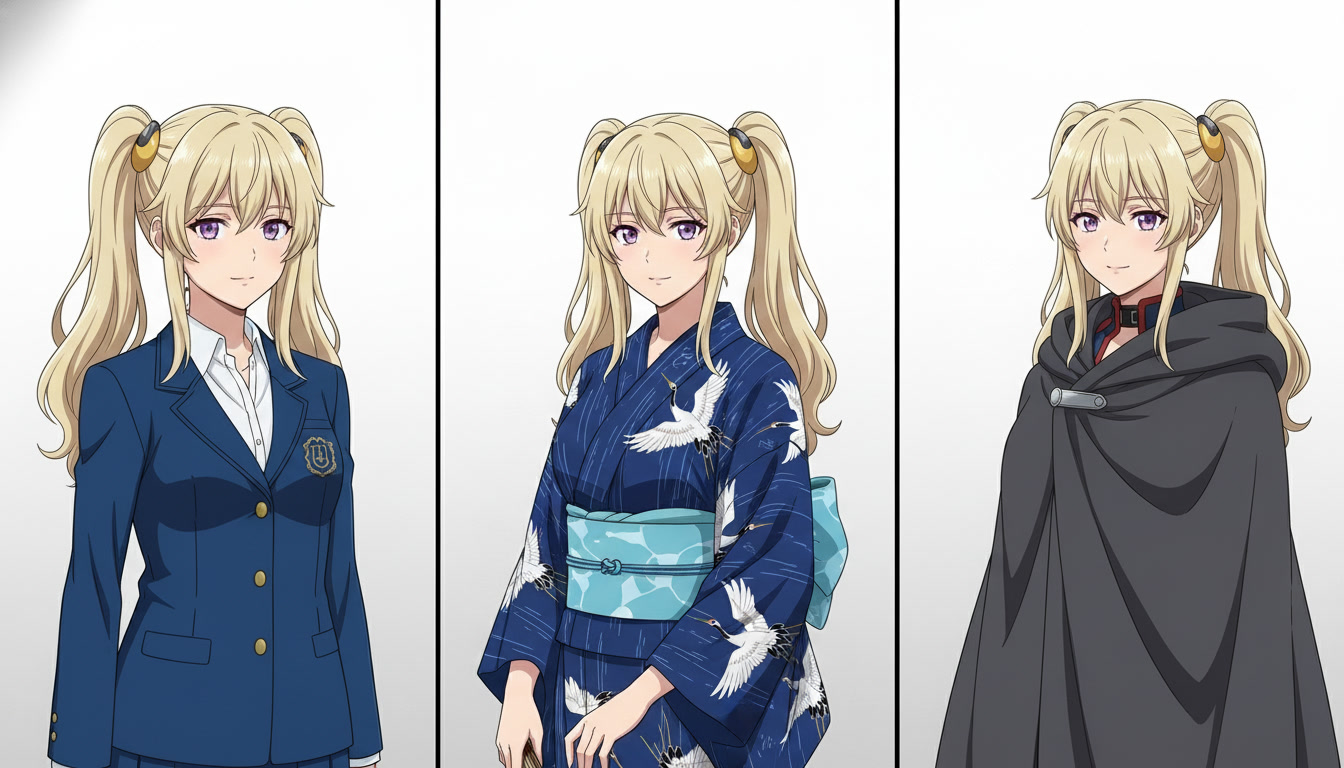
Medium shot, copper hair with single side clip, navy school blazer with gold buttons, white collar visible, neutral relaxed face, soft anime key light, clean line art, wardrobe reference panel, same character ID.
Example festival arc prompt:
Same character medium shot, indigo yukata with white crane pattern, same copper side clip, same eye color, evening lantern light, wardrobe reference panel, no new jewelry.
Example finale layer prompt:
Same character bust, dark charcoal cloak over uniform_v1 blazer, same copper side clip, cool rim light, wardrobe reference panel, cloak hem visible, no mask or hat added.
Reject any panel that changes fringe length, ear shape, or shoe design when you only asked for a jacket swap. Those are new characters borrowing a palette. Batch all three tiers in one session while the model's latent mood is warm, as you would for expression rows in original character creations for video creators.
Drop the winning grid into your series doc beside location rows and expression codes from storyboarding AI anime pre-production. Humans can read one contact sheet; machines still need coded filenames in the folder.
Storyboard tags that connect outfits to hook, turn, and land.
Add an outfit: field beside face: and Purpose on every panel that shows a readable costume. Discovery Shorts often map like this:
- Hook (0-3s): outfit: uniform_v1 on a close-up intrusion so the thumbnail matches the opening frame.
- Turn (5-9s): outfit: uniform_v1 on a medium when the rival speaks. Save arc costumes for multi-upload arcs, not beat two of a fifteen-second pilot.
- Land (11-15s): outfit: finale_cloak_v1 only if the script earns a layer change. Otherwise stay on uniform_v1 so the land does not look like a costume commercial.
When you run a festival arc across four uploads, switch the whole episode to fest_yukata_v1 on every panel that frame, including inserts from B-roll and cutaways. Mixed tiers inside one Short read like a continuity error even when faces match.
Motion prompts should repeat trim words from the bible row, not invent synonyms. If the row says gold blazer buttons, write gold blazer buttons in the motion add-on. "Formal jacket" is how buttons disappear between still and clip.
Wardrobe rules when duos, locations, and hooks already cost generations.
Two-character episodes from AI anime two-character scenes need two bible rows, not one shared adjective list. Rival coat trim belongs on the rival ID. Do not describe both jackets in one prompt and hope the model sorts them.
Location reopen methods from photo packs should not smuggle wardrobe changes. If you place uniform_v1 in the festival alley pack, say so in the panel stub: same navy blazer, same gold buttons, alley from loc_fest_01. Packs set geometry; your outfit line sets fabric.
Thumbnail discipline still applies. Pull the hook still tagged outfit: uniform_v1 plus face: shock_wide when possible, as in AI anime YouTube thumbnails for video creators. A finale cloak on the tile when the Short opens on uniform_v1 is a broken promise.
Batching wardrobe rows so Tuesday is not a guessing game.
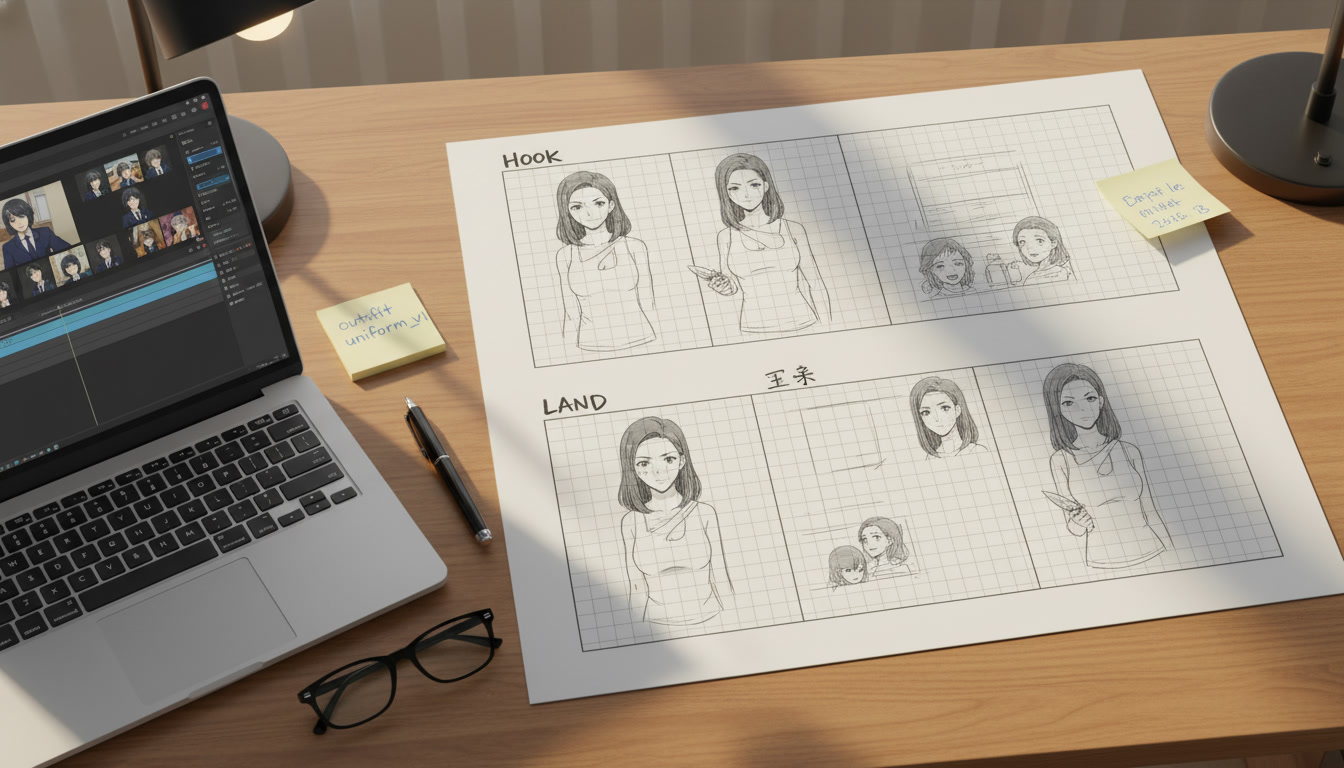
Batch outfit reference stills per tier, not per upload mood. If episodes eight through ten stay on uniform_v1, regenerate uniform busts only when trim drifts in motion tests, not because Tuesday felt creative.
Keep a simple wardrobe checklist on the series doc:
- One locked uniform row with three trim anchors (collar, buttons, accessory)
- At most one active arc costume per season
- Forbidden list: hats, masks, random scarves unless scripted
- Grade note copied from hero clips (warm amber, cool rooftop blue, etc.)
When a uniform wins retention in analytics, duplicate its storyboard line into the template for the next three uploads. That is how how to make anime video with ai stops depending on a lucky jacket and starts behaving like a show with a closet that obeys the script.
A wardrobe bible sits between OC lock and the timeline: named tiers, batched reference stills, tags on every panel. Pair this workflow with editing AI anime video for rhythm, and with creating an AI anime YouTube channel when you are planning the series spine. For face states and geography upstream, continue with expression sheets and the location bible guides.
Related Blog Posts
AI Anime Location Bible for YouTube Video Creators
Recurring sets are not luck. They are named places with anchors you reopen instead of re-prompting from memory.
Build an AI anime location bible for YouTube Shorts: name recurring sets, lock scene anchors, map photo packs and scene builders, and keep geography consistent across episodes.
AI Anime Two-Character Scenes for YouTube Video Creators
Rivals and partners need two saved faces, one framing rule, and motion that does not merge them into one person.
Create AI anime two-character scenes for YouTube Shorts: save both OCs, frame medium two-shots, use photo packs and motion prompts that keep rivals and partners readable in one clip.
AI Anime Video Hooks for YouTube Shorts
The first three seconds are not a trim decision. They are a beat you storyboard, generate, and edit on purpose.
Write AI anime video hooks for YouTube Shorts: hook-first storyboard beats, one-action openers, sound punctuation, and prompts that match your saved OC before viewers scroll away.
AI Anime YouTube Thumbnails for Video Creators
Panel zero is not an afterthought. It is the still you generate on purpose before the Short goes live.
Design AI anime YouTube thumbnails that match your Shorts: thumbnail-first prompts, readable faces at small size, series titles, and export frames from your saved OC without clickbait drift.
Explore AutoWeeb
Jump into the tool that fits your creative step.
AI Anime Video Generator
Animate storyboard shots into cinematic clips with Seedance 2 and consistent characters.
Anime Character Creator
Design original characters with consistent sheets across every scene.
AI Anime Image Generator
Generate cinematic anime stills anchored to your character library.
Anime Filters
Upload any photo and apply AI anime filters to turn it into stunning anime art in seconds.
AI Anime Location Generator
Create a location set once, then generate reference images from every angle.
AI Anime Storyboarding
Describe your idea, pick your characters, and let AI draft the script and scenes.
AI Anime Prompt Agent
Turn a rough idea into a cinematic Seedance 2 prompt with the AI Director.