How to Create a Shounen Anime in 2026: A Step-by-Step Guide for Beginners
A complete guide to building an original shounen anime from concept to animated scenes, covering character sheets, power systems, rival dynamics, storyboarding, AI image generation, and the image-to-video workflow in AutoWeeb.
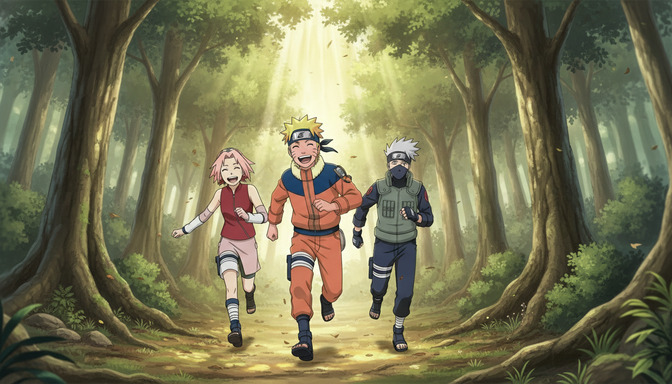
Shounen is the dominant form of anime storytelling for a reason. It takes the most universal human experiences, the gap between who you are and who you want to become, the friend who makes you better by refusing to let you be less, the moment when the thing you have trained for your entire life finally arrives, and renders them with complete emotional seriousness. Naruto, My Hero Academia, Demon Slayer, Jujutsu Kaisen. Every series in that lineage runs on the same architecture, and that architecture is learnable. It is not the exclusive property of professional studios. It is a set of principles that anyone can apply.
What has changed in 2026 is the production side. Creating a shounen anime no longer requires a team of animators, a studio budget, or years of technical training. With AutoWeeb, a solo creator can take an original concept from character design through storyboarding, AI image generation, and animated clips in a single focused workflow. This guide covers every step of that process, from understanding what makes a shounen series work to generating your first animated fight scene.
What Defines a Shounen Anime?
Shounen is a demographic category, not a genre tag. The word means "young boy" in Japanese, and the category was historically aimed at readers between roughly ten and eighteen years old. But the defining quality of shounen anime is not the age of its audience. It is the emotional register: the conviction that growth is possible, that effort matters, that the person you become through struggle is worth the cost of becoming them.
Visually, shounen anime tends toward kinetic compositions, expressive character designs, and fight sequences that function as character arguments rather than pure spectacle. The battle between Naruto and Sasuke is not interesting because of the jutsu. It is interesting because of everything that led there and everything at stake in the outcome. The power system exists to externalize interior states. The tournament arc exists to force encounters the characters cannot avoid. Every structural element in shounen serves the same purpose: creating conditions where a character has no choice but to show you who they really are.
An original shounen series, one built from scratch with original characters, is exactly what AutoWeeb's production tools are designed for. The character sheet system, the Storyboard feature, the AI Director, and the image-to-video pipeline all map directly onto the production needs of a serialized shounen concept.
The Core Pillars of Every Successful Shounen Series
Before you open AutoWeeb and start designing characters, you need a structural foundation. These are not optional story elements. They are the load-bearing walls. Every successful shounen series has all of them.
Main Protagonist
The protagonist needs a gap between their current ability and their stated goal, and that gap should be wide enough to sustain a long series. The goal itself should be clear, specific, and slightly audacious. "Become the greatest ninja" works because it is concrete and almost certainly impossible at the start of the story. The protagonist's defining quality is not power. It is the specific nature of their drive, the thing that makes them keep going when nothing in the situation suggests they should.
Rival
The rival is the mirror. Where the protagonist achieves through effort, the rival achieves through talent, or through a different kind of effort that the protagonist cannot replicate. The rival makes the protagonist uncomfortable because they represent a possible outcome: what the protagonist might be if one variable were different. The best rivals are not antagonists. They are the character the protagonist most wants to surpass and most fears becoming.
Mentor
The mentor has seen the protagonist's version of struggle before, usually from the inside. They are not infallible. A good shounen mentor has their own wound, a fight they lost, a student they could not save, a limit they never crossed. That wound is what makes their guidance meaningful rather than instructional. They are not giving the protagonist a manual. They are giving them something harder to transmit: the understanding that it is survivable.
Supporting Cast
The team exists to reflect different facets of the protagonist's arc. Each teammate should represent a different answer to the same question the protagonist is wrestling with. One character who has already accepted their limits. One who has not yet understood theirs. One whose motivation runs parallel to the protagonist's but diverges enough to create tension. The supporting cast gives the protagonist different surfaces to develop against.
Villains
The best shounen villains believe they are right. Not in a cartoonish way, but in a way that requires the protagonist, and the audience, to actually reckon with the argument. Pain's philosophy in Naruto Shippuden is not just a motivation. It is a coherent position that the series has to answer at a level deeper than defeating him in combat. Your villain should have a worldview that emerged from genuine experience, one that became toxic precisely because there was truth in it at the start.
Power System
The power system's job is to create conditions for character expression, not just visual spectacle. The best systems have clear rules that characters can push against, limitations that force creativity, and a ceiling that the protagonist cannot see yet but can feel. Chakra in Naruto, Quirks in My Hero Academia, Breathing Styles in Demon Slayer: each system is interesting not because of what it enables but because of what it costs and what it constrains.
Character Growth
Growth in shounen is not a straight line. It is a pattern of plateau, crisis, and breakthrough. The protagonist reaches a level where they can hold their own, gets confronted by something that exposes a ceiling, goes through a dark or uncertain period, and then breaks through in a way that costs them something. Real growth in shounen is always paid for. The power-up that comes without a price is one of the most reliable signs that a series has stopped taking itself seriously.
Tournament Arcs
Tournament arcs are structural gift-givers. They provide a built-in reason for the protagonist to face a sequence of escalating opponents without requiring complex plot justification for each encounter. They create time pressure, spectator stakes, and the opportunity for the rival to appear on a parallel track. A tournament arc is also where the supporting cast gets their own moments, because the bracket structure forces different characters into different fights. Plan at least one for your first season.
Emotional Stakes
This is the element beginners most often underwrite. Technical animation quality and cool power systems matter less than whether the audience cares about what happens. The emotional stakes are built through specificity: not "he wants to protect everyone" but "he made a promise to this specific person in this specific moment, and breaking it would mean something irreversible about who he turned out to be." Specificity converts story beats into moments. Do not skip it.
Step 1: Plan Your Anime Before Animating
The planning step is where most beginners either skip ahead too fast or get stuck indefinitely. You do not need a complete 26-episode outline before you generate a single image. You need enough structure to keep the first five to seven episodes coherent: the protagonist's starting state and stated goal, the inciting event that sets the story in motion, the central conflict of the first arc, the key characters who need to be introduced, and the moment the first arc resolves.
AutoWeeb's AI Director is the right tool for this phase. Give it your core concept, the setting, the power system's basic mechanics, and a description of the protagonist and their goal. Ask it to generate a five-episode arc breakdown, a cast list with brief descriptions, and an episode-by-episode scene structure for the opening. Treat the output as a working draft, not a final document. The planning exists to give your character design work and your storyboarding a direction to run toward.
Example AI Director prompt for series planning: "I'm creating a shounen anime set in a city where people are born with the ability to manipulate a single material, stone, water, fire, glass, and so on. The protagonist, a seventeen-year-old boy, has the rarest and most difficult ability to control: silence itself. He is not deaf, but he can suppress all sound in a radius around him, which is powerful but deeply isolating. His stated goal is to enter the National Ability Tournament and reach the top eight, which would earn him a scholarship to the advanced training academy. His rival has an explosive ability and has never lost. Develop a five-episode opening arc structure, a primary cast of six characters, and the central tension of the first season."
Step 2: Design Consistent Anime Characters
AutoWeeb's Character Sheet system is where your cast becomes a production asset rather than a description in a document. A character sheet is not a portrait. It is a comprehensive visual reference that tells AutoWeeb's AI how to render this character consistently across every scene in the series: their proportions, hair, face, default outfit, and the visual quality that communicates who they are before they speak.
Write the character description with production in mind. Named specifics beat vague descriptors at every level. "Spiky charcoal-black hair with two silver streaks, roughly textured" produces more consistent results than "spiky dark hair." "Build is lean but with defined forearms from years of training, not broad-shouldered but visible strength in how he holds himself" gives the AI a clear physical logic to work from.
Example Character Sheet prompt for a shounen protagonist: "Male, seventeen, lean build with defined forearms and a slightly forward-leaning posture that suggests readiness rather than aggression. Spiky charcoal-black hair with two silver streaks from his right temple. Face is angular with high cheekbones, dark gray eyes with a quality of intense focus that occasionally tips into blankness during combat. Default outfit: dark navy training jacket over a plain white compression shirt, dark gray combat trousers with a diagonal utility pocket on the left thigh, light athletic shoes, a single wrapped bandage around the right palm. Expression resting at quiet attention rather than neutrality. Anime style, clean shonen linework, proportions grounded but slightly idealized."
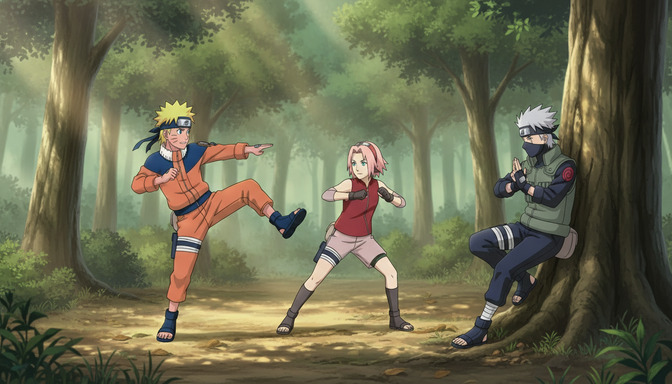
Build character sheets for every member of your core cast before generating any storyboard panels. At minimum: protagonist, rival, mentor, and the primary villain for your first arc. Save each one to your AutoWeeb project. These saved sheets are what the @tag system will reference when you place characters in storyboard shots, and their consistency across the production depends entirely on how well the sheets are written and saved before you start generating scenes.
Step 3: Create Locations and Environments
Every location your characters inhabit needs a saved reference in your AutoWeeb project, built to the same standard as your character sheets. A location reference describes the environment's visual identity with enough specificity to regenerate consistently across different shots, different times of day, and different scene compositions.
For a shounen series, the essential locations for the first arc are typically: the protagonist's home environment or training ground, the arena or tournament venue, the rival's domain, and one location tied to the protagonist's emotional backstory. A fifth location, usually a city street or school setting, handles the connective tissue between major scenes.
Example location reference for a shounen training ground: "An outdoor training area at the edge of a mid-sized Japanese city, concrete walls on two sides with a chain-link fence on the third opening to a tree line. The ground is packed earth with worn patches where the same drills have been run thousands of times. There is a single overhead light on a metal pole, which means early morning and late evening sessions have a specific overhead cast that the afternoon sessions do not. The quality of the space is functional and slightly austere, the kind of place that feels like serious work rather than performance. Anime style, clean backgrounds with visible architectural detail, slight desaturation compared to main character scenes."
Step 4: Storyboard Your Episodes Scene by Scene
The storyboard is the production plan for an episode. It is the document that converts your script into specific images, and those images into a video sequence. AutoWeeb's Storyboard feature, combined with the AI Director, handles both the planning and the asset-referenced generation.
Start by asking the AI Director to break your episode script into individual storyboard panels, with shot type, camera direction, character positions, and emotional beat for each panel. Then, for each panel description, add @tags for every named character and location that appears in the frame. The @tag system references your saved character sheets and location references directly, so the generation draws from your established visual anchors rather than reconstructing characters from context in the prompt text.
Example storyboarded shot prompt for a training sequence: "Medium two-shot, @protagonist on the left in fighting stance, weight distributed, right hand forward with the bandaged palm visible. @rival on the right in a more open aggressive stance, expression intent, slight smirk. @training-ground in the background, chain-link fence visible behind the rival, tree line behind the protagonist. Time of day is late afternoon, long shadows pulling toward the camera from both characters. Anime style, clean shonen linework, the tension of two people who have done this before and both know it could break open at any moment."
Generate panels in script order, reviewing each one against the storyboard beat before continuing. Catching consistency drift at the panel level is significantly easier than correcting it across an assembled episode.
Step 5: Generate Anime Images
With your character sheets saved, your location references built, and your storyboard structured, image generation becomes a systematic execution rather than a series of one-off prompting experiments. Each panel prompt should reference its assets via @tags, specify the exact shot composition from the storyboard, include lighting and time-of-day details consistent with the scene context, and match the visual register of the surrounding panels.
The quality gap between a production with saved, @tagged assets and one built from pure text prompts is significant and becomes more significant as the series grows. A protagonist who has been @tagged from a saved character sheet in every panel will look like the same person across episode three and episode twelve. One built from context-only prompts will have drifted considerably by then.
For fight scenes specifically, generate the impact moment, the wind-up, and the aftermath as separate panels. Shounen anime fight sequences read as a rhythm of compression and release: the moment before contact, the contact, the environmental aftermath, the reaction shot. Each beat is a panel. The @tags on the combatant sheets should be consistent across all of them. If you are exploring AutoWeeb's fight scene capabilities in more depth, the guide on how to create an anime fight scene covers the full shot breakdown and prompting approach for combat sequences.
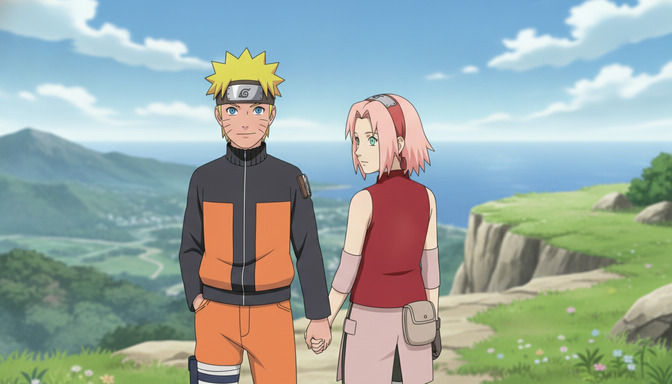
Step 6: Turn Images Into Animated Clips
Not every panel needs to become a video clip, and trying to animate everything is one of the most common beginner mistakes. Prioritize video generation for the panels where motion is the actual content: the attack sequence in a fight scene, the transformation or power reveal, the protagonist running toward the opponent, the finishing blow and its aftermath. Still images carry the dialogue scenes, the reaction close-ups, the backstory flashbacks, and the quiet post-fight panels without losing any emotional information.
When writing motion prompts for AutoWeeb's image-to-video pipeline, specify what moves, the timing of the peak action beat within the clip, and what the camera does during the motion. Vague motion descriptions produce inconsistent results. Specific ones produce clips that cut cleanly into the surrounding stills.
Example video motion prompt for a power activation scene: "Medium shot, @protagonist raising the bandaged right palm toward the camera, slow build for the first two seconds as the air in the frame begins to visibly distort around the hand. At the two-second mark, the sound-suppression ability activates: the distortion expands outward from the palm as a ripple through the air, visible as a subtle warping of the background without color change. The protagonist's expression shifts from focused to something quieter, more interior. @training-ground visible in the background, the distortion wave reaching the chain-link fence. Anime style, shonen power activation visual language, four to five seconds."
Assemble the episode from storyboard order, alternating between still panels and video clips. The ratio for a typical shounen fight episode sits around 60% stills to 40% video. The motion carries the kinetic peaks. The stills carry everything else.
Keeping Character Consistency Throughout the Series
Consistency is the defining challenge of a multi-episode anime production, and it is what AutoWeeb's architecture is specifically built to solve. The character sheet system and the @tag workflow exist because the alternative, re-describing characters from scratch in every prompt, produces inevitable drift. Drift is not a prompting skill problem. It is a structural problem. AutoWeeb solves it structurally.
When you save a character sheet and @tag it in a panel prompt, the generation draws from that saved reference rather than reconstructing the character from the text. The protagonist in episode one and the protagonist in episode eight are anchored to the same saved visual document. That anchor is what makes the series look like a series rather than a collection of well-executed individual images. Update a character's saved sheet when the story produces a permanent visual change: a scar, a new outfit, a different hairstyle that marks a turning point in the arc. Keep old versions saved under versioned names so you can reference the pre-change appearance for flashback scenes.
Common Beginner Mistakes
The most common mistake is starting with the action and skipping the architecture. A protagonist with a cool power and no stated goal, no rival, no mentor, and no emotional stakes is not a shounen series. It is a character design. The power system is interesting only when it runs up against limits that matter to the characters. Build the structure first.
The second most common mistake is generating images before building and saving character sheets and location references. Every generation done without saved references is work that cannot be consistently replicated. You will reach episode three and discover that your protagonist looks noticeably different in episode one. Start with assets. Then generate.
Third: animating everything. Video generation should be reserved for the panels where motion is the story. Trying to animate every panel slows down the production significantly and does not improve the output. Shounen anime uses stills strategically. The reaction close-up, held as a still for two seconds with music underneath it, lands harder than an animated equivalent in many cases. Use motion where motion is the point.
Fourth: writing villains without genuine conviction. The protagonist's growth is measured against the difficulty of what they overcome. A villain who is merely powerful but philosophically empty will make the climactic battle feel hollow. Write the villain's argument first, before you write their fight choreography.
Why AI Dramatically Lowers the Barrier to Creating Anime
Traditional anime production at a professional level requires hundreds of staff, years of development, and a production budget that most individual creators will never access. The bottleneck has never been creative ideas. The bottleneck has been execution: the gap between the anime series someone can envision and the anime series they can actually produce.
AI-powered tools collapse that gap. Character design, environment creation, scene generation, and animation no longer require technical drawing skills or a production team. They require creative judgment: the ability to describe what you want specifically, to evaluate the output against your vision, and to refine until the two align. That is a skill set that writers, storytellers, and anime fans already have the foundation for. The tools now exist to build on that foundation and produce a finished product.
The constraint in 2026 is no longer "can I produce this?" It is "can I produce this consistently and at series scale?" That is exactly the problem AutoWeeb's architecture is designed for.
Why AutoWeeb Is Built for Creating Original Anime Series
Most AI image tools are built for single-image generation. AutoWeeb is built for production. The difference is the infrastructure around the generation: the Character Sheet system that stores and references your cast, the Locations feature that stores and references your environments, the AI Director that handles story planning and storyboard generation, the @tag system that connects every saved asset to every generated panel, and the image-to-video pipeline that turns the storyboard into animated content.
For a shounen series specifically, that production infrastructure maps directly onto the format's requirements. A long-running story with a consistent cast, recurring locations, escalating power reveals, and a tournament structure that creates dozens of new fight panels across a single arc: all of that requires a system where characters stay consistent, locations stay consistent, and the AI has production-level memory of what you have built. AutoWeeb is that system.
If you want to explore other ways to build your anime universe, the guide on how to turn your manhwa into an anime using AI covers adapting existing sequential art into the AutoWeeb workflow, and how to make an anime character goes deeper on the character sheet process for creators who want to spend more time on character design before moving to story production.
Frequently Asked Questions
Do I need drawing skills to create a shounen anime with AutoWeeb?
No. AutoWeeb's AI generates anime images and animated clips from text descriptions. The skill that matters is descriptive specificity, the ability to describe a character's appearance, a scene's composition, and the emotional register of a moment in enough detail that the AI produces what you envision. That is a writing and creative judgment skill, not a drawing skill. The character sheets, storyboard prompts, and location references are all built through text.
How many episodes can I realistically create as a solo creator?
A focused single session in AutoWeeb can produce enough panels and video clips for a three-to-five-minute episode cut. A short first arc of five episodes, roughly fifteen to twenty minutes of content, is achievable across three to four dedicated production sessions. The timeline depends on how much preparation work you do upfront: creators who build all their character sheets and location references before generating any storyboard panels move considerably faster in production than those who build assets as they go.
How do I keep my protagonist looking consistent across a multi-episode series?
Save your protagonist's character sheet in AutoWeeb and @tag it in every storyboard panel prompt where the character appears. The @tag references the saved visual document rather than reconstructing the character from prompt context. That is what keeps the protagonist's appearance consistent from episode one through episode twelve. Any permanent visual change, a new scar, a different outfit tied to an arc development, a changed hairstyle after a key moment, should be saved as an updated character sheet under a versioned name.
What makes a good shounen power system for an AI-generated series?
A system that has visible rules and visible costs produces better scene descriptions and more interesting fight storyboards. "He punches hard" is difficult to storyboard with specificity. "He can amplify impact force through direct contact, but each use fractures the small bones in the striking hand, which have healed imperfectly dozens of times" generates a completely specific visual language: the wrapped hands, the expression on contact, the aftermath shot that shows the cost. Design your power system by defining what it looks like when it is used, what it looks like when it fails, and what the body or environment shows after.
How should I structure a tournament arc in my first season?
A first-season tournament arc works best as a five-to-seven-match structure. The opening match establishes the tournament and gives the protagonist an early win against an opponent who is better in one specific way. The middle matches develop the supporting cast, introduce the rival's parallel bracket progression, and put at least one teammate at genuine risk of elimination. The semifinals deliver the protagonist vs. rival match, which should end ambiguously or in a loss that sets up the season finale differently than a win would. The finals, if they happen, are the emotional payoff for everything that preceded them. If the story is stronger with the rival in the finals, the protagonist's path forward becomes about the thing that changes after the tournament ends.
Can I use AutoWeeb to make anime fight scenes with multiple characters?
Yes. Multi-character fight scenes require @tags for every combatant and the location reference in the shot prompt. The key prompting practice for group fight scenes is specifying each character's position and physical state within the frame explicitly: who is in the foreground, what their body language communicates, who is in the background and what they are reacting to. For scenes with three or more characters in active combat, generate the primary exchange first, then add peripheral characters in subsequent panels, rather than trying to compose the full group scene in a single generation.
Related Blog Posts
How Indie Manga Creators Can Turn Their Manga Into an Anime
A practical guide for independent mangaka, comic creators, and anime enthusiasts who want to adapt their existing manga into a watchable anime, from arc selection and character sheets through storyboards, AI image generation, and video production.
Learn how indie manga creators can turn manga into anime using AI. Select the right arc, build character sheets, storyboard panels, and generate anime scenes and video without a studio.
How to Turn Your Manhwa Into an Anime Using AI
A complete guide for manhwa creators, webcomic artists, and digital storytellers who want to adapt their work into anime, from evaluating your story and building character sheets through storyboards, AI image generation, and video production.
Learn how to turn your manhwa into an anime using AI. Build character sheets, storyboard vertical panels into cinematic scenes, generate anime images, and create video without a studio.
How to Turn Your Wattpad Story Into an Anime Series with AI
A complete guide for Wattpad authors who want to adapt their stories into indie anime, from episode structure and character sheets through storyboards, AI image generation, and video production.
Learn how to turn your Wattpad story into an anime series with AI. Design characters, storyboard scenes, generate anime images, and create anime video episodes without a studio.
How to Turn Your AO3 Fanfiction or Original Story Into an Anime
A practical guide for AO3 writers, fanfiction authors, and original fiction creators who want to adapt their stories into anime, from story selection and character design through storyboards, AI image generation, and video production.
Learn how to turn your AO3 fanfiction or original story into an anime with AI. Design characters, storyboard scenes, generate anime images, and create video without a studio.
Explore AutoWeeb
Jump into the tool that fits your creative step.
AI Anime Video Generator
Animate storyboard shots into cinematic clips with Seedance 2 and consistent characters.
Anime Character Creator
Design original characters with consistent sheets across every scene.
AI Anime Image Generator
Generate cinematic anime stills anchored to your character library.
Anime Filters
Upload any photo and apply AI anime filters to turn it into stunning anime art in seconds.
AI Anime Location Generator
Create a location set once, then generate reference images from every angle.
AI Anime Storyboarding
Describe your idea, pick your characters, and let AI draft the script and scenes.
AI Anime Prompt Agent
Turn a rough idea into a cinematic Seedance 2 prompt with the AI Director.