AutoWeeb vs ChatGPT Image: Which AI Tool Is Better for Creating Consistent Anime Characters and Stories?
ChatGPT Image generates impressive one-off anime art. AutoWeeb is built for anime creators who need the same character to look right across every scene, storyboard panel, and video clip.
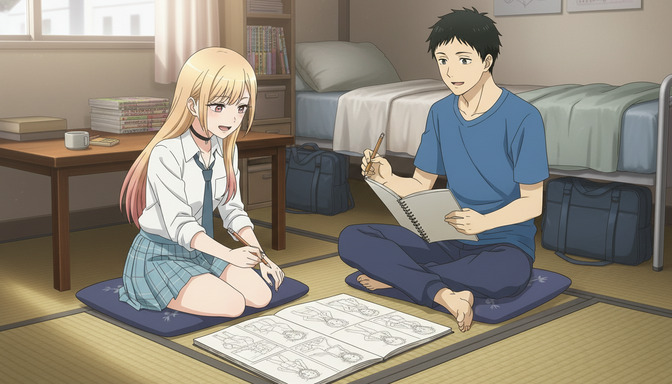
ChatGPT Image is one of the most capable general-purpose AI image generators available right now. Its anime output quality has improved substantially, and it can produce stylized character art, dramatic action frames, and atmospheric scenes from a single well-written prompt. For a creator who wants one striking anime image, it delivers.
But anime storytelling is not a one-image problem. It is a consistency problem. The character who appears in your opening scene needs to look identical in scene twelve. The hair color you locked in during character design needs to survive twenty different lighting conditions. The outfit details, the eye shape, the distinctive scar above the left brow: these have to hold across every panel, image, and video clip in the story. ChatGPT Image was not designed to solve this problem. AutoWeeb was built around it.
What ChatGPT Image Is
ChatGPT Image (powered by GPT-4o's native image generation) is a multimodal image generation system embedded directly in ChatGPT. It accepts text prompts and reference image uploads, handles style transfers and character edits in conversation, and produces high-quality output across a wide range of visual styles, including anime. Its biggest advantage over earlier AI image tools is its instruction-following: ask for a specific detail and it reliably delivers it. Request an edit and it applies it without destroying the rest of the image.
For anime art specifically, ChatGPT Image can produce clean linework, expressive character faces, and stylized scene compositions that rival dedicated anime generators on individual images. The conversation-based interface makes iteration feel natural. Describe a change, see the result, refine again. For creators who need single illustrations, character concept art, or experimental visual exploration, it is a genuinely strong tool.
What it lacks is any system for persisting a character's identity across generations. There is no character sheet. No saved reference that automatically anchors future outputs to a defined visual standard. Every new generation session starts from the prompt, which means every new session introduces the possibility of drift. For multi-scene storytelling, that structural absence creates a compounding problem that careful prompting can only partially solve.
What AutoWeeb Is
AutoWeeb is an anime storytelling platform designed from the ground up for creators building original anime characters, planning stories, and producing consistent images and video across a full production pipeline. The platform is organized around the pre-production discipline that anime actually requires: character sheets that define and lock every visual property of every character, an AI storyboard that connects scenes into a planned narrative arc, a prompt improvement system that translates creative intent into generation-ready descriptions, and an image-to-video workflow that animates approved frames into anime clips with consistent character identity throughout.
The foundational principle is that character consistency is an infrastructure problem, not a prompting problem. AutoWeeb solves it structurally: define your character once, save that definition as a reusable sheet, and every scene you generate draws from that locked reference automatically. You stop managing consistency by hand and start directing the story instead.
Feature-by-Feature Comparison
Character consistency
AutoWeeb's character consistency is structural. The character sheet holds a complete visual definition: hair length, texture, and exact color description; eye shape and color; skin tone; distinguishing marks; outfit details down to collar style and specific accessories. Every generation session that references the saved character draws from that definition automatically. Consistency is enforced by the workflow, not hoped for through prompt precision.
ChatGPT Image has no character sheet system. Reproducing a character across multiple generations requires re-uploading reference images, rewriting detailed prompt descriptions, and careful session management. Results improve with good technique, but they drift across sessions, and long projects with large cast sizes become genuinely difficult to manage. For a single character in a single session, the drift is manageable. For an original series with four recurring characters across forty scenes, it is a production problem with no structural solution inside ChatGPT Image's current toolkit.
Scene creation and storyboarding
AutoWeeb's storyboard is a production workspace designed for anime. Each scene has dedicated fields for location, time of day, emotional tone, character assignments, and action. Shots are organized as sub-panels with camera angle and character positioning planned before generation begins. Characters are tagged into scenes from the saved library rather than described from scratch each time. The storyboard holds the full project context across sessions: scene notes, story arc structure, panel descriptions, character assignments. It is a planning document that connects character identity to narrative architecture before any generation happens.
ChatGPT Image has no storyboard tool. There is no scene planning interface, no shot organization, no persistent project workspace, and no narrative structure. Sequences of related images live in chat history, which is not designed as a production document. For creators planning multi-scene stories, narrative context exists in memory rather than in a tool built to hold it.
Anime art styles
AutoWeeb maintains a curated library of anime-specific art styles, each tuned to the visual vocabulary of a distinct genre or aesthetic register: Shonen action, Slice-of-Life warmth, dark fantasy atmosphere, Mecha industrial design, and more. Applying a style adjusts the full visual treatment of the generation, from linework weight to color grading to scene composition conventions, without changing the character's defined visual identity. The character description defines who the character is; the style defines the world she inhabits.
ChatGPT Image handles anime styles through prompt language and reference images. Asking for "Studio Ghibli-inspired," "Demon Slayer linework," or "90s shoujo aesthetic" produces recognizable stylistic results on individual images, often impressive ones. The limitation is that style consistency across a long project requires careful prompt management rather than a locked style selection. Two scenes generated a week apart in "Slice-of-Life style" may render with noticeably different color temperatures and line quality unless the prompts are written with deliberate precision each time.
Video generation
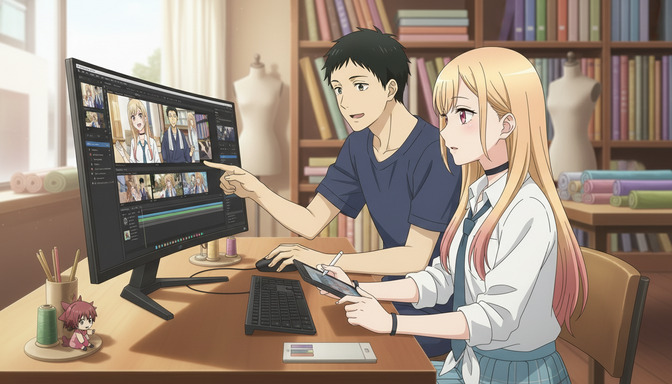
AutoWeeb's image-to-video workflow is a deliberate two-stage pipeline. First, generate and approve the scene as a static image: character positioning, facial expression, lighting, and composition all locked before animation begins. Then convert the approved image to video inside the storyboard workspace. Because the character's visual identity is embedded in the source image before animation starts, the resulting clip begins from a frame that is already correct, with the protagonist's distinctive features preserved throughout the motion. The guide on turning an anime image into a video with AI in 2026 covers the full workflow.
ChatGPT Image does not include a native video generation feature. It is an image generation tool. Creators who want to animate ChatGPT Image output need to export the image and bring it into a separate video platform, breaking the production pipeline into disconnected steps. For anime storytelling that runs from character design through finished video, this requires stitching together multiple tools, each with its own interface, pricing, and consistency limitations.
Prompting and creative workflow
AutoWeeb includes a prompt improvement system that translates natural creative descriptions into generation-ready prompts. Describe a scene the way you think about it, and the system produces the structured prompt that achieves it with the technical precision the image model needs. For anime creators who know what they want creatively but have not developed prompt engineering expertise, this closes a significant gap between intent and output.
ChatGPT Image's conversational interface is one of its genuine strengths. The back-and-forth editing workflow, where you request a change and see it applied without losing the rest of the image, is more intuitive than prompt-and-regenerate cycles. For exploratory work, character concept development, or when you are not sure exactly what you want yet, the conversation format is well-suited to the uncertainty. The limitation is that there is no underlying prompt improvement system tailored to anime's specific visual grammar, no genre awareness, and no mechanism for building on previous sessions structurally.
Full Feature Comparison
| Feature | AutoWeeb | ChatGPT Image |
|---|---|---|
| Anime-specific art styles | Yes — curated anime style library | Via prompt and reference images |
| Character sheet system | Yes — save and reuse across all scenes | No — manual reference management |
| Character consistency across scenes | Yes — structurally enforced by workflow | Requires careful prompt and reference management |
| Storyboard and scene planning tool | Yes — anime-native scene and shot planning | No |
| Image-to-video pipeline | Yes — integrated two-stage anime workflow | No — image generation only |
| Prompt improvement system | Yes — anime-aware prompt refinement | No — manual prompt writing |
| Multi-character scene support | Yes — tag multiple characters per panel | Yes, with careful prompting |
| Persistent project workspace | Yes — full story context saved across sessions | Chat history only |
| Conversational image editing | No | Yes — strengths in iterative editing |
| General-purpose image generation | Anime-focused only | Yes — broad style range |
| Photo-to-anime conversion | Yes — dedicated workflow | Via style transfer prompt |
| AI character development (AI Agent) | Yes — structured character building from scratch | Via conversational prompting |
| Starting price | $9.99/month — full anime pipeline included | Included with ChatGPT Plus (~$20/month) |
Which Type of Creator Should Use Each Tool
Choose ChatGPT Image if you need
ChatGPT Image is the right choice for creators who need high-quality one-off anime illustrations, character concept sketches, or individual scene art without a multi-scene production requirement. If you are exploring what a character might look like before committing to a design, testing different aesthetic directions for a project, or creating standalone promotional images, ChatGPT Image's conversational editing workflow and strong instruction-following make the iteration process fast and intuitive. It is also well-suited to creators who already have a production workflow in other tools and need image generation as a single step within it, rather than a platform that manages the full pipeline.
Choose AutoWeeb if you need
AutoWeeb is built for creators who are producing anime stories: an original series, a multi-scene storyboard, a webtoon with recurring characters, an animated fan project, or any creative work where the same character needs to look recognizably identical across a sequence of images or video clips. The platform solves the production problems that every multi-scene anime creator runs into: character drift across sessions, narrative context lost between sittings, the friction of rebuilding prompts from scratch for every new panel. If your creative goal involves characters you care about appearing consistently across more than a handful of images, AutoWeeb's infrastructure is what makes that possible without spending the majority of your time on consistency management rather than storytelling.
The guide on how AutoWeeb's AI Agent helps you create better original anime characters covers the full character development workflow, and why @ tagging makes AI storyboarding faster and more consistent explains how character definitions connect to the full production pipeline.
Frequently Asked Questions
Can ChatGPT Image generate consistent anime characters if I upload the same reference image every time?
Reference image uploads improve consistency significantly, and for short projects with a single main character, the results can be quite good. The limitation becomes visible over longer projects with multiple characters, complex outfits, or distinctive features that need to survive different poses and lighting conditions. Each new session starts fresh without access to your previous generation context, and the results depend on how much visual information survives in the reference image you upload. AutoWeeb's character sheet system addresses the consistency problem structurally rather than relying on reference image management each session.
Does AutoWeeb use the same underlying image generation technology as ChatGPT Image?
AutoWeeb's image generation is built on different underlying models tuned specifically for anime output, rather than the general-purpose multimodal model powering ChatGPT Image. The more relevant distinction is not which model is generating the images, but what infrastructure surrounds the generation: character sheets, storyboards, style libraries, and prompt improvement tools that are specific to anime production. The generation model matters less than whether the platform is structured to solve the problems anime storytelling actually creates.
Is AutoWeeb significantly harder to use than ChatGPT Image?
The learning curve is different rather than steeper. ChatGPT Image's conversational interface requires very little setup but demands good prompting technique for reliable results. AutoWeeb's interface requires setting up a character sheet and storyboard before generating, which takes more initial work, but that setup is what makes every generation session faster and more consistent afterward. Creators building original anime stories generally find the front-loaded setup pays for itself within a few scenes.
Can I import a character I designed in ChatGPT Image into AutoWeeb?
Yes. Export the best image of your ChatGPT Image character as a reference and upload it as the visual anchor for a new AutoWeeb character sheet. Add the written description of the character's appearance, personality, and story role, and use AutoWeeb's Improve Prompt feature to sharpen the visual description for consistent generation. The guide on importing character sheets from other AI platforms into AutoWeeb covers this process in detail.
Which platform produces better-looking anime images?
On individual images, both platforms are capable of producing high-quality anime art, and the results are close enough that "better" depends on style preference and how well-crafted the prompt is. The more meaningful comparison is across a sequence of images: a six-panel storyboard, a twelve-scene story arc, a character in twenty different situations. At that scale, AutoWeeb's character consistency system produces results that hold together as a story, while ChatGPT Image's results depend on how carefully consistency is managed by hand across every session.
Does ChatGPT Image support anime video generation?
No. ChatGPT Image generates static images only. Creators who want to animate ChatGPT Image output need to export the image and bring it into a separate video generation platform such as Kling, Runway, or Seedance 2. AutoWeeb's image-to-video pipeline is integrated into the storyboard workspace, so the character you designed and the image you approved move into video generation within the same production environment without switching tools.
Which platform is better for a creator who is new to AI and anime storytelling?
For a creator who is exploring what AI image tools can produce and has no specific storytelling project in mind, ChatGPT Image's conversational interface is a lower-friction starting point. For a creator who has an anime story they want to build, original characters they are designing, or a storyboard they are planning, AutoWeeb's structured workflow is better suited to the task from the beginning. The guided production pipeline, including the AI Agent for character development, means a new creator is building something functional from day one rather than learning prompt technique in isolation.
If you are ready to move from individual images to a full production workflow, the guide on upgrading your existing character sheets with AutoWeeb explains how to turn any character you have already designed into a consistent, storytelling-ready asset. For the full pipeline from character creation through finished video, the step-by-step guide on creating your first AI anime story covers every stage in sequence.
Related Blog Posts
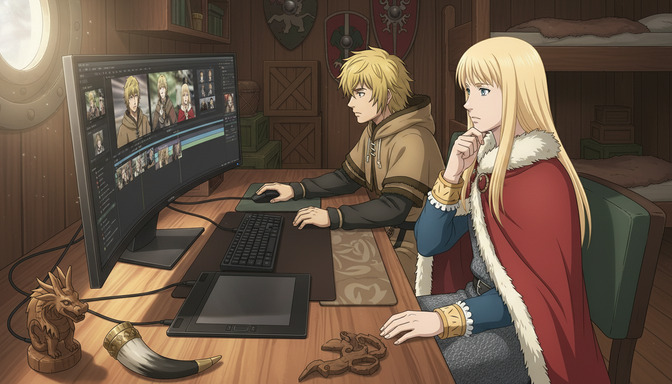
Why @ Tagging Characters in AutoWeeb Makes AI Storyboarding Faster and More Consistent
Every time you retype a character description from scratch, you're wasting time and introducing drift. AutoWeeb's @ tagging system solves both problems at once.
Learn how AutoWeeb's @ tagging system speeds up AI storyboarding and keeps characters consistent across every scene. Tutorial with before/after examples.
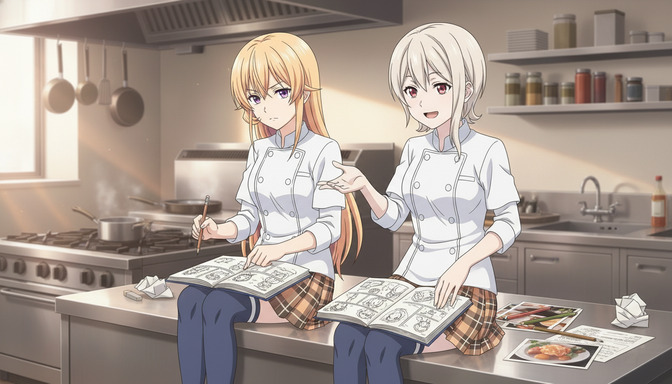
How AutoWeeb's AI Agent Helps You Create Better Original Anime Characters
Most original anime characters fail before they're ever drawn. AutoWeeb's AI Agent and Improve Prompt feature fix the structural problems that generic characters share.
Learn how AutoWeeb's AI Agent helps you create original anime characters with real personality, visual identity, and story purpose. Step-by-step guide with prompt examples.
AutoWeeb vs Artlist: Which AI Tool Is Better for Creating Anime Stories and Videos?
Artlist is a media asset platform with AI video tools. AutoWeeb is the platform built for creators designing anime characters, planning stories, and generating consistent anime video from scratch.
AutoWeeb vs Artlist for anime story creation in 2026. Compare character creation, storyboarding, image generation, video workflow, character consistency, pricing, and which platform wins for anime creators.
How to Import Character Sheets from Other AI Platforms into AutoWeeb
Built your character in Midjourney, ChatGPT, or Leonardo AI? Here's how to bring them into AutoWeeb and turn them into a complete reusable storytelling asset.
Learn how to import character sheets from Midjourney, ChatGPT, Leonardo AI, Stable Diffusion, Ideogram, and Flux into AutoWeeb for consistent anime storytelling.
Explore AutoWeeb
Jump into the tool that fits your creative step.
AI Anime Video Generator
Animate storyboard shots into cinematic clips with Seedance 2 and consistent characters.
Anime Character Creator
Design original characters with consistent sheets across every scene.
AI Anime Image Generator
Generate cinematic anime stills anchored to your character library.
Turn Photo Into Anime
Upload any photo and watch AI turn it into stunning anime art in seconds.
AI Anime Location Generator
Create a location set once, then generate reference images from every angle.
AI Anime Storyboarding
Describe your idea, pick your characters, and let AI draft the script and scenes.
AI Anime Prompt Agent
Turn a rough idea into a cinematic Seedance 2 prompt with the AI Director.