How to Upgrade Your Existing Character Sheets with AutoWeeb
A single reference image is a starting point, not a character system. Here's how to turn what you already have into a complete, storytelling-ready anime character.
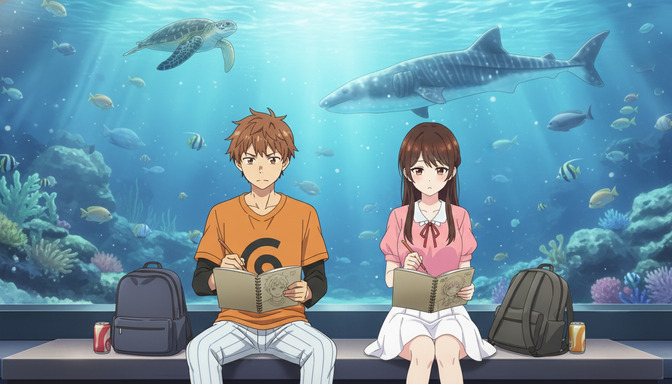
Most anime character sheets are incomplete. Not because the creator didn't care, but because the tools they used weren't built for the full scope of what storytelling actually demands. You have a strong front-facing portrait, maybe two. The design is solid. The colors are right. But the moment you try to put that character into a real scene, the gaps show: no side profile, no secondary outfit, one expression that reads somewhere between neutral and vaguely concerned, and a prompt description that would produce inconsistent results on a good day. The character exists. The character system doesn't.
This guide is for creators who already have something, a character image, a reference set, a design that was generated elsewhere and never quite made it into a format that works across scenes, and want to turn it into a fully usable storytelling asset inside AutoWeeb.
Why Most Character Sheets Are Incomplete
When creators build anime characters on general-purpose AI platforms, they tend to stop at the first image that looks right. That moment of satisfaction is real, but it creates a false sense of completion. A single good image is a reference, not a character system. The difference matters the moment you try to generate that character across twenty different scenes.
Here are the gaps that appear most often, and why each one is a problem in actual production.
Missing expressions
A character locked into one emotional register is visually inert. If your reference set only shows a neutral or lightly serious expression, every generated scene inherits that flatness regardless of what the scene description says. An argument scene, a reunion, a moment of pure joy: they all generate with the same face because that's the only face the AI has seen. Expressions are not decorative. They are the primary vehicle for character emotion in visual storytelling.
Missing poses
Front-facing standing portrait is the most common reference image and the least useful for scenes. Stories require characters in motion: running, sitting, reaching, turning, reacting. If the character sheet has no reference poses, the AI defaults to whatever pose fits the scene description generically, which frequently produces proportion distortion, awkward limb placement, and characters who look like they borrowed someone else's body for the scene.
Missing outfits
A character in a single outfit cannot move through a story that spans multiple settings. School scenes, casual scenes, formal events, action sequences: each demands different clothing. Without outfit references, every generated scene either repeats the canonical outfit regardless of context or drifts toward a generic anime wardrobe that has nothing to do with who the character is.
Inconsistent proportions
This one is subtle but damaging across a long project. If your reference images were generated at slightly different times, with slightly different prompts, or in different generations of the same model, the character's proportions may not be fully consistent between them. Height, head-to-body ratio, shoulder width, hand size: small variations add up, and they make multi-scene storytelling feel uncanny in ways that are hard to articulate but immediately felt.
Missing camera angles
Stories use the camera. A scene has a perspective: close-up, medium shot, overhead, over-the-shoulder, low angle. Without reference images that show the character from multiple angles, generating scenes with specific camera work produces unpredictable results. The AI has no visual anchor for what the character looks like from the side, from above, or in a low-angle hero shot.
Missing emotional states
Expressions and emotional states are related but distinct. An expression is a face configuration: the angle of the brows, the set of the mouth. An emotional state is a full-body condition: how the character holds herself when she's frightened, how her posture shifts when she's trying not to cry, the way she looks when she's deciding something difficult. Emotional states require full or upper-body reference images, not just portrait close-ups.
Weak prompt descriptions
A character sheet with strong images but a vague written description is only half-built. If the description reads "a girl with dark hair and a school uniform," the AI will default to the statistical center of that description across every generation: average school uniform, average hair length, average everything. The written description is how you maintain specificity when the reference image does not perfectly match the scene context you're generating.
Step 1: Audit Your Existing Character Sheet
Before generating anything, take stock. Pull out every reference image you have for this character and categorize what's there and what's missing. A useful audit covers these categories:
- Front-facing portrait: clean, full face visible, no obstruction
- Side or three-quarter view
- Full-body shot showing the complete outfit
- At least two distinct facial expressions
- At least one non-standing pose
- A second outfit or outfit variation
- A written description with specific color names, hair details, outfit details, and distinguishing features
Mark every category you're missing. That list is your upgrade roadmap. Everything on it can be generated inside AutoWeeb once the base character sheet is loaded.
Step 2: Load Your Existing References into AutoWeeb
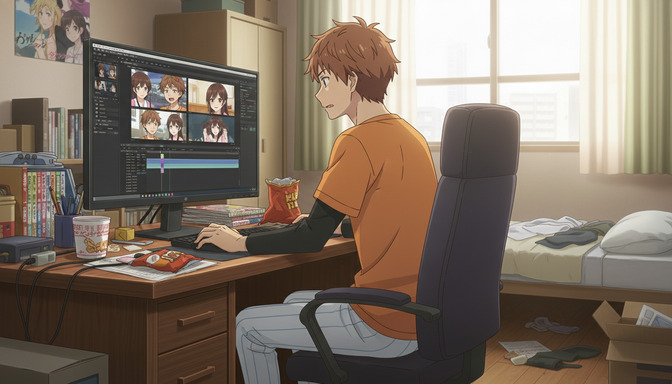
Open AutoWeeb and create or open the character record for this character. Upload your existing reference images. These become the visual foundation for everything you generate next: AutoWeeb's AI uses them as anchors, so the new content you generate inherits the character's established appearance rather than reinventing it from the prompt alone.
Once the references are loaded, write or refine the written character description. Do not summarize. Be specific. Name every color: not "dark hair" but "deep brown hair that shifts toward auburn in direct light, worn in a low ponytail with two shorter strands framing the face." Name every outfit element by piece, cut, and color. That specificity is what allows AutoWeeb to hold the character together across scenes that differ significantly in context, lighting, and composition.
Step 3: Generate the Missing Pieces
With the base sheet loaded, work through your audit list. AutoWeeb generates targeted additions: single expressions, specific poses, outfit variations, camera-angle references. The key is generating each addition with the same character sheet active, so every new reference is visually consistent with the ones you already have.
Adding facial expressions
Generate expressions one at a time and be specific about what you're asking for. Vague instructions like "happy expression" produce generic results. Specific emotional context produces useful ones. A prompt like: Yuki, front-facing close-up, wide eyes with visible tears brimming at the lower lash line, slight tremble in the lower lip, hands clutched together at chest height, diffused soft lighting, slice of life anime style gives the AI an emotional and physical context to work from, not just a label.
At minimum, generate a neutral expression, a genuinely happy expression with visible eye movement, a distressed or frightened expression, and a determined or resolved expression. Those four cover the emotional range most story scenes will require.
Adding emotional states
Emotional states require upper-body or full-body context. Describe posture alongside the expression: where the shoulders are, how the arms are positioned, what the hands are doing. A character who is frightened with arms crossed and body turned slightly away reads differently from one who is frightened with hands up in front of her, palms out, weight shifted back. Both are valid for different scene contexts. Generate both.
Adding new outfits
Outfit references work best when generated from a standing neutral pose with a clear front view. The goal is not a dramatic scene image; it is a clear record of what the character looks like in this clothing. Once you have the reference, AutoWeeb can use it consistently in any scene you generate that calls for that outfit. A useful prompt: Yuki in summer casual outfit, cropped white linen shirt and high-waisted denim shorts with a thin brown belt, ankle-strap sandals in tan leather, same deep brown ponytail and amber eyes, neutral expression, plain light background, standing, full-body view, slice of life anime style.
Adding dynamic poses
Dynamic poses are harder to generate consistently than static ones, but they are critical for action and motion scenes. The trick is describing the pose in terms of the body's position and weight rather than the action label. Instead of "running," describe what running looks like: Yuki mid-stride, weight forward on left foot, right leg behind with knee bent, right arm swinging forward, left arm back, hair and scarf trailing behind from motion, slight forward lean in the torso, determined expression, urban street background slightly out of focus.
Adding camera angle references
Generate at least one over-the-shoulder angle, one low-angle hero shot, and one tight close-up focused on the eyes and upper face. These three cover the camera moves that appear most frequently in anime storytelling. Having reference images for each angle means that when you generate a scene using that camera position, the AI has a visual anchor for how the character looks from that perspective.
Adding story-specific variations
Think about what your story actually demands. Does this character appear in scenes set at night? Generate a low-light reference. Is there a moment of physical transformation or a costume change that's narrative-significant? Generate that now, while the character sheet is active and current. Story-specific variations are not bonus content; they are production assets that will pay off every time you need to generate those scenes.
Before and After: From a Single Image to a Complete Character System
Here is what the upgrade process looks like in practice. Say the starting point is a single image: a front-facing portrait of a character named Sora, silver hair with a blunt cut, pale blue eyes, a dark school blazer with a white collar visible at the neck. That image is good. The face is clear, the colors are right, the aesthetic reads correctly as anime. But it is one image of one pose in one emotional state with one outfit.
After loading that reference into AutoWeeb and completing the upgrade workflow, the character sheet contains: a neutral front portrait, a three-quarter profile, a back view showing hair detail, a full-body standing reference in the school uniform, a seated pose with book, three distinct facial expressions (neutral/analytical, distressed, quietly determined), two outfit variations (school uniform and a casual weekend look in a pale gray oversized hoodie and dark joggers), a low-angle hero shot, and a close-up eye reference. The written description specifies: silver-white hair cut bluntly at jaw level with a slight inward curve, pale blue-gray eyes with a thin darker ring at the iris edge, light skin with no visible blush under normal conditions, dark navy school blazer, white dress shirt, dark pleated skirt, white knee socks, black oxfords.
The before: one image, unusable in production without extensive re-prompting each time. The after: twelve references, a complete written anchor, and a character who can be placed in any scene, in any outfit, in any emotional state, in any camera angle, without visual drift.
Step 4: Make the Character Reusable Across Images, Videos, and Storyboards
A complete character sheet in AutoWeeb is not a local asset tied to one project. It is a persistent object in your account, available across every image generation, video generation, and storyboard you create going forward.
For image generation, the character sheet supplies the reference image and the written description simultaneously. The AI uses the image to anchor visual identity and the text to resolve specific attributes in the current scene context. Scenes with complex lighting, unusual angles, or emotionally charged compositions stay on-model because both anchors are active.
For video generation, the workflow builds on the image generation layer. You generate the source image for the scene with the character sheet active. That source image then becomes the input for the video prompt, which specifies motion, camera behavior, and environmental animation. The character's visual identity carries from the character sheet into the scene image and from the scene image into the video, maintaining consistency across the full pipeline.
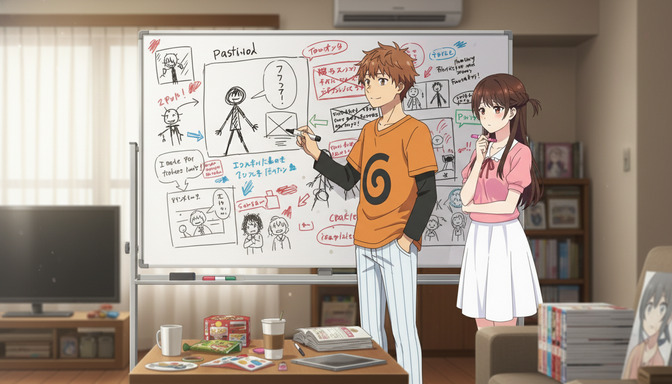
For storyboards, the character sheet is attached at the project level. Every panel in the storyboard draws from the same character definition. You write the scene descriptions; AutoWeeb structures the prompts with your character sheet as the foundation. The character remains herself across a twenty-panel sequence even when the settings, actions, and emotional beats vary completely between panels.
Once a character sheet is complete, the marginal cost of using that character in a new project is almost zero. Every hour you put into the upgrade workflow is recovered across every project that character appears in for the rest of your work.
Frequently Asked Questions
Can I upgrade a character sheet that was originally built in Midjourney or another AI tool?
Yes. AutoWeeb's character sheet process is image-based: you upload your existing reference images from any source and build the written description from what you see in them. The platform of origin does not matter. What matters is the clarity and quality of the reference images you bring over. For a more detailed walkthrough of importing characters from other platforms, see the guide on importing character sheets from other AI platforms into AutoWeeb.
How many expressions do I actually need on a character sheet?
At minimum, four: neutral, happy, distressed, and determined. Those cover the emotional range that most story scenes require. For longer projects or characters with complex emotional arcs, add a frightened expression, a quietly sad expression, and a caught-off-guard or surprised expression. Eight expressions is a solid ceiling for most purposes. More than that rarely improves generation quality and adds noise to the reference set.
Will upgrading the character sheet affect images I've already generated?
No. Previously generated images are not affected by changes to the character sheet. Only new generations use the updated sheet. This means you can refine and expand the sheet at any point without breaking existing work. If you make significant changes to the character's core appearance, generating a fresh front-facing reference first before continuing with new scenes is good practice.
My character has proportions that look slightly different across my existing references. How do I fix that?
The fix is to generate a new canonical reference inside AutoWeeb with the character sheet active, treating your most accurate existing image as the primary anchor and the others as secondary. Once you have a clean, consistently proportioned set of references all generated from the same character sheet, retire the inconsistent older images from the active reference set. The new references become the foundation everything else builds from.
What makes a character sheet "storytelling-ready" versus just complete?
A complete character sheet has coverage: expressions, poses, outfits, camera angles. A storytelling-ready character sheet also includes story-specific variations tied to actual scenes in the project. The character in the emotional state she's in during the climax. The character in the costume she wears for the festival scene. The character's expression in the moment she realizes what happened. Those variations are not generated speculatively; they are generated in response to specific story beats you've already identified. That specificity is what closes the gap between a reference library and a production asset.
How long does it take to fully upgrade a character sheet in AutoWeeb?
A focused upgrade session, starting from a single existing reference image and ending with a complete character system including multiple expressions, poses, outfit variations, and camera angle references, typically takes one to two hours. That includes the time to write or refine the written description. For a character with an existing strong reference set from another platform, the process is faster because the visual foundation is already in place and you're generating additions rather than starting from scratch.
Can I use a character sheet across multiple different anime story projects?
Yes. Character sheets are saved to your AutoWeeb account and reusable across every project you create. A character you build once can appear in short-form image sets, storyboards, video series, and new story projects without rebuilding the sheet each time. The investment in a complete character sheet compounds with every project that character is used in.
Do I need to describe the character's personality in the character sheet, or is visual description enough?
Both matter, but for different things. Visual description drives appearance consistency. Personality and behavioral description drives how AutoWeeb's story and prompt tools frame the character in scene descriptions. A character described as a "reserved strategist who deflects with dry humor and rarely shows discomfort until she's pushed past a threshold" generates differently in a scene prompt than one described only as "a girl in a school uniform." The behavioral specificity shows up in the emotional framing of generated scenes, not just in the visual output.
For creators building a character from the ground up rather than upgrading an existing sheet, the guide on writing better AI anime prompts and stopping wasted credits covers the full prompt structure for character creation in detail. And for the complete workflow from a finished character sheet through storyboard, image generation, and video, creating your first AI anime story step-by-step is the place to go next.
Related Blog Posts
AutoWeeb vs Higgsfield: Which AI Video Generator Is Better for Anime Storytelling?
Higgsfield is impressive for cinematic human video. AutoWeeb is built for what anime creators actually need.
AutoWeeb vs Higgsfield for anime storytelling in 2026. Compare character consistency, storyboard tools, image-to-video pipeline, pricing, and which platform wins for anime creators.
AutoWeeb vs Kling AI: Which Platform Creates Better Anime Videos?
Kling AI generates impressive standalone clips. AutoWeeb is the platform built for anime creators making stories with recurring characters.
AutoWeeb vs Kling AI for anime creators in 2026. Compare character consistency, storyboard tools, anime styles, pricing, and which platform wins for anime storytelling.
AutoWeeb vs LTX Studio: The Better AI Storyboarding Platform for Anime Creators
LTX Studio is a capable film production tool. AutoWeeb is the platform that was actually built for anime storytelling.
AutoWeeb vs LTX Studio for anime creators in 2026. Compare storyboarding tools, character consistency, anime styles, pricing, and which platform wins for anime storytelling.
AutoWeeb vs PixVerse: Which AI Video Generator Is Better for Anime Storytelling?
PixVerse generates fast, fun anime-adjacent clips. AutoWeeb is the platform built for creators making actual anime stories with recurring characters.
AutoWeeb vs PixVerse for anime storytelling in 2026. Compare character consistency, storyboard tools, anime styles, image-to-video workflow, pricing, and which wins for anime creators.
Explore AutoWeeb
Jump into the tool that fits your creative step.
AI Anime Video Generator
Animate storyboard shots into cinematic clips with Seedance 2 and consistent characters.
Anime Character Creator
Design original characters with consistent sheets across every scene.
AI Anime Image Generator
Generate cinematic anime stills anchored to your character library.
Turn Photo Into Anime
Upload any photo and watch AI turn it into stunning anime art in seconds.
AI Anime Location Generator
Create a location set once, then generate reference images from every angle.
AI Anime Storyboarding
Describe your idea, pick your characters, and let AI draft the script and scenes.
AI Anime Prompt Agent
Turn a rough idea into a cinematic Seedance 2 prompt with the AI Director.