AutoWeeb vs Midjourney: Which AI Tool Is Better for Anime Storytelling and Character Consistency?
Midjourney generates some of the most visually stunning AI images available. AutoWeeb is built to take a specific anime character through an entire story, consistently, without rebuilding them from scratch every session.
Midjourney is, by most measures, the most visually impressive AI image generator available. Its outputs carry a distinct painterly quality, lighting that professional concept artists recognize, and a compositional sensibility that makes single images feel like stills from a production that already exists. For pure image quality across many visual styles, including anime, it is genuinely hard to beat.
The problem is that anime storytelling is not a single-image problem. An original anime character needs to look like herself in the school hallway, on the rooftop at midnight, mid-argument in the rain, and three years later in the epilogue, wearing different clothes and carrying a different expression. Midjourney has no structural way to guarantee that. Every session starts fresh. The character you spent an hour dialing in yesterday is not the same character Midjourney generates today unless you do the reconstruction work yourself. AutoWeeb was designed to solve exactly that gap: not to compete on single-image quality, but to make consistent, story-ready anime characters possible across every panel, storyboard, and video clip in a project.
What Midjourney Is Built For
Midjourney is an image generation model that produces high-resolution, stylistically distinct outputs from text prompts. Its visual language, developed through millions of user interactions and iterative model training, has a recognizable aesthetic: rich color palettes, dramatic lighting, cinematic depth, and a kind of composed intentionality that makes outputs feel curated rather than generated. For anime, that means it can produce images that look like frames from a real production, with clean linework, expressive character art, and painterly backgrounds that rival professional concept illustration.
Its architecture, however, is a pure generation model. There is no character library, no persistent project workspace, no storyboard system, no video pipeline, and no mechanism for defining what a character looks like across multiple sessions. Midjourney does not know who your protagonist is. It produces what the prompt describes, impressively, then forgets it entirely. For a creator who wants a single beautiful anime illustration, or who is exploring visual concepts without a specific production goal, that is often exactly enough. For a creator building an original anime story with recurring characters, it is where the friction begins.
What AutoWeeb Is Built For
AutoWeeb is an anime creation platform designed around the specific production challenges of anime storytelling. Its core infrastructure is the character sheet system: a structured visual definition that captures every detail of a character's appearance and saves it as a persistent reference the platform uses automatically. Define a character once, hair color, texture, and cut, eye shape and iris detail, facial marks, the specific way the school blazer fits, the worn-out sneakers from the track team, the nervous habit of tucking the left sleeve. Save that definition. Every scene and storyboard panel that tags this character will produce her in that exact visual register, whether the scene is set in April or November, in a festival crowd or an empty classroom at 3am.
On top of character sheets, the platform provides a storyboard workspace for planning scenes and shots, a curated anime style library organized by genre, an AI Agent for structured character development, an Improve Prompt feature that translates natural creative descriptions into generation-ready anime prompts, and an image-to-video pipeline that animates approved scene frames into anime clips with the character's visual identity intact throughout the motion. The goal is not to replace Midjourney's image quality. It is to make long-form anime storytelling structurally possible without managing character consistency manually across every session.
Feature-by-Feature Comparison
Anime image generation and visual quality
Midjourney's visual quality is its primary strength. The model produces anime images with a depth and stylistic coherence that makes individual outputs feel genuinely impressive. Lighting behaves like lighting. Cloth drapes with weight. Character expressions land with emotional specificity. For a single anime illustration intended to stand on its own, it is one of the best tools available. The limitation for anime storytelling is that visual quality is evaluated per image, not across a sequence. Midjourney has no mechanism for holding a character's visual identity constant across separate generations. Two prompts for the same character, run in two separate sessions, may produce images that share a general type but diverge in hair texture, eye color temperature, and proportional treatment enough to feel like different characters.
AutoWeeb's generation quality is designed for consistency rather than peak single-image output. The style library applies the full visual grammar of a selected genre across every generation in a project, from linework conventions to color grading to background treatment, creating a cohesive visual language that holds across scenes. The character sheet defines the person who inhabits that world. Together, they produce images that cohere as a story rather than as a collection of impressive individual frames.
Character consistency across scenes
This is the clearest structural difference between the two platforms. Midjourney has no character sheet system. Producing a consistent character across multiple generations requires a combination of reference image uploads, highly detailed visual descriptions repeated in each prompt, and Midjourney's character reference feature, which uses an existing image as a visual anchor for new generations. That approach can produce reasonable consistency for a character with simple, distinctive features in a short project. Over longer projects with multiple characters, complex outfit details, subtle distinguishing features, and scenes that require the same character in a range of emotional states and lighting conditions, the work of managing consistency manually becomes a significant part of the production process.
AutoWeeb's character sheet system removes that manual work from the equation. The platform holds the character's visual definition structurally and applies it automatically whenever the character is tagged into a scene. Consistency is enforced by the workflow rather than maintained through prompt discipline. For a creator building a project across multiple sessions, that means the character from session one is structurally identical to the character in session twelve, without requiring the creator to remember and reconstruct every visual detail each time.
AutoWeeb's AI Agent goes a step further: structured conversation helps creators build out a character's personality, backstory, and visual identity before any image is generated, so the character sheet begins as a complete description rather than a rough starting point. The guide on how AutoWeeb's AI Agent helps you create better original anime characters covers this workflow in full.
Anime-specific workflows and style libraries
Midjourney handles anime as one style among many, applied through prompt language. Requesting anime-style outputs produces recognizable results, and experienced users have developed Midjourney-specific prompting conventions for particular anime aesthetics. What Midjourney does not provide is a curated library organized around anime's specific visual genres. There is no Shonen action mode, no Slice-of-Life style preset, no Mecha industrial design library. Each stylistic request is rebuilt through prompt engineering, which means visual consistency across a long project depends on how precisely the creator can reconstruct the same stylistic instruction in every session.
AutoWeeb's style library is organized by anime genre and maps each genre's full visual grammar: the high-contrast shadow work and kinetic energy of Shonen action, the warm color temperature and soft linework of Slice-of-Life, the desaturated atmosphere and heavy detail of dark fantasy, the geometric precision of Mecha design. Selecting a style applies it consistently across every generation in the project. Combined with the character sheet system, this means the visual world of a project, its genre feel, its color language, and its recurring characters, all hold together automatically rather than requiring the creator to maintain them manually.
Character sheets and recurring characters
Building a cast of recurring anime characters in Midjourney requires managing each character's reference images and prompt descriptions independently across every session. A project with three main characters, each with distinctive visual designs, outfit variations, and scene-specific states, becomes a significant prompt management challenge. The character reference feature helps but does not replace a structural definition: it anchors a new generation to an existing image rather than to a set of defined visual properties that hold consistently regardless of how the model interprets the reference on a given day.
AutoWeeb's character library stores every character as a structured definition. Tag two characters into the same storyboard panel with @ tagging, and both character sheets are applied to the generation automatically. The scene shows both characters in their defined visual identities, in the same visual style, without requiring the creator to describe either one from scratch. For a creator working with a cast of three, five, or ten recurring characters, the difference in production friction is substantial. The guide on why @ tagging characters in AutoWeeb makes AI storyboarding faster and more consistent explains the mechanics and the time savings in detail.
Storyboard creation
Midjourney does not include a storyboard workspace. A creator using Midjourney for anime production typically generates images in Discord or the Midjourney web app, exports them, and organizes them in a separate tool: a slide deck, a Notion board, a video editing timeline. Narrative structure, shot composition planning, scene sequencing, and character assignment all happen outside the generation tool, which means rebuilding context each time the creator returns to the project.
AutoWeeb's storyboard workspace is a production environment designed for multi-scene anime work. Each scene has fields for location, time of day, emotional tone, character assignments, and narrative purpose. Shots are planned as sub-panels with camera angle and character positioning defined before generation begins. The storyboard holds the complete project structure across sessions: scene notes, arc planning, and character assignments persist between sittings, so returning to a project means picking up exactly where the work left off rather than reconstructing context from scattered files.
Image-to-video generation
Midjourney does not include a native video generation pipeline. Animating a Midjourney image requires exporting to a separate video tool, such as Runway or Kling, and managing the translation between platforms manually. Character visual identity established in Midjourney is not structurally carried into the video tool, which means continuity in the animated clip depends on how faithfully the video model interprets the source image rather than on a shared character definition.
AutoWeeb's image-to-video workflow is integrated into the same storyboard workspace where the character was defined and the scene was composed. Generate a scene image, review and approve it with character positioning and expression locked, then animate that approved frame into an anime clip without leaving the platform. Because the character's visual identity is embedded in the source image before animation begins, the resulting clip preserves the protagonist's features, hair movement, and outfit details throughout the motion. The full pipeline, from character sheet through storyboard through animated video, runs in one environment without context switching.
Prompt improvement tools
Midjourney rewards prompt expertise. Users who understand how to describe lighting, composition, style references, and technical parameters get significantly better outputs than users who write natural creative descriptions. That expertise gap is real: the same scene described by an experienced Midjourney user and a first-time user will produce outputs with a visible quality difference, not because the creative vision is better but because the prompt syntax is more fluent. For anime creators who want to spend their energy on story and character rather than on learning prompt syntax, that is a meaningful barrier.
AutoWeeb's Improve Prompt feature closes that gap. Describe the scene in natural creative language: Kaito standing in the rain outside the station, uniform jacket pulled over his head, expression somewhere between tired and resigned, commuter crowd blurring past him, yellow streetlights reflecting in the puddles. The Improve Prompt system translates that description into a generation-ready anime prompt that captures the visual register of the moment, the specific lighting quality, the emotional tone, the anime-appropriate framing, without requiring the creator to know how the model interprets any of those concepts. The scene gets generated as imagined, not as translated by prompt trial and error.
Who Should Use Which: A Buying Guide
For beginners
New creators approaching anime image generation for the first time face a different version of the question depending on what they want to make. If the goal is a few standout anime illustrations, fan art of original characters, or exploratory visual concepts without a production target, Midjourney's quality ceiling is appealing and the Discord-based interface is familiar enough to navigate quickly. The learning curve is in the prompting; outputs will improve significantly as prompt skill develops, but first-session results can still be impressive.
For a beginner with a specific story goal, a character they want to bring to life consistently across multiple scenes, or an original anime project they are starting from scratch, AutoWeeb is the more structured entry point. The AI Agent walks through character development conversationally. The Improve Prompt feature handles the translation from creative intent to generation-ready description. The character sheet system means the character stays consistent automatically, so early work holds rather than needing to be rebuilt as the project grows. AutoWeeb is also the better choice for a beginner who wants to produce anime video: starting in Midjourney and then switching tools for animation means rebuilding workflow context partway through every project.
For content creators
Content creators producing anime-style visual content for social platforms face a consistency and output volume challenge. A Midjourney workflow produces high-quality individual images efficiently, and for creators posting standalone illustrations, the visual quality can drive strong engagement. The constraint appears when building a series: a recurring cast, a running storyline, a character arc that plays out across multiple posts. Managing character consistency in Midjourney at production volume requires careful prompt template management and reference image systems that creators build themselves.
AutoWeeb's infrastructure is designed for exactly that production pattern. Character sheets mean the cast is defined once and stays consistent across every post. The storyboard workspace organizes content as a series rather than as individual disconnected generations. The image-to-video pipeline adds animated clips to the content mix without switching platforms. For content creators who want to build an audience around an original anime cast and story, AutoWeeb handles the production overhead that would otherwise slow down the creative work.
For aspiring anime filmmakers
An aspiring anime filmmaker working with AI tools needs the complete pipeline: character design, character consistency across a full cast, scene planning and storyboard production, and video generation that preserves character identity through motion. Midjourney handles the design stage with impressive quality but has no native path through to video, no storyboard workspace, and no character consistency infrastructure for a multi-episode project with a developed cast.
AutoWeeb is built for this workflow. A filmmaker can design a full cast of characters with detailed sheets, plan an episode's story arc in the storyboard workspace with scene-by-scene shot composition, generate the visual content for each scene with characters tagged from the library, and animate approved frames into video clips, all without leaving the platform. The guide on how to upgrade your existing character sheets with AutoWeeb explains how to build production-ready character definitions that hold through every phase of that pipeline.
Full Feature Comparison
| Feature | AutoWeeb | Midjourney |
|---|---|---|
| Single-image visual quality | Strong, anime-optimized output | Exceptional — one of the best available |
| Anime-specific art styles | Yes — curated genre library (Shonen, Slice-of-Life, Mecha, and more) | Via prompt description and style references only |
| Character sheet system | Yes — save and reuse across all scenes automatically | No — character reference images only, manual per session |
| Character consistency across scenes | Yes — structurally enforced by the workflow | Requires prompt management and reference image uploads |
| Storyboard and scene planning workspace | Yes — anime-native scene and shot planning environment | No — external tools required |
| Image-to-video pipeline | Yes — integrated two-stage anime animation workflow | No — image generation only, separate video tools required |
| Prompt improvement system | Yes — anime-aware prompt refinement built in | No — manual prompt expertise required |
| AI Agent for character development | Yes — structured character building from description to sheet | No |
| @ tagging characters into scenes | Yes — tag multiple characters per panel directly | No |
| Recurring character cast support | Yes — character library holds full cast across all sessions | Manual reference and prompt management per character |
| Persistent project workspace | Yes — full story context saved across sessions | Generation history only — no project structure |
| Prompt expertise required | No — Improve Prompt handles translation from creative intent | Yes — output quality scales significantly with prompt skill |
| Suitable for anime filmmakers | Yes — full pipeline from character design through video | Partial — strong for design, no native storytelling or video pipeline |
| Starting price | $9.99/month — full anime pipeline included | Basic plan from $10/month — image generation only |
Verdict
Midjourney is the better tool for a single anime image. If the goal is one visually striking illustration, a concept piece, or exploratory character art without a production destination, its image quality is genuinely unmatched among AI generators. The depth, the lighting, the compositional intelligence: these are real advantages for a specific creative goal.
AutoWeeb is the better tool for an anime story. The moment the creative goal extends beyond a single image to a character who needs to look the same across ten scenes, a storyboard that holds narrative structure across sessions, or an animated clip that preserves the protagonist's design through motion, Midjourney's structural limitations become the dominant production challenge. AutoWeeb was built to solve those specific problems: consistent characters through character sheets, organized story production through the storyboard workspace, and integrated video through the image-to-video pipeline.
For anime creators who want to build something rather than just generate something, AutoWeeb provides the infrastructure that makes that possible. Midjourney produces beautiful images. AutoWeeb produces a story.
Frequently Asked Questions
Can Midjourney generate consistent anime characters across multiple images?
Midjourney can produce visually impressive individual anime images. Maintaining a specific character's appearance across multiple separate generations requires the character reference feature (uploading an existing image as a visual anchor), detailed prompt descriptions repeated each session, and careful management of how the model interprets the reference on any given generation. For a character with simple, distinctive features and a short project, the results can be reasonable. For a longer project with a complex character design, multiple outfit variations, and scenes requiring different emotional states and lighting conditions, the consistency work becomes a significant production overhead. AutoWeeb's character sheet system replaces that manual effort with structural consistency enforced automatically by the workflow.
Does Midjourney have a storyboard tool for anime production?
Midjourney does not include a storyboard workspace. Creators using Midjourney for anime production typically generate images in the Midjourney interface and organize them in external tools: slide decks, Notion boards, video editing timelines. Narrative structure, scene sequencing, and character assignment are all managed outside the generation tool, which means rebuilding production context when returning to a project. AutoWeeb's storyboard workspace is a dedicated anime production environment where scenes are planned with production fields, characters are tagged from the saved library, and the complete project structure persists across sessions.
Can I animate Midjourney images into anime video?
Midjourney does not include a native video generation feature. Animating a Midjourney-generated image requires exporting to a separate video platform such as Runway, Kling, or similar, and managing the workflow between disconnected tools. Character visual identity defined in Midjourney is not structurally carried through to the video tool. AutoWeeb's image-to-video pipeline is integrated into the same workspace where the character was defined and the scene was composed. Approve a scene image, then animate it in the same environment, with the character's visual properties preserved throughout the motion.
Is AutoWeeb harder to use than Midjourney for anime image generation?
The initial experience is different rather than harder. Midjourney produces a first anime image quickly with a text prompt in Discord or the web app. AutoWeeb asks you to create a character sheet and set up a storyboard before generating, which requires more upfront work. That setup is what makes every session afterward faster and more consistent: the character definition and project structure are already in the workspace rather than needing to be rebuilt. AutoWeeb also does not require prompt expertise. The Improve Prompt feature handles the translation from natural creative descriptions to generation-ready anime prompts, which makes it more accessible than Midjourney for creators who do not want to learn prompt engineering.
What anime styles does AutoWeeb have that Midjourney does not?
AutoWeeb maintains a curated library of anime-specific art styles organized by visual genre. Selecting Shonen action applies the full visual grammar of that genre: high-contrast shadows, kinetic composition, saturated impact colors, expressive character distortion. Selecting Slice-of-Life applies warm color temperature, soft linework, and understated compositional framing. Midjourney handles style through prompt language, which can produce recognizable genre results on individual images but requires careful reconstruction of those stylistic instructions across every session in a long project. AutoWeeb's style selection holds the visual language constant automatically.
Can I bring a Midjourney character into AutoWeeb?
Yes. Export your best Midjourney-generated character image and upload it as the visual anchor for a new AutoWeeb character sheet. Add a written description of the character's appearance and use AutoWeeb's Improve Prompt feature to sharpen the visual description for consistent generation. The character sheet then becomes the persistent structural reference for all future generations in AutoWeeb, which is more reliable than re-uploading the Midjourney image each session and managing consistency through reference images and prompt repetition.
Which platform is better for beginners making their first anime character?
It depends on the goal. For a beginner who wants a few impressive anime illustrations quickly, Midjourney's quality is immediately accessible, though improving outputs requires developing prompt skills. For a beginner with a story goal, a character they want to develop across scenes, or a project they want to grow into a storyboard or video, AutoWeeb's structured workflow is the better entry point. The AI Agent walks through character development conversationally, the character sheet system keeps work consistent automatically, and the Improve Prompt feature handles the technical prompt writing. The initial setup takes more time than a first Midjourney generation, but the infrastructure holds as the project grows rather than requiring manual consistency management at every new scene.
For more comparison context, see AutoWeeb vs Gemini: The Better AI Platform for Anime Images, Characters, and Videos or AutoWeeb vs ChatGPT Image: Which AI Tool Is Better for Creating Consistent Anime Characters and Stories for additional head-to-head breakdowns covering the same character consistency and storytelling criteria.
Related Blog Posts
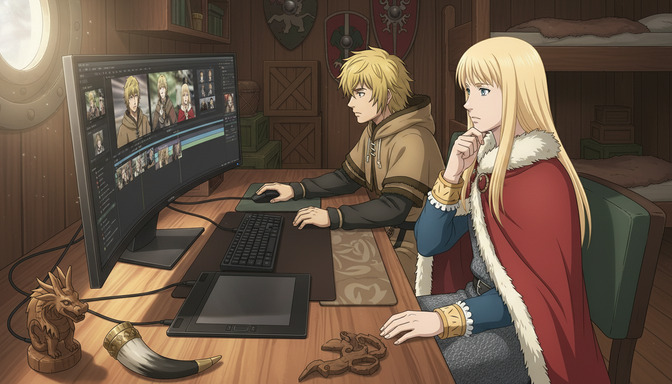
Why @ Tagging Characters in AutoWeeb Makes AI Storyboarding Faster and More Consistent
Every time you retype a character description from scratch, you're wasting time and introducing drift. AutoWeeb's @ tagging system solves both problems at once.
Learn how AutoWeeb's @ tagging system speeds up AI storyboarding and keeps characters consistent across every scene. Tutorial with before/after examples.
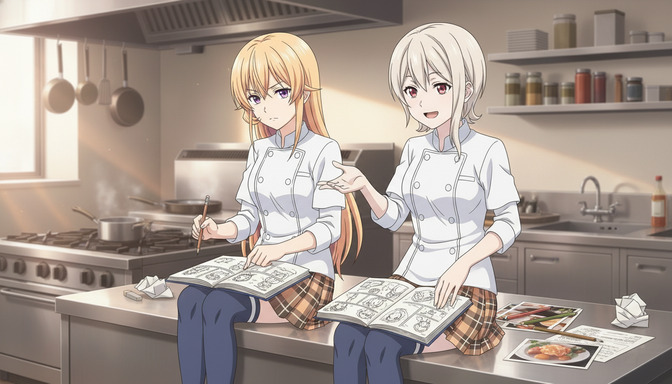
How AutoWeeb's AI Agent Helps You Create Better Original Anime Characters
Most original anime characters fail before they're ever drawn. AutoWeeb's AI Agent and Improve Prompt feature fix the structural problems that generic characters share.
Learn how AutoWeeb's AI Agent helps you create original anime characters with real personality, visual identity, and story purpose. Step-by-step guide with prompt examples.
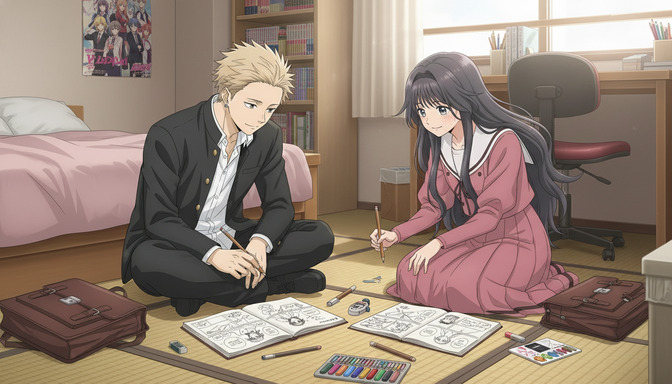
AutoWeeb vs Artlist: Which AI Tool Is Better for Creating Anime Stories and Videos?
Artlist is a media asset platform with AI video tools. AutoWeeb is the platform built for creators designing anime characters, planning stories, and generating consistent anime video from scratch.
AutoWeeb vs Artlist for anime story creation in 2026. Compare character creation, storyboarding, image generation, video workflow, character consistency, pricing, and which platform wins for anime creators.
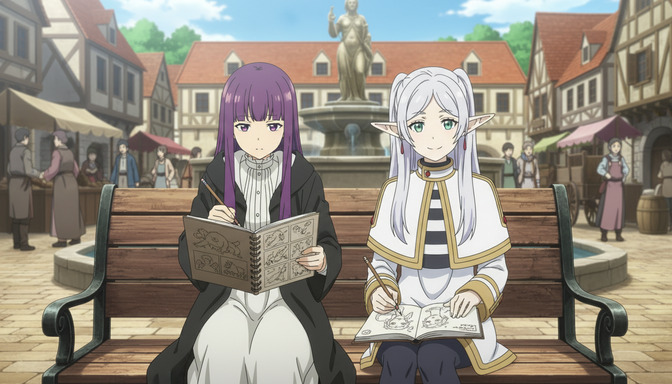
How to Import Character Sheets from Other AI Platforms into AutoWeeb
Built your character in Midjourney, ChatGPT, or Leonardo AI? Here's how to bring them into AutoWeeb and turn them into a complete reusable storytelling asset.
Learn how to import character sheets from Midjourney, ChatGPT, Leonardo AI, Stable Diffusion, Ideogram, and Flux into AutoWeeb for consistent anime storytelling.
Explore AutoWeeb
Jump into the tool that fits your creative step.
AI Anime Video Generator
Animate storyboard shots into cinematic clips with Seedance 2 and consistent characters.
Anime Character Creator
Design original characters with consistent sheets across every scene.
AI Anime Image Generator
Generate cinematic anime stills anchored to your character library.
Turn Photo Into Anime
Upload any photo and watch AI turn it into stunning anime art in seconds.
AI Anime Location Generator
Create a location set once, then generate reference images from every angle.
AI Anime Storyboarding
Describe your idea, pick your characters, and let AI draft the script and scenes.
AI Anime Prompt Agent
Turn a rough idea into a cinematic Seedance 2 prompt with the AI Director.