AutoWeeb vs Niji Journey: Which Anime AI Generator Is Best for Building Characters and Stories?
Niji Journey produces genuinely impressive anime artwork. AutoWeeb is built to take that character through an entire story, scene by scene, with the same face and outfit every time.
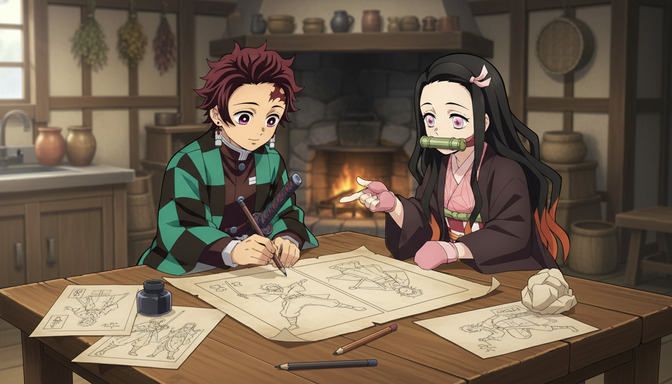
Niji Journey is, for a specific kind of anime fan, exactly the right tool. It is Midjourney's anime-native model, trained specifically on anime and manga visual language, and it shows: the outputs have a genuine anime quality that general-purpose image generators struggle to match. Fluid linework, expressive character designs, stylistic range from soft shoujo to kinetic shonen action. For generating a beautiful single anime image, it is one of the most capable tools available.
The limitation appears the moment the creative goal extends past one image. Niji Journey is a generation model. It produces what the prompt describes, then starts fresh with the next one. There is no character library, no saved character definition, no storyboard workspace, no video pipeline, no project that remembers who your protagonist is from one session to the next. For anime creators who want to build something, a character who survives scenes, an arc that holds across panels, a story that can be animated, that structural gap matters more than the quality ceiling of any individual image. AutoWeeb was built for exactly that creative scope.
What Niji Journey Is Built For
Niji Journey is Midjourney's anime-specialized model, designed to produce high-quality anime and manga-style artwork from text prompts. Where the base Midjourney model treats anime as one visual style among many, Niji Journey was trained specifically on anime's visual conventions, and that training depth is visible in the outputs. Character proportions follow anime norms. Expressions read as intended. Line quality and color relationships feel authentic to the genre rather than approximated from a generalist model. For a creator wanting stunning standalone anime artwork, it genuinely delivers.
Its architecture, however, is still a pure generation model. Niji Journey has no concept of a character existing beyond a single prompt. There is no character sheet system, no persistent storage of visual definitions, no way to say "use this character I built last week" without reconstructing that character's description from scratch and hoping the model interprets it the same way today as it did then. Projects exist as Discord threads or image galleries rather than structured creative workspaces. Storyboarding, scene sequencing, and script development all happen outside the tool entirely. For anime creators whose goals extend to story production, these are not minor inconveniences; they are the structural limits of a tool designed for image generation rather than narrative production.
What AutoWeeb Is Built For
AutoWeeb is an anime creation platform designed around the specific problems of anime storytelling production. Its foundation is the character sheet system: a persistent visual definition that captures every detail of a character's appearance and stores it as a structural reference the platform applies automatically across every scene, panel, and clip in a project. Design a character once, crimson haori with a black-and-green checkered pattern, deep burgundy hair in a short ponytail, a diagonal scar across the left cheek, worn wooden sandals, the particular set of the jaw that belongs to someone who has been carrying something heavy for years, and every subsequent scene that tags this character generates her in that exact visual register without any reconstruction work.
Built around the character sheet system, AutoWeeb provides a storyboard workspace for planning and generating multi-scene story sequences, a curated anime style library organized by visual genre, an AI Agent for structured character and narrative development, an Improve Prompt feature that translates natural creative descriptions into generation-ready anime prompts, and an integrated image-to-video pipeline that animates approved scene frames into anime clips with the character's identity intact through motion. The platform is not competing with Niji Journey on single-image output. It is solving a different and larger creative problem: how to produce an original anime story with a consistent cast, a structured narrative, and production-ready visual output from start to finish.
Feature-by-Feature Comparison
Anime image generation and visual quality
Niji Journey's image quality is its primary strength. The model's anime-specific training produces outputs that feel genuinely native to the medium rather than approximated: clean linework with the right weight distribution, color palettes that match anime's genre conventions, character expressions that land with emotional specificity, and compositional instincts shaped by actual anime production aesthetics. For a creator evaluating single-image output quality, Niji Journey is one of the strongest options available, and arguably the best among image-only generators for pure anime output fidelity.
AutoWeeb's generation quality is optimized for consistency across a sequence rather than peak quality on an individual frame. Its style library applies the full visual grammar of a selected anime genre, from the kinetic energy and high-contrast shadow work of shonen action to the warm linework and understated palette of slice-of-life, consistently across every image in a project. Combined with character sheet-enforced visual continuity, the result is a set of images that read as a coherent story rather than a collection of individually impressive but structurally unrelated frames.
Character creation and character sheets
Creating an original anime character in Niji Journey starts and ends with the prompt. A creator writes a detailed description of their character's appearance, submits it, reviews the output, refines the prompt, and repeats until the generation matches the vision. The results can be genuinely good. The problem is that this character exists only as a prompt string and a collection of generated images. There is no character definition saved to the platform. The next session, the next scene, the next project starts from scratch: rewrite the description, hope the model interprets the same language the same way, manage divergence manually.
AutoWeeb's character creation begins with the AI Agent, a structured conversational tool that helps creators develop a character's personality, backstory, visual identity, and emotional register before any image is generated. That conversation outputs a character sheet: a saved, persistent definition that becomes the structural anchor for every subsequent generation. The guide on how AutoWeeb's AI Agent helps you create better original anime characters explains the full process. Once the sheet exists, the character is a fixture in the project, not a prompt to reconstruct.
Character consistency across scenes
Maintaining character consistency in Niji Journey across multiple separate generations is the central production challenge for any creator building a longer project. The model's anime-specific training means it interprets character descriptions more faithfully than generalist models, which helps. But "more faithfully" is not the same as "structurally consistent." Two prompts with identical character descriptions, generated in separate sessions, can produce outputs that share the general character type while diverging in hair texture, iris color temperature, face shape subtleties, and proportional treatment. For a character with a distinctive, complex design and a project with twenty scenes, those small divergences accumulate into a cast that looks like it belongs to slightly different shows.
AutoWeeb's character sheet system makes consistency structural rather than probabilistic. The platform stores the character's visual definition and applies it automatically whenever the character is tagged into a scene. Consistency does not depend on how precisely the creator reconstructed the prompt or how the model interpreted the reference on a given day. The character in scene one is structurally identical to the character in scene twenty because the same definition was applied to both. For a project with multiple characters, each tagged with the @ system, the entire cast holds together across sessions without any active management work from the creator. The post on why @ tagging makes AI storyboarding faster and more consistent covers this mechanic in detail.
Expressions and poses
Niji Journey handles expressions and poses with genuine capability. Its anime-specific training means that requesting a character looking devastated in the rain, or mid-leap with a bokken raised, produces results that feel tonally accurate to the genre. The model understands anime's emotional vocabulary: the specific way exhaustion is drawn, what a character's posture looks like at the edge of a decision, how action poses carry weight and velocity in anime's visual language.
AutoWeeb applies that same expressive range within the character sheet framework. Requesting a scene where the protagonist breaks down at the train station, or squares off against an opponent in the school courtyard, generates those expressions and poses while preserving the character's visual identity: the same face, the same eyes, the same outfit, the same proportional relationship to the space. In Niji Journey, an expressive result is an isolated achievement. In AutoWeeb, it is one emotionally specific moment in a sequence where the same person just made a different face three panels ago.
Storyboarding and scene planning
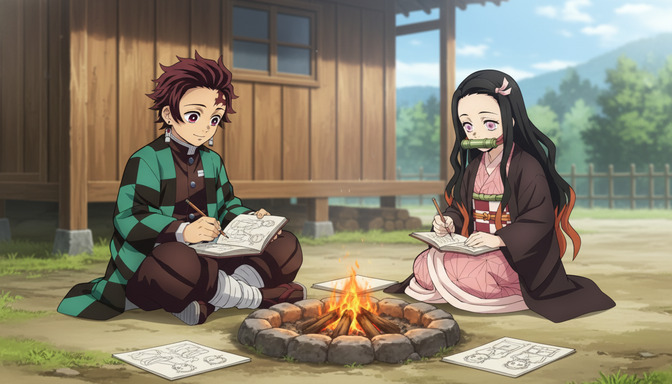
Niji Journey has no storyboard workspace. A creator using Niji Journey for multi-scene anime production generates images in Discord or the web interface, exports them, and manages narrative structure entirely in external tools: a slide deck, a Notion board, a video editing timeline. Every time the creator returns to the project, they are rebuilding context: which scene comes next, which characters are in it, what the emotional purpose of the moment is, which prompt produced the best result last session. That overhead is not a Niji Journey failure; storyboarding was simply never in scope for the tool.
AutoWeeb's storyboard workspace is a purpose-built production environment for multi-scene anime work. Each scene entry holds location, time of day, emotional tone, character assignments, narrative function, and shot composition notes. Characters are tagged from the saved library rather than described from scratch in each prompt. The storyboard holds the complete project structure across sessions, so returning to a project means continuing the work rather than reconstructing the context. For a creator building a story across days or weeks, that persistence is the difference between a project that grows and a collection of individually generated images that stays flat.
Image-to-video generation
Niji Journey does not include a video generation pipeline. Animating a Niji Journey image requires exporting to a separate platform, Runway, Kling, or similar, and managing the workflow across disconnected tools. Character visual identity established in Niji Journey is not structurally carried through to the video tool. The clip that results reflects how faithfully the video model interpreted the source image, not how precisely the character was defined anywhere upstream.
AutoWeeb's image-to-video pipeline is integrated into the same workspace where the character was defined and the scene was composed. Approve a scene image, then animate it in the same environment. The character's visual properties, face, hair, outfit, proportions, are embedded in the source image before animation begins, so the resulting clip preserves those details through the motion without requiring additional setup or cross-platform management. The full pipeline from character sheet design through storyboard production through animated video runs in one environment.
AI-assisted script writing and story development
Niji Journey has no script writing or story development tools. It generates images. Any narrative development, scene writing, character arc planning, or dialogue work happens in separate applications, with no structural connection between the written story and the generated images.
AutoWeeb's AI Agent supports both character development and story structure. Describe what kind of character you want to build and the AI Agent asks the kind of questions that sharpen a vague concept into a specific person: What is she protecting? What has she decided to stop apologizing for? How does her body move when she's nervous? Those answers build the character sheet and simultaneously inform the narrative logic of every scene she appears in. For story structure, the AI Agent can help develop scene sequences, emotional beats, and arc planning within the storyboard workspace, keeping the written story and the visual production in the same environment.
Project organization
Projects in Niji Journey are essentially Discord threads or web app galleries. Generated images accumulate without narrative structure or production context attached to them. A creator managing a twenty-scene story with three main characters across multiple sessions has to maintain that organizational structure entirely themselves, in their own file system, notes app, or project management tool.
AutoWeeb organizes everything inside the platform. Character sheets, storyboard scenes, generated images, production notes, and the video clips that come out of approved frames all live in the same workspace. A project can be left mid-session and picked up later with full context intact. Adding a new character to a scene in session eight takes the same number of steps as it did in session one, because the library, the storyboard, and the generation tools are all in the same place.
Creating an Original Character and Turning It Into a Story
The difference between Niji Journey and AutoWeeb becomes most concrete when you follow a single character from design through a multi-scene story.
Designing the character
In Niji Journey, the process looks like this: write a prompt describing the character in detail, a teenage girl with cropped silver hair and asymmetric bangs, pale violet eyes with heavy lashes, a worn dark navy tracksuit with one stripe missing from the left arm, athletic build, expression habitually unreadable, and iterate until the generation matches the vision. The results can be strong. When the image lands, it is a genuinely impressive piece of anime art. Save it to a folder. That is your character reference for everything that follows.
In AutoWeeb, the process begins with the AI Agent. Describe the character in the same terms, or less specific ones. The Agent asks follow-up questions: the specific shade of silver, whether the asymmetry is deliberate or the result of a bad haircut she never bothered to fix, what the missing stripe means if it means anything, whether the unreadable expression is a defensive habit or just how her face sits at rest. Those answers build a character sheet that holds not just the visual description but the logic behind it, so every subsequent generation reflects a person rather than a description. From the character sheet, the first scene image is generated. The character looks the same in the second, the tenth, and the twentieth scene, automatically.
Building the multi-scene story
In Niji Journey, moving from a character design to a multi-scene story means generating each scene separately with carefully reconstructed prompts, managing the saved reference images, and hoping consistency holds across sessions. There is no storyboard. There is no project. There is the character you designed and the next prompt you write.
In AutoWeeb, the transition from character design to story production is structural. Open the storyboard workspace. Create a scene: Scene 1, early morning at the track, before anyone else arrives, Ren is running the same 400m she has run every morning for three years, because stopping would mean deciding something. Tag @Ren. Set the style to slice-of-life. Add a production note about the emotional register: quiet, slightly desolate, the specific silence of a track at 5am. Generate. The panel shows Ren on the track, in her tracksuit, with her face, in the exact light and emotional tone described. Create the next scene. Tag her again. The same character appears.
By scene five, there is a story. The character exists across it. The emotional arc is visible from one panel to the next. That is the structural difference between a generation tool and a storytelling platform.
Full Feature Comparison
| Feature | AutoWeeb | Niji Journey |
|---|---|---|
| Anime image quality | Strong — anime-optimized, consistent across sequences | Exceptional — among the best single-image anime generators |
| Anime-specific training | Yes — genre library with full visual grammar per style | Yes — trained specifically on anime and manga visuals |
| Character sheet system | Yes — save and reuse across all scenes automatically | No — reference images only, manual per session |
| Character consistency across scenes | Yes — enforced structurally by the workflow | Requires prompt management and reference image uploads |
| Expressions and poses | Yes — expressive range preserved within character consistency | Strong on individual images; no consistency across scenes |
| Storyboard and scene planning | Yes — anime-native production workspace | No — external tools required |
| Image-to-video pipeline | Yes — integrated in the same workspace | No — separate video tools required |
| AI-assisted script and story writing | Yes — AI Agent for character and narrative development | No |
| Prompt improvement tools | Yes — translates natural descriptions to anime-ready prompts | No — manual prompt expertise required |
| @ tagging for multi-character scenes | Yes — tag multiple characters per panel directly | No |
| Project organization | Yes — full project structure persists across sessions | Image gallery only — no project structure |
| Suitable for anime filmmakers | Yes — full pipeline from character design through video | Partial — strong for design, no storytelling or video tools |
| Starting price | $9.99/month — full anime pipeline included | Included with Midjourney subscription from $10/month |
Who Should Use Which: Recommendations by Creator Type
For beginners
A beginner approaching anime AI generation for the first time faces a genuine fork. Niji Journey offers an immediate and impressive first result. Write a prompt, see anime art, iterate. The gap between intent and output is still meaningful for new users who have not developed Midjourney prompt fluency, but the anime-specific model means the results are recognizably on target even early on. For a beginner who wants a few beautiful anime images and has no specific story goal, Niji Journey is a low-friction entry.
For a beginner who has a character they want to develop, a story they want to tell, or a project they want to build into something, AutoWeeb is the more durable starting point. The AI Agent guides character development conversationally, so the creator does not need to know how to write a good generation prompt before producing a meaningful result. The Improve Prompt system handles the technical translation. The character sheet means early work holds rather than needing reconstruction as the project grows. A beginner who starts in AutoWeeb with a story goal is in a better structural position at scene ten than a beginner who started in Niji Journey and is now trying to maintain consistency manually.
For fan artists and standalone illustrators
A creator whose primary output is individual anime illustrations, character fan art, or concept pieces without a production narrative attached will find Niji Journey's image quality genuinely attractive. The model's anime-native training produces outputs that feel right in a way that matters for fan art: correct proportions, genuine anime expressiveness, stylistic range across genres. For someone generating content that is evaluated one image at a time and does not require a cast of consistent recurring characters, Niji Journey's quality ceiling is difficult to argue against.
For content creators building a series
Content creators building an original anime series for social platforms face a consistency and volume problem that Niji Journey is not designed to solve. A recurring cast, a running storyline, a character who needs to look the same across sixty posts: managing that in Niji Journey requires prompt templates, reference image systems, and manual consistency work that the creator builds and maintains themselves. That overhead compounds as the series grows and the cast expands.
AutoWeeb's infrastructure eliminates that overhead. Character sheets mean the cast is defined once and consistent automatically. The storyboard workspace organizes the series as production rather than as a stack of individual generations. The image-to-video pipeline adds animated content without switching platforms. For a creator committed to an original cast and story, AutoWeeb is the tool that scales with the ambition.
For aspiring anime filmmakers
An aspiring filmmaker working with AI needs the complete pipeline: character design, consistency across a full cast through an entire episode, storyboard production, and video generation that preserves character identity through motion. Niji Journey handles the design stage with genuine quality but has no path through to video, no storyboard workspace, and no structural mechanism for holding a cast together across a long production.
AutoWeeb is built for this scope. A filmmaker can design the full cast with detailed character sheets, plan an episode's arc scene by scene in the storyboard workspace, generate visual content for each scene with characters tagged from the library, and animate approved frames into clips, all without platform switching. See the guide on how to upgrade your existing character sheets with AutoWeeb for building production-ready character definitions that hold through every phase of that pipeline.
Verdict
Niji Journey is the better tool for a single anime image. Its anime-specific training produces outputs that are genuinely native to the medium, and for a creator whose goal is beautiful standalone artwork, a concept piece, or fan art of a character that does not need to recur, the quality is difficult to match.
AutoWeeb is the better tool for an anime story. The moment the goal extends to a character who needs to look the same across scenes, a narrative that holds structure across sessions, a cast that stays consistent through an arc, or an animated clip that preserves the protagonist's design through motion, Niji Journey's structural limitations become the dominant production challenge. AutoWeeb was built to solve those specific problems: character sheets for structural consistency, storyboard workspace for organized production, image-to-video pipeline for animation without platform switching, and AI Agent tools for developing the story alongside the visuals.
Niji Journey generates anime art. AutoWeeb generates an anime story.
Frequently Asked Questions
Can Niji Journey maintain consistent anime characters across multiple scenes?
Niji Journey can produce high-quality individual anime character images. Maintaining visual consistency for the same character across multiple separate generations requires uploading a reference image in each session, repeating a detailed visual description in every prompt, and accepting that the model may interpret the same description differently from one generation to the next. For a short project with a visually simple character, results can be reasonable. For a longer project with a complex character design, multiple outfit or emotional state variations, and scenes that span different lighting conditions and contexts, the consistency management becomes a significant production overhead. AutoWeeb's character sheet system replaces that manual effort with structural consistency applied automatically by the workflow.
What is Niji Journey and how does it differ from standard Midjourney?
Niji Journey is Midjourney's anime-specialized model, developed in collaboration with the team behind Spellbrush. Where the base Midjourney model treats anime as one visual style among many, Niji Journey was trained specifically on anime and manga visual conventions, making it more fluent in the genre's proportional norms, expressive vocabulary, linework conventions, and stylistic range. The practical effect is anime outputs that feel more authentically native to the medium than those produced by generalist models. Niji Journey shares Midjourney's core limitations for storytelling production: no character sheet system, no storyboard workspace, no video pipeline, and no persistent project structure.
Does AutoWeeb work like Niji Journey for generating anime images?
AutoWeeb generates anime images from text prompts, similar to how Niji Journey works, but the workflow is built around producing consistent images for a specific story project rather than maximizing quality on individual standalone generations. The key difference is the layer of structure underneath the generation: AutoWeeb's Improve Prompt feature translates natural creative descriptions into generation-ready prompts (so prompt expertise is not required), the style library applies a consistent anime genre grammar across the project, and the character sheet system means the character description does not need to be reconstructed with each new prompt. For anime storytelling, that structure produces better results than repeated individual generations.
Can I use Niji Journey images to start a project in AutoWeeb?
Yes. Export your best Niji Journey character image and upload it as the visual anchor for a new AutoWeeb character sheet. Add a written description of the character's appearance and use AutoWeeb's Improve Prompt feature to build out the visual specification. The resulting character sheet becomes the persistent structural reference for all future generations in AutoWeeb, which is more reliable across a long project than re-uploading the Niji Journey image each session and managing consistency through reference images and prompt repetition.
Does AutoWeeb support anime video generation?
Yes. AutoWeeb includes an integrated image-to-video pipeline that animates approved storyboard frames into anime clips. The animation workflow runs in the same workspace where the character was designed and the scene was composed, so the character's visual identity is already embedded in the source image before the animation begins. The resulting clip preserves the character's design, proportions, and visual details through the motion. Niji Journey does not include a video generation feature; animating Niji Journey images requires exporting to a separate platform and managing the workflow across disconnected tools.
Which platform is better for building an original anime character from scratch?
For building an original character that will appear in a single image or a small portfolio of standalone illustrations, Niji Journey's image quality makes it an attractive option, especially for creators who already have Midjourney prompt fluency. For building an original character intended to anchor a story, a series, or a longer creative project, AutoWeeb is the better starting point. The AI Agent develops the character's personality, backstory, and visual identity through structured conversation before any image is generated, producing a character sheet that holds the character's definition structurally. Every scene after the first benefits from that upfront investment.
How does AutoWeeb handle multi-character scenes compared to Niji Journey?
In Niji Journey, generating a scene with two or three specific recurring characters requires uploading reference images for each character and writing combined prompt descriptions that attempt to hold all of them consistent simultaneously. Results are more variable than single-character generations, and managing visual consistency for a full cast across many scenes is a significant manual effort. AutoWeeb's @ tagging system lets creators assign any number of saved characters to a storyboard panel directly. The character sheets for each tagged character are applied to the generation automatically, so the scene shows the entire cast in their defined visual identities without requiring the creator to describe any of them from scratch. The post on why @ tagging makes storyboarding faster explains this workflow in detail.
For more context on how AutoWeeb compares against other AI tools in this space, see AutoWeeb vs Midjourney: Which AI Tool Is Better for Anime Storytelling and Character Consistency? or AutoWeeb vs ChatGPT Image: Which AI Tool Is Better for Creating Consistent Anime Characters and Stories? for additional head-to-head breakdowns using the same character consistency and storytelling criteria.
Related Blog Posts
Why @ Tagging Characters in AutoWeeb Makes AI Storyboarding Faster and More Consistent
Every time you retype a character description from scratch, you're wasting time and introducing drift. AutoWeeb's @ tagging system solves both problems at once.
Learn how AutoWeeb's @ tagging system speeds up AI storyboarding and keeps characters consistent across every scene. Tutorial with before/after examples.
How AutoWeeb's AI Agent Helps You Create Better Original Anime Characters
Most original anime characters fail before they're ever drawn. AutoWeeb's AI Agent and Improve Prompt feature fix the structural problems that generic characters share.
Learn how AutoWeeb's AI Agent helps you create original anime characters with real personality, visual identity, and story purpose. Step-by-step guide with prompt examples.
AutoWeeb vs Artlist: Which AI Tool Is Better for Creating Anime Stories and Videos?
Artlist is a media asset platform with AI video tools. AutoWeeb is the platform built for creators designing anime characters, planning stories, and generating consistent anime video from scratch.
AutoWeeb vs Artlist for anime story creation in 2026. Compare character creation, storyboarding, image generation, video workflow, character consistency, pricing, and which platform wins for anime creators.
How to Import Character Sheets from Other AI Platforms into AutoWeeb
Built your character in Midjourney, ChatGPT, or Leonardo AI? Here's how to bring them into AutoWeeb and turn them into a complete reusable storytelling asset.
Learn how to import character sheets from Midjourney, ChatGPT, Leonardo AI, Stable Diffusion, Ideogram, and Flux into AutoWeeb for consistent anime storytelling.
Explore AutoWeeb
Jump into the tool that fits your creative step.
AI Anime Video Generator
Animate storyboard shots into cinematic clips with Seedance 2 and consistent characters.
Anime Character Creator
Design original characters with consistent sheets across every scene.
AI Anime Image Generator
Generate cinematic anime stills anchored to your character library.
Turn Photo Into Anime
Upload any photo and watch AI turn it into stunning anime art in seconds.
AI Anime Location Generator
Create a location set once, then generate reference images from every angle.
AI Anime Storyboarding
Describe your idea, pick your characters, and let AI draft the script and scenes.
AI Anime Prompt Agent
Turn a rough idea into a cinematic Seedance 2 prompt with the AI Director.