AutoWeeb vs DomoAI: Which is Best for Anime in 2026?
Anime quality, beginner usability, storytelling, self-insert, and pricing compared
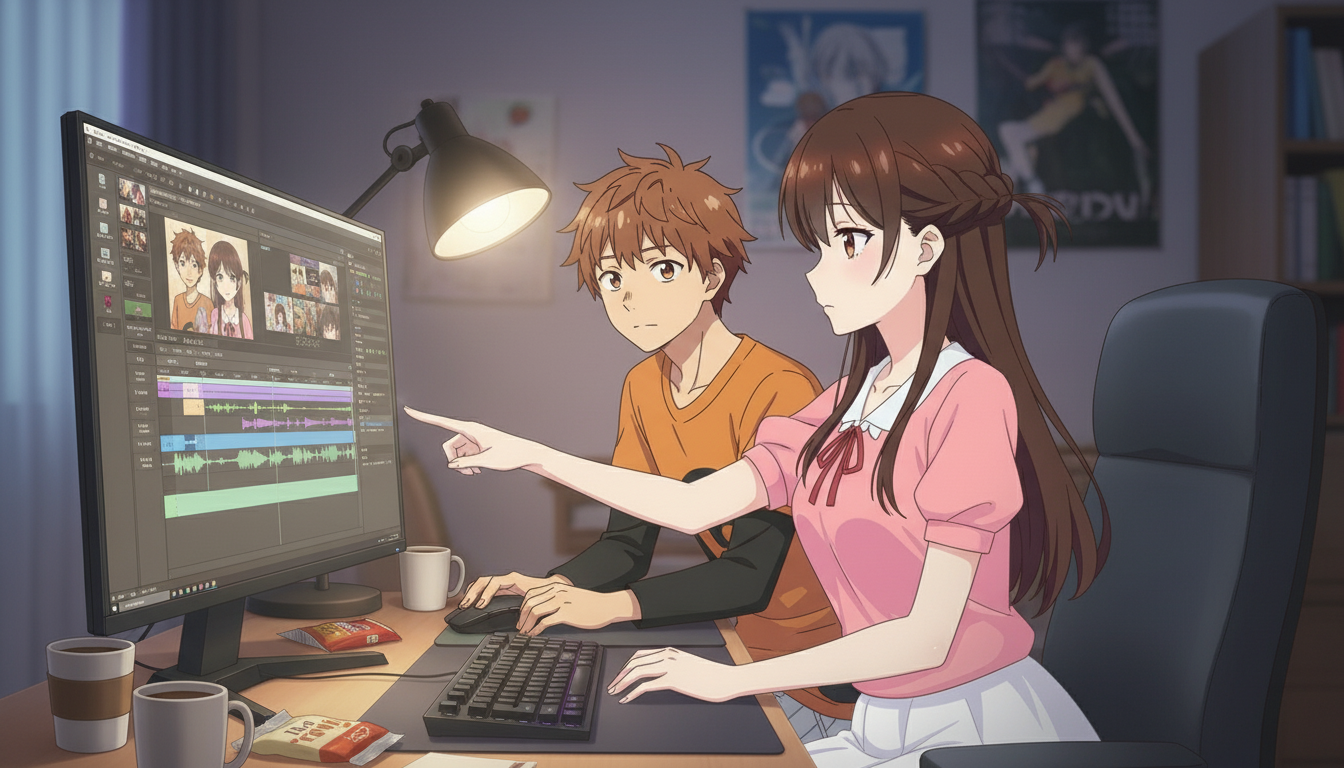
Both AutoWeeb and DomoAI can produce anime-style visuals. That's where the similarity ends. DomoAI is a general-purpose AI video platform optimised for photorealistic output and developer workflows. AutoWeeb is built from the ground up for anime and manga creation. Depending on what you're trying to make, one of these platforms will serve you dramatically better than the other.
This comparison covers anime output quality, beginner ease of use, storytelling tools, self-insert features, pricing, and the professional features DomoAI offers that AutoWeeb does not.
The Short Answer
If you want to create anime art, videos, or stories with as little friction as possible, AutoWeeb wins. If you need a professional platform for photorealistic video or want to integrate AI generation into a custom application via REST API, DomoAI is the right tool. Most anime fans, content creators, and casual users will find AutoWeeb far more immediately useful.
👉 Try AutoWeeb Free and See the DifferenceAnime-Specific Styles and Preset Characters
AutoWeeb ships with a curated library of anime art styles, from classic Shonen action aesthetics to soft Slice-of-Life palettes and high-detail Seinen looks. You pick a style from a visual menu. No prompt engineering required.
Beyond styles, AutoWeeb offers preset character templates: archetypal anime characters you can customise and reuse across images, videos, and storyboard panels. DomoAI has no equivalent anime character workflow.
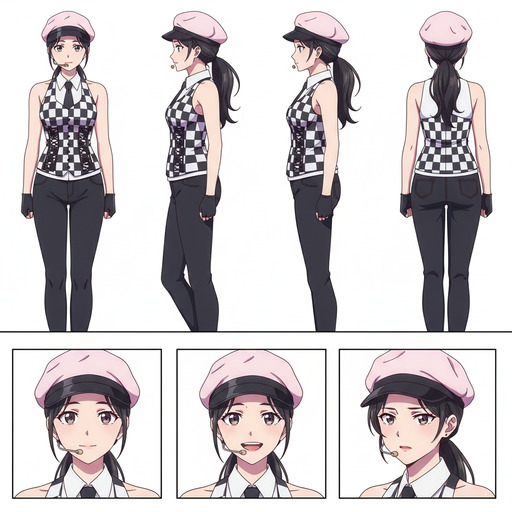
AutoWeeb produces more authentic anime output than DomoAI by a significant margin
Anime is a specific visual language. Expressive linework, flat cel shading, stylized proportions, emotionally exaggerated facial expressions. These aren't filter effects layered onto a photorealistic base. They're design decisions baked into the output from the start.
AutoWeeb is tuned entirely for that aesthetic. Every style in the library, from high-contrast Shonen action to soft Slice-of-Life watercolor, is built to produce outputs that look genuinely anime rather than anime-adjacent. Characters have the right eye shapes, the right line weight, the right color relationships. You're not fighting defaults to get there.
DomoAI's core optimization is photorealistic video generation. Its anime-style outputs exist but reflect that orientation. Faces tend to sit closer to realism than stylization. The expressive exaggeration that makes anime characters feel distinct is often flattened out. For creators who care specifically about authentic anime aesthetics, this difference is visible in every image.
AutoWeeb is significantly easier for beginners than DomoAI's interface
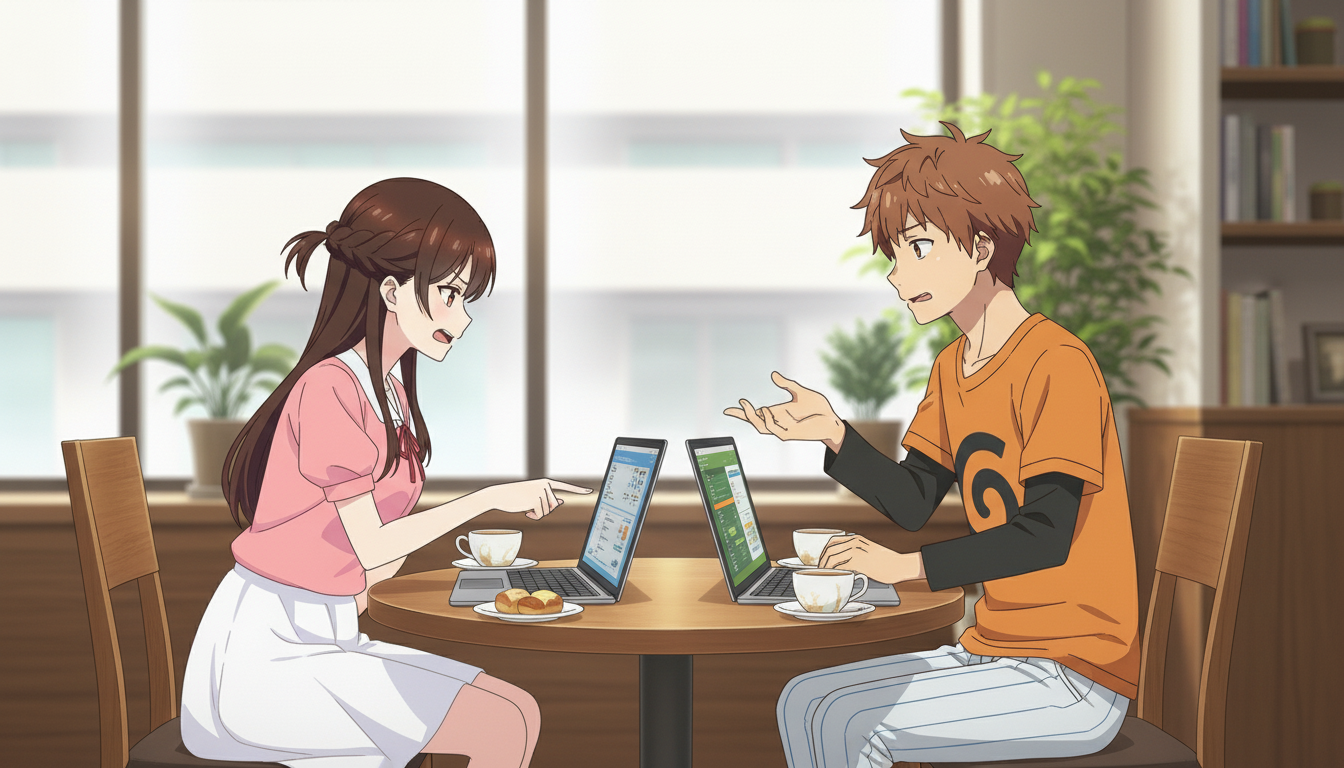
If you have no background in AI image generation, the two platforms present very different entry experiences.
AutoWeeb's design assumes you know anime, not AI. You pick a style from a visual menu. You upload a photo or choose a character archetype. You select a scene. The outputs appear. There are no prompting skills to develop, no model parameters to tune, no terminology to learn before you can produce something worth keeping. Most new users generate their first usable image within minutes.
DomoAI is built for users who already understand AI generation workflows. The platform's strength is configurability, which means its interface surfaces a lot of controls. For someone starting from scratch, that depth can feel less like power and more like friction. Getting anime-quality output requires more experimentation and more familiarity with how the platform works.
Neither platform is inaccessible. But if you're evaluating tools and haven't used AI generation before, the learning curve difference between them is real.
AutoWeeb's storytelling tools are built for anime narrative structure, DomoAI's are not
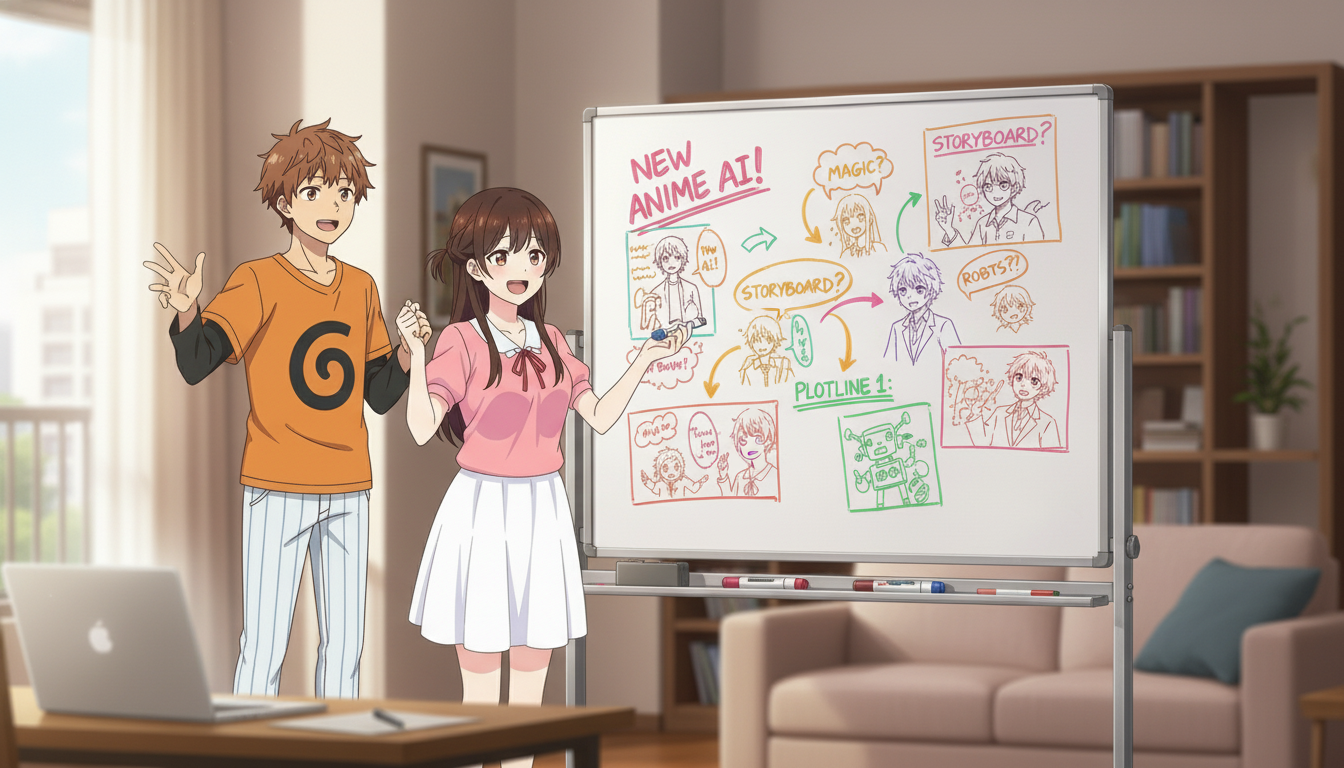
Generating a single image is one thing. Building a coherent anime sequence, a storyboard with consistent characters across multiple panels, is another problem entirely.
AutoWeeb's storyboard tool lets you chain scenes together while maintaining character consistency across every panel. You define your cast once. Your characters carry their appearance from the first scene through the last without drifting. The tool is structured around the way anime stories are actually built: in beats, arcs, and scene-to-scene transitions, not in isolated single-image prompts.
The video templates extend this further. AutoWeeb includes ready-made anime sequence formats including dramatic reveal structures, ambient scene loops, and action-beat arrangements. You drop your characters in and the platform handles the motion, timing, and transitions. For creators building episode pitches, webtoon previews, or short-form social content, this matters.
DomoAI's video generation is capable, but it's designed around photorealistic cinematic output rather than anime narrative formats. Producing something with the rhythm and structure of an anime scene requires considerably more manual work on DomoAI. The platform doesn't have preset storytelling templates built for the genre.
AutoWeeb's self-insert feature lets you become an anime character, which DomoAI lacks entirely
Self-insert, placing yourself or another real person into an anime story as a character, is one of the most popular use cases for AI anime tools. It's also where the gap between AutoWeeb and DomoAI is most pronounced.
AutoWeeb is built for this. Upload a portrait photo, select an anime style, and the platform generates an anime version of the subject that preserves their facial structure, hair color, and overall likeness. The resulting character can be used immediately across all other features: placed into scenes, added to a storyboard, animated in a video template, or dropped into a photo pack. Your character stays consistent across every output.
DomoAI can apply stylistic effects to video footage, but it doesn't have a dedicated photo-to-anime character conversion workflow. There's no mechanism to extract a character from a real photo, give them a stable anime likeness, and reuse them across a creative project. For anyone who wants to star in their own anime or turn a friend's photo into a character, DomoAI simply doesn't offer this.
If self-insert is any part of why you're looking at these tools, AutoWeeb is the clear answer.
AutoWeeb's pricing gives beginners a meaningful free tier, while DomoAI's credit model suits high-volume professional use
AutoWeeb offers a free plan that lets you generate anime art and explore the platform's core features before committing to anything. Paid tiers unlock higher-resolution outputs, faster generation, and access to the full style and video template library. For individual creators and casual users, the free tier is enough to evaluate the platform thoroughly and produce real results.
DomoAI operates on a credit-based system, where you purchase generation credits that apply across the platform's tools. This model suits high-volume users and professional workflows where predictable consumption rates matter. For someone exploring the platform casually or making a first evaluation, the credit model means every generation costs something from the start.
For most individual US creators, AutoWeeb's free entry point is a practical advantage. You can build your first anime scene, test photo-to-anime conversion with your own photos, and evaluate the storytelling tools before spending anything.
Where DomoAI Excels: Professional Tools and API Access
DomoAI is built with professional production workflows in mind. Its toolset includes fine-grained controls over motion, camera behaviour, and output fidelity that suit teams producing content at a commercial level. DomoAI also provides a REST API that developers can use to integrate AI video generation directly into applications, websites, or automation workflows.
For studios, agencies, and product teams that need programmatic access or photorealistic cinematic output, these capabilities are genuinely valuable. AutoWeeb's focus is the in-platform creative experience for anime creators rather than API-driven production pipelines.
Side-by-side comparison: AutoWeeb vs DomoAI across key dimensions
| Dimension | AutoWeeb | DomoAI |
|---|---|---|
| Anime-specific styles | Yes (curated library) | Limited |
| Preset anime characters | Yes | No |
| Authentic anime output quality | Purpose-built for anime aesthetics | Optimized for photorealism |
| Beginner usability | No prompting required, visual-first | Steeper learning curve |
| Storytelling and storyboard tools | Built-in, anime-native storyboard | No anime-specific narrative tools |
| Anime video templates | Yes, genre-structured templates | Limited, not anime-specific |
| Photo-to-anime self-insert | Dedicated workflow with likeness preservation | Not available |
| Character consistency across scenes | Yes | Not built in |
| Free entry tier | Yes | Credit-based from the start |
| Professional / API access | In-platform focus | REST API available |
| Photorealistic video output | Not the focus | Core strength |
Who Should Use AutoWeeb
- Anime fans who want to create art, stories, or videos featuring themselves or original characters
- Content creators building anime-style social media content, shorts, or series
- Couples and individuals who want a personalised anime portrait from their photos
- Indie creators building manga, webtoons, or anime pitches without a team
- Anyone who wants results fast, without learning prompt engineering or model selection
Who Should Use DomoAI
- Developers who need to integrate AI video generation into an application via REST API
- Studios and agencies that need professional-grade tools and fine-grained production controls
- Creators focused on photorealism who want lifelike faces and cinematic video output
- Teams building automated content pipelines where programmatic access matters more than user experience
The bottom line: AutoWeeb for anime creators, DomoAI for developers and photorealistic video
The decision isn't really about which platform is better overall. It's about what you're building. DomoAI is a strong platform for high-volume photorealistic video generation, developer API integrations, and professional production pipelines where budget and technical fluency aren't limiting factors.
AutoWeeb exists for anime. If your goal is to generate images and videos that look like anime, put yourself or original characters into scenes, build a storyboard with consistent characters, or create social content with an authentic anime feel without spending weeks learning a platform, AutoWeeb is the right tool. The free tier means you can confirm that for yourself in the first session.
👉 Start Creating Anime Free with AutoWeebFrequently asked questions about AutoWeeb vs DomoAI
Is DomoAI good for anime, or is it mainly for photorealistic content?
DomoAI is primarily optimized for photorealistic video generation. It can apply anime-style filters to footage, but its outputs tend to skew toward realism rather than the expressive linework and flat shading that define authentic anime. Creators specifically targeting anime aesthetics generally get better results from a platform built for that genre.
Can I use AutoWeeb if I have no experience with AI art tools?
Yes. AutoWeeb is designed for users who know anime, not users who know AI. There's no prompting required to get started. You pick a style from a visual menu, upload a photo or choose a character archetype, and the platform generates the output. Most new users produce their first usable image in minutes.
Does DomoAI have a photo-to-anime character feature?
No. DomoAI can apply stylistic effects to video, but it doesn't offer a dedicated photo-to-anime character conversion workflow. There's no way to extract a stable anime likeness from a real photo and reuse that character across scenes or storyboards within the platform. AutoWeeb's self-insert feature was built specifically for this.
Which tool is better for building an anime story or storyboard?
AutoWeeb. It includes a storyboard tool that maintains character consistency across panels and video templates structured around anime narrative formats: dramatic reveals, action beats, ambient scene loops. DomoAI has no equivalent tools for anime-native storytelling. Building a scene sequence on DomoAI requires significantly more manual effort to get anything resembling a genre-appropriate result.
How does pricing compare between AutoWeeb and DomoAI?
AutoWeeb offers a free tier that lets you generate anime art and test core features before paying anything. Paid plans unlock higher resolution, faster generation, and the full style and video library. DomoAI uses a credit-based system where you purchase generation credits upfront, which suits high-volume professional use but means every generation costs something from day one. For individual creators evaluating their options, AutoWeeb's free entry point is a practical advantage.
Is AutoWeeb better than DomoAI for social media content?
For anime-style social content, yes. AutoWeeb produces outputs with genuine anime aesthetics, supports consistent character reuse across posts, and includes video templates that match the pacing and visual style of anime short-form content. If you're building a TikTok, Instagram, or YouTube Shorts presence around anime, the platform is purpose-built for that workflow in a way DomoAI is not.
When should you choose DomoAI over AutoWeeb?
If you're a developer who needs to integrate AI video generation into an application via REST API, DomoAI is the right choice. It's also better suited to professional production pipelines where photorealistic output and fine-grained parameter control matter more than anime-specific aesthetics. For individual creators whose goal is anime, AutoWeeb will be the better fit in almost every case.
If you want to go deeper on what AutoWeeb can do before signing up, the guides on anime storytelling tools and photo-to-anime converters cover the specific features in more detail. For a broader look at how AutoWeeb compares across the competitive landscape, the three-way comparison with Leonardo AI and DomoAI is worth reading alongside this one.
Related Blog Posts
Best AI Anime Generator for YouTube Creators and TikTok Content in 2026
Speed, consistency, and monetization potential start with having the right tool for your content workflow.
The best AI anime generators for YouTube Shorts, TikTok, and anime series content in 2026. Compare tools on speed, character consistency, and monetization potential for US creators.
Best AI Tool for Anime Storytelling: Storyboards, Scene Creation, and Original Stories
Going beyond anime filters means building something with a beginning, a conflict, and a character worth following.
The best AI tools for anime storytelling in 2026: storyboarding, scene creation, and writing original stories. For US creators who want more than a filter.
Best AI Anime Generators for Beginners in 2026: Ease of Use, No-Prompt Options, and What's Actually Worth Your Time
Most AI anime tools are built for people who already know what a ControlNet is. This guide is for everyone else.
The best AI anime generators for beginners in 2026, compared on ease of use, no-prompt options, photo-to-anime, customization, pricing, and speed. AutoWeeb wins for simplicity.
Best Photo to Anime Converter Online in 2026: Quality, Realism, Speed, and Customization Compared
Not all photo-to-anime converters produce results worth keeping. Here's which ones actually do.
Compare the best photo to anime converters in 2026 on quality, realism, speed, and customization. See why US users choose AutoWeeb for fast, true-to-likeness anime conversions.
Explore AutoWeeb
Jump into the tool that fits your creative step.
AI Anime Video Generator
Animate storyboard shots into cinematic clips with Seedance 2 and consistent characters.
Anime Character Creator
Design original characters with consistent sheets across every scene.
AI Anime Image Generator
Generate cinematic anime stills anchored to your character library.
Turn Photo Into Anime
Upload any photo and watch AI turn it into stunning anime art in seconds.
AI Anime Location Generator
Create a location set once, then generate reference images from every angle.
AI Anime Storyboarding
Describe your idea, pick your characters, and let AI draft the script and scenes.
AI Anime Prompt Agent
Turn a rough idea into a cinematic Seedance 2 prompt with the AI Director.