How to Create a Basketball Anime Using AutoWeeb
A complete guide to building an original basketball anime, from underdog team concept and star player design through championship arcs, training montages, dramatic game moments, and AI-animated basketball scenes.
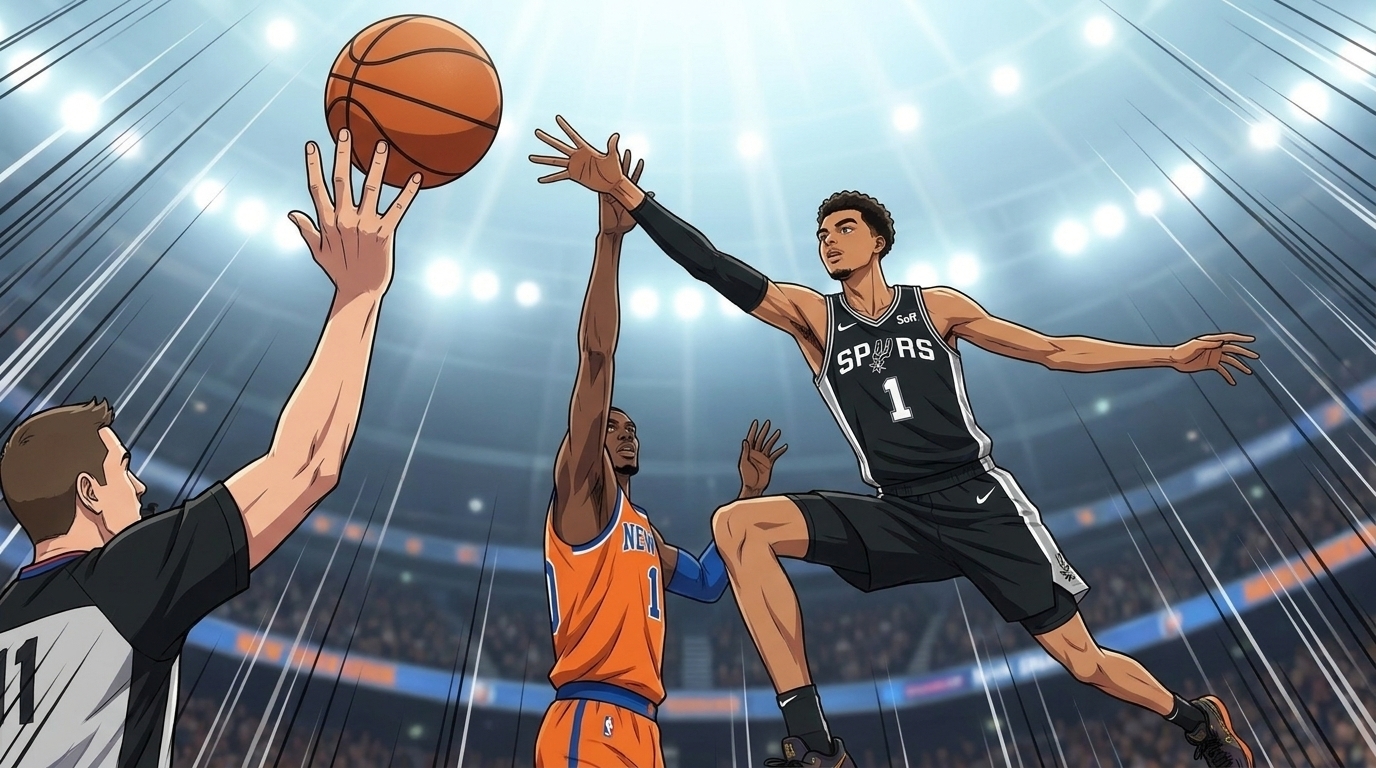
Basketball anime earns its electricity from a specific kind of drama: five players who have to think as one, in real time, under a clock that has no mercy. The court is small enough that every mistake is visible to everyone. The game is fast enough that the margin between a winning play and a catastrophic turnover is a single bad decision. Series like Kuroko no Basuke and Slam Dunk built entire generations of fans on that tension, and the reason those series work is not the basketball. It is the specific human beings playing it, and what the game costs them. If you have been carrying a basketball anime concept in your head, this guide is the production pipeline that gets it from idea to storyboard.
This guide walks through every stage of building an original basketball anime in AutoWeeb: team concept and stakes, player and coach design, uniform and location creation, tournament structure, training montages, game scene storyboards, and AI video generation. The character sheets you build in step two are the same visual references feeding the championship climax you animate in step six. Nothing gets rebuilt from scratch.
Step 1: Build Your Underdog Team Concept and Championship Stakes
The best basketball anime is never actually about basketball. It is about a team that has no business being on the court against its opponents, and the specific reason that gap exists. Before designing a single character or uniform, you need a team situation with a human cost: a school that has never made the national tournament, a program rebuilt from dissolution with one year to prove it can survive, a star player who walked away from the sport and is one season away from that decision being permanent. The underdog premise is not a cliché. It is the mechanical requirement for dramatic tension, because a team that should win every game provides no stakes.
Define your team's situation in a single concrete sentence. Not "they want to win the championship," but something with a specific clock and a specific cost: a first-year coach whose contract is non-renewable, a senior who has been the best player on a mediocre team for three years and is about to run out of time. That sentence is your anchor. Every arc decision, every character role, every tournament match design gets checked against it.
Alongside the underdog premise, define the championship goal with the same specificity. Which tournament, which round is the realistic maximum for early arcs, and what does reaching the final actually mean beyond a trophy? The trophy is the visible symbol of something else, and that something else is what keeps the audience watching games that are not close on the scoreboard.
In AutoWeeb's writing workspace, save this team premise and championship definition to your project notes before opening the character creator. It functions as a filter for every creative decision you make across the entire production.
Step 2: Design Your Star Players, Rivals, and Coach
A basketball anime cast is built around positional archetypes that carry narrative functions. The point guard is usually the protagonist, because the position demands court vision, decision-making under pressure, and the burden of being the person who decides when to trust teammates and when to take it themselves. Those three demands are also the engine of nearly every basketball anime arc.
For your protagonist, define four things before opening the character creator: their physical build and the specific athletic quality that makes them dangerous on the court, their signature move or technique that no one else on the team can replicate, the flaw the game exposes under maximum pressure, and what they want that has nothing to do with winning basketball games. That last element is the character. The basketball is just the arena where the character becomes visible.
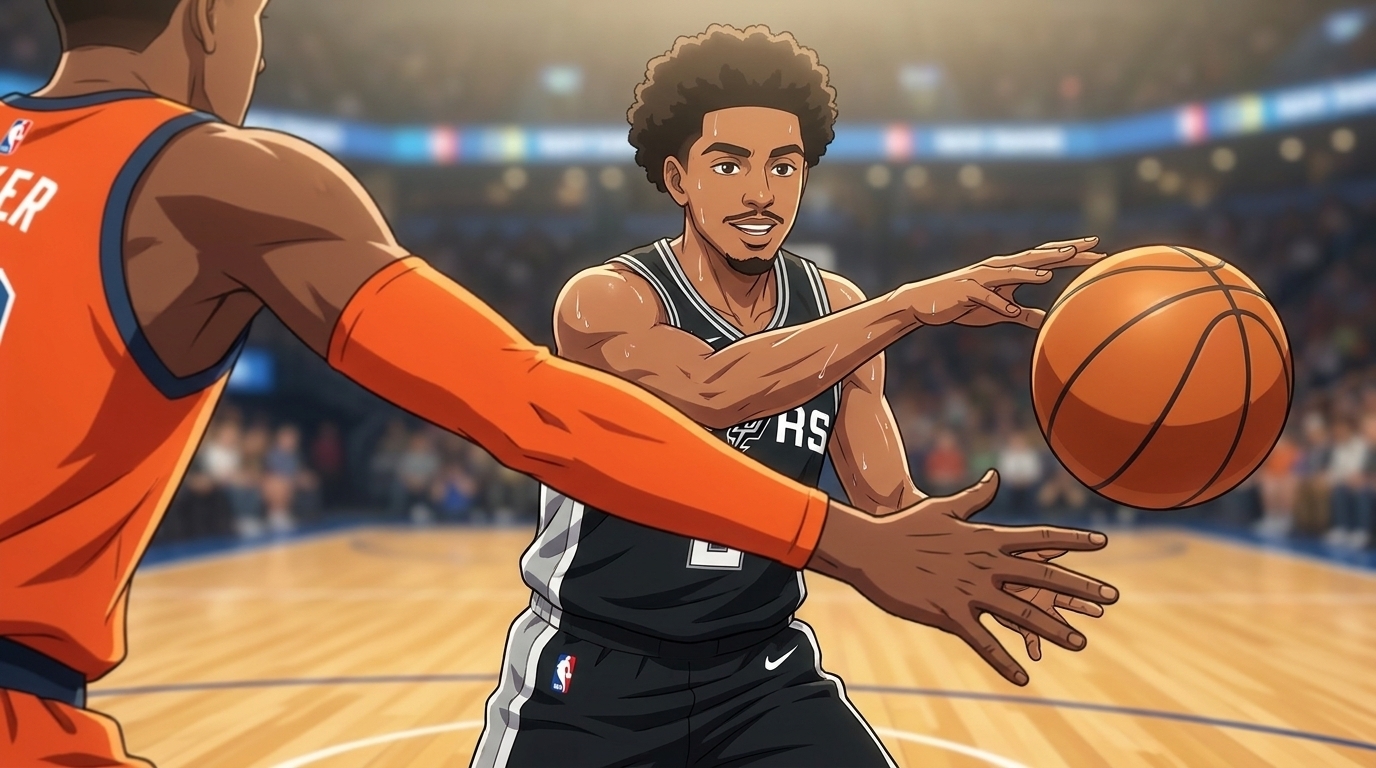
Example protagonist prompt: "Male player, late teens, lean and quick build with a low center of gravity, short tight curls, sharp dark eyes with a calculating focus. Wears a worn black and silver team jersey, number 2, sleeves cut off. Standing handle-low dribble stance, weight slightly back, one hand shielding the ball, reading the defense. Expression calm but scanning. Anime style, shonen energy."
The rival should embody the answer to the question your protagonist cannot yet answer. If your protagonist wins through improvisation and instinct, the rival has prepared for every contingency. If your protagonist's strength is creating opportunities for teammates, the rival is the player who needs no one and wins alone. That contrast is the argument the series is making across every match.
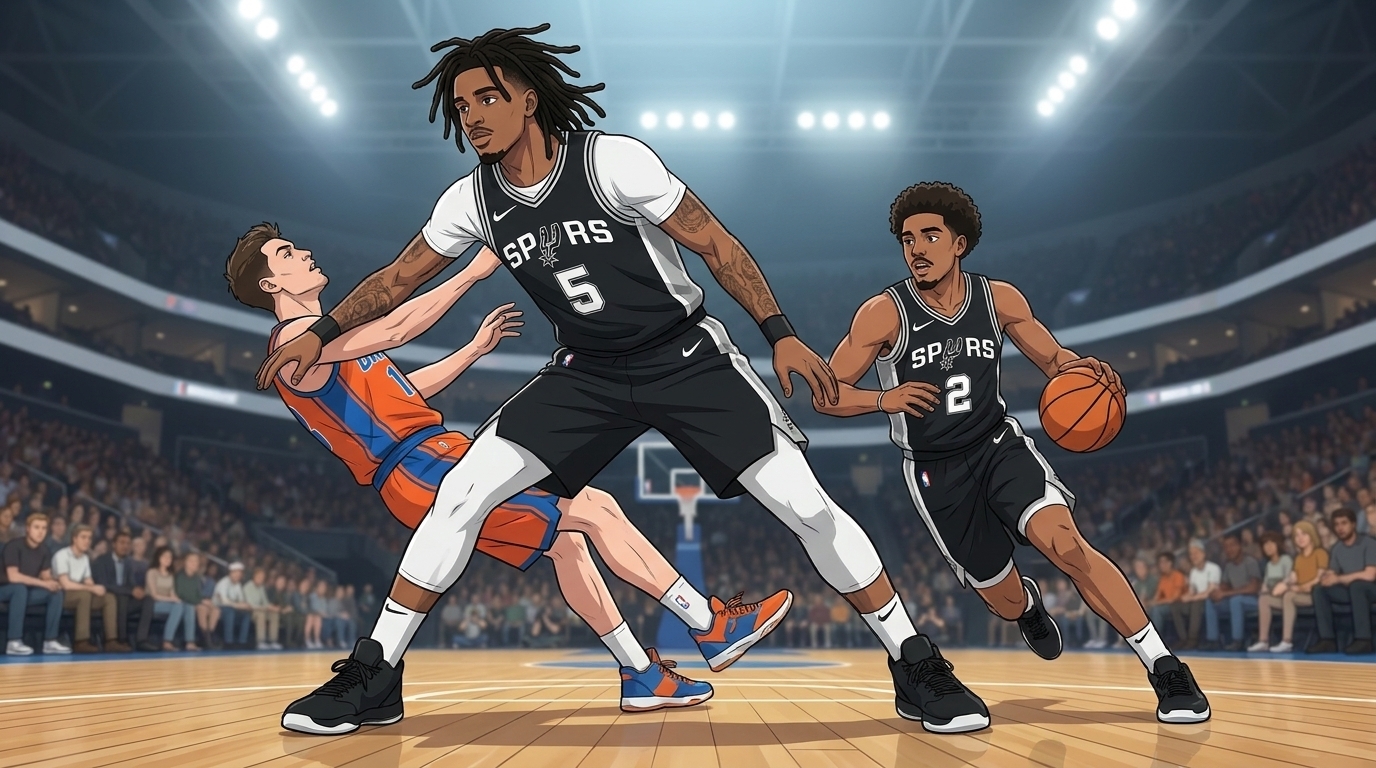
Example rival prompt: "Male player, late teens, tall and physically dominant, long locs pulled back, layered arm tattoos visible on both arms. Wearing an opposing team's orange and blue jersey, number 5, standing with the ball in one hand at hip height, completely relaxed. Expression unreadable, half-attention on the defense, as if the outcome is already settled. Anime style, quiet menace."
The coach carries a different narrative function. A good basketball anime coach is not a tactical encyclopedia. They are a character with their own unresolved relationship to the game, usually a player who hit a ceiling, or a coach who has been here before and knows exactly what is at stake this time. Design them with that history visible in posture and expression.
Build and save character sheets for your protagonist, rival, two to three supporting players, and the coach in AutoWeeb's character creator before generating any game or storyboard scenes. The sheets are the visual anchor for every image in the production.
Step 3: Design Basketball Uniforms and Gymnasium Locations
Uniform design in basketball anime carries more narrative information than it might appear to. The condition of a uniform communicates everything about a program: pristine and precisely tailored reads as a team with resources and expectations, while worn and slightly faded reads as a team that has been here a long time and is still fighting with the same gear. Decide which story your team's uniform tells before designing the color palette.
For the color scheme, choose two primaries and one accent that work both as team identity and as visual contrast against opposing teams on the court. The rival team's colors should be visually distinct enough that any wide court shot immediately communicates which players belong to which side. If your protagonist's team wears dark colors, the main rival's team should wear something that pops at a distance.
Example uniform prompt: "Basketball uniform, away kit. Deep charcoal gray with silver piping on the side seams and collar. Team crest on the left chest, player number centered on the front and back. Shorts matching the jersey with a single silver stripe down each side. Clean, slightly worn look, like a program that has history but not recent success. Anime style."
The gymnasium is as much a character as the players. The home gym should feel earned and specific: the particular quality of the light through the high windows, the age of the hardwood, how full the stands are for an early-season game versus a tournament match. In AutoWeeb, generate location references for your home gym, the opponent's arena (larger, louder, less forgiving), and the neutral tournament venue that represents the biggest stage your team has ever played on. Consistent location references across scenes make the spaces feel real rather than interchangeable.
Example home gymnasium prompt: "Interior, high school basketball gymnasium, late afternoon light from high clerestory windows casting long diagonal shadows across the hardwood. Bleachers on one side, about half-filled with students. Scoreboard with an old analog display. The court lines are freshly painted but the wood shows decades of use. Quiet pre-game atmosphere. Anime style, slightly melancholy and familiar."
Step 4: Build the Tournament Structure and Training Montages
A twelve-episode basketball anime typically runs four to five matches in the tournament arc, each serving a different structural purpose. The first match establishes the team as a viable competitor, usually against an opponent they are expected to lose to. A mid-bracket match introduces a vulnerability the first match did not expose. The semifinal forces the protagonist to confront the core skill gap the training arc was designed to address. The final is where the series' central question gets answered.
Design each opponent team with a defined tactical identity rather than a generic level of quality. A pressing defense that thrives on forcing turnovers specifically targets a protagonist whose court vision collapses under physical pressure. A team built around a single dominant center exposes the protagonist's reluctance to commit to the paint. The best opponents in basketball anime are constructed to make the protagonist's weakness unavoidable, not just to be generally excellent.
The training montage, typically covering episodes three through five, serves three functions simultaneously: it develops the protagonist's specific skill gap, builds the team's internal chemistry through shared difficulty, and establishes the tactical concept the audience needs to understand what they are watching in the tournament. Structure it around one skill that the protagonist cannot currently execute and must be able to execute under championship pressure. The breakthrough moment, when they finally execute it under conditions that actually matter, should be the most carefully storyboarded sequence in the entire training arc.
In AutoWeeb's writing workspace, draft the training arc episode beats in sequence and use them to generate location references: the early-morning outdoor court where the protagonist works alone, the team's practice gymnasium during intense drills, the film room scene where the coach breaks down game tape. Each location gets a saved reference in the project library.
Example training location prompt: "Exterior, early morning, outdoor basketball court in an empty park. Concrete surface, two hoops, one net frayed to almost nothing. Orange sunrise light hitting the backboard from a low angle. One player alone on the court, ball resting against their foot, looking at the hoop with an expression somewhere between frustration and resolve. Anime style."
Step 5: Storyboard Dramatic Game Moments and Action Scenes
Basketball scenes require storyboards that solve two problems simultaneously: spatial logic (where every player is on the court and which direction play is moving) and emotional weight (what the camera angle communicates about the balance of power at each moment). A wide high-angle shot of the full court establishes tactical context. A low-angle close-up on the protagonist as they receive a pass communicates stakes and agency. An overhead shot of five players converging on the paint in the final seconds communicates collective pressure. Plan camera positions the way a director would, because the angle carries as much narrative meaning as the action itself.
For each game in the tournament arc, map the key storyboard beats in sequence: the opening possession that establishes each team's tactical identity, the first momentum shift, the protagonist's crisis moment when the game appears lost, the decision that changes direction, and the final sequence leading to the outcome. These five beats are the structural skeleton. Scene-level scripting and storyboard panels fill in the detail.
Example championship storyboard panel prompt: "Low angle, interior gymnasium. Male player in dark jersey, number 2, in full extension mid-air at the peak of a driving layup, left hand extended toward the backboard. Opposing player visible behind him, one hand reaching but a full step late. Packed student section visible in the blurred background, all vertical motion, everyone on their feet. Speed lines on the player's upward trajectory. Anime style, shonen cinematic."
Reaction panels carry as much emotional weight as the action panels they follow. The teammate on the bench who has been waiting for exactly this moment, the coach who lets something through the normally controlled expression, the rival watching from the opposing bench who registers what just happened and recalibrates. These panels are often shorter scenes in a storyboard, but they are doing the most character work in the sequence.
In AutoWeeb, generate storyboard panels in the sequence they appear in the scene rather than jumping between moments. Reviewing a panel against the script beat it covers before moving to the next one catches composition misalignments early and keeps the pacing tight.
Step 6: Generate Character Sheets and Animate Your Basketball Sequences
With character sheets saved and location references built, every image generated in AutoWeeb draws from a consistent visual library rather than rebuilding appearances from context alone. The protagonist in the training arc is visually the same player in the championship match, wearing the same worn jersey under the same stadium lights, with the same recognizable athletic posture under pressure. That consistency is the difference between a production and a collection of AI-generated images that happen to share a theme.
For animation, identify the three to five panels per episode that carry the most inherent motion and deserve video treatment: the game-changing move executed under championship pressure, the training breakthrough that arrives without fanfare, the final-second sequence the entire series has been building toward. Write the motion description for each priority panel before sending it to video generation.
Example video motion prompt: "Player drives baseline from left to right, cuts sharply inside the paint at the two-second mark. Jump begins at the second cut, elevation reached at four seconds. Contact with the backboard as the body rotates slightly, ball releasing off fingertips. Camera tracks the upward arc from a low angle and holds on the release for one beat. Crowd sound implied by the composition. Slow motion on the contact frame."
The complete AutoWeeb workflow from concept to animated scene means character sheets built in the first session feed the storyboard panels generated in the fifth, which feed the video prompts written in the sixth. The project library carries every decision forward. There is no version where the protagonist looks slightly different between the training arc and the tournament because each session rebuilt the description from scratch.
Frequently Asked Questions
What makes basketball work so well as an anime setting?
Basketball's confined court and continuous clock create inherent narrative compression. Every possession is a decision under pressure, every timeout is a character scene in miniature, and the five-versus-five structure creates exactly enough named participants for a full cast of meaningful relationships. The visual language of the sport, a player rising above a defender, five players moving in coordinated possession, a game-winning shot hanging at the peak of its arc, translates naturally into the motion lines, close-up panels, and dramatic freeze frames that define the visual grammar of shonen anime. The sport's requirement that players trust each other in real time also means interpersonal conflict on the team has direct competitive consequences, which is the most structurally efficient setup in sports anime.
How do I develop an underdog team that feels genuinely dangerous by the tournament arc?
The underdog team becomes dangerous when the audience understands exactly what it can do that more talented teams cannot. A raw team with no resources might have the one player who makes impossible reads under pressure. An outmatched team might have the chemistry that only comes from playing together long enough that communication becomes instinct. Define the specific thing your team does better than anyone in the bracket, even if everything else is a disadvantage, and build the training arc around developing that quality to its maximum. By the tournament, the audience should know exactly what your team's ceiling looks like and be waiting to see whether they can reach it under pressure.
How do I keep my player characters visually distinct on a basketball court?
Build and save a character sheet for every named player in AutoWeeb before generating any game scenes. Each sheet should establish the player's height relative to teammates, their distinct hair or facial feature that reads clearly at a distance, and their specific on-court body language under pressure. In any wide court shot, the audience should be able to identify the protagonist by silhouette alone, which means their physical profile needs to be designed with that shot in mind. For the rival, design an equally distinct silhouette that communicates a different physical archetype: if the protagonist is compact and quick, the rival should be taller and more deliberate, readable as a different kind of threat from across the court.
Do I need to understand basketball tactics to write convincing game scenes?
You need to understand one tactic per match well enough to name it and describe its physical execution on the court. A pick-and-roll, a full-court press, a zone defense that collapses on the paint. Each match should have one tactical concept that the opponent uses to create pressure and one tactical adjustment that the protagonist's team makes in response. The tactic does not need to be technically complex. It needs to be visually describable in a storyboard panel and emotionally legible to an audience that may not know basketball. "They trap him in the corner every time he catches the ball" is enough tactical specificity to build a match arc around, even for a viewer who does not know what a trap defense is called.
How many characters should I design for a basketball anime season?
A first season typically works with five to seven named players on the protagonist's team, two to three members of the main rival's team, one coach per side, and one named player on each non-rival opponent team. That is a cast of roughly fifteen to eighteen named characters, which is large enough to populate a full season of interpersonal drama without requiring character development work that a solo creator cannot sustain across twelve episodes. Build character sheets for the full protagonist team and the rival before scripting the tournament arc. The opponent teams' named players can be designed closer to the specific match episodes where they appear.
Can I animate the key basketball moments, or are the outputs still images only?
AutoWeeb supports both still storyboard panels and AI video generation. For basketball anime, the moments that benefit most from animation are the ones with the clearest physical arc: a drive to the basket, a game-winning shot from release to the moment it clears the rim, a full-court fast break. Still panels work for planning and presenting the full episode structure. Video generation is most effective on the three to five panels per episode that carry the most kinetic weight and would lose meaning as frozen images. Writing the motion description for those panels as part of the storyboarding step means the video prompts are ready the moment you move to animation.
For a broader look at building a complete sports anime season from concept through production pipeline, the guide on how to create your own sports anime series with AutoWeeb covers sport selection, rival dynamics, training arc structure, and tournament design in detail. If you are working on the action sequence compositions within your game storyboards, how to storyboard epic AI anime fight scenes like a director covers shot types, impact frames, and pacing technique that applies directly to basketball climax scenes.
Go Further with Basketball Videos
Our Create Anime Basketball Videos hub brings together all of AutoWeeb's basketball anime guides, Seedance 2 tips, and the full workflow for cinematic court drama and game-winning sequences.
Related Blog Posts
The Ultimate AI Anime Pre-Production Checklist for Creators
A phase-by-phase production checklist covering everything from story development to final editing, built for creators using AI tools to produce original anime.
Complete AI anime pre-production checklist for creators. Covers story development, character design, storyboarding, image generation, and video production with AutoWeeb.
Turn Manga Panels Into an AI Anime Storyboard in Minutes
Converting manga storytelling into animation-ready sequences requires rethinking pacing, camera movement, and scene structure. Here's how to do it in AutoWeeb.
Learn how to convert manga panels into an AI anime storyboard using AutoWeeb. Step-by-step tutorial covering scene planning, camera angles, character setup, and video prep.
How to Storyboard Epic AI Anime Fight Scenes Like a Director
A director-level guide to planning, composing, and pacing anime fight scenes for AI animation, covering shot types, fight choreography, impact frames, and the complete storyboarding workflow in AutoWeeb.
Learn how to storyboard AI anime fight scenes like a professional director. Master shot composition, fight choreography, pacing, and impact frames for shonen, martial arts, fantasy, and sci-fi styles.
From Idea to Anime: Why AutoWeeb Is the Best AI Anime Pre-Production Studio
AutoWeeb replaces the entire traditional anime pre-production pipeline with a single AI-powered workspace, so solo creators and small teams can take a story from concept to production-ready storyboard without switching tools.
AutoWeeb is the best AI anime pre-production studio for solo creators. Cover script writing, character sheets, storyboards, and video generation in one AI anime workflow.
Explore AutoWeeb
Jump into the tool that fits your creative step.
AI Anime Video Generator
Animate storyboard shots into cinematic clips with Seedance 2 and consistent characters.
Anime Character Creator
Design original characters with consistent sheets across every scene.
AI Anime Image Generator
Generate cinematic anime stills anchored to your character library.
Turn Photo Into Anime
Upload any photo and watch AI turn it into stunning anime art in seconds.
AI Anime Location Generator
Create a location set once, then generate reference images from every angle.
AI Anime Storyboarding
Describe your idea, pick your characters, and let AI draft the script and scenes.
AI Anime Prompt Agent
Turn a rough idea into a cinematic Seedance 2 prompt with the AI Director.