How to Storyboard Epic AI Anime Fight Scenes Like a Director
A director-level guide to planning, composing, and pacing anime fight scenes for AI animation, covering shot types, fight choreography, impact frames, and the complete storyboarding workflow in AutoWeeb.
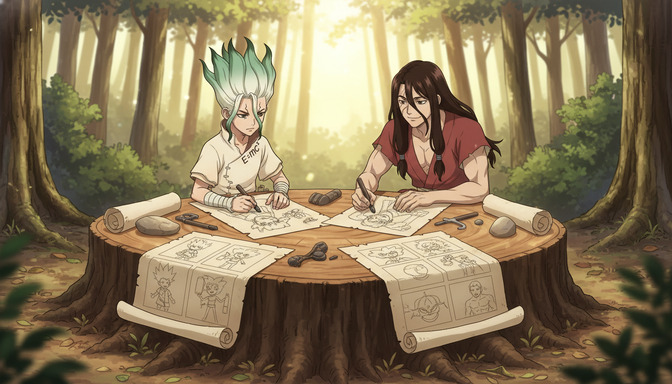
The most memorable anime battles are not won by the character with the highest power level. They are won by the director who decided where to put the camera, how long to hold a shot, and exactly when to cut before impact lands. A fight scene in anime is a sequence of directorial decisions, each one communicating something dialogue cannot. A creator who understands those decisions builds fights that feel real, urgent, and earned. A creator who skips that understanding produces action that is visually busy but emotionally empty.
This guide covers how to storyboard anime fight scenes the way professional directors do: from establishing the spatial relationship between fighters to the finishing blow, with specific techniques for shot composition, camera movement, anticipation frames, impact timing, and the pacing choices that separate a forgettable skirmish from the sequence that becomes the reason someone recommends a series to a friend. Whether you are building a shonen battle, a martial arts duel, a fantasy clash, or a sci-fi engagement, the storyboarding principles are the same.
How Professional Anime Directors Plan Fight Scenes
Professional anime directors produce detailed storyboards for action sequences before a single frame is animated. For intense fight sequences, those storyboards include camera angle, character position, motion line direction, impact markers, and timing notes for every significant moment. The directors most celebrated for action choreography, including those behind the most technically complex sequences in My Hero Academia, Demon Slayer, and Fullmetal Alchemist: Brotherhood, treat fight choreography as a form of music: sequences of tension and release, fast and slow, tight and wide.
For AI anime creators, the storyboard serves the same function. It is the document that translates a fight concept into specific images. A well-planned fight storyboard produces coherent, emotionally driven action sequences. An improvised approach produces disconnected images that show two characters in proximity without communicating what is actually happening between them.
The foundational principle: every fight scene is a story with a beginning, middle, and end. Before generating a single panel, write the narrative arc of the fight in three sentences. Who controls the opening? Where does momentum shift? How does it end, and what does that outcome mean for the characters? That arc is the structure every panel is built to support.
The Seven Elements Every Anime Fight Scene Needs
1. The Establishing Shot
The establishing shot tells the viewer where the fight is happening and positions the fighters in space relative to each other and the environment. Without it, every subsequent action panel is disconnected from physical reality. A strong establishing shot shows the full arena, both fighters, any significant environmental features (terrain, debris, confined space, elevated ground), and the initial spatial distance between combatants.
Example prompt: "Wide shot, low angle, rocky mountain summit at dusk. Two anime characters face each other twenty meters apart. Left figure: warrior in dark armor, battle-worn, one hand on sword hilt. Right figure: robed sorcerer, hands raised, wisps of energy at fingertips. Storm clouds forming overhead. Cinematic anime style."
2. Fighter Positioning and Spatial Logic
Before the first strike, establish which fighter is dominant in space. Standing higher communicates power. Being cornered communicates vulnerability. Once you define spatial logic in the establishing shot, every subsequent panel must maintain that logic. If character A is to the left of frame and character B is to the right, they hold that relationship through the exchange, unless a specific reversal of position is itself a story beat. Losing track of spatial logic is the single most common reason fight storyboards become incoherent.
3. Anticipation Before Impact
Anticipation is the moment before an attack that tells the viewer something fast and violent is coming. A fighter pulling an arm back before a punch. A warrior going still before drawing a sword. A mage closing their eyes before unleashing a technique. Anticipation frames make impacts feel inevitable rather than arbitrary. Without them, attacks appear from nowhere and feel weightless.
Example prompt: "Medium shot, shonen style. Male fighter, late teens, dark spiky hair, red tactical uniform. Right arm drawn fully back, fist clenched, teeth gritted, entire body coiled. Motion lines converging at shoulder. Opponent blurred in foreground right, only outline visible. High contrast lighting."
4. The Attack and Impact
The attack panel should show the beginning of the motion: the first frame of a strike as it launches, before contact. This is where speed lines are heaviest, angles are most extreme, and framing is most distorted. Low angle on a punch shot upward. Dutch angle on a sword slash. Tracking shot parallel to a running charge. The attack panel is where camera angle carries the most narrative weight.
The impact frame, the white or solid-color flash that punctuates the moment of contact, works because it interrupts the visual flow and forces the viewer's perception to reset. Many directors cut away from the impact itself and cut directly to the reaction: the opposing character registering the hit. That reaction panel, not the impact, is where the emotional weight of the fight lands.
5. Reactions
A fighter absorbing a devastating blow and refusing to fall communicates character. A fighter taking one hit and crumbling communicates the severity of what happened. Both are reaction panels, and both do more narrative work than any action panel. Shoot the reaction before returning to the attacker. Every significant strike needs a corresponding reaction, either immediate or delayed by a beat.
6. Environmental Destruction and Escalation
The environment is not a backdrop. It is a measure of the fight's intensity. Cracked stone, exploded walls, displaced water, scorched ground. Environmental destruction communicates stakes without requiring characters to speak. As a fight escalates, the environment should reflect it. Show stages of that destruction across the storyboard, not just reveal the rubble in the final panel.
Example prompt: "Wide shot, anime style. Large stone courtyard, post-exchange. Central section blasted outward, raw crater at center. Smoke rising from two impact points left and right. Loose stone and debris suspended mid-air. Camera positioned low, looking toward the destruction. No characters in frame. Conveys aftermath of extreme impact."
7. The Finishing Moment
The finishing moment is the most choreographed beat in the entire sequence. It requires a clear spatial position for both fighters, a legible final technique, and a held frame after impact where the emotional consequence registers before the action cuts away. Do not cut immediately from a finishing blow to the aftermath. Hold the frame. A fighter standing over a fallen opponent. A technique dissolving in the air. The silence after a storm. Held moments are what audiences remember.
Shot Composition and Camera Movement for Action
Camera angle in an action storyboard is not aesthetic decoration. It is a storytelling tool with specific emotional outputs. Low angles make fighters appear powerful and threatening. High angles show vulnerability and overwhelm. Dutch angles create instability and disorientation. Tracking shots parallel to a running character communicate speed. Static shots during a pause create stillness that makes the next move hit harder by contrast.
For fight scene storyboards, build a deliberate rhythm between static and dynamic panels. If the last three panels were fast cuts with heavy motion lines, the next panel should be a held wide shot that resets the spatial relationship. That contrast is what gives the fast panels their speed. Continuous action without stillness reads as noise, not combat.
- Close in during anticipation: tighten on the face or weapon before the strike
- Pull wide during impact: show the environmental effect and spatial disruption
- Cut to the reaction before returning to the attacker
- Use static overhead shots to reset spatial relationships mid-fight
- Reserve the single extreme close-up on eyes or hands for the peak emotional moment in the sequence
Pacing, Impact Frames, and Timing
The pacing of an anime fight is controlled by the number of panels between significant events and the visual density of each panel. A fast exchange uses many panels with short descriptions and heavy motion indication. A slow, heavy moment uses a single panel with enormous visual weight: a wide shot, a dramatic angle, a character expression held before speaking.
Impact frames are the most deliberately timed element in fight choreography. They work because they interrupt visual flow and force perception to reset. One or two per fight sequence is the standard. More than that and the effect diminishes. Save them for the two or three hardest hits in the entire sequence, not every strike.
For AI anime storyboarding, translate pacing decisions into panel description style. Fast panels: motion blur, speed lines, partial framing, incomplete environmental information. Slow panels: full framing, environmental context, visible character expressions, stillness. Impact frames: white or blown-out background with radiating lines, minimal character detail, maximum contrast. The description determines what the panel communicates, not just what it shows.
Fight Scene Styles Across Anime Genres
Different anime genres approach fight scenes with distinct visual priorities. Understanding the conventions of each style makes storyboarding more efficient and the output more genre-accurate.
Shonen
Shonen fight scenes are built around power scaling, emotional stakes, and signature technique moments. The structure is typically: initial exchange establishes relative strength, one character gains advantage, a moment of crisis or doubt, then a power reveal or emotional breakthrough that changes the fight's direction. Storyboarding shonen fights requires specific attention to expression close-ups (determination, grief, controlled rage) and full-frame technique panels: the elaborately rendered attack that defines a character's power ceiling.
Example prompt for a shonen technique panel: "Dynamic shonen style, full-frame attack shot. Male fighter, 17, black hair with orange streaks, fierce expression. Massive aura of orange energy expanding outward from body in all directions. Background obliterated by light. Bold dynamic lines radiating from center. High contrast. Vertical composition."
Martial Arts
Martial arts fights prioritize technique, body mechanics, and physical intelligence over raw spectacle. The storyboard should reflect precision: specific grips, footwork, stance transitions, the exact angle of a joint lock. Fewer wide shots, more mid-shots on the body showing exact body positioning. Environmental destruction is minimal. Pacing tends to be faster, with more panels per exchange, because the action is precise rather than explosive. The emotional weight comes from technique recognition, not power display.
Fantasy
Fantasy fights use the environment as a weapon and expand combat into three dimensions: characters flying, terrain reshaping, scale shifting between intimate and enormous. Storyboarding fantasy fights requires attention to scale contrast: a character floating above a vast landscape in one panel, dropping into close-quarters combat in the next. Magic effects need enough visual specificity in their description to remain consistent across panels. Define the color, particle behavior, and spatial effect of each spell before generating any panels that use it.
Sci-Fi and Mecha
Sci-fi anime fight scenes tend toward mechanical precision, long-range engagement, and electronic effect design. Mecha fights use scale contrast between enormous machines and interior cockpit close-ups, with the pilot's reaction shots carrying the emotional weight the machine cannot convey. Cyberpunk hand-to-hand combat uses tight urban corridors, digital effect overlays, and a speed that reads as technical efficiency rather than raw power. Both benefit from storyboards that alternate between interior (cockpit, face, targeting display) and exterior (full machine, cityscape, range shot) perspectives.

Common Mistakes in Anime Fight Scene Storyboarding
Unclear action
The most frequent failure: the viewer cannot tell what is physically happening. Two characters in a frame with no clear spatial logic, no direction of movement, no readable technique. Every action panel should be legible without narration. If someone cannot look at the panel and describe in one sentence what is physically occurring, the panel needs to be recomposed or broken into two panels with more specific descriptions.
Inconsistent character positioning
If character A starts the fight on the left side of frame and character B is on the right, they must maintain those relative positions throughout the exchange, except when a deliberate reversal is a story beat. Inconsistent positioning breaks the viewer's spatial model and makes the fight feel incoherent even when individual panels are well-composed. Before generating, write down which side of frame each character occupies and hold to that map.
Poor pacing
A storyboard with uniformly fast, dense panels throughout has no pacing, only density. Pacing requires contrast: held moments next to fast exchanges, static wide shots next to tight close-ups, silence next to impact. Review the storyboard and identify the slowest moment in the fight. If there is none, add stillness before the two or three most intense panels. The contrast is what makes intensity readable.
Missing reactions
Characters who take hits and show no reaction appear to be fighting themselves rather than each other. Every significant strike needs a corresponding reaction panel, either immediate or delayed by one beat. Reactions carry emotional consequence. Without them, the fight has action but no weight.
No environmental grounding
A fight that happens in a visual void has no stakes, because nothing beyond the fighters is at risk. Ground the action with an establishing shot, environmental reference panels between exchanges, and destruction that escalates with the fight's intensity. The environment tells the viewer how serious this is before any dialogue does.
The Complete Workflow: Storyboarding an AI Anime Fight Scene in AutoWeeb
A structured workflow prevents the most common storyboarding failures and produces fight sequences that are coherent, paced, and ready for AI video generation.
- Write the fight arc in three sentences. Who controls the opening, where does momentum shift, and how does it end? This narrative spine is what every panel is built around. Do not skip it.
- Lock character sheets before generating any panels. Both fighters need visual references saved to the AutoWeeb project library before the first storyboard panel is generated. Inconsistent character appearance in a fight sequence is nearly impossible to fix retroactively.
- Generate the establishing shot first. Define the arena, the spatial relationship between characters, and the environmental conditions. Every subsequent panel is built against this reference image.
- Break the fight into beats, not individual shots. List the significant story moments in sequence: opening exchange, first advantage, escalation, crisis, climax, finish. Each beat becomes a mini-sequence of two to four panels.
- Plan camera angles before writing panel descriptions. Decide which angle serves each beat: low angle for the dominant fighter, high angle for the fighter under pressure, static wide for spatial resets, extreme close-up for the peak emotional moment.
- Write panel descriptions with full direction. Include the camera angle, character position, specific action, motion indication (speed lines, blur, stillness), and environmental detail. A complete description generates a usable image. A vague one requires regeneration.
- Review for spatial consistency. After generating the full storyboard, check that fighter positioning is consistent, action is legible in every panel, and environmental state escalates across the sequence. Fix before sending to video generation.
- Select priority panels for AI video generation. The establishing shot, the key attack, the reaction, and the finishing moment are the panels that benefit most from animated output. Write motion descriptions for each before adding them to the video queue.
AutoWeeb's storyboard workspace keeps character sheets, location references, and panel descriptions inside the same project. The fight sequence stays consistent from panel one through the finishing moment and into video generation without switching between tools.
For a broader look at how fight scene storyboarding fits into a full production pipeline, the guide on how to plan and produce your own AI anime series from scratch covers series structure, character arc planning, and episode-level storyboarding. The ultimate AI anime pre-production checklist organizes every production decision from story development through final editing into a phase-by-phase reference.
Frequently Asked Questions
How many storyboard panels does a typical anime fight scene need?
A short fight sequence of thirty seconds to one minute of screen time typically requires fifteen to thirty storyboard panels, depending on pacing. A full climactic battle lasting three to five minutes of screen time may require sixty to one hundred panels or more. The number is determined by the number of distinct beats in the fight, not by a fixed ratio. Every panel should serve a specific narrative or visual purpose. If a panel can be removed without losing spatial logic, emotional continuity, or story information, it is either redundant or needs to be replaced with a panel that does more work.
How do I keep both fighters visually consistent across a long fight storyboard?
Save both fighters as character sheets in your AutoWeeb project library before generating any panels. Tag them from the library into each panel rather than re-describing their appearance from scratch. This is the mechanism that keeps the protagonist's face, hair, costume, and build identical in panel three and panel sixty. Any storyboard that describes characters instead of tagging saved references will drift. The longer the sequence, the more visible the drift becomes.
What camera angles work best for anime fight scenes?
No single angle is best. The angles that work are the ones that match the emotional state of the beat. Low angles for a character establishing dominance. High angles for a character under pressure or being overwhelmed. Dutch angles during moments of disorientation or psychological instability. Wide static shots for spatial resets between exchanges. Extreme close-ups on hands, weapons, or eyes for peak emotional moments. The most important principle is contrast: if every panel uses the same angle, the camera stops communicating anything.
How do I storyboard a signature technique or special move in AutoWeeb?
A signature technique requires three panels: anticipation (the fighter preparing, body coiled, energy beginning to gather), the attack (the technique launching, at peak visual complexity), and the impact or aftermath (either the hit landing or the effect expanding into the environment). Write a specific visual description for the technique's appearance, including color, particle type, spatial behavior, and scale, before generating any of the three panels. Use the same description across all three to maintain visual consistency. Save the technique description as a note in your AutoWeeb project so it can be reused in future episodes without rewriting.
What is an impact frame and how often should I use one?
An impact frame is a panel, usually one to two frames in actual animation, rendered as a white or solid-color flash with minimal character detail and speed lines radiating from the point of impact. In a storyboard, it appears as a high-contrast, nearly abstract panel immediately before or during the hardest hit in a sequence. The purpose is to reset the viewer's visual perception so the moment after the impact hits with full force. Use one or two per fight sequence, maximum. Reserve them for the one or two hits that need to register as the most significant in the entire fight. Overusing them eliminates the effect.
How do I show speed and motion in a static storyboard panel?
Include specific motion indicators in the panel description rather than assuming the generation will produce them automatically. Describe: the direction and density of speed lines, whether the character or elements in the panel are motion-blurred, the angle and trajectory of the movement, and what is static in contrast to what is moving. A panel description that says "character running fast" produces a different image than "male fighter in full sprint, horizontal motion blur on torso and legs, speed lines trailing behind from left to right, feet barely touching ground, background streaked." Specificity in description is what translates into legible motion in the generated image.
Can I use AutoWeeb storyboards to prepare fight scenes for AI video generation?
Yes, and the storyboard step is the most important preparation for video generation. Each storyboard panel that goes to video generation needs a motion description in addition to the visual description: what moves, in which direction, at what speed, over how many seconds. The panels that benefit most from video are the ones with the most inherent motion: the attack launch, the impact, the environmental destruction, the finishing moment. Storyboarding those panels with video generation in mind, by including motion intent in the panel descriptions, produces video prompts that are already half-written by the time you reach the generation stage.
Go Further with Fighting Videos
Our Create Anime Fighting Videos hub brings together all of AutoWeeb's fight-scene guides, Seedance 2 tips, and the full workflow for cinematic anime combat sequences.
Related Blog Posts
AutoWeeb vs ChatGPT Image: Which AI Tool Is Better for Creating Consistent Anime Characters and Stories?
ChatGPT Image generates impressive one-off anime art. AutoWeeb is built for anime creators who need the same character to look right across every scene, storyboard panel, and video clip.
AutoWeeb vs ChatGPT Image for anime creation in 2026. Compare character consistency, storyboarding, anime styles, video generation, and which platform is right for your creative workflow.

AutoWeeb vs Gemini: The Better AI Platform for Anime Images, Characters, and Videos
Gemini generates impressive images across many styles. AutoWeeb is built to produce the same anime character, consistently, across every image, storyboard panel, and animated video clip you need.
AutoWeeb vs Gemini for anime creation: compare image generation, character sheets, storyboarding, and video. Find out which AI platform is better for anime creators in 2026.
AutoWeeb vs Midjourney: Which AI Tool Is Better for Anime Storytelling and Character Consistency?
Midjourney generates some of the most visually stunning AI images available. AutoWeeb is built to take a specific anime character through an entire story, consistently, without rebuilding them from scratch every session.
AutoWeeb vs Midjourney for anime storytelling: compare character consistency, storyboards, image-to-video, and anime-specific workflows. Find the best AI tool for anime creators in 2026.
AutoWeeb vs Niji Journey: Which Anime AI Generator Is Best for Building Characters and Stories?
Niji Journey produces genuinely impressive anime artwork. AutoWeeb is built to take that character through an entire story, scene by scene, with the same face and outfit every time.
AutoWeeb vs Niji Journey for anime character creation and storytelling: compare consistency, storyboarding, image-to-video, and full creative workflows. Best anime AI generator in 2026.
Explore AutoWeeb
Jump into the tool that fits your creative step.
AI Anime Video Generator
Animate storyboard shots into cinematic clips with Seedance 2 and consistent characters.
Anime Character Creator
Design original characters with consistent sheets across every scene.
AI Anime Image Generator
Generate cinematic anime stills anchored to your character library.
Turn Photo Into Anime
Upload any photo and watch AI turn it into stunning anime art in seconds.
AI Anime Location Generator
Create a location set once, then generate reference images from every angle.
AI Anime Storyboarding
Describe your idea, pick your characters, and let AI draft the script and scenes.
AI Anime Prompt Agent
Turn a rough idea into a cinematic Seedance 2 prompt with the AI Director.