How to Create a Hockey Anime with AutoWeeb: From Character Sheets to Championship Storyboards
A complete guide to building an original hockey anime, from team concept and captain design through rival franchises, locker room drama, playoff arcs, and AI-storyboarded championship moments.
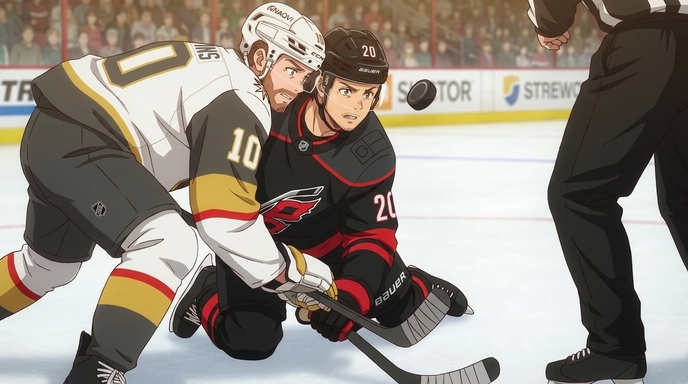
Hockey anime occupies a specific territory that no other team sport quite reaches. The sport runs faster than basketball, hits harder than soccer, and forces decisions in compressed space that makes every shift feel like a controlled emergency. When it works as an anime format, it produces something that feels like a collision between a war film and a puzzle: teams executing patterns at full speed while physically dismantling the people trying to execute different ones. If you are building a hockey anime concept, whether it is a junior league underdog story or a professional playoff run for a franchise that has not won in a generation, this is the complete production pipeline that takes it from concept through animated championship.
This guide walks through every stage of building an original hockey anime in AutoWeeb: team concept and league structure, captain and roster design, rival franchise archetypes, arena and locker room environments, training arc scripting, game storyboarding, and AI animation for the moments that carry the most kinetic and emotional weight. The character sheets built in step two are the same visual references powering the overtime goal panels generated in step five. Nothing gets rebuilt between sessions.
Step 1: Design Your Team Concept, League Structure, and Series Premise
Hockey anime protagonists work differently from solo sports protagonists because the team is the unit of drama, not the individual. Before designing a single character, define what your team represents and what it costs them to keep playing. A franchise that has not won a championship in forty years carries weight the players did not ask for but cannot escape. A junior team assembled from players no other program wanted operates under a different kind of pressure, the pressure of being told they are not enough before they have had a chance to prove anything. That weight is the structural tension your series will live in.
Choose a league structure that fits the emotional scale of the story. A junior regional tournament creates a compressed single-season arc where every game is one mistake from being the last. A full professional playoff bracket allows a multi-round structure where the opponent in the second round is harder than the opponent in the final for reasons the protagonist does not understand until it is almost too late. The bracket is not backdrop. It is the set of constraints that makes the dramatic situations possible, and it tells you which opponents the team needs and how many rounds the series has to resolve every open question.
Write your series premise as one concrete sentence containing a specific clock and a specific cost. Not "a team tries to win the championship," but something like: "A franchise that has lost in the final four times in seven years acquires a brilliant but damaged captain whose reputation for abandoning teams under pressure is the exact story the locker room already believes about itself." The clock is the playoff window before the roster gets dismantled by trades and contracts. The cost is the specific damage the team carries into every elimination game. Every episode is an argument about whether that damage is permanent or structural.
Save the league bracket and franchise backstory in AutoWeeb's writing workspace before designing any characters. The structure determines which opponents need full character development, which arenas need dedicated environment references, and how many episodes each playoff series requires to resolve both the game results and the character arcs running underneath them.
Step 2: Design Your Captain, Enforcers, Goalies, Rivals, and Supporting Cast
Hockey character design has to communicate role and playing style before the first puck drops. A captain whose leadership operates through composure and positioning reads differently from a captain whose leadership is physical and vocal, and both read differently from the quiet defensive captain who organizes the penalty kill with the intensity of someone solving a problem no one else has correctly identified yet. Design the protagonist's silhouette, build, and on-ice posture to match their role before choosing any visual details like hair color or equipment.
Example captain prompt: "Male hockey player, mid-twenties, lean and composed with precise athletic posture and the kind of stillness that reads as control under pressure. Close-cropped dark hair visible at the edges of a white and red helmet. Sharp, focused eyes with the expression of someone already three plays ahead of the current situation. Wearing a deep red home jersey with a captain's C on the chest, holding a composite stick loosely in both hands at center ice. Expression is controlled and direct. Skates on indoor ice, arena lights overhead. Anime style, shonen energy, the physical presence of someone who has been here before."
Enforcers carry a specific kind of weight in hockey anime that rivals in one-on-one sports cannot replicate. The enforcer exists to protect the skilled players and to shift the psychological climate of the game through physical presence alone. A good enforcer design communicates that function visually: a larger, heavier build with a different quality of stillness than the captain's, equipment that looks like it has absorbed more than its share of punishment, and an expression that reads as willingness rather than aggression. The distinction matters because the best enforcers in sports anime are not simple: they are characters who have chosen a specific role because it serves something they believe in, and that choice carries its own kind of cost.
Example enforcer prompt: "Male hockey player, late twenties, powerfully built with broad shoulders and a physical presence that changes the space around him. Worn equipment, a helmet with visible scuffing and a slight crack across the cage from a previous game. Cropped blond hair, a thin scar along the left jawline. Expression is calm, almost patient, the kind of calm that only exists in people who have been in difficult situations enough times to stop finding them surprising. Standing near the boards, stick held low, watching the far end of the ice. Anime style, protective energy, arena lighting from above."
Goalies deserve their own design logic entirely. The goalie is isolated even within the team: they see the entire game from one end, they absorb every mistake the team makes in front of them, and they are the last thing standing between a good game and a loss. Design the goalie's mask first, because the mask is the character's face during play, the only identity visible when they are in position. A mask with a hand-painted mural from their hometown, a mask with a simple geometric pattern that reflects the analytical detachment they use to manage pressure, a mask with damage they have refused to repair: each choice tells the audience something specific before the character speaks a single line.
Rival franchises in hockey anime function as team-level antagonists. The rival team needs its own visual identity, an arc, and at least two or three individual players who become personal foils for members of the protagonist team. Design the rival team's color scheme and uniform to create deliberate visual contrast with the protagonist team. The game between them should always carry the sense that these are two specific arguments about how hockey should be played, not just two teams trying to score more goals.
Step 3: Build Team Uniforms, Ice Arenas, Locker Rooms, and Tournament Environments
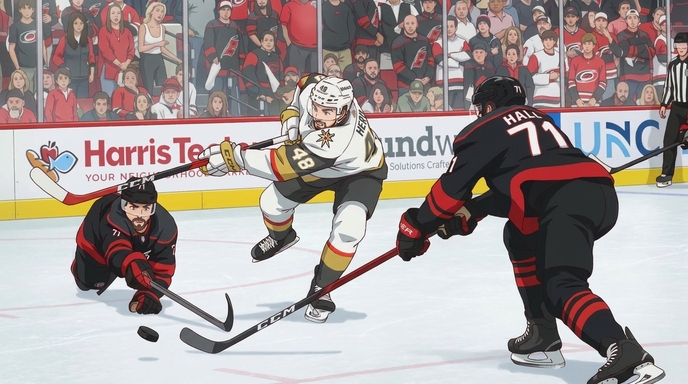
Hockey uniform design carries more storytelling information than in most sports because the equipment layers over the jersey. The helmet, shoulder pads, and gloves are part of the visual silhouette. Design uniforms as a complete on-ice look: jersey color and number, helmet style, glove color, and skate details. Home and away uniform variants should read as distinct enough that the audience immediately knows whose building the game is being played in. Save both variants as named references in the AutoWeeb project library before generating any game panels.
Ice arenas are the most visually distinctive environment in sports anime. The reflective ice surface, the overhead arena lighting casting hard shadows in the circles and soft diffuse light across the neutral zone, the boards and glass with advertising panels visible in the background, the penalty box with its door hinges and its particular quality of confinement: each element contributes to the visual grammar of hockey. Design the protagonist team's home arena as the establishing reference, then build the opposing arenas as visual variations that communicate something about the rival franchise's identity.
Example home arena prompt: "Wide angle, professional hockey arena interior, pre-game warmup. Ice surface pristine and reflective under overhead arena lights, center ice logo sharp in the frame. Stadium seating rising steeply on all sides, roughly half full during warmup with clusters of fans in team colors visible in the lower bowl. The penalty boxes visible on both sides, the tunnel entrances at each end of the ice. The scale of the building visible in a single frame, the ice looking almost impossibly bright against the dark seating sections above. Anime style, cinematic arena atmosphere, the quiet before the game starts."
Locker rooms are where hockey anime does its most important non-game work. The pre-game speech, the mid-period adjustments, the silence after a loss, the specific geography of who sits next to whom: all of it happens in the locker room, and the visual design should make that space feel specific and inhabited. Build the locker room reference with individual stalls visible, the whiteboard where line combinations get written and erased, the equipment hanging and the tape rolls on the bench. The locker room should look like someone actually uses it, not like a set.
Tournament and playoff environments should escalate in visual scale across the bracket. The first-round series in a smaller arena feels different from a conference final in a building with 20,000 people. The neutral-site championship game, if your series builds to one, needs its own visual reference: a different arena with a different color palette and a quality of occasion visible in the composition before the puck drops. Build each environment in sequence so the escalation feels earned rather than arbitrary.
Step 4: Write Training Arcs, Locker Room Drama, and Game Scripts
Training arcs in hockey anime work differently than in solo sports because the problem being repaired is almost always relational before it is technical. A team that loses because the first line stops communicating with the defense in the third period does not need better skaters. It needs to understand why the communication broke down and what it would cost each player to rebuild it. The training arc should be about that cost, not about acquiring a new skill.
Structure each training arc around a specific failure from the previous game: not "they lost," but "they gave up three goals in the final seven minutes of the third period because the defense was cheating toward the offensive zone, and it happened because the captain made a decision in the second period that the defense interpreted as a signal to attack, and nobody on the bench said anything because the captain's authority is not the kind you question." That specificity makes the practice scenes legible as repair rather than activity. Every drill should map directly to the specific breakdown being addressed.
Writing Locker Room Scenes That Carry Dramatic Weight
The locker room scene is one of the most underutilized narrative tools in sports anime. At its best, a locker room scene can accomplish in three minutes of screen time what a training arc takes six episodes to do: it can change a relationship, reveal a character's actual priorities, or establish that the team's understanding of its own situation is wrong in a way the audience already knows but the characters do not yet. Write locker room scenes as two-person conversations, not group speeches. The captain talking to the goalie after a bad period. The enforcer and the young center who keeps taking penalties. The coach and the captain in the equipment room after everyone else has left.
Scripting Game Sequences with Physical and Tactical Depth
Hockey game scripts run on three simultaneous tracks. The tactical track covers what each team is trying to do: the power play structure, the neutral zone trap, the moment when the coach pulls the enforcer to send a message the other team's bench will read immediately. The physical track covers the contact and speed: the angle of a hit, the wingspan of a goalie sprawling across the crease, the length of a stride in the open ice before a breakaway. The emotional track covers what the game is asking of each character at that specific moment in their arc.
Plan each game in three beats: the opening period where each team establishes its game and the tactical situation becomes legible, the crisis point in the second period where a goal or a penalty or an injury changes the shape of the game against the protagonist team, and the third period where the resolution takes shape. The resolution does not have to be a win. Some of the best game episodes in sports anime end with a loss that permanently changes how the team understands its own limits.
For game scripting in AutoWeeb's writing workspace, draft each game in parallel: the period-by-period tactical arc, the five priority storyboard moments, and the emotional question each period is answering. If you cannot write the emotional question for each period in a single specific sentence, the game script needs more work before moving to storyboarding.
Step 5: Storyboard Breakaways, Power Plays, and Championship Moments
Hockey anime generates its most distinctive visual moments from the sport's specific geometries: the long open-ice breakaway with the puck carrier's skates cutting lines in the ice, the power play with five skaters moving in coordinated triangles around a disorganized four-player penalty kill, the faceoff at center ice where two players crouch over a single puck with the outcome of the next thirty seconds compressed into one moment of anticipation. These are built for storyboard panels because the composition practically writes itself. The challenge is sequencing the panels so the visual weight lands at the right moment in the narrative arc.
Breakaway sequences are the signature set piece of the genre. Design them as four-panel sequences: the moment the puck carrier enters the open ice and the space ahead of them becomes visible (the audience understands what is about to happen before the players on the ice do), the full-stride acceleration with the puck cradled close (the commitment), the split second of decision in front of the goalie (the silence inside the speed), and the aftermath in either direction. The third panel, the decision frame, should work as a standalone image: the puck carrier, the sprawling goalie, and the visible geometry of what is and is not available.
Example breakaway storyboard prompt: "Hockey breakaway sequence, anime style. Player in red and black home jersey carrying a black puck on their stick, full stride on open ice, camera tracking from behind and slightly above. The goalie visible at the far end of the frame in a white and gold mask, dropping into a butterfly position. The ice surface showing skate marks from both directions, arena lights reflected in the ice. Speed lines on the player's skates and stick. The frame compressed with urgency, the space between the puck carrier and the goalie feeling both enormous and closing fast. Impact frame energy without contact yet."
Power play sequences require a different visual approach: coordination over individual brilliance. The storyboard panels should show the geometric pattern of movement, the precision of passing in tight space, and the specific moment when the setup collapses into a shot. The goal, when it comes, should feel like the inevitable result of precision rather than a single act of individual skill.
Championship storylines require the deepest storyboard planning because the final game is not just the highest-stakes game. It is the simultaneous resolution of every character arc the series has been building. The goalie who has carried a team on a long postseason run. The enforcer playing through an injury the opponent's team is deliberately targeting. The captain who has been here before and lost. The championship storyboard has to carry all of that weight without requiring dialogue to explain it, and the panel compositions should communicate the emotional convergence before a single line is spoken.
Step 6: Generate Consistent Character Art and Animate Key Hockey Moments
With character sheets saved for the captain, each key roster member, the goalie, the rival team's principal characters, and the primary arena environments, AutoWeeb draws from a consistent visual library across the entire production. The protagonist in the first-round game and the protagonist in the championship final are visually the same player in the same jersey under the same quality of pressure, not two approximations of the same description generated fresh each session. That consistency is the operational difference between a storyboard production and a collection of well-executed individual images.
For AI animation, identify the moments per episode that carry the most inherent motion and lose their primary meaning as still images: the breakaway from open ice through the decision frame to the goalie's reaction, the slap shot wind-up through contact to the puck's trajectory across the ice, the body check that changes the momentum of the game, the goalie's glove save at full extension. Write motion descriptions for each priority panel before moving to video generation.
Example slap shot animation prompt: "Hockey slap shot animation, six seconds. Player in red and black jersey visible from the left side of the frame, stick raised behind them at the top of the wind-up. Contact at two seconds, stick blade striking the puck on the ice, the player's entire body rotating through the shot. Camera cuts to puck-level tracking shot at three seconds as the puck crosses the blue line, speed visible in blur and compression. The goalie's reaction beginning at four seconds, butterfly drop, the crease visible in the frame. Whether the puck goes in is not the final frame, the reaction is. Anime style, impact frame on contact, speed lines on puck trajectory."
The complete AutoWeeb workflow means the league structure defined in step one, the roster designed in step two, the arenas and uniforms built in step three, the game scripts drafted in step four, and the storyboards planned in step five are all active resources in the project library when you generate championship animation in step six. The creative decisions remain yours. The production infrastructure that executes them does not require a studio.
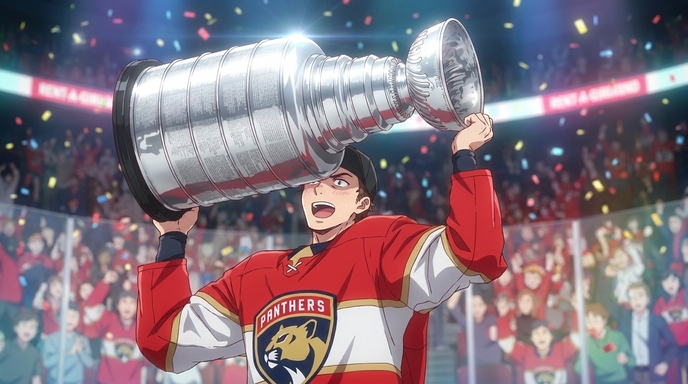
AI-assisted storyboarding makes hockey anime pre-production achievable for solo creators and small teams in ways that traditional timelines do not allow. Maintaining consistent character art across a full playoff bracket with multiple opponents, multiple arenas, and dozens of game scenes requires either a full character design team or constant manual reference management. AutoWeeb's character sheet system collapses that overhead. The captain in the first-round elimination game and the captain lifting the championship trophy are the same person, drawn from the same reference, carrying the same visual weight the audience has been building with since episode one.
Frequently Asked Questions
Why does hockey work so well as a format for anime storytelling?
Hockey operates at a speed that creates genuine information compression: decisions that take a quarter second, physical commitments that cannot be reversed, and a team structure where every player's mistake is immediately visible to every other player on the ice. That combination of speed, physicality, and collective accountability produces a dramatic environment where the gap between the team's understanding of its own situation and what the audience can see tends to widen exactly when the stakes are highest. That gap is the engine of sports anime, and hockey generates it almost constantly. The playoff format, with its best-of-seven series and its overtime games that can end at any moment, adds a structural pressure that single-elimination tournament brackets cannot fully replicate.
How many players and rival teams should I design for a hockey anime?
A first season works with a core roster of six to eight fully designed characters: the captain, the goalie, one or two elite forwards, the enforcer, a key defenseman, and at minimum one player whose arc runs counter to the team's momentum and creates internal tension. On the rival side, design the opposing captain and goalie fully before scripting any games against that team. Secondary rivals can be introduced with less developed character sheets, with full design work completed closer to the episodes where they become central. A playoff bracket typically needs three full rival teams designed before production begins, because each round's opponent needs to represent a distinct test for the protagonist team that the previous round's opponent did not pose.
How do I depict speed and physicality in hockey storyboard panels?
Speed in hockey anime comes from three compositional tools used in combination: speed lines on the skates and puck that imply trajectory and momentum, camera angles placed at ice level or close to it that make the players look enormous and fast against the arena background, and the compression of space visible in the frame when a player enters a lane where the gap is closing. Physicality comes from the moment of contact and the aftermath: a body check lands more weight as a panel when the contact frame shows the impact compression and the next panel shows the player against the boards, already calculating how quickly they can get back into the play. The hit itself is less dramatic than the decision made in the second after it. Design that second as a distinct panel.
How do I write a locker room scene that carries dramatic weight?
The locker room scene fails when it exists only to deliver information. It works when it changes a relationship or reveals something about a character that the game action could not show directly. Write it as a two-person conversation between characters whose relationship has unresolved tension, set it in the specific geography of the locker room rather than a generic interior space, and give each character something they need from the conversation that the other character either cannot or will not provide. The conversation should end with the tension unresolved but differently shaped than it was at the start. A good locker room scene leaves the audience understanding why the next game will be different before the next game begins.
How do I design a goalie character who feels distinct from the rest of the roster?
Design the goalie's mask first, because the mask is the primary face of the character during play. It should communicate something specific: the hometown they are still playing for, the analytical framework they use to manage pressure, the damage they have refused to repair because it reminds them of something important. The goalie's body language during warmup and during stoppages carries more characterization than most players' dialogue, because the goalie is isolated even within the team and expresses their internal state through posture and positioning rather than conversation. Build the goalie reference in three positions: standing up in the crease between plays (assessment), in butterfly position mid-save (execution), and alone at the near end of the ice while the game is at the far end (the specific solitude of the position). Those three positions tell the audience who this character is before the series has explained a single fact about them.
How do I build a championship arc that feels earned rather than inevitable?
A championship arc feels earned when the final game requires every specific thing the team has been learning across the entire series in order to win it, and when the audience can see exactly what it would have cost them if they had played the final game at the beginning of the series instead of the end. Map the championship opponent directly to the team's starting weakness: if the series has been about a team that cannot hold a lead in the third period, the championship opponent should be the team that is historically best at scoring in the third period. The championship win, if it comes, should read as a specific answer to a specific question, not just a better performance in a high-stakes game.
Can I animate hockey sequences like breakaways and slap shots in AutoWeeb?
AutoWeeb supports both storyboard panel generation and AI video generation. For hockey anime, the moments that carry the most value as animation are the ones with a clear physical arc and a defined start and end point: the breakaway from open ice through the decision frame in front of the goalie, the slap shot from wind-up through contact to puck trajectory, the goalie's glove save at full extension. Still panels work efficiently for the tactical and emotional beats: the line change decision at the bench, the captain's expression during a timeout, the goalie resetting in the crease between plays. Writing motion descriptions as part of the storyboarding step means animation prompts are ready to execute the moment you move to video generation, without needing to rebuild the visual context from scratch.
How does AutoWeeb maintain character consistency across a full playoff bracket?
The character sheet system in AutoWeeb means the visual reference built when you first design the captain, including their jersey details, helmet, stick, skates, and on-ice posture, is the same reference active when you generate storyboard panels for the championship game six sessions later. The captain in the first-round elimination game and the captain in the final are visually the same person because both panels draw from the same saved reference rather than from a new description approximating the original. For a playoff bracket with three rounds and multiple arenas, that consistency eliminates the revision cycle that typically dominates the middle phase of solo pre-production and lets you focus on the creative decisions rather than the infrastructure that executes them.
For the broader framework of building any sports anime series from concept through production pipeline, the guide on how to create your own sports anime series with AutoWeeb covers sport selection, rival structures, training arc design, and tournament construction in detail. If you are planning the game climax storyboards and want to sharpen your composition and shot sequencing for high-impact moments, how to storyboard epic AI anime fight scenes like a director covers impact frames, camera angles, and pacing techniques that apply directly to overtime goals and championship sequences.
Related Blog Posts
The Ultimate AI Anime Pre-Production Checklist for Creators
A phase-by-phase production checklist covering everything from story development to final editing, built for creators using AI tools to produce original anime.
Complete AI anime pre-production checklist for creators. Covers story development, character design, storyboarding, image generation, and video production with AutoWeeb.
Turn Manga Panels Into an AI Anime Storyboard in Minutes
Converting manga storytelling into animation-ready sequences requires rethinking pacing, camera movement, and scene structure. Here's how to do it in AutoWeeb.
Learn how to convert manga panels into an AI anime storyboard using AutoWeeb. Step-by-step tutorial covering scene planning, camera angles, character setup, and video prep.
How to Storyboard Epic AI Anime Fight Scenes Like a Director
A director-level guide to planning, composing, and pacing anime fight scenes for AI animation, covering shot types, fight choreography, impact frames, and the complete storyboarding workflow in AutoWeeb.
Learn how to storyboard AI anime fight scenes like a professional director. Master shot composition, fight choreography, pacing, and impact frames for shonen, martial arts, fantasy, and sci-fi styles.
From Idea to Anime: Why AutoWeeb Is the Best AI Anime Pre-Production Studio
AutoWeeb replaces the entire traditional anime pre-production pipeline with a single AI-powered workspace, so solo creators and small teams can take a story from concept to production-ready storyboard without switching tools.
AutoWeeb is the best AI anime pre-production studio for solo creators. Cover script writing, character sheets, storyboards, and video generation in one AI anime workflow.
Explore AutoWeeb
Jump into the tool that fits your creative step.
AI Anime Video Generator
Animate storyboard shots into cinematic clips with Seedance 2 and consistent characters.
Anime Character Creator
Design original characters with consistent sheets across every scene.
AI Anime Image Generator
Generate cinematic anime stills anchored to your character library.
Turn Photo Into Anime
Upload any photo and watch AI turn it into stunning anime art in seconds.
AI Anime Location Generator
Create a location set once, then generate reference images from every angle.
AI Anime Storyboarding
Describe your idea, pick your characters, and let AI draft the script and scenes.
AI Anime Prompt Agent
Turn a rough idea into a cinematic Seedance 2 prompt with the AI Director.