
How to Create a World Cup Soccer Anime with AutoWeeb
A step-by-step guide to building an original World Cup-style soccer anime, from national team concepts and rival country arcs through tournament brackets, stadium environments, match scripts, and AI-storyboarded tournament climaxes.
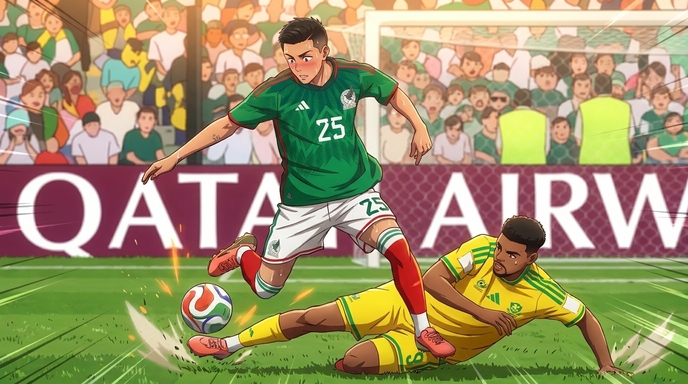
World Cup soccer anime occupies a different emotional register than club sports anime. When a player steps onto that pitch, they carry an entire country with them, not just a team, and the gap between success and failure is not a league table position but something that does not dissolve at the end of the season. Series like Captain Tsubasa and Blue Lock understood this: the international tournament format is not just a dramatic backdrop, it is the engine of a specific kind of storytelling where a nineteen-year-old striker from a country that has never advanced past the group stage is suddenly the reason millions of people are either celebrating or going quiet. If you have been building a soccer anime concept around that scale of stakes, this guide is the production pipeline that takes it from premise to storyboarded tournament arc.
This guide covers every stage of building an original World Cup-style soccer anime in AutoWeeb: national team construction, rival country dynamics, captain and star player design, uniform creation, stadium environments, match scripting, tournament bracket structure, and AI-assisted storyboarding for entire arcs. The character sheets built in step two are the same visual references powering the semifinal storyboard panels generated in step five. Nothing gets reconstructed from scratch between sessions.
Step 1: Design Your National Teams, Tournament Bracket, and Rival Countries
The World Cup format is the best tournament structure in sports anime for one structural reason: every team carries a different weight of history, expectation, and national identity into the bracket. Before designing a single character, you need to know which national teams populate your tournament, which two or three of those teams are your narrative focus, and what each rivalry between them is actually about beneath the football.
Choose a protagonist nation that carries a specific tournament burden. Not a country expected to win easily, but a country at an inflection point: a traditional power that has not advanced past the quarterfinal in twelve years, a rising nation playing in their first World Cup final since a generation of players who could not quite get there, a country where the entire narrative around the team captain has become bigger than the team itself. The tournament premise should be expressible in a single concrete sentence that carries both a specific clock and a specific cost.
Structure the bracket so that the protagonist nation's path through the tournament forces the specific confrontations the series needs. The group stage should introduce a rival nation whose tactical identity exploits your protagonist team's weakness. The knockout rounds should escalate that confrontation, with the semifinal serving as the series' central argument about what football actually demands from the people playing it. Design the final as the outcome of that argument, not just a match with higher stakes than the ones before it.
For rival countries, define each one by its football identity and the specific historical or philosophical tension it represents against the protagonist nation. A rival whose system demands individual sacrifice for collective efficiency creates a different kind of conflict than a rival whose star player has been your protagonist's benchmark since they were both teenagers in the same youth academy. Build three to four rival nations with distinct identities before writing any team rosters.
In AutoWeeb's writing workspace, save the tournament bracket as a project document with each nation's identity, their path to the round where they meet the protagonist team, and the one-line description of what the match between them means beyond football.
Step 2: Design Your Team Captains, Star Players, and Rival Captains
A World Cup soccer anime cast is organized around captains rather than individual stars, because the captaincy carries the weight of the national team's entire emotional narrative. The protagonist captain is the person who has been told their entire career that the team has never been good enough, and is now the person responsible for changing that. Define their specific technical quality, the attribute that makes them dangerous in ways the tournament has not yet seen from their country, and the flaw that the knockout rounds will expose.
Example protagonist captain prompt: "Male player, early twenties, lean and technical build, medium-length dark hair swept back and slightly damp, sharp focused eyes. Wearing a deep green national jersey with the national crest over the left chest, number 10, white shorts. Standing with the ball at his feet, weight forward, looking up to survey the midfield. Expression concentrated, slightly isolated, like someone carrying more than their immediate task. Anime style, shonen energy, World Cup stadium backdrop."
The rival captain should embody the answer to the question the protagonist cannot yet answer. If the protagonist wins through technical improvisation and individual brilliance, the rival captain has built a system where no single player is necessary and the collective is more dangerous than any individual. If the protagonist's strength is making every player around them better, the rival is a player whose genius operates alone and does not require, or want, that kind of interdependence. Design that contrast before designing anything visual.
Example rival captain prompt: "Male player, mid-twenties, physically imposing with a long athletic build, close-cropped hair, calm expression that reads as complete psychological control. Wearing a dark red national jersey, number 9, arms slightly away from the body in a natural athletic rest position. Not posturing, just present. The kind of player who makes every person on the pitch aware of exactly where he is without doing anything overt. Anime style, quiet threat, sunset stadium light."
Beyond the two captains, build out each nation's squad with two to three named players whose roles create narrative function: the veteran midfielder in their final World Cup, the teenage winger whose pace changes what is possible in the final third, the goalkeeper whose performances are the only reason the tournament run is still alive. Each supporting player should have a specific attribute and a specific relationship to the captain that creates either tension or trust.
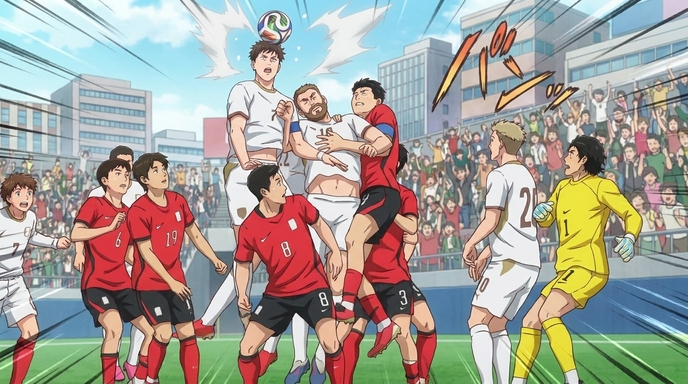
Step 3: Create National Uniforms and Stadium Environments
National kit design in World Cup anime carries a different function than club uniform design. The kit is not just team identity, it is national identity made visible on a pitch, and the visual contrast between two nations' colors in a wide stadium shot is one of the primary tools for communicating who has the upper hand before a ball is touched. Design every kit with its opposite in mind: the protagonist nation's colors should be legible against every opponent they face in the bracket.
Example national kit prompt: "Soccer uniform, home kit for a fictional national team. Deep forest green jersey with a thin gold collar and cuff trim, national crest embroidered on the left chest in gold and white. Player number in bold white on the front and back. White shorts with a single green stripe down each side, green socks with a gold band at the top. Clean, modern cut, slightly fitted. The crest feels official and earned rather than decorative. Anime style."
Stadium design in World Cup anime serves a narrative purpose that domestic sports series rarely require. Each venue communicates something about the host city, the match's weight, and the atmosphere a team either feeds from or is overwhelmed by. The group stage match played in a small, intensely local stadium reads completely differently from the semifinal in a 90,000-seat neutral venue at night. Design three to four distinct stadium environments: the intimate early-match venue where the protagonist team finds their footing, the imposing opponent-hosted stadium that the crowd turns against them, and the final venue that exists on a scale none of these players have experienced before.
Example stadium environment prompt: "Interior wide shot, large international soccer stadium, night match. Pitch under intense white floodlights, crowd in the upper tiers a dense mosaic of national colors. Digital advertising boards at pitch level glowing orange and blue. Camera from halfway line height, both goals visible, eleven players per side in formation. The scale of the space makes the players feel small against the institution of the tournament. Anime style, cinematic wide."
Save location references for each stadium in AutoWeeb's project library alongside the team they host. A consistent stadium reference means the protagonist nation's home-country group stage match and the same nation's emotional quarter-final draw from the same visual foundation, communicating the difference in scale through composition rather than rebuilding the environment from scratch.
Step 4: Write Match Scripts, International Storylines, and Team Dynamics
World Cup soccer anime runs on two narrative tracks simultaneously: the tactical and physical story happening on the pitch, and the international and personal story happening off it. Both tracks need to be planned before scripting individual episodes, because the most effective World Cup storylines are ones where the off-pitch tension directly changes what happens when these specific players face each other in a match.
For international storylines, define the specific historical or personal context each major rivalry carries. A match between two nations whose players grew up in the same youth football system before the protagonist returned home has a different emotional register than a match between two nations where one has historically been seen as the ceiling the other cannot pass. Neither context needs to be politically detailed. It needs to be personally legible: two captains who respect each other's football but have been answering questions about each other for three years, and this match is when that ends.
Balancing Action, Strategy, and Emotional Storytelling
Each match in the tournament arc should alternate between three types of scenes in a consistent rhythm. The tactical scenes, where the coach adjusts the system and the players process what the opponent is doing that they did not anticipate, carry the intellectual weight of the match. The action sequences, the sprint into the channel, the one-on-one at the edge of the box, the goalkeeper's decision in the final second, carry the kinetic weight. The emotional scenes, a sideline conversation at halftime, a substituted veteran watching from the bench, the captain's expression after a goal that changes the team's trajectory, carry the human weight. A match episode that runs too long in any one register loses the audience that came for the other two.
For teamwork storytelling, build at least one scene per episode around a decision where the protagonist has to trust a teammate rather than solve the problem themselves. The moment when the captain plays the ball to the younger player in the final third rather than taking the shot is doing more character work than the goal itself, regardless of what happens next.
In AutoWeeb's writing workspace, draft each match in three columns: the tactical arc (what each team is trying to do and how that changes across the match), the action sequence beats (the five moments per match that need storyboard panels), and the emotional through-line (the one character question each match asks and whether the episode answers it).
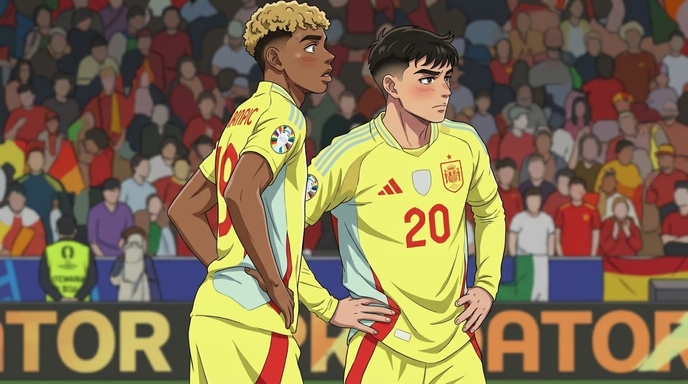
Step 5: Storyboard Tournament Arcs and Match Sequences
Tournament arc storyboarding for a World Cup anime requires two simultaneous structures: the episode-level match structure (how each game plays out dramatically) and the arc-level tournament structure (how each match changes what the protagonist team is capable of by the time they reach the final). Both structures need to exist before generating any individual storyboard panels, because the panels are only legible in the context of what they are building toward.
For the arc structure, plan each knockout round match as a specific test. The round of sixteen match establishes that the protagonist team can operate at this level. The quarterfinal introduces the tactical weakness the training between rounds addresses. The semifinal is where the series' central argument about football and what it costs is made explicitly. The final is the resolution, not the argument. If the final still needs to make the argument, the semifinal was not specific enough.
For match-level storyboarding, plan five to seven panels per major match: the opening formation shot that establishes each team's tactical identity, the first significant possession that signals what the match will be about, the protagonist's crisis moment (usually around the sixty-minute mark), the tactical or emotional shift that opens the door, and the final sequence leading to the outcome. Write the panel descriptions with camera angles specified before generating images.
Example match storyboard panel prompt: "High angle, international soccer pitch, rainy night. Protagonist in green jersey number 10 at the center circle, isolated, ball at his feet. Five opposing players in dark red jerseys visible in a compact defensive block between him and the goal. Fifteen meters of open grass and then a wall of color. The rain is visible as slight diagonal blur across the lights. Expression from above: one player choosing. Anime style, cinematic overhead."
Reaction panels are as structurally important in soccer anime as in any other sports genre. The veteran on the bench watching the teenager take the responsibility they prepared them for, the opposing captain adjusting their expression by one unreadable degree, the coaching staff on both sides who have been here before and know what the next ninety seconds mean, these are the panels that carry emotional information that the action panels cannot hold alone. Build them into the storyboard sequence rather than treating them as optional.
In AutoWeeb, generate storyboard panels in scene order and review each against the match beat it covers before moving to the next. Composition misalignments are much easier to catch early than after fifteen panels have been generated on a flawed spatial logic.
Step 6: Generate Consistent Character Art and Animate Match Moments
With character sheets saved for every named player and stadium references built for every venue in the bracket, AutoWeeb draws from a consistent visual library across the entire production. The protagonist captain in the group stage match and the protagonist captain in the final are visually the same person in the same kit under the same kind of pressure, not two versions of the same description generated fresh for each session. That consistency is the difference between a storyboard production and a collection of well-executed individual images.
For AI animation, identify the three to five moments per episode that carry the most inherent motion and will lose meaning as still images: the striker's run in behind the defensive line that ends in a shot or a block, the goalkeeper's full-extension save in the eighty-ninth minute, the free kick struck from the edge of the box as the wall jumps. Write motion descriptions for each priority panel before generating video.
Example soccer animation prompt: "Player in green jersey sprints from left to right across the frame, receives a through-ball at the edge of the box at the two-second mark. Touch to control, body shifting toward goal at four seconds. Shot struck with the right foot, low and driven, at six seconds. Camera tracks the ball from the foot to the bottom corner of the goal frame. Goalkeeper's reaction dive begins half a second after contact. Crowd noise implied by the composition scale. Speed lines on the ball trajectory. Anime style, slow motion on the shot frame."
The complete AutoWeeb workflow from concept to animated sequence means the national team identities defined in step one, the captain designs built in step two, the kit and stadium references created in step three, and the match scripts drafted in step four are all active resources in the project library when you generate the tournament final storyboard in step five and the animation prompts in step six. Nothing gets rebuilt. The production carries forward.
AI-assisted storyboarding accelerates anime pre-production in ways that matter most for solo creators and small teams. A tournament arc that would take months to storyboard by hand, designing consistent characters across dozens of match scenes, building out multiple national team visual identities, generating atmospheric stadium environments for each knockout round, becomes a structured multi-session workflow rather than a years-long project. The creative decisions remain yours. The production infrastructure that executes them does not require a studio.
Frequently Asked Questions
Why does the World Cup format work so well for anime storytelling?
The single-elimination knockout structure creates a specific kind of dramatic pressure that league formats cannot replicate. Every match from the round of sixteen onward is the last match the losing team will ever play in this tournament, and for players at the peak of their career, possibly in any tournament. That finality is built into the structure, which means the audience never has to be told the stakes are high. The national team element adds a second layer: the player is not just representing a club, they are carrying the entire accumulated history of their country's relationship with this competition. Series like Captain Tsubasa built enormous audiences on exactly that combination, and the format has not become less effective since.
How many national teams should I design for a World Cup anime season?
A first season works with one protagonist nation, two to three primary rival nations with full character rosters, and four to six additional nations who appear in the group stage and early knockout rounds as named opponents without full squad development. That is a world large enough to feel like an actual international tournament while remaining manageable for a solo creator. Build full character sheets for the protagonist nation's starting eleven and the two main rival captains before scripting the knockout rounds. Secondary nation named players can be designed closer to the episodes where they appear.
How do I create visual distinction between national teams on the pitch?
Build and save a national kit reference for every team that appears in more than one episode before generating any match scenes. Each kit needs a primary color that is visually distinct from the protagonist nation's kit and from the other rival nations'. In any wide stadium shot, the audience should be able to identify which team has the ball by kit color alone. For captains specifically, design a silhouette that reads distinctly at a distance: if the protagonist captain is technically built and compact, the main rival captain should be physically imposing enough that their shape alone communicates a different kind of danger across the pitch.
How do I write international storylines that feel earned rather than political?
Ground every international storyline in the specific personal history between two players or two coaches, not in geopolitical abstraction. Two captains who grew up watching each other in youth tournaments and spent their entire careers being compared to each other carry a personal rivalry that is legible without requiring the audience to understand anything beyond football. A coach facing the system they used to run against the players who learned it from them is a complete dramatic situation. The national identity context enriches those personal stories without needing to carry the dramatic weight itself.
How do I balance action, strategy, and emotional scenes within a single match episode?
Structure each match episode so that the tactical scenes, action sequences, and emotional character moments alternate rather than cluster. A run of four consecutive action panels loses the emotional context that makes the actions meaningful. A long tactical discussion scene that is not interrupted by on-pitch consequence loses momentum. Plan each match in three parallel tracks before generating storyboard panels: what the tactics are doing, what the action sequences are showing, and what character question the episode is answering. If any track runs longer than three consecutive beats without the other two present, the pacing needs adjustment before panels are generated.
Can I animate the key match moments with AutoWeeb, or is it stills only?
AutoWeeb supports both storyboard panels and AI video generation. For soccer anime, the moments that benefit most from animation are the ones with a clear physical arc: a through-ball run from midfield to the box, a goalkeeper's diving save, a free kick from contact to the moment it crosses the line. Still panels handle the tactical and emotional beats efficiently. Video generation is most effective on the four to six panels per episode that carry the most kinetic weight and would lose meaning as frozen images. Writing the motion description as part of the storyboarding step means the animation prompts are ready the moment you move to video generation.
How does AutoWeeb help accelerate anime pre-production specifically?
The primary acceleration is consistency across sessions. In traditional pre-production, maintaining visual consistency for a cast of twenty-plus characters across dozens of match scenes across multiple episodes requires either a full character design team or constant reference management by a solo creator. AutoWeeb's character sheet system means the visual library built in early sessions carries forward automatically. The protagonist captain looks the same in panel seven of the group stage storyboard and panel twelve of the final storyboard because both panels draw from the same saved reference, not from a new description that approximates the original. That consistency collapses the revision cycle that typically occupies the middle phase of solo pre-production.
For the broader framework of building any sports anime series from concept through production pipeline, the guide on how to create your own sports anime series with AutoWeeb covers sport selection, rival structures, training arc design, and tournament construction in detail. If you are working on the match climax storyboards and want to sharpen your composition and shot sequencing, how to storyboard epic AI anime fight scenes like a director covers impact frames, camera angles, and pacing techniques that apply directly to soccer match sequences.
Related Blog Posts
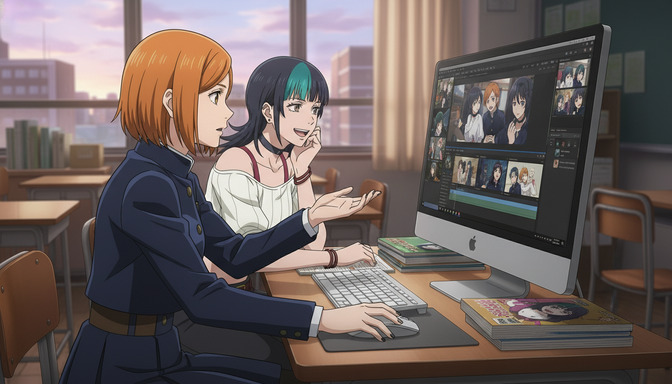
The Ultimate AI Anime Pre-Production Checklist for Creators
A phase-by-phase production checklist covering everything from story development to final editing, built for creators using AI tools to produce original anime.
Complete AI anime pre-production checklist for creators. Covers story development, character design, storyboarding, image generation, and video production with AutoWeeb.

Turn Manga Panels Into an AI Anime Storyboard in Minutes
Converting manga storytelling into animation-ready sequences requires rethinking pacing, camera movement, and scene structure. Here's how to do it in AutoWeeb.
Learn how to convert manga panels into an AI anime storyboard using AutoWeeb. Step-by-step tutorial covering scene planning, camera angles, character setup, and video prep.
How to Storyboard Epic AI Anime Fight Scenes Like a Director
A director-level guide to planning, composing, and pacing anime fight scenes for AI animation, covering shot types, fight choreography, impact frames, and the complete storyboarding workflow in AutoWeeb.
Learn how to storyboard AI anime fight scenes like a professional director. Master shot composition, fight choreography, pacing, and impact frames for shonen, martial arts, fantasy, and sci-fi styles.
From Idea to Anime: Why AutoWeeb Is the Best AI Anime Pre-Production Studio
AutoWeeb replaces the entire traditional anime pre-production pipeline with a single AI-powered workspace, so solo creators and small teams can take a story from concept to production-ready storyboard without switching tools.
AutoWeeb is the best AI anime pre-production studio for solo creators. Cover script writing, character sheets, storyboards, and video generation in one AI anime workflow.
Explore AutoWeeb
Jump into the tool that fits your creative step.
AI Anime Video Generator
Animate storyboard shots into cinematic clips with Seedance 2 and consistent characters.
Anime Character Creator
Design original characters with consistent sheets across every scene.
AI Anime Image Generator
Generate cinematic anime stills anchored to your character library.
Turn Photo Into Anime
Upload any photo and watch AI turn it into stunning anime art in seconds.
AI Anime Location Generator
Create a location set once, then generate reference images from every angle.
AI Anime Storyboarding
Describe your idea, pick your characters, and let AI draft the script and scenes.
AI Anime Prompt Agent
Turn a rough idea into a cinematic Seedance 2 prompt with the AI Director.