How to Use Poses to Make Your AI Anime Characters Feel Alive
A character standing still in every scene is not a character. It is a placeholder. Posing is what turns a design into a person.
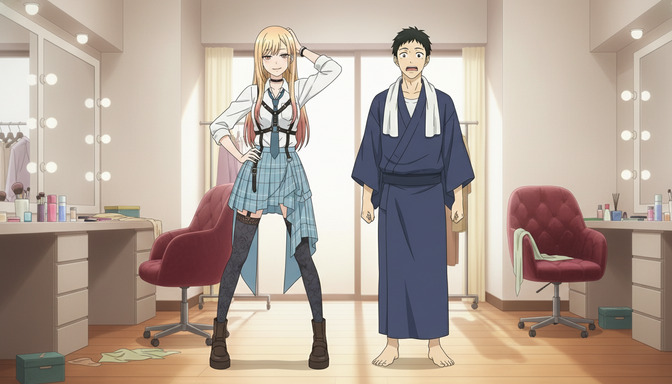
Two characters can be designed with identical care and still feel completely different in a scene depending on how they stand. One with a hip cocked, chin lifted, and weight shifted forward reads as confident. The other with hunched shoulders, arms pulled inward, and eyes averted reads as uncertain. Same art style, same level of rendering detail, completely different presence. Pose is not decoration. It is character made visible.
For AI anime creators, pose prompting is one of the highest-leverage skills you can develop. A well-posed character requires fewer regenerations, communicates clearly to viewers without dialogue, and makes your images feel like moments from a real story rather than character card renders. This guide covers how to use poses intentionally across every scene type, with example prompts and a practical workflow.
Why posing matters in AI anime art
Most AI anime generations default to a neutral standing pose when the prompt does not specify otherwise. The character appears, centered, arms at their sides, looking slightly at the camera. It is technically correct and emotionally empty. That default exists because "anime character" as a concept has a center of gravity in the training data: character art, references, and design sheets, all of which favor neutral presentation for clarity. If you do not actively override it, that is what you get.
The problem is that a neutral pose communicates nothing about the character beyond their design. It does not tell you who they are in this moment, what they want, or how they relate to anyone else in the frame. Viewers can study it, but they cannot feel anything from it. Posing is what moves an image from "here is what this character looks like" to "here is who this character is."
Posing also does practical compositional work. A character leaning against a wall fills the frame differently than one running toward the camera. A slouched posture draws the eye down; a raised arm draws it up. When you understand pose as a compositional and emotional tool, not just a visual detail, you start making decisions that improve every image you generate.
Emotional storytelling through body language
Anime communicates emotion through stylized exaggeration. A character does not just look down; their entire spine curves under the weight of something. A character is not just startled; their whole body lifts off the ground. That language is already embedded in the models you are prompting. Your job is to use it deliberately.
The body language principles that translate most reliably into AI prompts are weight distribution, arm and hand placement, and the relationship between the head and spine. Weight distribution tells you where the energy is: forward weight signals aggression or urgency, backward weight signals surprise or withdrawal. Arms and hands are the most expressive part of the body after the face, and they are the part most often left out of prompts. A character with their arms behind their head reads as relaxed. Arms crossed reads as defensive or closed. One hand extended toward another character changes the entire meaning of the scene.
Prompt example for emotional body language: anime girl, seated on a wooden floor, knees drawn to her chest, both arms wrapped around her legs, chin resting on her knees, looking out a rain-streaked window, soft side lighting, melancholy expression, muted indigo and gray color palette, slice-of-life style.
That prompt produces an image that conveys a specific interior state without any facial close-up or dialogue. The pose carries the emotion.
Action poses
Action poses require you to communicate motion in a still image. The key is committing to a moment mid-movement rather than a pose that could be held indefinitely. "Mid-sprint" is more generative than "running." "Sword raised at the peak of a downward strike" is more specific than "holding a sword." The AI responds to motion words and physical specificity, but it needs you to pick the moment.
The visual vocabulary of anime action has well-established conventions. Speed lines, exaggerated limb extension, airborne poses, off-axis angles, and dramatic foreshortening all signal action. You can lean into these conventions explicitly in your prompts.
- Punch/kick: "arm fully extended in the follow-through of a punch, body rotated, feet planted, dramatic low angle"
- Leap: "character mid-leap between buildings, one leg bent trailing behind, one arm reaching forward, wind-swept hair, dynamic perspective from below"
- Defense: "both arms raised in a cross-block, weight shifted back, knees bent, gritted expression, motion blur on incoming strike"
- Magic cast: "arm raised with palm open toward the sky, head tilted back, energy particles spiraling around the hand, glowing runes at the feet"
Prompt example for an action beat: anime boy, mid-sprint on a rain-slicked rooftop, body leaning forward at 45 degrees, leading foot just touching down, trailing leg extended behind, right arm pumping forward, left arm driving back, dark hooded jacket flaring open, motion blur on the legs, dramatic low-angle camera, night scene with city lights below.
Slice-of-life poses
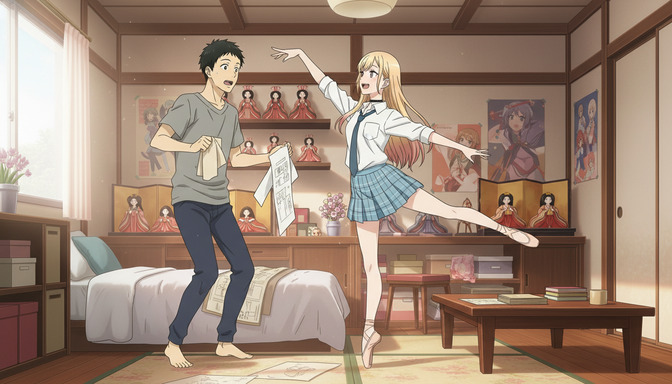
Slice-of-life is where subtle pose work matters most, because there is no dramatic action to carry the scene. The interest has to come from the quality of the everyday moment, and the pose is what makes an ordinary activity feel lived-in rather than staged.
Good slice-of-life poses are specific to the activity. Not "sitting at a desk" but "leaning over a textbook with one arm extended and the pencil resting behind the ear." Not "eating" but "holding chopsticks in both hands over a bowl of ramen, leaning slightly forward, steam rising." The specificity is what signals that something real is happening rather than a character being placed into a setting as a prop.
Useful slice-of-life pose vocabulary includes: lounging with limbs loose and unconstrained, mid-task with hands occupied, caught in a transitional moment (standing up, about to sit, mid-reach), and absorbed in an activity with the body angled away from the viewer. That last one, the character not performing for the camera, tends to produce images with strong naturalistic warmth.
Prompt example: anime girl, sitting cross-legged on a window seat, looking out at the street below, one hand pressed flat against the glass, the other resting in her lap holding a folded piece of paper, soft morning light from the left, loose school uniform, calm and slightly distant expression, slice-of-life style, warm muted palette.
Romantic poses
Romantic poses in anime work through proximity and intention, not just physical contact. Two characters standing at arm's length but with one turned toward the other and one turned away can carry more romantic tension than a generic embrace. The AI understands the conventions of slow-burn anime romanticism. You can work with those conventions deliberately.
The most effective romantic poses in AI prompting are ones where the emotional dynamic is embedded in the physical arrangement. Who is leaning in and who is pulling back. Who is reaching and who is not yet responding. The direction of eye contact and its absence.
- The almost-touch: "two characters side by side, hands nearly touching on a shared surface, both looking forward, neither acknowledging the other, golden hour light"
- The reach: "character reaching up to adjust the other's collar, faces close, slight tilt in the posture, the receiver's expression unreadable"
- Back-to-back: "two characters seated back to back, both looking in opposite directions, slight contact between shoulder blades, quiet scene"
- The over-the-shoulder: "character standing behind the other, looking over their shoulder at the same thing, foreheads almost close, soft lighting"
Prompt example: anime couple at a festival, girl in a dark blue yukata with white floral print, boy in a light gray yukata, standing side by side facing the stalls, boy's hand reaching slowly toward the girl's hand at his side, neither looking at each other, warm lantern light from above, soft depth of field, romantic slice-of-life style.
Group poses
Group poses fail for one of two reasons: every character is standing upright in a flat lineup, or the characters are spatially jumbled with no clear visual hierarchy. Both problems are solved by assigning each character a distinct spatial role before you think about individual poses.
Spatial roles in a group shot: one character anchors the center, at least one character is at a different elevation or depth plane (kneeling, seated, standing on something, leaning), and at least one character is interacting with another rather than posing independently. This creates triangulation in the composition that draws the eye through the group rather than across it in a flat read.
Then assign a distinct pose archetype to each character. One stands with arms crossed. One leans on a wall. One sits on a surface with hands clasped. The variety in posture visually separates them even before the viewer reads their designs. When characters share similar visual profiles (similar hair, similar clothing color), pose variation is the primary tool that keeps them distinguishable at a glance.
Prompt example: three anime characters, school rooftop, afternoon light: the tall boy with silver hair leans against the fence with arms crossed, looking away; the girl with short black hair sits on the fence with legs dangling, head tilted with a knowing smile; the boy with auburn hair crouches in the foreground with hands loosely linked, looking up at both of them. Soft warm light, clear sky background, character-focused composition.
Camera angle considerations
Camera angle and pose work together. A strong action pose is undermined by a camera angle that flattens it. A quiet emotional moment gains weight from a camera angle that increases intimacy. Specifying the angle in your prompt is not optional once you start thinking about posing seriously.
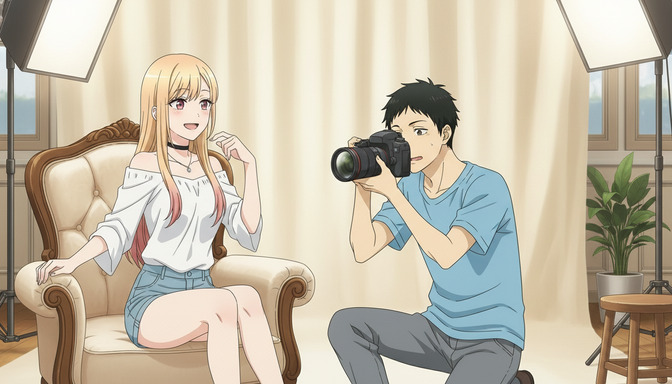
The most useful camera angle vocabulary for AI anime prompting:
- Low angle (camera below, looking up): makes characters feel powerful, imposing, or heroic. Best for antagonist reveals, power moments, and confident character introductions.
- High angle (camera above, looking down): makes characters feel small, vulnerable, or observed. Best for introspective moments, characters in wide environments, or vulnerability scenes.
- Dutch angle (tilted frame): creates psychological unease or disorientation. Best for tense encounters, reveals, or moments of instability.
- Over-the-shoulder: places the viewer in relationship with the character in front of the camera. Best for conversation scenes, confrontations, and moments of recognition.
- Close-up on hands or feet: directs attention to the action or to an object. Best for moments of tension where the face is not the focal point.
- Wide establishing shot: shows the character's relationship to their environment. Best for setting scenes and for showing characters who are small against a large world.
When you specify both pose and camera angle in the same prompt, you give the AI a complete compositional brief: what the body is doing and how that body is seen. That combination produces images with intentional visual grammar rather than accidental one.
Common pose prompting mistakes
Not prompting a pose at all. The most common and most costly mistake. Every prompt that does not specify a pose defaults to neutral standing. It is not that the AI cannot generate dynamic poses; it is that it defaults to neutral when given no instruction. Specify pose first, before clothing, before background, before style.
Using pose adjectives instead of pose descriptions. "Dynamic pose" and "cool pose" are adjectives, not instructions. They tell the AI how you feel about the pose without telling it what the pose is. "Body leaning forward at a 40-degree angle, leading with the right shoulder, both hands gripping a sword hilt above the head" is a pose description. That is what produces consistent, usable results.
Ignoring hands. Hands are the hardest thing for AI to render correctly, so most creators stop asking for specific hand positions to avoid the problem. This is the wrong solution. Hands carry enormous expressive weight in anime: a clenched fist says something different from an open palm, a hand over the mouth says something different from a hand resting on the collarbone. Prompt for hands specifically. Accept that some outputs will have hand errors, but the ones that land correctly will be far more expressive than any output with neutral or hidden hands.
Mismatch between pose and camera angle. A character running in profile looks flat. A character reaching toward the camera looks dynamic. The pose and the angle need to be selected together, not separately. Think about the relationship between the body and the viewpoint before writing the prompt, not after.
Assigning the same pose energy to every character in a group scene. When all characters in a group share the same level of tension or relaxation, the image reads as static regardless of what each character is individually doing. Vary the energy: one character at rest, one at medium tension, one at high tension. That variation creates visual rhythm and implies a narrative.
For more on the prompting principles that underlie all of this, the guide on writing better AI anime image prompts for consistent results covers the full prompting framework that makes pose work land reliably. If you are building scenes with multiple posed characters, the guide on creating multi-character anime scenes using character sheets goes deep on keeping identity and pose consistent across a full cast.
Frequently asked questions about anime pose prompting
How specific do I need to be when prompting a pose?
Specific enough that a person who has never seen your character could draw the pose from your description alone. That usually means: which body part is doing what, which direction the body is facing relative to the camera, what the hands are doing, and whether the character is in motion or at rest. "Standing confidently" is not a pose description. "Standing with weight shifted to the left hip, arms loosely crossed at the chest, chin tilted up slightly, facing the camera at a slight three-quarter angle" is one.
What pose types work best for character introductions?
For a character introduction, the pose should reveal personality in the first read. A protagonist's introductory pose tends to work best when it shows either their primary trait (a scholar surrounded by books, seated with a book open mid-read) or their internal conflict (a composed exterior but one small tell: a hand gripping a sleeve, feet turned slightly inward despite the upright posture). Avoid the neutral default for introductions specifically, because this is the moment the character makes their first impression on the viewer.
Can I use reference poses or real photo references in my prompts?
Yes. If your generation tool accepts image references alongside a text prompt, a photo reference of a pose is one of the most efficient tools available. The AI reads the spatial geometry of the reference and applies it to the character's design. The text prompt then handles character appearance, style, and environment. Use references for poses that are hard to describe precisely in words: complex foreshortening, unusual weight distribution, or specific dance or martial arts positions that have a named form you cannot articulate verbally.
How do I prompt romantic poses without them looking stiff or staged?
The key is asymmetry and incompleteness. Real moments of romantic tension are rarely symmetrical: one person is slightly ahead of the other emotionally, and the pose reflects that. One is leaning in while the other is still neutral. One hand has moved toward the other but has not arrived yet. One character is looking while the other is not looking back. That imbalance is what creates the feeling of a genuine moment rather than a posed photograph. Also, specify that characters are not looking at the camera. Having both characters absorbed in the moment, rather than presenting themselves, is one of the strongest signals to the model that this is a scene, not a portrait.
What is the best way to prompt a character in motion without getting blurry results?
Choose a single frozen instant from within the motion rather than asking for motion itself. "Mid-sprint" without further specification often produces motion blur because the model interprets continuous motion literally. "The exact moment both feet leave the ground in a sprint, left arm forward, right arm back, body angled forward at 30 degrees" produces a sharp image of a body in a specific instant of motion. Speed lines and motion blur can then be added as deliberate compositional choices in the style or finishing description, rather than as artifacts of an imprecise motion prompt.
How do I get consistent poses across multiple generations of the same character?
Write the pose description with the same precision you write the character description, and carry both into every generation. Most creators invest in writing a strong character sheet, then write the pose loosely, and the result is a character who looks consistent but is positioned differently every time. Treat pose as part of the scene specification, not an afterthought. If you have a recurring shot type for a character, for example their thinking pose or their combat stance, write that pose description as a fixed block and reuse it exactly as written, the same way you reuse the character description. For more on building those systems, the AutoWeeb anime character creator lets you store and reuse character details across your projects.
Do different anime styles require different pose prompting approaches?
Yes, at the extremes. Shonen and action styles are built for exaggerated poses and will render dramatic foreshortening and extreme extension more reliably than softer styles. Slice-of-life and shoujo styles are better calibrated for subtle, naturalistic poses and may smooth out or soften overly dramatic action prompts. When working in a specific style, test a few pose extremes early to understand where that style's generation range sits. Adjust your pose vocabulary to match: more extreme language for action styles, more observational and specific language for character-study styles.
Related Blog Posts
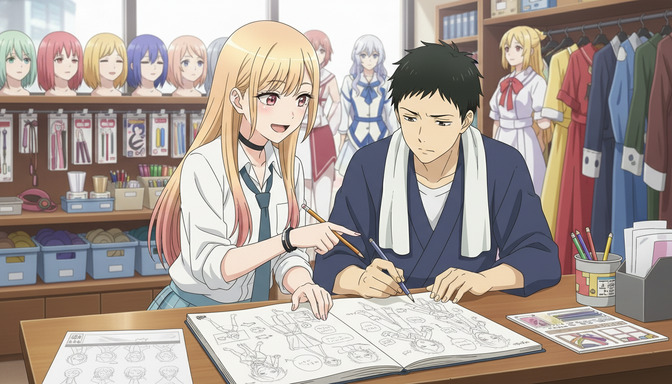
Generate Story Ideas With AI Before Building Your Anime Storyboard
The storyboard cannot tell a story the idea never finished building. Start with inspiration, not panels.
Learn how to generate AI story ideas before you storyboard. Genre-first, character-first, world-first methods with examples for romance, action, horror, and more.
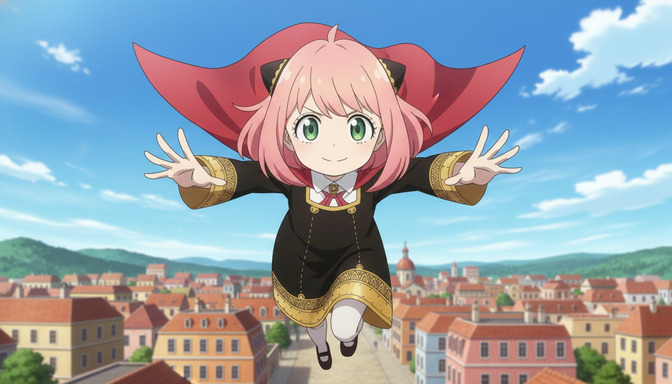
How to Create a Character Arc Before Storyboarding Your Anime Story
The character arc is not something you add after the storyboard. It is the decision that makes every panel in the storyboard necessary.
Learn how to create a character arc before storyboarding your anime story. Covers positive, negative, and flat arcs, internal vs external conflict, and character wants vs needs.
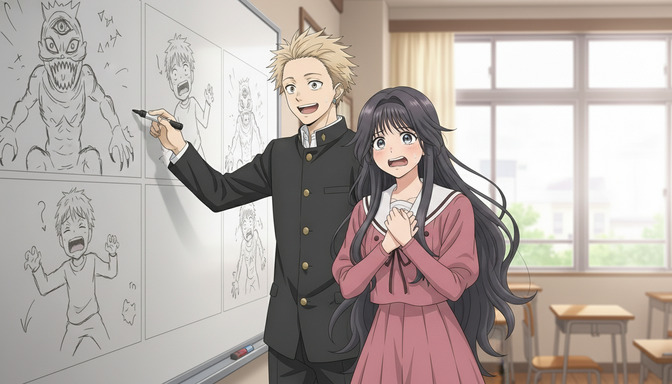
How to Pick Anime Story Tropes That Make Your Storyboard More Engaging
The story tropes that do not just decorate your script — they dictate every panel order, shot distance, and emotional beat on the storyboard.
Learn how to pick anime story tropes that strengthen your storyboard. A step-by-step framework covering character tropes, writing tropes, and story ideas with AutoWeeb.
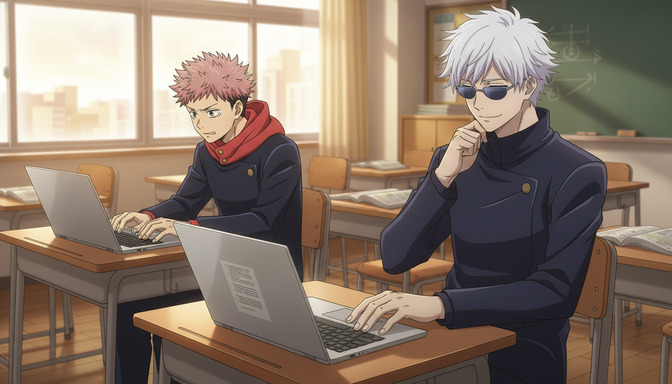
How to Write a Script With AutoWeeb's AI Story Agent
The script is not a step you skip on the way to the storyboard. It is the map that makes every panel in the storyboard necessary.
Learn how to write a script with AutoWeeb's AI story agent. Complete workflow: story idea, genre, tropes, characters, script generation, scene refinement, and storyboard panels.
Explore AutoWeeb
Jump into the tool that fits your creative step.
AI Anime Video Generator
Animate storyboard shots into cinematic clips with Seedance 2 and consistent characters.
Anime Character Creator
Design original characters with consistent sheets across every scene.
AI Anime Image Generator
Generate cinematic anime stills anchored to your character library.
Turn Photo Into Anime
Upload any photo and watch AI turn it into stunning anime art in seconds.
AI Anime Location Generator
Create a location set once, then generate reference images from every angle.
AI Anime Storyboarding
Describe your idea, pick your characters, and let AI draft the script and scenes.
AI Anime Prompt Agent
Turn a rough idea into a cinematic Seedance 2 prompt with the AI Director.