How to Create a Character Arc Before Storyboarding Your Anime Story
The character arc is not something you add after the storyboard. It is the decision that makes every panel in the storyboard necessary.
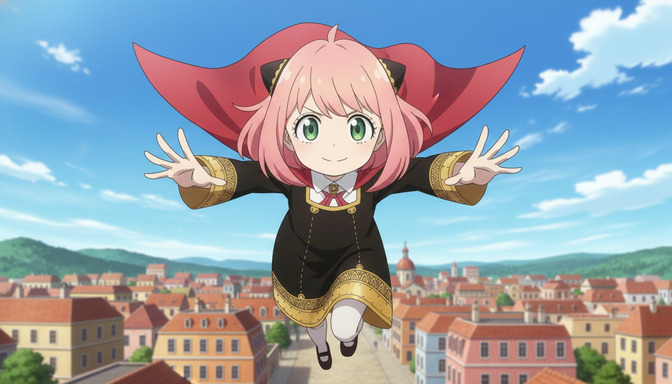
Most anime storyboards that lose their momentum halfway through have the same root problem: the creator started with a scene instead of a character. A scene is just a location and an action. A character arc is the internal journey that makes the scene matter. Without one, each storyboard panel can look beautiful but adds up to nothing because there is no internal pressure building toward release. This guide is for US creators who want to build a protagonist arc before touching a single panel prompt, so every image generated is doing narrative work rather than decorative work.
What follows covers the full architecture of character development: what a character arc actually is, why it has to precede storyboarding, how positive, negative, and flat arcs differ in their storyboard demands, how internal and external conflict operate differently, and how separating what a character wants from what a character needs gives you the clearest possible map from scene one to the final panel. It ends with how AutoWeeb's AI Story Agent converts the arc you build into storyboard-ready beats.
What is a character arc?
A character arc is the measurable change, or deliberate non-change, in a character's internal state across a story. It is not the plot. The plot is what happens to the character from the outside. The arc is what shifts inside the character as a result. A character who starts a story believing she is not powerful enough to protect anyone and ends the story having chosen to protect someone at personal cost has a complete arc, even if the only external event is a single confrontation. The external plot is the mechanism. The arc is the point.
In story structure terms, the arc has three positions: a beginning state (a belief, a wound, or a misunderstanding the character holds about themselves or the world), a midpoint pressure (an event that makes the beginning state unsustainable), and an end state (a revised belief, a surrendered wound, or a confirmed truth). Those three positions map directly onto storyboard thirds. The opening panels should reflect the beginning state visually, the middle panels should build pressure against it, and the final panels should register the shift. A storyboard without all three positions is a storyboard without an arc.
Why character arcs must come before storyboarding.
Storyboarding without a character arc produces panels that are technically competent and narratively inert. Every shot decision, from framing distance to lighting to whether the character is shown from above or below, has a correct answer if you know the arc. It has no answer, only preference, if you do not. A wide establishing shot of a character alone in a large landscape means one thing in the opening panel of a positive arc (she is small but about to grow into the frame) and a completely different thing in the closing panel of a negative arc (she has shrunk to nothing, and the world swallowed her). The same image does opposite emotional work depending on where it sits in the arc. Without the arc defined first, you cannot know which shot to take or where to place it.
The practical cost of skipping arc definition is revision loops. Creators who storyboard before arcing tend to generate twenty panels, feel that something is wrong without being able to name it, and start over. The issue is almost always that the panels have no directional pressure. Each one is its own contained image rather than a beat in a sequence that is building toward a specific internal change. Defining the arc first converts storyboarding from open-ended image generation into a constrained problem with correct answers.
Positive character arcs: growth that costs something.
A positive arc is the most common structure in anime and the most misunderstood. The word "positive" does not mean the character gets what they want or that the story ends happily. It means the character moves from a false belief toward a true one, and that movement represents genuine character growth. The cost of that growth is what gives the arc its weight.
Example: a young witch believes that power is something you earn alone, that asking for help is weakness. Her arc tracks the dismantling of that belief through contact with a world that requires connection to function. The positive resolution is not that she becomes happy. It is that she chooses connection knowing it makes her vulnerable. Storyboard implications are specific: early panels frame her in isolation, often centered in the shot with empty space on both sides; middle panels begin introducing other presences that she actively turns away from; late panels close that distance, not because she stopped being afraid, but because the need became greater than the fear.
For a positive arc to land in a storyboard, the beginning belief has to be visually encoded. If the opening panels do not show what the character is protecting themselves from, the resolution has nothing to resolve. Write the beginning belief as a single sentence before generating panel one. That sentence is your opening panel's emotional brief.
Negative character arcs: the arc that ends in loss.
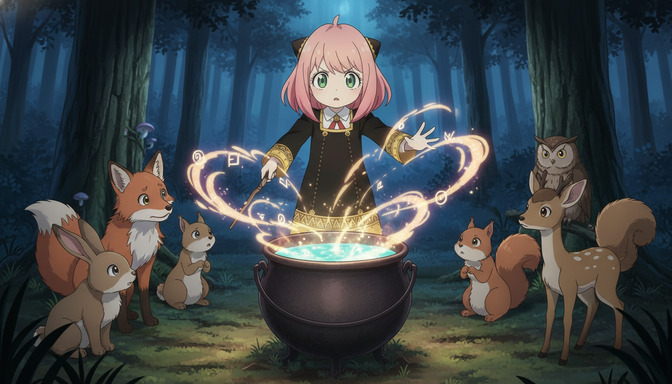
A negative arc tracks a character moving away from truth rather than toward it. The beginning state contains a crack, a temptation, an unresolved wound, and the arc shows how external pressure widens that crack until the character breaks through it in the wrong direction. Negative arcs are rarer in short-form storyboards because they require the audience to invest in a character they will watch fail, which demands more runway than most short projects have. But when they are executed well, they are structurally the most efficient arc available because every plot beat becomes ironic: the viewer can see the character is choosing wrong before the character can.
Example: a protagonist who starts a story using her power to protect others and ends it using that same power only for herself. The external events that cause the shift can be reasonable, even sympathetic, betrayals, losses, exhaustion. The arc is negative not because the character is villainous but because the direction of internal change is away from connection and toward self-protection. Storyboard implications are the inverse of the positive arc: early panels show the character framed with others; late panels return to isolation, but the isolation now reads as chosen rather than given. Lighting is useful here. Warm color temperature in early shared panels; cooler, more controlled light in late solo panels.
Flat character arcs: the character who changes the world instead.
A flat arc is not a failed arc. It is a deliberate structural choice in which the character holds a true belief under pressure and, by holding it, changes the world around them rather than being changed themselves. The flat arc character is often the mentor, the moral center, or the idealist who refuses to become cynical when every external force demands it.
The storyboard demands of a flat arc are different from both positive and negative arcs because the visual evidence of the arc is in the other characters rather than the protagonist. The flat arc protagonist stays compositionally consistent across the storyboard: centered, grounded, a fixed point in the frame. The other characters orbit and shift. Early panels show supporting characters holding positions that contradict the protagonist's worldview. Late panels show those same characters gravitating toward the protagonist's position, not because they were convinced by argument, but because they saw the protagonist hold their belief at personal cost.
Flat arcs are underused in short-form anime storyboards because creators confuse flat with static. A flat arc has as much internal pressure as a positive or negative arc. The difference is where the pressure resolves: outward into the world rather than inward into the protagonist. If your story is about a character who is already right and needs to stay right, you have a flat arc. Build the storyboard to show what it costs her to stay right, and what shifts in the world as a result.
Internal conflict versus external conflict: how to use both in your storyboard.
External conflict is what the world throws at the character. Internal conflict is what the character does to themselves in response. Both are necessary in a complete story structure, but they function differently, and confusing them is one of the most common reasons a storyboard loses emotional coherence.
External conflict is visible and storyboard-friendly by default. A character in a fight, a character facing a crowd, a character caught in a storm: all of these are external conflicts, and they generate immediate visual material. The storyboard problem with external conflict is that it can run for many panels without producing any character development at all. Action does not equal arc. A character can win ten fights without changing internally, and a storyboard full of action beats that never register the internal cost of those fights will feel hollow even when it looks impressive.
Internal conflict is the harder material to storyboard because it is invisible by default. It has to be externalized. The tools are familiar in anime: reaction close-ups, hesitation beats, things the character almost says, the gaze that lands on one thing while the thought is clearly elsewhere. A character standing at the edge of a crowd, watching rather than entering: that is internal conflict given a visual form. A character who reaches toward something and stops: internal conflict. A character who smiles at the wrong moment because the alternative is too much: internal conflict made legible.
The correct ratio in most storyboards is not equal. External conflict provides the structure and the forward momentum. Internal conflict provides the meaning. A useful test: for each action beat in your storyboard, ask what internal beat follows from it. If the action beats do not generate internal beats, you have external conflict without arc. If the internal beats do not escalate in response to external pressure, you have a static character. Both produce the same result: a storyboard that does not add up.
Character wants versus character needs: the gap that drives the whole arc.
Every compelling protagonist arc is built on a gap between what the character wants and what the character actually needs. The want is conscious, immediate, and often named aloud in the story. The need is structural, usually unconscious, and almost never named by the character because the character cannot see it yet. The arc is the process of the character discovering, through external events, that the want was always a proxy for the need.
Example: a young witch wants recognition. She wants to be seen as powerful, competent, independent, someone who does not need others to complete her work. That is the want. What she needs is to belong, to be part of something that continues without her, to trust that connection is not the same as weakness. The want and the need are not just different; they are in tension. Every action she takes to satisfy the want, working alone, refusing help, demonstrating capability at the cost of relationship, pushes her further from what she needs. The arc resolves when the want is either abandoned or redefined in terms of the need.
The storyboard utility of this gap is that it gives every panel a double reading. The panel that shows her succeeding alone is simultaneously a panel about her failing to get what she actually needs. That double reading is what makes a storyboard feel dense and emotionally alive rather than thin. To use it, you need both terms named before you begin. Write the want in one sentence. Write the need in one sentence. Check that they are genuinely in tension and not just restatements of each other. Then storyboard the action of the want while encoding the cost of the need in the surrounding visual details: who is absent from the frame, where her gaze goes, what the light on her face is doing.
How AutoWeeb's AI Story Agent helps you build character arcs and convert them into visual storyboards.
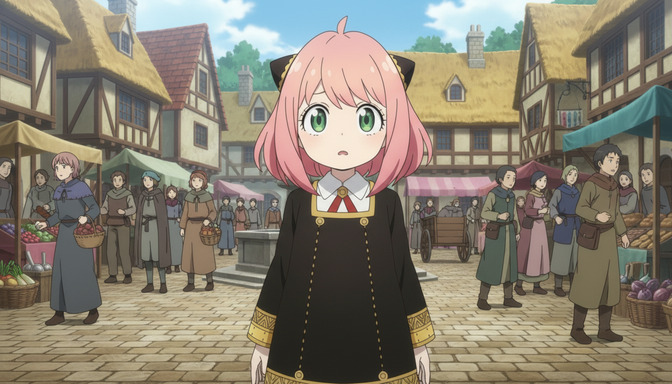
AutoWeeb's AI Story Agent is built for the exact gap between arc definition and storyboard generation. You do not need to arrive with a complete arc already structured. You bring the premise, the character, and the emotional landing you want; the agent surfaces the arc mechanics already latent in your idea and drafts the beat structure that maps directly onto storyboard panels.
The workflow is concrete. Tell the agent something like: "A young witch who has always worked alone discovers that a spell she cannot cast solo will be the only thing that saves her village. She is too proud to ask for help until the last possible moment." The agent identifies this as a positive arc anchored in the want (independence) versus the need (connection). It drafts a beat structure: opening panels encoding the beginning belief through isolation and competence-display; middle panels introducing the spell's requirements as external pressure; a midpoint beat showing the first failed solo attempt; a hesitation beat before the ask; a resolution beat showing the cost of the choice alongside its outcome. Each beat arrives in storyboard-ready language with panel framing, character positioning, and lighting notes already included.
The agent also works the other direction. If you have a set of scenes already planned but the arc feels unclear, describe the beats and ask the agent to identify which arc type is operating and where the want-versus-need gap sits. It returns a diagnosis and, if the arc is incomplete, a set of suggested beats to fill the gap. This catches structural problems at the planning stage rather than after twenty panels have been generated.
Once arc and beats are confirmed, the storyboard planning tool in AutoWeeb takes each beat and converts it into a generation-ready panel prompt. Assign your character from the anime character creator before panel generation so visual consistency holds across the arc's full run. For the post that covers the trope layer that sits on top of the arc structure, the guide on picking anime story tropes for storyboards covers how to select the structural shape that delivers the arc's emotional payoff. For the genre decision upstream of both, the post on choosing the right genre before an AI storyboard walks through the container the arc lives inside.
Frequently asked questions about character arcs and anime storyboards.
What is a character arc in simple terms?
A character arc is the internal change a character undergoes across a story, or the deliberate choice not to change despite external pressure. It is measured by comparing the character's belief, behavior, or relationship to truth at the beginning of the story against those same things at the end. A character who starts a story afraid of relying on others and ends it having asked for help at personal cost has a complete positive arc. A character who starts with a true belief and holds it under attack until the world around them shifts has a flat arc. The arc is always internal. The plot is external.
What is the difference between a positive and a negative character arc?
A positive arc moves the character from a false belief toward a true one, from a wound toward healing, or from isolation toward connection. The direction of internal change is toward truth. A negative arc moves in the opposite direction: the character starts with something real or hopeful and, through a series of choices under pressure, moves away from it. Negative arcs do not require a villainous character. They require a character whose internal choices consistently select protection over growth until the cost of those choices is irreversible. The storyboard difference is in the endpoint: positive arcs earn the final shared frame; negative arcs earn the final solo frame.
Can a flat arc character have genuine character development?
Yes, though the character development in a flat arc is external rather than internal. The flat arc character holds a true belief under pressure. The development is in what that holding costs them and in how the world around them shifts as a result. A mentor figure who refuses to abandon a student the rest of the world has written off is developing the story's world through their resistance. Their internal state is not dramatically different at the end, but they are not the same character, because the story has tested the belief and they have paid to keep it. That payment is the development.
How do I figure out my character's want versus need?
The want is usually easy to name: it is the goal the character states, pursues, or would describe if asked what they are after. The need is harder because it is what the character is actually missing, usually a truth they cannot see yet because the want is blocking their view of it. A useful test: ask why the character wants what they want. The first answer is usually the surface want repeated. Push one level deeper. Ask again. The answer at the second or third level is usually much closer to the need. A character who wants to be the strongest mage in the region wants, under that, to be seen as valuable. Under that, she needs to believe she is enough without the ranking. That is the need. The arc is the distance between the want and that truth.
How does internal conflict show up in a storyboard?
Internal conflict has to be externalized through visual choices because storyboards cannot show thoughts directly. The standard tools are reaction close-ups that hold one beat longer than the action demands; hesitation beats where the character stops before an expected action; gaze direction that does not match the scene's focus; body language that contradicts dialogue or action; and compositional isolation in panels that are otherwise populated. A character standing at the edge of a group rather than inside it, a character who looks at their own hands after a victory instead of at the crowd: these are internal conflict given visual form. For each internal beat you need, find its external visual equivalent before generating.
How many panels does a character arc need to feel complete?
A complete arc can land in three panels if the beginning state, the pressure beat, and the resolution beat each carry their assigned emotional weight. Most short-form anime storyboards work well in the six-to-twelve panel range for a single arc. The risk is not too few panels but panels that do not each advance the arc. A twelve-panel storyboard where four panels are action beats with no arc content will feel shorter than it is, because four of its panels are doing nothing structural. Count arc beats, not total panels. A six-panel storyboard where every panel advances the arc will feel more complete than twelve panels where half are atmospheric.
What is a protagonist arc and how is it different from a supporting character arc?
A protagonist arc is the primary arc of the story, the one the plot is structured to deliver. The protagonist's internal journey is what the storyboard is ultimately about, even when the external events involve other characters equally. Supporting character arcs run in parallel and gain meaning by reflecting, complicating, or contrasting the protagonist's arc. In a flat arc story, the supporting characters often carry the change that the protagonist catalyzes: their arcs are positive or negative versions of the question the protagonist's arc poses. A supporting character who makes the same choice as the protagonist and thrives, or makes the opposite choice and suffers, confirms the protagonist's arc without requiring the protagonist to change.
How does AutoWeeb's AI Story Agent help with character arc planning?
Describe your character, the beginning belief or wound, and the emotional landing you want for the final panel. The agent identifies the arc type that fits, names the want-versus-need gap already present in the premise, and drafts a beat structure that maps onto storyboard panel positions. If the arc is unclear, the agent asks clarifying questions about what the character is protecting themselves from and what the external pressure is. Once the arc structure is approved, it converts each beat into panel language: framing, character positioning, lighting direction, and relationship to other characters in frame. The result is a generation brief for each panel that already knows what arc position it is serving.
A character arc defined before the first panel is the difference between a storyboard that accumulates meaning and one that accumulates images. Name the beginning belief, identify the arc type, write the want and the need as separate sentences, and let AutoWeeb's AI Story Agent convert the structure into storyboard beats. For the visual layer that reinforces each arc beat, the guide on AI anime lighting prompts covers how to use light to encode internal state across the arc's progression. For the trope structure that gives the arc its genre shape, the post on picking anime story tropes for storyboards picks up from where arc definition ends.
Related Blog Posts
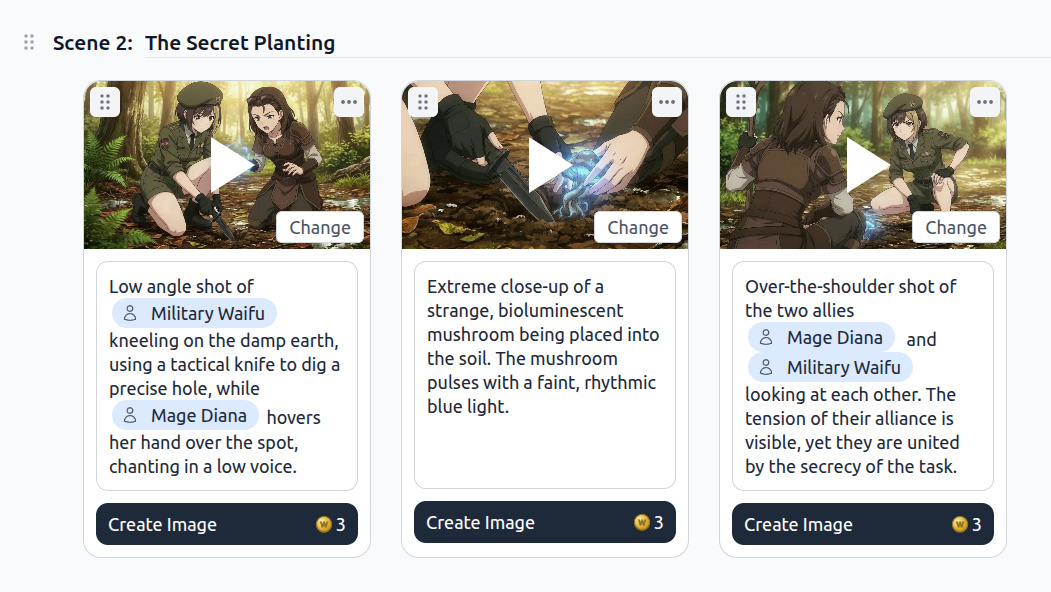
Introducing the Anime Storyboard Creator
Write your anime script and bring every scene to life with AI-generated images and videos.
AutoWeeb's new storyboard feature lets you write an anime script and generate images and videos for every scene. Meet the anime storyboard creator.
AI Anime Land Beats and Cliffhangers for YouTube Shorts
The last three seconds earn the next upload. Storyboard the land, generate one hold, and end on a question viewers cannot scroll past.
Design AI anime land beats and cliffhanger endings for YouTube Shorts: payoff panels, one-action holds, honest thumbnails, and prompts that lock your saved OC before EP02.
AI Anime Turn Beats for YouTube Shorts
The middle seconds deepen the hook without stealing the land. Storyboard one escalation, generate one action, and hand off to the cliffhanger on purpose.
Design AI anime turn beats for YouTube Shorts: middle-beat storyboard rows, one-action escalation prompts, b-roll handoffs, and saved OC locks before the land hold.
Creating an Anime Series with AI in 2026
A single-cour production grid for YouTube creators: twelve beats, one locked protagonist, and a still-to-motion chain that ships like a show.
Creating an anime series with AI in 2026 means a twelve-episode grid, locked protagonists, and Shorts-ready motion. A production workflow for YouTube video creators.
Explore AutoWeeb
Jump into the tool that fits your creative step.
AI Anime Video Generator
Animate storyboard shots into cinematic clips with Seedance 2 and consistent characters.
Anime Character Creator
Design original characters with consistent sheets across every scene.
AI Anime Image Generator
Generate cinematic anime stills anchored to your character library.
Turn Photo Into Anime
Upload any photo and watch AI turn it into stunning anime art in seconds.
AI Anime Location Generator
Create a location set once, then generate reference images from every angle.
AI Anime Storyboarding
Describe your idea, pick your characters, and let AI draft the script and scenes.
AI Anime Prompt Agent
Turn a rough idea into a cinematic Seedance 2 prompt with the AI Director.