AI Anime Land Beats and Cliffhangers for YouTube Shorts
The last three seconds earn the next upload. Storyboard the land, generate one hold, and end on a question viewers cannot scroll past.
AI anime land beats are how a fifteen-second ai anime video turns a stranger into someone waiting for your next upload. Video creators on YouTube and Shorts often nail the hook, survive the turn, then let the generator pick the ending. That leaves comments asking what happened instead of asking what happens next. A land beat is not a random still. It is a payoff panel with a deliberate hold, a cliffhanger that respects the thumbnail, and motion quiet enough that the question lands before the loop restarts.
This guide pairs with hook-first planning. If you have not locked the opening frame yet, read AI anime video hooks for YouTube Shorts first. If your protagonist still drifts between uploads, fix that in keeping your protagonist identical across twelve episodes before you optimize endings. Use the AI anime video generator for motion and the AI anime prompt agent so land lines and panel prompts share the same nouns.
What a land beat is (and how it differs from a cliffhanger).
In three-beat Shorts structure, the hook promises tension in the first seconds, the turn deepens it in the middle, and the land resolves or reframes it at the end. Resolution does not mean closure. Serialized anime ends episodes on unanswered questions all the time. The land beat delivers emotional punctuation: shock, dread, hope, betrayal. The cliffhanger is the story question that carries into the next upload.
What fails as a land: a second wide shot with no face, a smile that contradicts the turn, two gestures in one motion pass, or a cut to black before the viewer reads the expression. What works: one readable face, one prop or silhouette that changes meaning, half a second of hold so the loop feels complete but unfinished.
Think in questions, not twists for their own sake. "Who left the envelope?" beats "something crazy happens." Viewers subscribe when they trust you will answer in episode two on schedule, not when you bait and vanish.
Land-first storyboard notes before you generate.
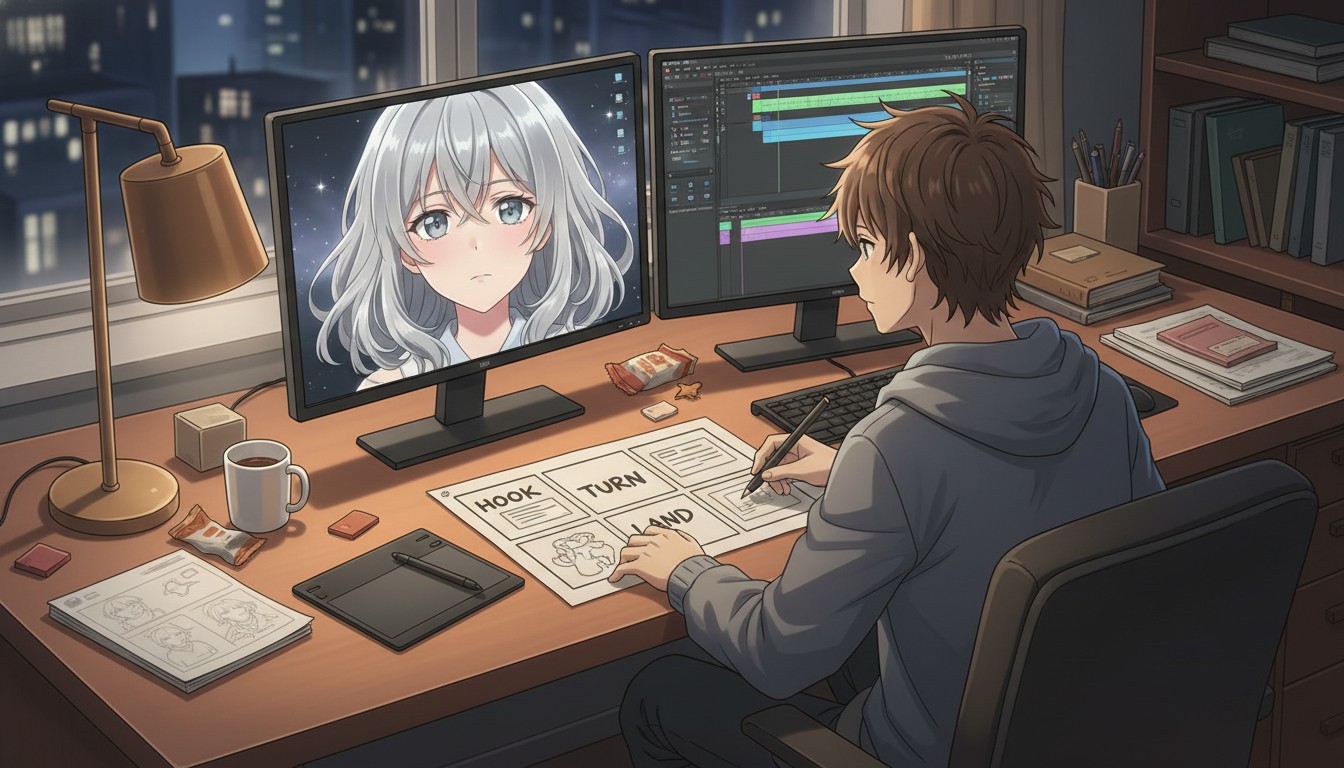
Label the final panel Land on the same five-line block as Hook and Turn. Many creators storyboard hook and turn, then treat the ending as leftover runtime. Reverse that habit once a month: write the land line first, then ask what hook and turn make that ending inevitable.
- Purpose (Land): Viewer feels a single emotion and one open question before the Short loops.
- Action (Land): One verb or hold: fingers stop on a seal, eyes lift to off-screen light, rain silhouette freezes in doorway.
- Duration (Land): Three to five seconds in the edit, often longer than the hook because couch viewers need the read.
- Thumbnail? Frequently yes: export the land still when it is the strongest face in the upload.
Example land annotation for "Alley Run #12":
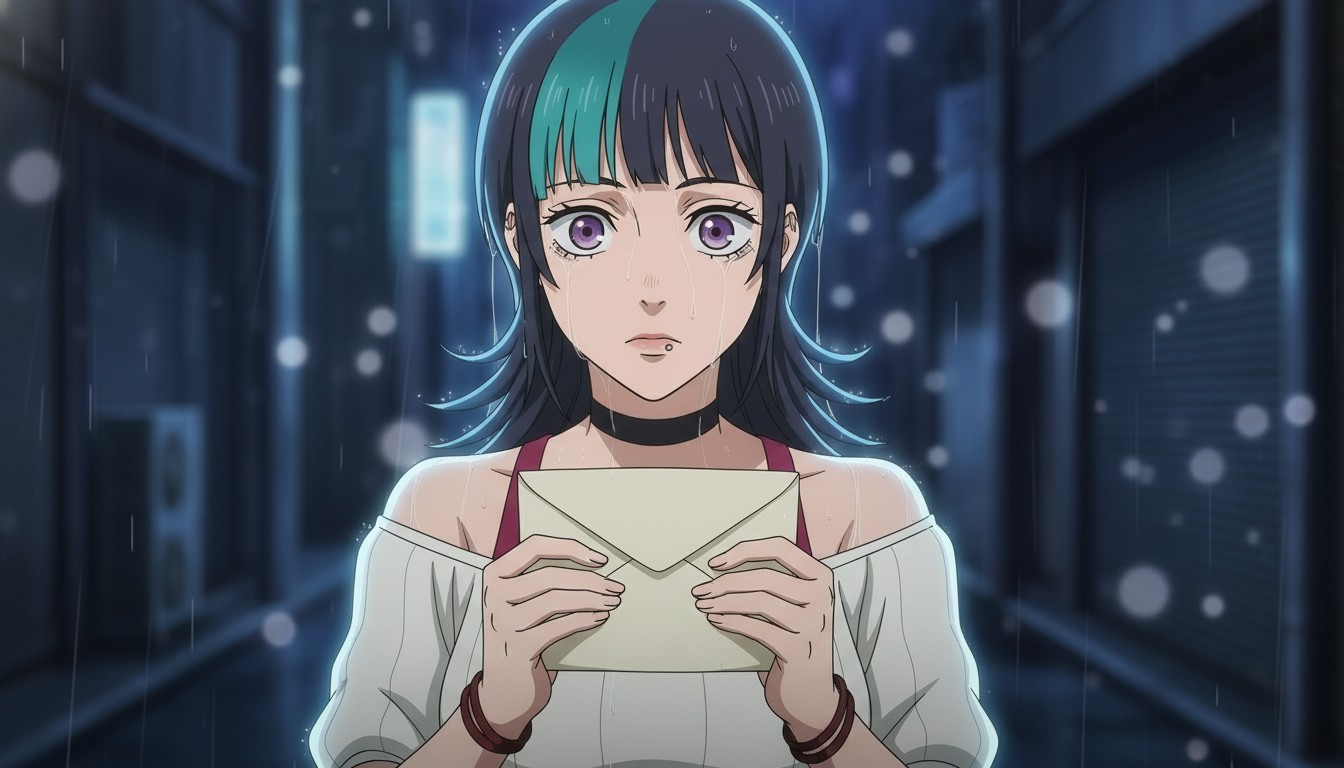
Land: tight close-up, saved protagonist, steel gray eyes, wet silver hair, envelope half visible at frame bottom, listener shock, cool blue alley bokeh, no second character, hold on eyes — cliffhanger: she recognizes the wax seal.
Full beat grammar lives in storyboarding AI anime for YouTube creators and storyboarding AI anime pre-production. Lands are where that grammar converts into comments and playlist clicks.
Generating land motion with one hold per pass.
Treat the land as its own generation, not the last seconds of a combined turn-plus-land clip. Motion models add flourishes when prompts stack verbs. The land wants deceleration: breathing slows, fingers stop, eyes settle. Pair an approved still from your scene pass as the first frame when the tool allows, using the same location and palette notes as video and scene generation for YouTube creators.
Example land motion prompts (pair with your saved OC and wardrobe bible):
Close-up, heroine with silver hair and steel gray eyes, subtle inhale then stillness, envelope edge in frame, rain on shoulders, cool blue rim light, cinematic anime, minimal motion only.
Medium close-up, protagonist looking down at object in hands, single slow blink, festival lanterns soft behind, hold expression, no camera drift.
If the pass adds a wave, a laugh, or a second character you did not storyboard, reject it. Lands are cheap to re-roll compared to losing subscribers who thought episode twelve recast the lead. Prompt discipline for Seedance-specific habits pairs with writing prompts for Seedance 2 anime videos and mistakes to avoid in Seedance 2 anime videos.
Cliffhanger patterns that earn episode two without bait.
Serialized channels reuse recognition: same protagonist, new stakes at the land. Discovery uploads use contrast lands: calm frame, one detail that breaks it. Both obey honest thumbnails and one-action motion.
- Object reveal: hands enter frame with a letter, charm, or blade hilt; face reacts in the last second.
- Off-screen presence: eyes track frame edge; no full reveal until next upload.
- Interrupted confession: mouth opens, sound cut or shadow crosses light before words land.
- Geography shift: feet at frame edge on rooftop; land is wide enough to imply fall or flight next week.
Track retention at the end of the first loop, not only at second three. If viewers replay but do not comment, your land is visually strong but narratively vague. If comments ask "what happens next" on schedule, your cliffhanger is working. Pair lands with AI anime b-roll cutaways when the turn beat needs breathing room before the hold.
Editing the land: hold, sound, and loop psychology.
Shorts loop. Design the land so the last frame matches the first frame emotionally, even if the pixels differ. A shock land that cuts to black can feel satisfying on loop; a land that mid-sentence cuts feels broken. Add half a second of room tone or a single diegetic sound on the hold: paper tear, heel stop, distant bell.
Do not stack music swells on every land. Duck the bed under the face read, then let the loop restart clean. Voiceover lands work when one sentence matches the on-screen question; write VO after picture lock, as noted in editing AI anime video for YouTube creators.
Trim the turn-to-land handoff on action, not on generator file length. If episode three's land is two frames late in analytics, fix the edit map before you blame the model. When you compile cells into a chapter, lands become episode buttons; see compiling AI anime Shorts into long-form YouTube chapters for slower rhythm on couch viewers.
Thumbnails, titles, and playlist chains.
The thumbnail should be the land face or prop when that frame is strongest. Do not thumbnail the hook if the hook is a wide with a tiny silhouette. Titles can tease the question without spoiling the answer: "She recognized the seal | Alley Run #12" beats "Huge twist ending."
Pin a comment that points to the playlist and the next episode number. End screens on long-form compilations should use the same face family. Channel packaging from creating an AI anime YouTube channel and backlog rhythm from building an AI anime episode backlog keep lands from becoming one-off spikes.
Frequently asked questions about AI anime land beats and cliffhangers.
How long should a land beat be in a YouTube Short?
Three to five seconds in the edit is the practical band for a readable hold. AutoWeeb motion passes can be shorter; your NLE adds the stillness viewers need. If analytics show drop-off before the land, the turn ran long, not the hold.
Should every Short end on a cliffhanger?
Serialized channels should land on a question most weeks. Anthology channels can land on emotional closure without a sequel tease. AutoWeeb does not choose your format; your spreadsheet row for Purpose (Land) does. Mix one quiet land every four uploads so subscribers trust you are not only escalating.
Can AutoWeeb keep the same face on the land as the hook?
Yes, when you use the saved character library and repeat capitalized noun locks in both panel lines. AutoWeeb inherits the reference into stills and motion. Lands fail when step two re-describes the face in new adjectives; keep hook and land prompts aligned on hair, eyes, and signature item.
What if my land motion keeps adding extra gestures?
Split turn and land into separate generations with one verb each. Reject takes that smile, wave, or pull back. The AI anime prompt agent can rewrite land lines into minimal motion language before you open the video generator.
Should the thumbnail always come from the land frame?
Use whichever panel has the clearest face at phone scale. Often that is the land close-up; sometimes it is the hook. AutoWeeb exports stills from approved frames; honesty matters more than which beat you crop. See AI anime YouTube thumbnails for video creators for panel-zero rules.
How do land beats work when I compile Shorts into a chapter?
Keep the same land frames as episode buttons; let them breathe half a second longer in long-form than in the vertical cell. AutoWeeb assets reuse across formats when palette and character locks stay constant. Chapters reward session time; lands on Shorts still earn the next weekly drop.
Lands sit downstream of hooks and upstream of playlists. Nail the face, the one hold, and the honest question, then let editing AI anime video punctuate the beat. For cour-scale planning, continue with creating an anime series with AI in 2026 and how to launch a trending anime series on YouTube in 2026.
Our Make Anime Videos for YouTube hub brings together all of AutoWeeb's YouTube production guides — turn beats, land cliffhangers, episode backlog batching, and compiling Shorts into long-form chapters — in one place.
Related Blog Posts
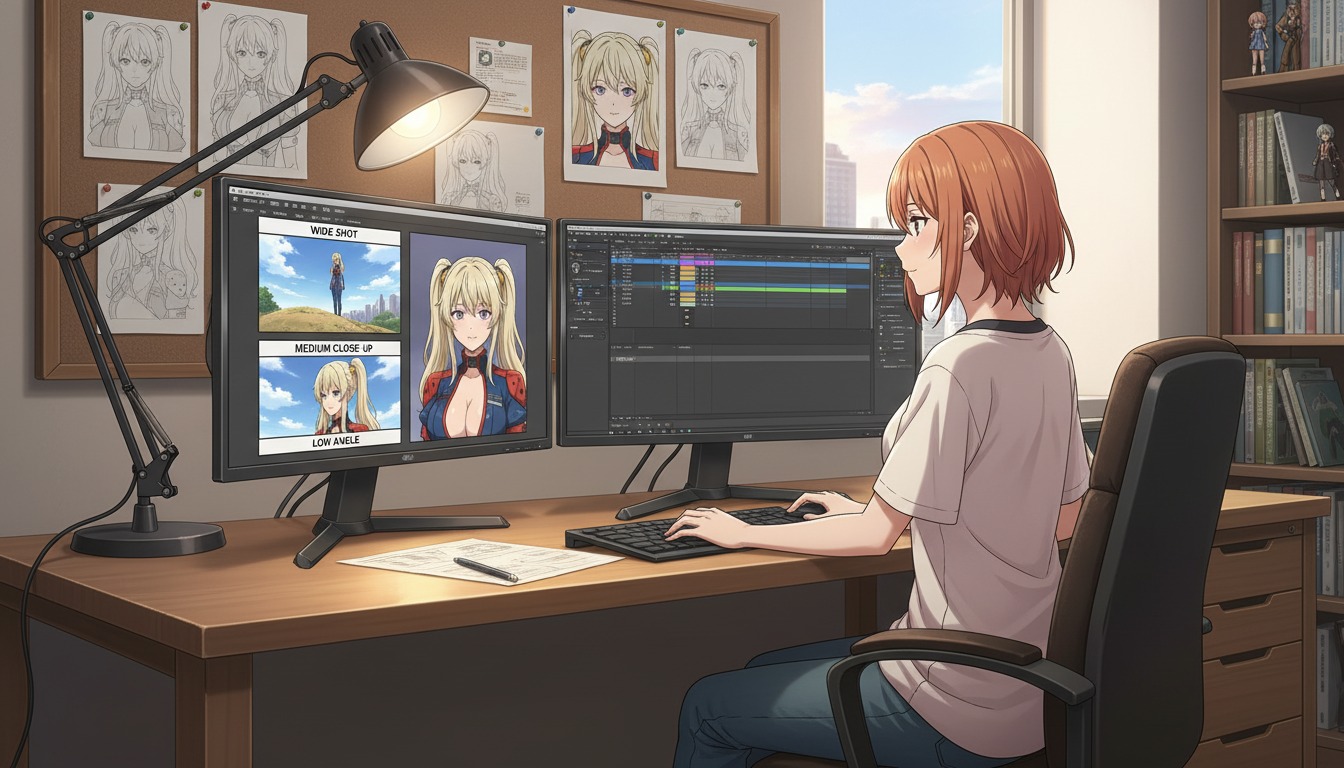
Cinematic Angles 101: How to Frame Your AI Anime Art Like a Professional Director
Wide shots, close-ups, and low angles are not decoration. They are how YouTube viewers feel stakes before a single line of dialogue lands.
Learn cinematic angles for AI anime video: frame hooks, turns, and lands like a director. Shot sizes, eyelines, and prompt language for YouTube and Shorts creators using AutoWeeb.
From Photo to VTuber Avatar: Designing Your Virtual Identity for YouTube
Your face becomes the anchor. Your anime model becomes the brand viewers recognize every stream, Short, and debut.
Turn a photo into a VTuber-style anime avatar for YouTube. Design a virtual identity with locked characters, expression sheets, and AI anime video clips that stay on-model.
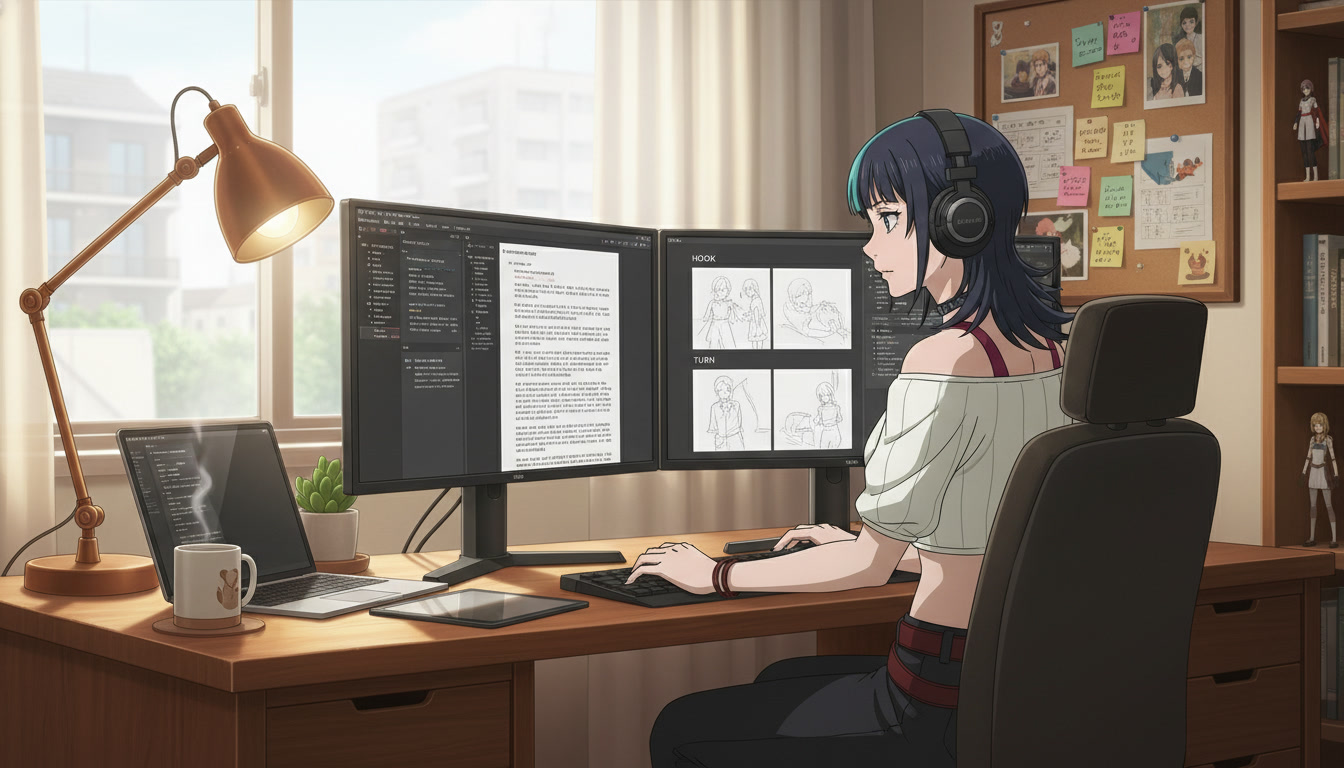
From Script to Screenplay: Using LLMs to Format Anime Scripts for Better Video AI Prompts
Your rough idea is not the problem. Unstructured prose is. A screenplay-shaped doc is how YouTube creators turn one paragraph into repeatable Seedance panels.
Learn how to use LLMs to format anime scripts into screenplays for better AI video prompts. A practical workflow for YouTube creators using beat sheets, panel lines, and AutoWeeb.
From Still Image to Animation: Bringing Your Art to Life in One Click
Turn a locked anime still into a Shorts-ready clip without redrawing the frame or re-describing your protagonist from scratch.
Learn how to turn a still anime image into AI video for YouTube Shorts. A still-to-motion workflow with locked characters, motion prompts, and AutoWeeb's anime video generator.
Explore AutoWeeb
Jump into the tool that fits your creative step.
AI Anime Video Generator
Animate storyboard shots into cinematic clips with Seedance 2 and consistent characters.
Anime Character Creator
Design original characters with consistent sheets across every scene.
AI Anime Image Generator
Generate cinematic anime stills anchored to your character library.
Anime Filters
Upload any photo and apply AI anime filters to turn it into stunning anime art in seconds.
AI Anime Location Generator
Create a location set once, then generate reference images from every angle.
AI Anime Storyboarding
Describe your idea, pick your characters, and let AI draft the script and scenes.
AI Anime Prompt Agent
Turn a rough idea into a cinematic Seedance 2 prompt with the AI Director.