How to Create a Shoujo Anime: The Complete Beginner's Guide to Making Romantic Anime
A complete guide to building an original shoujo anime from concept to animated scenes, covering character design, emotional arcs, romantic locations, storyboards, AI image generation, and video generation in AutoWeeb.
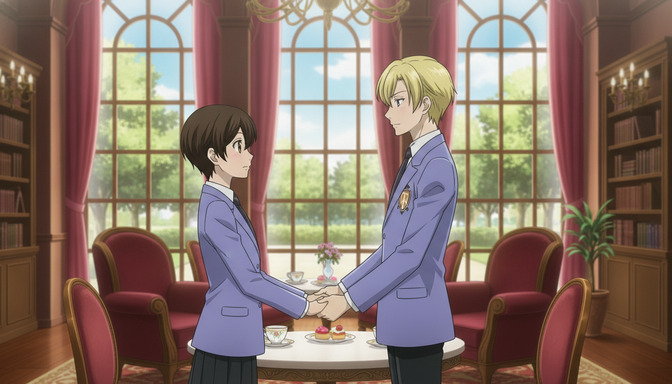
Shoujo anime is not simply romance. It is one of the most emotionally sophisticated storytelling forms in animation, built around the interior life of its characters, the way a look across a classroom can carry an entire arc's worth of meaning, the way a single conversation under cherry blossoms can break and remake someone at the same time. Cardcaptor Sakura, Fruits Basket, Ouran High School Host Club, Kimi ni Todoke. Every series in that lineage earns its emotional weight through the same structural commitment: it takes its characters' feelings seriously and finds visual language to render those feelings visible.
Creating a shoujo anime has always required more than a good love story. It requires expressive character design, carefully constructed emotional arcs, a visual grammar for unspoken feeling, and enough story architecture to sustain something that breathes across multiple episodes. What has changed in 2026 is that none of those requirements demand a professional studio, a drawing background, or a production team. With AutoWeeb, a solo creator can take an original romance concept from character design through storyboarding, image generation, and animated scenes in a single focused workflow. This guide covers every step.
What Is Shoujo Anime?
Shoujo is a Japanese publishing demographic category that translates roughly as "young girl." Like shounen, it describes a target audience rather than a genre. But in practice, shoujo anime has developed a distinct set of storytelling priorities, visual conventions, and emotional registers that make it immediately recognizable regardless of who is watching.
Where shounen anime externalizes conflict through combat and power systems, shoujo anime internalizes it. The drama in a shoujo series is the drama of feeling: misread intentions, the terror of vulnerability, the slow collapse of the defenses someone built to protect themselves from exactly the person standing in front of them. The protagonist's most important battles are not against enemies. They are against their own assumptions, fears, and the story they've been telling themselves about who they are and what they deserve.
Visually, shoujo anime is defined by its expressive character design: large, luminous eyes that communicate emotional state with precision, soft linework with detailed hair and facial features, and a color palette that shifts with the emotional temperature of the scene. Flower motifs, sparkle effects, extreme close-ups on eyes during key moments, backgrounds that dissolve into abstraction during emotional peaks: these are not decorative choices. They are a visual vocabulary designed to render interior states legible.
An original shoujo series built from scratch with AutoWeeb's production tools, Character Sheets for the cast, saved Locations for the recurring settings, the AI Director for story planning and storyboard generation, and image-to-video for the animated moments that carry the emotional peaks, maps directly onto the format's requirements. The tools are built for exactly this kind of sustained, character-driven production.
Common Themes in Romance Anime
Before you design a single character or write a scene, you need a structural theme. Not a plot summary, but the underlying emotional question your series is exploring. The best romance anime are not simply stories about two people getting together. They are stories about what getting together requires those people to become.
The most durable themes in shoujo and romance anime include: the person who has decided love is not for them, and what it takes to disprove that belief. The two people who are clearly right for each other but approach vulnerability from completely different directions. The girl who has spent years being someone else's background character discovering that she is the main character of her own story. The slow-burn where the feelings are obvious to everyone except the people having them.
What each of these themes shares is a protagonist who has something to learn that only this particular relationship can teach them. The love interest is not just attractive or kind. They are specifically positioned to confront the protagonist with the thing she most needs to face. That specificity, the sense that these two people in particular could only have this particular story, is what separates a romance anime that stays with people from one that is pleasant but forgettable.
Writing Compelling Romantic Leads
The protagonist of a shoujo series needs an interior life that predates the romance. She has a history, a set of beliefs about herself and the world, things she wants that have nothing to do with the love interest, and a specific blind spot that the narrative is going to exploit. The audience should understand who she is before the romance begins, because what makes the romance meaningful is watching it change her.
The most common version of the protagonist is the girl who is socially awkward, deeply sincere, and slightly invisible, someone who has accepted a smaller version of her own story because she has never had evidence that a larger version was available to her. Think Sawako in Kimi ni Todoke. What makes her compelling is not that she is sweet. It is that her sweetness coexists with a complete misunderstanding of how she is perceived, and the love interest's role in the story is largely to show her that her self-image is wrong.
The love interest in a shoujo series needs an equivalent depth. The prince type, the cold and distant upperclassman, the seemingly unattainable boy who turns out to be something more complicated than his surface: these are archetypes, but they work because they represent emotional puzzles. The love interest's coldness or distance or unavailability is a defense, and the protagonist is the person who, without intending to, finds the specific angle that gets through it. Define what that defense is protecting before you design the character's exterior.
Secondary leads matter significantly in shoujo. The best friend who sees everything the protagonist doesn't. The rival who believes they have a better claim on the love interest and is not entirely wrong about why. The love interest's existing social world, which the protagonist has to navigate without fully understanding its rules. These characters are not padding. They are the scaffolding that makes the central relationship visible from different angles.
Creating Emotional Character Arcs
A character arc in shoujo anime follows a specific pattern: false belief, inciting disruption, resistance, evidence, and transformation. The protagonist starts with a story she tells herself about who she is, usually a limiting one. The love interest, or the relationship itself, provides evidence that contradicts it. She resists that evidence because the false belief has been protective. She is gradually overwhelmed by proof she cannot dismiss. She changes, not all at once, but in the specific way that this story required her to change.
The arc's emotional stakes depend entirely on how clearly you have established the false belief at the start. If the audience does not understand what the protagonist believes about herself before the story begins, they cannot feel the weight of her change. The first episode or two of a shoujo series should do the work of making that belief legible: through her internal monologue, through how she holds herself in social situations, through the specific way she shrinks or deflects when she is seen.
The love interest needs a parallel arc, even if it is quieter. The story where only the protagonist changes is less satisfying than the one where both leads are transformed by the relationship in ways that are specific to each of them. His arc should not mirror hers. It should be its own thing, arriving at a different place through a different route, and the two arcs should intersect at the moment of resolution in a way that makes the ending feel earned rather than arrived at.
Designing Expressive Anime Characters
Shoujo character design is a visual argument about interiority. Every design choice communicates something about who the character is before they speak: the quality of their gaze, the way they hold their shoulders, the details in their uniform that mark them as slightly different from everyone around them.
AutoWeeb's Character Sheet system is built for exactly this kind of precision. A character sheet is not a portrait. It is a comprehensive visual reference that gives AutoWeeb's AI everything it needs to render this character consistently across every scene in the series: proportions, hair, face, default outfit, and the visual quality that communicates their emotional register at rest.
Write the character description with production specificity. Named colors and textures produce more consistent output than generic descriptors. "Soft brown eyes with an unusually direct quality, like she is always slightly surprised by what she sees" is more useful than "brown eyes." "Uniform worn slightly looser than regulation, left collar always a little uneven, a detail that suggests she dresses quickly and does not check mirrors" gives the AI a visual logic rather than a list of features.
Example Character Sheet prompt for a shoujo protagonist: "Female, sixteen, petite build with an unassuming posture that tends toward making herself small in crowded spaces, though she straightens when she's focused on something. Soft amber-brown eyes, unusually expressive, with a quality of attentive sincerity that reads as slightly old-fashioned. Dark brown hair worn in loose twin tails at the nape of the neck, small wisps escaping at the temples. School uniform in the standard colors, but the ribbon is always slightly crooked and the blazer sleeves fall just past her wrists. Resting expression is quietly attentive, not shy but watchful. Anime style, clean shoujo linework, soft shading with emphasis on expressive eyes, proportions slightly idealized."
Example Character Sheet prompt for a shoujo love interest: "Male, seventeen, tall with a composed, self-contained posture that communicates complete ease in his own space. Pale blond hair that falls across the forehead, longer at the sides, impeccably neat but with one strand that never quite cooperates. Eyes are a light steel blue, the expression default is distant and politely unreadable, but the corners shift when he is genuinely interested in something. Uniform is worn with precision, blazer always buttoned, the kind of put-together appearance that has been consciously maintained rather than effortlessly achieved. The tell is his hands: when something actually reaches him, his left hand opens slightly at his side. Anime style, clean shoujo linework, proportions tall and slightly elegant."
Build Character Sheets for every member of your core cast before generating any storyboard panels. At minimum: the protagonist, the love interest, the best friend, the rival, and one supporting adult who anchors the story's world. Save each to your AutoWeeb project so the @tag system can reference them consistently across every generated panel.
Building Memorable Schools, Cafés, Cities, and Romantic Locations
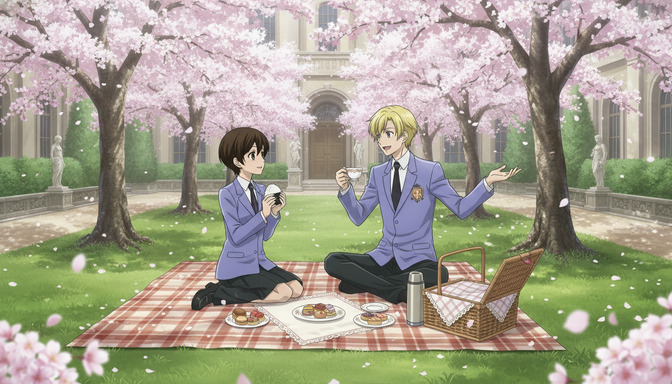
Locations in shoujo anime do more than provide setting. They carry emotional weight. The school rooftop is not just a place to have lunch. It is the place where conversations happen that could not happen anywhere else, elevated literally from the social dynamics below. The quiet café on a side street is not just a place for the leads to meet. It is a world apart from their daily lives, a space where different rules apply. Every significant location in your series should have an emotional function, not just a geographic one.
AutoWeeb's Locations feature allows you to build saved visual references for each recurring setting in your series, the same way Character Sheets anchor your cast. A location reference describes the setting's visual identity with enough specificity to regenerate consistently across different shots, different times of day, and different emotional registers.
The essential locations for a first-arc shoujo series are typically: the high school (with specific rooms or spaces within it, including the classroom, the hallway, the rooftop, and the courtyard), at least one significant outdoor location tied to the central relationship (a park, a riverside path, a shrine), one interior location that belongs to the relationship rather than the school (a café, a bookshop, a music room after hours), and the protagonist's bedroom, which is the location of her internal monologue and the place the audience understands her most clearly.
Example Location reference for a shoujo high school rooftop: "A school rooftop in late spring, chain-link fence around the perimeter with a wire mesh that has partially rusted at the bottom corners. A water tower in the background visible above the fence line, and beyond it the suggestion of the city, soft and slightly out of focus. The sky is usually overcast or blue with scattered clouds, rarely dramatic. There is one bench near the center, pale wood, worn smooth. The light here is different from the rest of the school, flatter and more honest, which is why characters say things here that they don't say anywhere else. Anime style, clean detailed background with soft atmosphere, subtle bloom on the sky light."
Example Location reference for a romantic café: "A small neighborhood café on a side street in a quiet urban district, warm amber interior light visible through the window from outside. Inside: wooden tables with mismatched chairs, a row of small potted plants on the windowsill, a chalkboard menu on the wall behind the counter. The quality of the space is particular and slightly worn, the kind of café that has been here for a long time and does not feel the need to announce itself. Early afternoon light comes through the windows at a low angle. The feeling is private, separate from the rest of the city. Anime style, warm tones, soft shadows, detailed interior."
Creating Supporting Characters
Supporting characters in shoujo anime are not background. They are the architecture of the central relationship. Without them, the protagonist and love interest have only each other to react against, which flattens everything. The supporting cast creates the social world that the relationship has to exist within, and each supporting character should apply specific pressure to that relationship from a different direction.
The best friend is essential and often underwritten. She should be someone who sees the protagonist more clearly than the protagonist sees herself, perceptive rather than purely supportive, the person who articulates what the audience already understands while the protagonist is still catching up. She should have her own life, her own small arc across the series, and her own opinions about the love interest that are not simply cheerleading.
The rival or competing figure is the element that most beginning creators hesitate to include because it introduces apparent conflict into a romance story. Do not hesitate. The rival is essential. She does not need to be malicious. She needs to represent a genuine alternative: the girl who is more compatible with the love interest by conventional measures, or the boy who likes the protagonist and is objectively a reasonable choice, the one who makes the central relationship feel like a choice rather than an inevitability. Removing the rival removes the stakes.
Secondary adult characters, teachers, parents, an older sibling or cousin, provide a window into the world the protagonists are growing toward. They should feel like people who were once exactly where the protagonists are now and have not necessarily resolved it better. The adult who managed to get out of their own way, and the adult who didn't, are both useful presences in a shoujo series.
Planning Episodes With Storyboards
The storyboard is the document that converts your story into specific images and those images into a production sequence. A storyboard is not a script. It is a visual plan: for each scene, a description of the exact shot, the characters' positions and expressions, the location and time of day, and the specific emotional beat the scene is landing.
AutoWeeb's Storyboard feature, combined with the AI Director, handles both the planning and the asset-referenced image generation. Start by giving the AI Director your episode concept, the characters who appear, the scenes it needs to hit, and the emotional arc from opening to close. Ask it to break the episode into individual storyboard panels with shot type, character positions, location, and emotional beat for each. Then add @tags for every named character and location that appears in each panel.
Example AI Director prompt for a shoujo episode storyboard: "I'm creating a shoujo anime series. The protagonist is @Hana, a sixteen-year-old with a reputation for being unapproachable despite being genuinely kind, who has decided she is better off not getting close to people. The love interest is @Ren, the school's student council president, composed and slightly unreachable. This is episode three. Hana accidentally leaves her notebook in the library. Ren finds it and reads enough of it to understand something about her that she has never told anyone. He returns it without acknowledging what he read. She realizes he must have seen it but he's giving her an out. By the end of the episode she cannot decide whether she is relieved or disappointed. The setting is @school-library, @school-hallway, and @school-courtyard. Break this into a storyboard of twelve to fifteen panels with shot type, character positions, emotional beat, and camera movement for each."
Generate panels in script order and review each one against the storyboard beat before continuing. Consistency drift is much easier to catch at the panel level than after a sequence has been assembled.
Creating Emotional Visual Storytelling
Shoujo anime has a specific visual vocabulary for rendering feelings that are too large or too complicated for dialogue. Learning to use that vocabulary in your prompts is what separates scenes that feel like illustrated story summaries from scenes that feel like actual shoujo anime.
Close-ups on eyes are not simply portrait shots. They are the moment when the scene asks the audience to feel what the character is feeling rather than understand it. "Extreme close-up on @Hana's eyes, the expression holding still at the edge of something, the moment before she decides she is not going to cry in front of him" is a specific visual instruction that produces a specific emotional effect.
Abstract or dissolving backgrounds during emotional peaks are a shoujo convention with a clear function: they signal that the external world has momentarily ceased to exist for the character experiencing this moment. "Two-shot, @Hana and @Ren in a medium frame, the school hallway dissolving softly into out-of-focus pale gold light behind them, only the space between the two characters remains in full focus" is using that convention deliberately.
Environmental detail carries emotional argument. The timing of cherry blossoms in your series is not arbitrary. Rain during an argument, clear sky after a resolution, the café windows fogging in the cold while the warmth inside is visible from outside: every environmental choice either reinforces the emotional beat or counterpoints it, and both are valid depending on the scene's need. Make the choice consciously.
Negative space and silence are structural tools in shoujo. A panel of an empty school hallway after a conversation that just ended. A shot of a phone on a desk with no notification. The protagonist's bedroom window at night with the city lights visible and no character in frame. These panels are not nothing. They are the space where the audience sits with what just happened before the scene moves forward.
Animating Scenes With AI
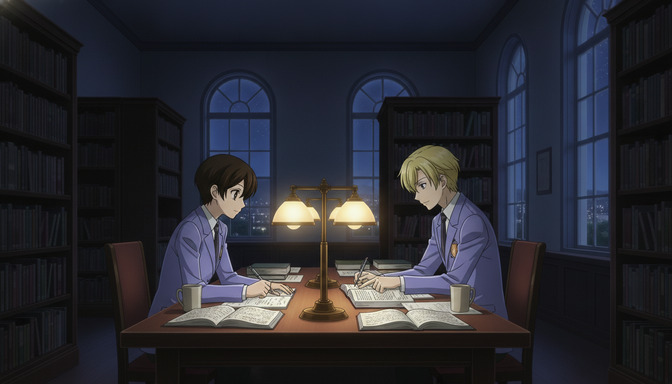
Not every panel in a shoujo series needs to become an animated clip. The format uses stillness strategically, and trying to animate everything dilutes the impact of the moments that genuinely need motion. Prioritize video generation for scenes where movement is the emotional content: the moment a character turns around, the slow approach during a near-confession, petals falling during a key exchange, the protagonist running because she finally decided something.
AutoWeeb's image-to-video pipeline takes a generated panel and animates it from a motion prompt. The motion prompt for a shoujo scene should specify what moves, the pace and quality of the movement, and what remains still in the frame. Shoujo motion is rarely kinetic in the shounen sense. It is often slow, deliberate, and charged.
Example video motion prompt for a romantic scene under cherry blossoms: "Medium two-shot, @Hana and @Ren sitting on the grass in @cherry-blossom-courtyard. Cherry blossom petals drift through the frame from upper left across both characters at a slow, unhurried pace. The characters themselves are mostly still: @Ren turns his head slightly toward @Hana at the two-second mark, the movement so small it could be nothing. @Hana does not look back but her hands in her lap open slightly. The camera holds steady. The light is warm late afternoon. Duration four to five seconds. Anime style, soft shoujo atmosphere, the movement of the petals does all the work."
Example video motion prompt for a key emotional moment: "Close-up on @Hana's face, three-quarter angle, the school courtyard softly out of focus behind her. She has just heard something she did not expect to hear. The emotion in the first second is held, then it shifts, something loosening in the area around her eyes. She does not cry. The expression moves from held-still to something quieter and more open, as if she just put something down that she has been carrying for a long time. Duration three seconds. Anime style, clean shoujo linework, warm ambient light."
Still panels with careful sequencing carry the dialogue scenes, the internal monologue moments, the plot-information exchanges, and the quiet aftermath scenes. Motion is reserved for the beats that require it. A well-placed two-second petal drift clip in the middle of a still-panel exchange will land harder than a fully animated sequence because the contrast gives it weight.
Maintaining Visual Consistency
Consistency is the defining challenge of a multi-episode production, and it becomes more acute in shoujo anime because the format depends on subtle visual nuance. A protagonist whose eye shape shifts between episodes or a love interest whose hair length varies unexpectedly breaks the visual trust the audience has built. The Character Sheet and Locations systems in AutoWeeb exist to solve this structurally rather than through prompting discipline alone.
Every named character in your series should have a saved Character Sheet in AutoWeeb before you generate a single production panel. Every named location should have a saved Location reference. The @tag system in storyboard prompts references these saved documents directly, which is what keeps the protagonist in episode seven looking like the same person she was in episode one.
When the story produces a permanent visual change in a character, a different hairstyle after a turning point, a new outfit for an arc that marks a shift in who she has become, save it as an updated Character Sheet under a versioned name. Keep the earlier version saved so flashback scenes can reference the pre-change appearance accurately.
Location consistency across scenes with different lighting conditions, different times of day, and different emotional registers requires that your location references specify the variable elements as well as the fixed ones. A location that looks identical in bright afternoon and late evening is not a consistent location. It is a static image appearing in different contexts. Write your location references to include how the light changes, which details become more or less visible at different times of day, and what the emotional quality of the space is in different atmospheric conditions.
Common Mistakes First-Time Romance Anime Creators Make
The most common mistake is skipping the protagonist's interior life and starting directly with the romance. A love story where the audience does not understand who the protagonist is before the relationship begins has no transformation to show. The romance is only meaningful against the baseline of who she was without it. Establish that baseline first.
The second most common mistake is making the love interest too perfect too early. The prince who is kind, attentive, perceptive, and has no meaningful flaws is not a character. He is a fantasy, and fantasies are not interesting to watch develop because there is nothing to develop. Give him a genuine blind spot, a specific way he is wrong about something, a defense that has a real cost. The flaw is not a weakness in the story. It is the story.
Third: removing all genuine obstacles before the midpoint. Beginning creators often feel that external obstacles, the rival, the misunderstanding, the circumstance that separates the leads, are artificial or unfair to the characters they care about. They are not. They are the conditions that reveal who the characters really are when things are difficult. A romance without obstacles is not a romance. It is a meet-cute that never developed.
Fourth: generating images before building and saving Character Sheets and Location references. Every panel generated without saved references is work that cannot be consistently replicated. When you reach episode four and realize your protagonist looks noticeably different across three episodes, the repair is time-consuming and often imperfect. Build the assets first, then generate.
Fifth: writing every scene in the same emotional register. Shoujo anime earns its peaks through contrast. The scene that breaks your audience requires a long stretch of quieter scenes to land with full weight. If every scene is emotional, no scene is. Structure the emotional rhythm of each episode deliberately: the light scene that makes the heavy one possible, the moment of warmth that makes the next misunderstanding hurt.
Why AI Is Making Anime Creation Accessible
Traditional anime production at a professional scale requires hundreds of staff, animation directors, key animators, background artists, voice directors, and a production timeline measured in years rather than months. The bottleneck for independent creators has never been ideas. It has been execution: the gap between the series someone can see clearly in their imagination and the series they can actually produce.
AI tools have collapsed that gap in a way that is still being understood. Character design, background creation, scene generation, and motion now do not require drawing skills or a production team. They require creative judgment: the ability to describe what you want specifically, to evaluate the output against the vision, and to iterate until the two align. That is a skill set built on storytelling instincts and a knowledge of what good anime looks like, both of which an anime fan already has the foundation for.
The constraint in 2026 for a solo anime creator using AI tools is no longer whether execution is possible. It is whether the production infrastructure exists to maintain consistency and quality at series scale. That is the problem AutoWeeb is specifically built to solve.
Why AutoWeeb Is the Easiest Platform for Creating an Original Romance Anime
Most AI image tools are designed for generating single images. AutoWeeb is designed for series production. The difference is the infrastructure surrounding the generation: the Character Sheet system that stores and @tags your cast across every scene, the Locations feature that stores and @tags your environments with consistent visual identity, the AI Director that handles story planning and episode storyboard generation, and the image-to-video pipeline that converts still panels into animated clips.
For a shoujo series, that infrastructure maps directly onto the format's specific requirements. An emotionally nuanced story with a consistent cast of expressive characters, recurring romantic locations with carefully controlled atmospheric lighting, slow-burn arcs that depend on visual continuity to land their moments, and a series of intimate scenes where subtle expression changes carry the meaning: all of that requires a system where characters stay consistent, locations stay consistent, and the AI has production-level memory of what you have built. AutoWeeb is that system.
The anime story creator workflow in AutoWeeb also handles the parts that visual tools alone cannot. Planning the emotional structure of an arc, breaking an episode into storyboard beats, writing the specific prompt language that produces the shot you have in your head, these are tasks the AI Director is designed to support, treating your creative vision as the direction rather than replacing it.
If you want to explore adjacent workflows, the guide on how to create a shounen anime in 2026 covers the same production pipeline for action-oriented series, and how to make an anime character goes deeper on the character sheet process for creators who want to spend more time on design before moving to story production. For romance-specific creative scenarios, creating your own anime romance story explores the narrative structure in more depth.
Frequently Asked Questions
Do I need drawing skills to create a shoujo anime with AutoWeeb?
No. AutoWeeb generates anime images and animated clips from text descriptions. The skill that matters is descriptive specificity: the ability to communicate a character's appearance, a scene's composition, and the emotional register of a moment in enough detail that the AI produces what you envision. Writing ability and a clear sense of what good shoujo looks like are the relevant skills. Drawing ability is not required.
How long does it take to produce a single episode?
A focused session in AutoWeeb can produce enough panels and video clips for a three-to-five-minute episode cut. A short first arc of five episodes, roughly fifteen to twenty minutes of content, is realistic across three to four dedicated production sessions. Creators who build all their Character Sheets and Location references before generating any storyboard panels move considerably faster than those who build assets during production. The upfront investment in asset preparation pays back significantly during episode generation.
How do I keep my characters looking consistent across episodes?
Save a Character Sheet for every named character in AutoWeeb before you start generating production panels. Then @tag every character in every storyboard prompt where they appear. The @tag references the saved visual document rather than reconstructing the character from text, which is what produces consistency across episode one through episode ten. When a character's appearance changes permanently due to story events, update the Character Sheet under a new versioned name and keep the original for flashback scenes.
What is the best way to write romantic tension in a storyboard prompt?
Romantic tension in a storyboard prompt is built through proximity, interruption, and restraint. Specify the exact distance between characters in the frame. Include what they are doing with their hands and where they are looking. Name the small movement or shift that happens and then stops, the gesture that starts and does not complete. The tension is in the gap between what is happening and what almost happened, and that gap needs to be described precisely rather than implied.
Which locations should I build first for a shoujo series?
Build the school first, with at least two distinct spaces within it: the classroom and one secondary location such as the rooftop, the library, or the music room. Then build the outdoor location that will carry the arc's emotional peak, usually a park, a shrine, or a cherry blossom courtyard. Then the interior location that belongs to the relationship rather than the school. These three location types, institutional space, outdoor space, and private space, cover the full emotional range of a standard first arc and give you production coverage for the majority of scenes without needing to build new locations mid-production.
Can AutoWeeb generate the soft, expressive visual style that defines shoujo anime?
Yes. AutoWeeb's image generation handles shoujo-specific visual conventions including soft linework, luminous eye detail, warm and emotionally responsive color palettes, and the petal or sparkle overlay effects that define the genre's visual grammar. The key is prompting with shoujo-specific instructions rather than generic anime style: "anime style, clean shoujo linework, soft shading with emphasis on expressive eyes and warm atmospheric light" produces results that align with the genre's aesthetic conventions.
What is the difference between a romance anime and a shoujo anime?
Romance anime is a genre description. Shoujo is a demographic category that historically targets young female readers. Shoujo anime frequently focuses on romance, but its defining quality is its interior-focused storytelling and expressive visual style rather than the presence of a romantic plot. A shoujo series can be primarily about friendship, self-discovery, or supernatural events, with romance as a secondary element. What distinguishes it is the emotional register: the emphasis on interiority, the visual vocabulary for feeling, and the structural seriousness with which the characters' inner lives are treated.
Related Blog Posts
How Indie Manga Creators Can Turn Their Manga Into an Anime
A practical guide for independent mangaka, comic creators, and anime enthusiasts who want to adapt their existing manga into a watchable anime, from arc selection and character sheets through storyboards, AI image generation, and video production.
Learn how indie manga creators can turn manga into anime using AI. Select the right arc, build character sheets, storyboard panels, and generate anime scenes and video without a studio.
How to Turn Your Manhwa Into an Anime Using AI
A complete guide for manhwa creators, webcomic artists, and digital storytellers who want to adapt their work into anime, from evaluating your story and building character sheets through storyboards, AI image generation, and video production.
Learn how to turn your manhwa into an anime using AI. Build character sheets, storyboard vertical panels into cinematic scenes, generate anime images, and create video without a studio.
How to Turn Your Wattpad Story Into an Anime Series with AI
A complete guide for Wattpad authors who want to adapt their stories into indie anime, from episode structure and character sheets through storyboards, AI image generation, and video production.
Learn how to turn your Wattpad story into an anime series with AI. Design characters, storyboard scenes, generate anime images, and create anime video episodes without a studio.
How to Turn Your AO3 Fanfiction or Original Story Into an Anime
A practical guide for AO3 writers, fanfiction authors, and original fiction creators who want to adapt their stories into anime, from story selection and character design through storyboards, AI image generation, and video production.
Learn how to turn your AO3 fanfiction or original story into an anime with AI. Design characters, storyboard scenes, generate anime images, and create video without a studio.
Explore AutoWeeb
Jump into the tool that fits your creative step.
AI Anime Video Generator
Animate storyboard shots into cinematic clips with Seedance 2 and consistent characters.
Anime Character Creator
Design original characters with consistent sheets across every scene.
AI Anime Image Generator
Generate cinematic anime stills anchored to your character library.
Anime Filters
Upload any photo and apply AI anime filters to turn it into stunning anime art in seconds.
AI Anime Location Generator
Create a location set once, then generate reference images from every angle.
AI Anime Storyboarding
Describe your idea, pick your characters, and let AI draft the script and scenes.
AI Anime Prompt Agent
Turn a rough idea into a cinematic Seedance 2 prompt with the AI Director.