How to Turn Your AO3 Fanfiction or Original Story Into an Anime
A practical guide for AO3 writers, fanfiction authors, and original fiction creators who want to adapt their stories into anime, from story selection and character design through storyboards, AI image generation, and video production.
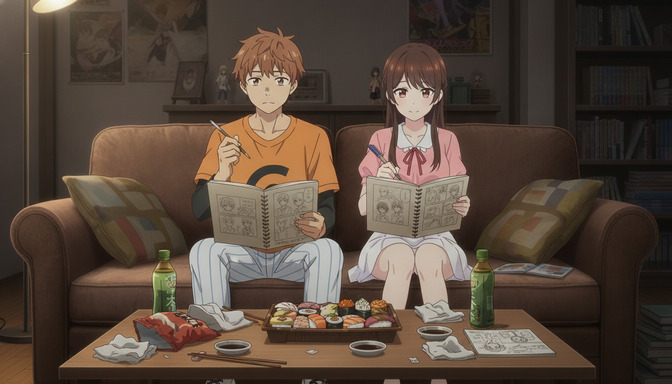
If you have been writing on AO3 long enough, you have seen the comments: "this deserves to be animated," "someone please make this into an anime," "the confrontation in chapter seven would be incredible on screen." Readers leave those notes because the material earns them. You already know how to build emotional stakes, structure a slow burn, and write the scene that breaks everything open in exactly the right way. What you have not had, until recently, is a path from that written scene to an actual animated episode.
This guide covers the full pipeline for AO3 writers and original fiction authors who want to adapt their work into anime. It applies to fanfiction written with your own character interpretations, to original works posted on AO3, and to stories you have never published anywhere but have been building in private. The process works the same either way: identify the story, design your characters for animation, storyboard the scenes that matter most, generate anime images, animate the key moments, and release the result to an audience that is already waiting for it.
Why Fanfiction Writers Make Great Anime Creators
The skill set that makes someone a good AO3 writer transfers directly to the decisions that make an anime episode work. You already know how to pace a reveal. You know how to write a scene where two characters say one thing and mean another, and how to signal that gap to an audience without stating it. You know which moment in a chapter makes someone close the tab and come back in twenty minutes because they need to process what just happened.
Traditional anime production keeps writers and visual creators in separate departments. A writer provides a script; a different team translates it into shots, character positions, and environmental details. When you are adapting your own work, those decisions belong to the same person: you know what the scene is doing, which means you can make the shot choices that serve the text rather than approximating it. That is a structural advantage, not a limitation.
The rise of AI animation tools has removed the infrastructure barrier that kept writers out of visual production. You do not need to draw, you do not need a studio, and you do not need a team of thirty people to take your story from text to screen. You need the story, a clear visual sense of your characters, and a production pipeline. This is that pipeline.
Section 1: Choose the Right Story
Not every fic is the right starting point. The selection criteria matter more than the word count or kudos count.
High-Impact and Popular Works
If you are adapting an existing fic with an established readership, look at which story generated the most specific feedback rather than the most volume. A fic where readers are consistently citing the same scenes, the library confrontation, the scene on the roof, the moment in chapter twelve where the thing finally happens, is a better candidate than a fic with high kudos but diffuse emotional response. Concentrated reader attention on specific scenes tells you exactly which moments to prioritize in production.
Completed Works
A completed fic is technically simpler to adapt because the full arc already exists. You can build character references that account for how a character looks at the end of the story rather than guessing based on early chapters. You know whether the third-act visual payoff you planned is actually in the text before you invest production time in the first episode. If the fic is complete and has a self-contained arc, it is the cleanest starting point.
Original Works
Original fiction posted on AO3 has an additional advantage: the characters and world belong entirely to you, which means the adaptation is yours to release, distribute, and build an audience around without navigating any source material considerations. If you have been writing original work and building a small readership through the archive, an anime adaptation is a different discovery channel for the same story, one that can reach audiences who do not read fanfiction but do watch indie anime.
For any story type, choose an entry point that can stand alone for a new viewer. The chapter or arc where the real premise is active, where a conflict is already in motion and the stakes are already present, is better than a prologue or backstory chapter. A viewer meeting your story for the first time needs to care within the first three minutes. Prioritize the arc that delivers that.
Section 2: Adapt Written Scenes Into Visual Scenes
Written prose and anime operate on different principles. Narration, internal monologue, and summary all work efficiently in text and require completely different tools to translate to screen. The goal of this step is not to animate every sentence. It is to extract what each scene is actually doing and find the visual form that does the same work.
Converting Text Into Visuals
Go through your selected arc and mark the moments where something changes: a power dynamic shifts, information changes hands, a character makes a decision they cannot walk back, a relationship crosses a threshold. Each of those marks is a scene. Now ask, for each scene: what does the audience need to see to understand what just happened? That question converts internal monologue into visual behavior, summary into edited sequences, and description into shot composition.
Slow-burn tension reads differently in anime than in prose. In text, the tension lives in word choice and what goes unsaid. In anime, it lives in physical proximity, in where characters position themselves in a room, in where they look when they are pretending not to look somewhere specific. The adaptation decision for your slow burn is: what does the body language look like in this scene, and what does the camera need to show for the audience to feel the same thing the reader felt?
Identifying Emotional Moments
Every fic has three or four scenes that the readers remember specifically: the ones that generated the longest comment threads, the ones people reread, the ones that showed up in fanart. List them. These are your production priorities. Every decision downstream, character design, storyboard choices, which panels to animate, serves the goal of making these scenes land as well in visual form as they do in text.
For each priority scene, write a one-sentence description of what the audience must feel by the end of it. The scene where the characters finally acknowledge what has been between them for forty thousand words should leave the audience with something specific, not just "emotional." The more precisely you can name the target feeling, the more precisely you can design the shots that deliver it.
Section 3: Create Character Sheets
Character consistency is the technical foundation of everything that follows. If your protagonist looks different between scenes because each image was generated from a different description, the adaptation loses the visual coherence that makes it feel like a series. Building character sheets before generating any story content solves this structurally.
Designing Anime Versions of Your Characters
A character sheet specifies the visual details that need to stay constant across every scene: hair color and style, eye color and shape, build, height relative to other cast members, default outfit, and a note on physical posture. For AO3 writers adapting fanfiction, this is the step where you make your interpretation of the character explicit as a visual document. Your version of this character has specific eyes, a specific way of standing, a specific expression they make when something costs them. The sheet is where that interpretation becomes a reference rather than a mental image.
Example character sheet prompt for an AO3 original protagonist: "Male, early twenties, dark brown eyes that read as exhausted and perceptive in equal measure. Messy black hair, longer on top, pushed back from his face without quite staying there. Lean build, slightly above average height. Default outfit: worn dark gray crewneck sweater, black jeans with frayed hems, white sneakers with scuffs on the toes. His default expression is composed with a quality of attention underneath it, the face of someone listening for the thing that has not been said yet. His default posture is hands in pockets, weight slightly back, present without being eager. Anime style, clean linework, expressive shading in emotional scenes."
Maintaining Consistency Across Scenes
Build a full character sheet for every character who appears in more than two scenes. For the protagonist and major supporting cast, add an expression range: neutral, determined, the vulnerable expression specific to their arc, and the one they wear when they are pretending to be fine. For antagonists and rivals, build their composure face and the expression that appears when something breaks through it.
Save all character sheets to your AutoWeeb project library before generating a single story panel. Every scene generated afterward draws from the same saved documents rather than rebuilding the character description from scratch. The character in the opening scene and the character in the climax are drawn from the same reference, which means they look like the same person.
Section 4: Storyboard Your Anime
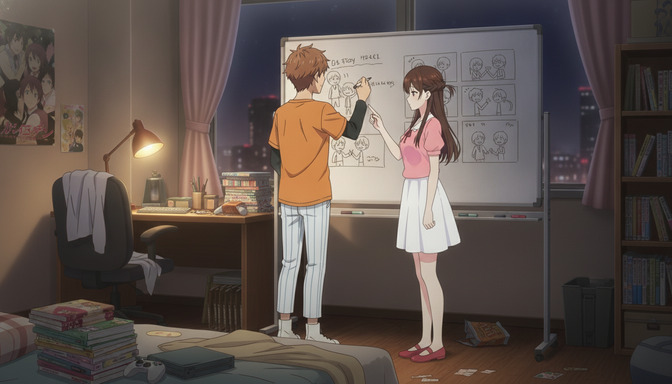
Storyboarding translates each scene into a sequence of shots. You do not need to generate images at this stage. Writing the shot descriptions in order is enough to build the production map.
Scene Planning
For each priority scene, identify the establishing shot, the reaction shots that carry the emotional texture, and the climax frame: the single image that carries the most weight in the scene. Write the climax frame description first, then work backward to the shots that make it land. This is the opposite of how most people approach storyboarding, but it produces significantly more coherent sequences because every shot before the climax is in service of something specific.
Episode Structure
An anime episode works best when it is organized around one central emotional event rather than a chapter summary. Map your selected arc against emotional beats: the moment something changes, the moment a choice becomes unavoidable, the moment a character understands something they did not before. Each major beat is the spine of an episode. The scenes around it are setup, texture, or aftermath.
Found family dynamics and ensemble casts need more scene planning than two-character stories because the episode has to track more relationships simultaneously. For those stories, identify which relationship carries the most weight in each episode and plan the shots around that relationship. The others support it; they do not compete with it for visual focus.
Shot Composition
Wide shots establish location and power dynamics: a character who occupies more of the frame than the person they are speaking to reads as dominant even if the dialogue does not say so. Close-ups on hands, on the space between characters, on an expression arriving a half-second after the words, carry emotional information that dialogue cannot. Low angles make characters feel imposing. High angles make them feel exposed or watched.
Example storyboard sequence for a slow-burn confession scene: "Shot 1: Wide interior, a dimly lit apartment, two characters standing on opposite sides of a kitchen table, the lamp between them doing most of the work. Neither character is sitting. Shot 2: Medium close-up on the protagonist, expression shifted from composed to something that is trying to stay composed and failing. Shot 3: The other character's hands on the table edge, fingers not quite relaxed. Shot 4: Over-the-shoulder from behind the protagonist, looking across at the other character's face, the window behind them showing city lights in soft focus. Shot 5: Close-up on the protagonist's face in the moment before speaking, the expression of someone about to say something they cannot take back. Anime style, low warm interior light, quiet atmospheric mood."
Section 5: Generate Anime Images
With character sheets saved and shot sequences planned, image generation is execution rather than improvisation. Each storyboard panel description becomes an image prompt. AutoWeeb draws from the saved character references for every image generated, so your protagonist in scene one and your protagonist in the climax are visually the same character.
Character Moments
The scenes that carry the emotional weight of a fanfic are usually dialogue scenes, quiet moments, and the aftermath of significant events. For these, close-up specificity matters most. The expression doing the work needs to be described in terms of what it is holding back rather than what it is showing: "an expression that is trying to look unbothered," "the face of someone who just heard their own feelings said back to them," "the moment composure arrives a second too late to be convincing." These descriptions produce significantly more accurate results than labeling the emotion directly.
Dialogue Scenes
Two-character dialogue scenes benefit from intercutting. Alternate between a medium shot with both characters and close-up reaction shots that give the non-speaking character something to do visually. The reaction shot is frequently the scene. The character who is listening is often doing more than the character who is talking.
Example dialogue scene prompt: "Two characters sitting across from each other at a low table in a quiet apartment, late evening. The character on the left is speaking, expression carefully neutral, looking at the table rather than directly at the other character. The character on the right is listening with an expression that is in the process of understanding something it did not want to. Ambient lamp light from the right side, soft shadows. Anime style, slice-of-life aesthetic, emotionally loaded quiet scene."
Action Scenes
For action sequences and high-stakes physical scenes, generate the impact frame first: the moment of peak motion, the expression at maximum intensity, the frame a reader would screenshot. Then generate the beat immediately before and the beat immediately after. Audiences read action sequences backward from the impact, so building outward from that frame produces more coherent sequences than trying to build linearly from the start.
Section 6: Animate Key Moments
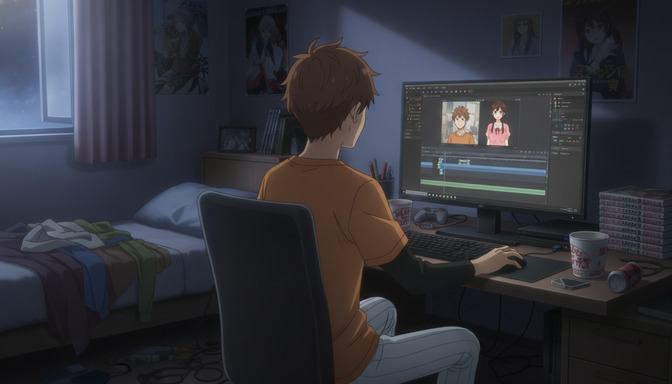
Not every panel needs to become video. The scenes that benefit most from motion are the ones with physical or emotional arc: a character moving through a space under pressure, the action sequence where the stakes are visible in the motion itself, the dialogue scene where a character's body language is the primary text and everything the face is suppressing is in how they are holding themselves.
Turning Still Images Into Motion
Write a motion description for each panel you plan to animate before using the video generation tool. Specify what moves, how it moves, and what the camera does during the movement. The more specific the description, the closer the resulting video will be to the storyboard intention.
Example motion prompt for an emotionally loaded departure scene: "Male protagonist walking away from the camera down a long hallway, pace deliberate rather than hurried. The camera holds a medium shot from behind and does not follow him as he walks, letting the distance grow. His hands are visible at his sides, not relaxed. The hallway light is fluorescent and slightly too bright, casting hard shadows. Duration five seconds. He does not look back. Anime style, institutional interior lighting, the mood of a decision that has been made."
Creating Trailers and Episodes
A trailer built from your three most visually striking animated panels, cut with a music bed and ending on your highest-impact frame, is your most efficient discovery asset. It introduces the story to people who have never read the fic and gives existing readers something they can share before the full episode is available. Keep it under ninety seconds, open on a frame that establishes tone immediately, and end on the frame that makes the full episode necessary.
A complete first episode is a different kind of release than a trailer, and it is the more valuable one. The reader who watches a trailer and then has to wait for the actual episode is in a harder position than the reader who watches the episode and immediately starts episode two. If you can release a complete first episode rather than a teaser, release the episode.
Section 7: Share Your Anime Adaptation
Releasing the adaptation is its own creative decision. Where you release it determines who finds it, and the sequence of the release matters as much as the content.
YouTube
YouTube is the primary platform for a full episode release. It supports long-form content, chapter markers that map to the episode structure, and a permanent archive that viewers can return to and share. Upload each episode as a standalone video with a title that names the series and episode clearly. A viewer who finds episode three via a recommendation or a clip should be able to navigate to episode one without effort. Titles like "Series Name | Episode 1: [Episode Title]" handle this cleanly.
Social Media
Short clips from your highest-impact moments serve as the discovery layer for TikTok, Instagram Reels, and YouTube Shorts. The first fifteen seconds of your best action sequence, the single most emotionally loaded animated panel, the scene your comment section has been asking about since chapter three: these are the clips that introduce the adaptation to people who have not read the fic. Keep them under sixty seconds. End on a frame that makes the full episode worth finding, and make the path to the full episode direct: pinned link, bio link, video description, all pointing to the same place.
Creator Communities
AO3 readers who follow your work are the warmest possible launch audience. An author's note posted to the original fic announcing the adaptation, linking directly to the first episode and including a clip of the scene your readers have referenced most in comments, will convert a percentage of your existing readership to viewership immediately. Readers who already care about your characters do not need to be convinced the adaptation is worth watching. They need to know it exists.
Fanart communities, Discord servers organized around your source material or genre, and Reddit communities covering indie anime are secondary channels with meaningfully different audiences. A viewer who finds the anime through one of these channels and follows back to the fic becomes a reader. A reader who shares the clip within their community extends the reach without any additional production work on your part.
Why AutoWeeb Is Ideal for Writers
The full pipeline described in this guide runs inside a single AutoWeeb project. Every reference you build in the early stages remains active through every scene you generate in the later ones. The character sheet you write once in step three is the reference active when you generate the climax sequence in step five.
- No drawing required: AutoWeeb handles the visual execution from your written descriptions. If you can describe a scene in specific visual terms, which AO3 writers can, you can generate that scene.
- Character management: Saved character references maintain your cast visually across every panel, every episode, and every session without rebuilding descriptions between generations. The character looks like themselves whether they appear in scene one or scene forty.
- Storyboarding: Plan scene sequences, shot types, and episode structure before committing to image generation. Every asset you create has a confirmed place in the episode before it is generated.
- Anime video generation: Turn storyboard panels into animated sequences with motion descriptions. Character moments, action scenes, and atmospheric establishing shots all become video from the same project workflow.
A traditional anime production keeps each of these functions in separate departments maintained by dozens of people over months. AutoWeeb puts all of them inside one workflow, which means a solo writer can move from finished fic chapters to a releasable anime episode without a studio, without a production team, and without rebuilding visual context from scratch each session.
Writers Become Anime Creators
The story you have already written contains what most anime productions spend years and significant resources trying to build from scratch: characters an audience is invested in, an emotional arc with known beats, and readers who have strong opinions about how those beats should land. The adaptation does not start from zero. It starts from your archive.
Every scene you adapt compounds what comes after it. The character references built for the first episode carry into the second. The audience that found the anime because of the first episode is still there for the third. Writing is how you built the story. Animation is how you show it to the people who already love it, and to the ones who have not found it yet.
Frequently Asked Questions
Can I adapt fanfiction into an anime, or does it have to be original work?
The production pipeline works the same for both. For fanfiction, the distinction that matters is whether you are creating a fan work for a personal creative project or planning commercial release. Fan works that use copyrighted source material are typically released as transformative, non-commercial creative projects, which is consistent with how most fanfiction exists on AO3. Original fiction posted on AO3 or written privately has no such consideration and can be released and distributed however you choose. The character sheets, storyboards, image generation, and video tools in AutoWeeb work the same either way.
Do I need any drawing or animation skills to do this?
No. AutoWeeb handles the visual execution: image generation, video creation, and character consistency through saved references. What you bring is the story structure, the scene descriptions, and the creative decisions about which moments to prioritize. AO3 writers already write with spatial and emotional specificity because good prose requires it. The shift from descriptive prose to storyboard panel descriptions is smaller than it looks from the outside.
How do I choose which arc or chapter to adapt first?
Look at your comment section and identify which scenes readers have referenced most specifically. The arc containing the highest concentration of those scenes is the strongest candidate for a first episode. Secondarily, choose an entry point that can stand alone for a viewer who has never read the fic: the arc where the premise is active and the stakes are already present, not a prologue or a backstory chapter that requires the rest of the story to make sense.
How do I keep my character designs consistent across scenes?
Build a full character sheet for every character who appears in more than two scenes, and save those sheets in AutoWeeb's project library before generating any story panels. Every subsequent generation draws from those saved references rather than from a new description. Consistency is structural: the protagonist in the opening scene and the protagonist in the climax are drawn from the same saved document rather than re-approximated each time.
What if my fic has a large ensemble cast?
Build full character references for the four or five characters who carry the most scenes in the arc you are adapting. Give supporting characters a shorter reference covering their most visually distinct features and their relationship to the main cast expressed in physical presence. Expand the reference library as the adaptation grows. For the first episode, prioritize depth over breadth: a few characters rendered with full consistency are more effective than a large cast rendered with partial consistency.
How should I handle a slow-burn story in anime format?
Slow-burn tension translates well to anime when you invest in the visual language of suppressed emotion: physical proximity and distance, where characters position themselves in a room, what their hands are doing when their faces are composed, the over-the-shoulder shot that shows what the protagonist is not looking at. The key storyboard decision for slow-burn material is how much space to put between characters in each shot and how that distance changes across the episode. Anime executes slow burn through geometry as much as dialogue.
Should I announce the adaptation before I have a complete episode?
Release the episode rather than announcing it first. An announcement before the episode exists creates anticipation that decays over time. An episode posted alongside the announcement converts that interest immediately. If you want to build anticipation, post a thirty-to-sixty second clip from the most visually striking scene with the episode release date visible in the caption. The announcement and the release happening within twenty-four hours of each other is a stronger strategy than a weeks-long buildup.
What is the best way to reach new audiences who have not read my fic?
Short clips from your highest-impact animated scenes are the most effective discovery content for audiences unfamiliar with your work. A viewer who does not know your fic will watch a fifteen-second clip of a well-executed confrontation scene. They will not watch a three-minute plot summary. Post the clip on TikTok, Instagram Reels, or YouTube Shorts ending on a frame that makes the full episode feel necessary. The path from that clip to the full episode should be a single click.
For writers building a full series from a longer fic, the guide on how to plan and produce your own AI anime series from scratch covers multi-episode structure, series planning, and production pipelines across a full season. If your story includes action sequences or high-stakes confrontations, how to storyboard epic AI anime fight scenes like a director covers the composition and camera decisions that make those scenes land.
Related Blog Posts
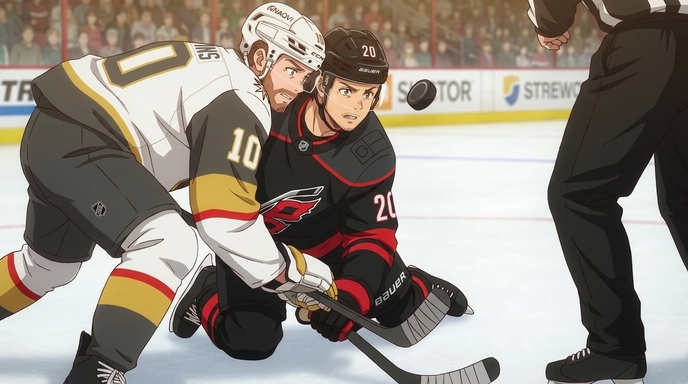
How to Create a Hockey Anime with AutoWeeb: From Character Sheets to Championship Storyboards
A complete guide to building an original hockey anime, from team concept and captain design through rival franchises, locker room drama, playoff arcs, and AI-storyboarded championship moments.
Learn how to create a hockey anime with AutoWeeb. Design captains, enforcers, goalies, rivals, arenas, and storyboard intense playoff sequences and championship lifts with AI.
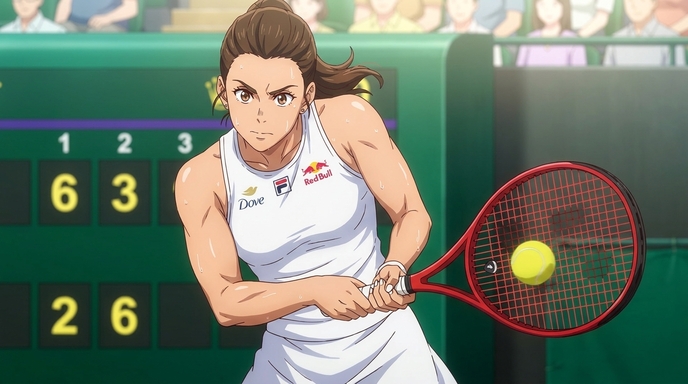
How to Create an Original Tennis Anime with AutoWeeb
A step-by-step guide to building an original tennis anime, from protagonist and rival design through tournament circuits, signature play styles, training arcs, and AI-storyboarded championship matches.
Learn how to create a tennis anime with AutoWeeb. Design protagonists, rivals, coaches, courts, and storyboard intense match sequences and championship arcs with AI.
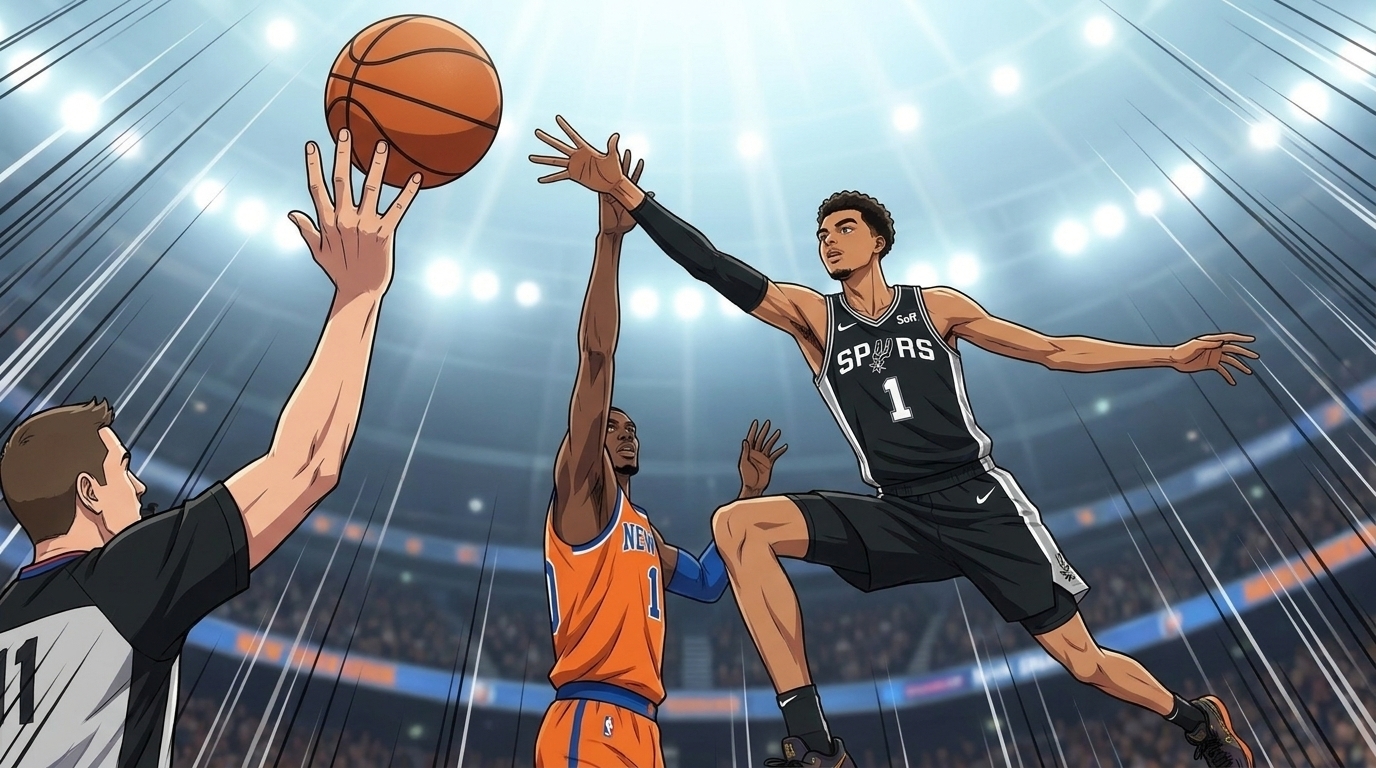
How to Create a Basketball Anime Using AutoWeeb
A complete guide to building an original basketball anime, from underdog team concept and star player design through championship arcs, training montages, dramatic game moments, and AI-animated basketball scenes.
Learn how to create a basketball anime with AutoWeeb. Design players, build rivalries, storyboard game sequences, and generate cinematic AI anime videos from your basketball story.
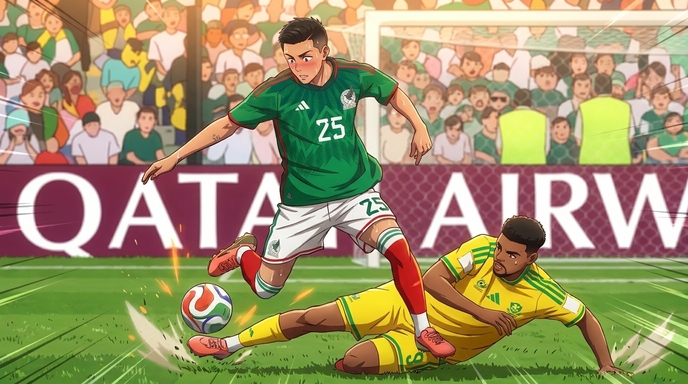
How to Create a World Cup Soccer Anime with AutoWeeb
A step-by-step guide to building an original World Cup-style soccer anime, from national team concepts and rival country arcs through tournament brackets, stadium environments, match scripts, and AI-storyboarded tournament climaxes.
Learn how to create a World Cup soccer anime with AutoWeeb. Design national teams, captains, uniforms, stadium environments, and storyboard entire tournament arcs with AI.
Explore AutoWeeb
Jump into the tool that fits your creative step.
AI Anime Video Generator
Animate storyboard shots into cinematic clips with Seedance 2 and consistent characters.
Anime Character Creator
Design original characters with consistent sheets across every scene.
AI Anime Image Generator
Generate cinematic anime stills anchored to your character library.
Turn Photo Into Anime
Upload any photo and watch AI turn it into stunning anime art in seconds.
AI Anime Location Generator
Create a location set once, then generate reference images from every angle.
AI Anime Storyboarding
Describe your idea, pick your characters, and let AI draft the script and scenes.
AI Anime Prompt Agent
Turn a rough idea into a cinematic Seedance 2 prompt with the AI Director.