How to Plan and Produce Your Own AI Anime Series from Scratch
A complete production guide for solo creators who want to build an original AI anime series, from genre and story concept through 12-episode planning, character sheets, storyboarding, and animated output.
Most creators who want to make an anime series get stuck at the same place. Not because they lack ideas, but because they have no production structure to put those ideas into. A concept that lives only in your head cannot be turned into consistent characters, coherent episodes, or a watchable season. What separates a finished AI anime series from a folder of disconnected images is planning: genre decisions, story architecture, character arcs, episode outlines, and production documents that guide every scene from start to finish.
This guide walks through how to plan and produce an original AI anime series from scratch, the same way professional studios approach pre-production, adapted for solo creators using AI tools. The example throughout is a 12-episode season, which is the standard format for a single cour anime run and the right scope for a creator building a first series.
Step 1: Choose a Genre and Lock Your Tone
Genre is not just the category your series lives in. It is the contract you make with your audience about what kind of experience to expect. A shonen action series and a slice-of-life school drama can share the same setting and still be completely different productions, because genre determines pacing, conflict structure, visual style, and emotional register. Choosing your genre before you touch anything else saves every decision that follows.
The most common genres for original AI anime series are shonen action, slice-of-life, isekai, psychological thriller, romance, and mecha. Pick one. Hybrid genres are possible but harder to execute in a first series because the visual tone, pacing, and story structure pull in different directions. A creator who commits to a single genre produces more consistent work.
Once you have a genre, define the tone in two or three words. Not mood boards or aesthetic references, but actual words: "bittersweet and grounded," "kinetic and optimistic," "quiet and unsettling." That tone phrase becomes the filter for every creative decision downstream. If a character design, scene composition, or dialogue choice does not match the tone, it does not belong in the series.
Example (12-episode series): Genre: psychological thriller. Tone: slow-burn and claustrophobic. The series takes place in a competitive high school where students begin receiving anonymous evaluations that are more accurate than anyone is comfortable with.
Step 2: Define Story Themes and the Emotional Core
A theme is what your series is actually about underneath the plot. The plot is what happens. The theme is what it means. An anime about students competing for top rank is a plot. An anime that uses that competition to explore how people weaponize honesty is a theme. Themes give long-form stories coherence. A 12-episode season without a central theme tends to feel like a sequence of events rather than a story.
Write your theme as a statement, not a topic. "Identity" is a topic. "People perform the version of themselves that earns approval until they forget who they were before" is a theme. The statement form forces you to take a position, which means every episode can push toward or against that position rather than wandering.
The emotional core is the specific feeling the audience should carry out of the finale. Not the story resolution, but the emotional residue. Tense relief? Earned melancholy? Quiet hope? That feeling becomes the target for every climactic scene in the series. Episodes that build toward it are pulling weight. Episodes that work against it are structural problems.
Example (continued): Theme: "Radical honesty is a weapon people use to avoid being known." Emotional core: the unsettling recognition that the person who sees you most clearly can still be wrong about what that means.
Step 3: Build the World and Its Rules
World-building for an anime series is not about creating lore documents. It is about defining the rules that govern what is possible in your story so that every scene operates within a consistent logic. Even a contemporary high school setting has rules: what social hierarchies exist, what the stakes of failure are, what characters are allowed to do and what they are not. Rules create the tension that makes conflict meaningful.
For a 12-episode series, define three things about your world before you write a single scene:
- The governing system. What structure organizes the characters' world? A school ranking system, a guild hierarchy, a post-apocalyptic faction map. The system is what characters push against.
- What success and failure look like. Concrete, not abstract. "Win the tournament" or "be exposed before graduation" or "reach the capital before winter." Vague stakes produce vague tension.
- What is impossible. Every world needs hard limits. Rules that can always be bent are not rules. The limits define what choices actually cost something.
Location design is part of world-building. A series with five recurring locations needs each one defined: architecture style, dominant colors, atmospheric quality, what kind of scenes happen there. A school rooftop carries different emotional weight than a basement server room, and both need visual descriptions precise enough that your AI tool can reproduce them consistently across a season.
Write a brief paragraph for each major location before you start generating. That paragraph becomes the location reference that keeps episode 8 visually consistent with episode 2.
Step 4: Develop Your Characters and Their Arcs
A 12-episode season can support three to five major characters. More than that and the arcs do not have room to develop. Fewer than three and the story risks feeling thin unless the character work is exceptionally dense. Each major character needs three things defined before pre-production begins: who they are at the start, what they want, and how they change by the finale.
Character arcs in long-form anime are almost always about the gap between what a character wants and what they actually need. A character who wants recognition but needs to accept being ordinary. A character who wants control but needs to trust someone. The arc is the journey from the want to the need, or the tragedy of failing to get there. That arc should be visible across the 12-episode structure, not invented in episode 9.
Example character (continued series): Protagonist Shiori Mase. At episode 1: a student who has built her identity entirely around being unreadable. She wants control over how others perceive her. She needs to be seen accurately by someone she trusts. Her arc: the anonymous evaluator begins describing her motivations with unsettling precision, and she becomes obsessed with identifying and dismantling whoever is doing it, until she realizes the evaluator is right.
The character arc document also drives visual design decisions. A character defined as "someone who performs composure while anxious underneath" has a specific set of expressions, postures, and costume choices that differ from a character defined as "openly volatile but loyal to a fault." Write the arc first. Let the visual design follow from it.
Step 5: Plan a 12-Episode Season Structure
A 12-episode anime season follows a well-established dramatic structure, and understanding that structure makes episode planning much faster. Most successful single-cour seasons break into four three-episode blocks, with each block serving a specific narrative function.
- Episodes 1-3: Establishment. Introduce the world, the protagonist, the central conflict, and the stakes. End episode 3 on a development that makes turning back feel impossible.
- Episodes 4-6: Escalation. Complicate the protagonist's situation. Introduce secondary characters who create new pressure. The central conflict deepens. End episode 6 on a failure or revelation that reframes the entire premise.
- Episodes 7-9: Crisis. The protagonist's approach stops working. The world they understood was wrong. Everything the audience thought they knew is in question. This block is where secondary character arcs peak.
- Episodes 10-12: Resolution. The protagonist applies what they learned to the central conflict in a new way. The finale pays off every arc established in episode 1 through 3. The emotional core lands here.
Once you have the four-block structure mapped, write a single-sentence outline for each episode. Not a plot summary, a dramatic function statement: what changes for the protagonist between the start and end of this episode? If the answer is "nothing," that episode needs to be restructured or cut.
Example episode outlines (first block):
- Episode 1: Shiori arrives at the new school, establishes her reputation as unreadable, receives the first anonymous evaluation and dismisses it.
- Episode 2: A second evaluation arrives, more specific. Shiori begins investigating who could have observed her closely enough to write it.
- Episode 3: A third evaluation predicts an action Shiori had not yet taken. She realizes this is not someone watching her. Someone already knows how she thinks.
Step 6: Write Episode Scripts
A script is the precise specification of what happens in every scene: who is present, where they are, what they say, what they do, and what the camera sees. In an anime production, the script is also the document that generates every downstream production decision. A script written before storyboarding produces tighter storyboards. A script skipped means the storyboard is guessing at scenes rather than visualizing them.
For a solo creator working episode by episode, the practical script format is: scene heading (location and time of day), action lines (what is happening and how), and dialogue. Action lines should describe specific physical actions, not emotional states. "Shiori sets the evaluation paper face-down on her desk and turns to face the window" is a storyboard panel. "Shiori feels uneasy" is not.
Write scripts to length. A 22-minute anime episode runs approximately 40 to 50 pages in standard script format. A creator producing a shorter form series should calibrate accordingly. The script length discipline prevents the common problem of episodes that feel padded in the middle because the script never defined what each scene actually needed to accomplish.
Use AutoWeeb's script workspace to draft and organize scripts by episode. Having scripts inside the same workspace as your character sheets, location references, and storyboards means every production document is connected rather than scattered across different applications.
Step 7: Design Locations and Create Character Sheets
Locations and character sheets are the two production documents that make AI image generation work at scale. Without them, every generation session involves re-describing what things look like from scratch, and the output drifts. With them, the AI tool has a precise reference to work from, and consistency across 200 storyboard panels becomes achievable.
Location Design
For each major location in your series, write a descriptive paragraph covering: architecture style, dominant color palette, lighting conditions at different times of day, atmosphere, and one or two specific details that make the location recognizable. The school's underground archive room is "cramped, fluorescent-lit, smelling faintly of old paper, with shelves reaching the ceiling and a single reading table at the center." That description is a reusable prompt component that keeps the room visually consistent across episodes 4, 7, and 11.
Generate an establishing shot reference image for each major location and save it to the project before generating any scenes set in that location. The establishing shot is the visual anchor. Every other shot in that location is built against it.
Character Sheets
A character sheet is the locked visual definition of a character. In AutoWeeb, character sheets are saved to the project library and tagged into storyboard panels rather than re-described each time. This is the mechanism that keeps the protagonist looking the same in episode 1 panel 3 and episode 12 panel 47.
Each character sheet needs: a precise visual description (hair color and length and texture, eye shape and color, build and height, distinguishing features, default expression tendency), a signature outfit with colors and specific details, and alternate outfit descriptions for costume changes across the series. Build the character sheet. Generate a front-facing neutral reference image. Approve it. Lock it. Do not change the core description after this point without regenerating every panel where that character appears.
The guide on how AutoWeeb's AI agent helps you create better original anime characters covers character sheet construction in detail, including how the AI agent assists with visual description precision.
Step 8: Storyboard Your Episodes
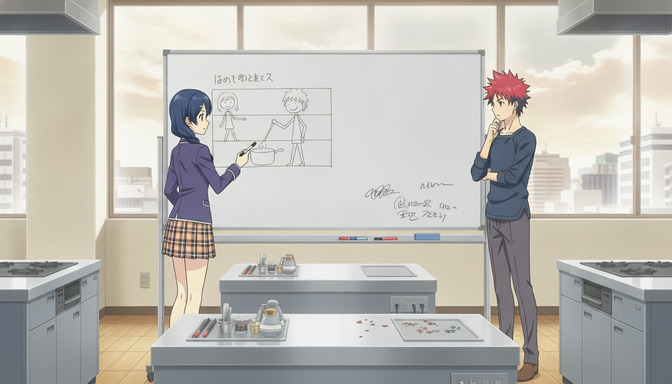
A storyboard is the shot-by-shot production plan for an episode. Each panel corresponds to a single camera setup in the final animation. The storyboard is where your script becomes a visual sequence, and it is where AI anime production is most different from traditional production: with locked characters, defined locations, and a written script, each storyboard panel prompt is a precise instruction rather than a creative decision made on the fly.
For each scene in your script, write a shot list before generating any images. Which shots are required to tell this scene's story? Every scene needs at minimum: an establishing shot to orient the viewer, mid-shots for dialogue and character interaction, and close-ups for emotional beats. Action scenes and sequences with significant visual information need more panels.
Include camera angle and framing notes in each panel description. Wide shot, over-the-shoulder, extreme close-up on hands, low angle. Camera angle carries as much emotional information as the character's expression. A low angle shot on an antagonist communicates threat. A high angle on the protagonist communicates vulnerability. These are decisions that should be made at the storyboard stage, not improvised during generation.
In AutoWeeb, tag saved characters into each panel from the character library rather than re-describing them. Tagging is the mechanism that maintains visual consistency across a 60-panel episode storyboard. A character tagged from the library looks the same in panel 3 and panel 58 because they are drawing from the same approved visual reference.
For a 12-episode series, plan to produce episode storyboards sequentially, one episode at a time, rather than storyboarding all 12 episodes before generating any images. Completing one episode's full storyboard and image set before moving to the next keeps the production manageable and surfaces consistency problems early, when they are still easy to fix.
Common Mistakes to Avoid
Creators who have produced AI anime projects at scale report the same failure patterns. Knowing them in advance prevents the most expensive production problems.
Starting image generation before character sheets are complete
The most common production failure. A creator generates one impressive image of the protagonist and starts building scenes around it without ever locking the character description. By episode 3, the protagonist looks visually different in 30% of panels. The fix always requires going back to build the character sheet that should have been built first, then regenerating every inconsistent panel. Build the sheet. Lock it. Generate nothing until it is done.
Planning a 24-episode series as a first project
Scope ambition kills more AI anime series than any technical limitation. A 24-episode series is twice the production work of a 12-episode series, which is itself a substantial project for a solo creator. Start with 12 episodes, or with a 3-episode pilot arc. Finish it. The discipline of finishing one scope of project is what makes larger scopes achievable.
Skipping episode outlines and writing straight to scripts
Scripts written without episode outlines tend to drift. Episode 7 ends up covering the same dramatic ground as episode 5 because no document defined what each episode needed to accomplish. The single-sentence outline per episode is a 15-minute exercise that prevents three hours of script revision later.
Changing character descriptions mid-series
A character whose hair was defined as "close-cropped dark brown with a slight wave" cannot be changed to "longer with an undercut" in episode 7 without regenerating every prior panel where that character appears. If a character design needs to evolve across the series (which is valid, and can be a powerful storytelling choice), plan both looks before production begins and build separate character sheets for each phase.
Generating scenes without location references
The school rooftop in episode 4 looks like a different building than the school rooftop in episode 9 because no location reference was saved and used consistently. Generate location establishing shots before populating them with characters. Every scene set in that location is built against the same reference.
Your AI Anime Series Production Roadmap with AutoWeeb
A 12-episode AI anime series is a substantial project. Here is the production sequence that professional pre-production practice and AI workflow efficiency both point toward.
- Series bible. Genre, tone, theme, emotional core, world rules. One document, completed before anything else.
- Character arcs. Three to five major characters, each with starting state, want, need, and ending state. Written before visual design begins.
- Character sheets. Visual descriptions written, reference images generated and approved in AutoWeeb, characters saved to the project library. Nothing is generated until this is complete.
- Location library. Descriptive paragraphs for each major location. Establishing shot references generated and saved. Color palettes and lighting conditions defined.
- 12-episode structure. Four three-episode blocks mapped. One-sentence dramatic function defined per episode.
- Episode scripts. Written episode by episode, with action lines describing specific physical actions and camera notes for key shots.
- Episode storyboards. Shot lists written per scene, panels generated in AutoWeeb with tagged characters, shot continuity reviewed before moving to the next scene.
- Image generation. Location references generated first, character reference images confirmed, scene panels generated in scene order per episode.
- Video production. Priority scenes selected for AI video generation, motion descriptions written per panel, output reviewed scene by scene.
- Episode editing. Clips assembled per episode against the script. Transitions, dialogue, music, and sound effects added. Pacing reviewed against the episode's dramatic function.
AutoWeeb's workspace connects every stage of this roadmap. Scripts, character sheets, location references, storyboards, image generation, and video production all live in the same project. A decision made in the character sheet builder carries through every storyboard panel that tags that character. The pipeline that professional anime studios implement across large teams is available to a solo creator inside one workspace.
For a closer look at how the AutoWeeb workspace handles each phase of the production pipeline, the post on why AutoWeeb is the best AI anime pre-production studio covers the full workflow from concept to animated output. For a detailed production checklist organized by phase, the ultimate AI anime pre-production checklist covers every decision point from story development through final editing.
Frequently Asked Questions
How long does it take to produce a 12-episode AI anime series?
Timeline depends heavily on episode length and how much of the production pipeline you are running solo. A creator producing 10-to-12 minute episodes with two to four main characters and five to seven recurring locations should budget roughly 4 to 6 hours of pre-production per episode (series bible, character sheets, location library, script, storyboard), plus generation and editing time. The full series is a multi-month project for most solo creators, which is normal. The discipline is in completing one episode before starting the next, not in rushing all 12 simultaneously.
Do I need to complete all the pre-production steps before generating any images?
You need to complete character sheets and the location library before generating scene images. Everything else can be developed in parallel with production to some extent. But the two documents that must be locked first are character visual references and location establishing shots. Skipping either of those produces consistency problems that compound across every episode.
How do I maintain visual consistency across 12 episodes?
Character sheets saved to the AutoWeeb project library and tagged into every panel rather than re-described. Location references saved and reused as the starting point for every scene in that setting. Storyboard panels reviewed for visual drift before moving to the next scene. Consistency is a production discipline, not a technical accident. The tools support it, but the discipline has to be applied deliberately.
What is the right number of main characters for a 12-episode series?
Three to five. A protagonist with a clearly defined arc, one or two supporting characters whose arcs intersect with the protagonist's in meaningful ways, and an antagonist or opposing force whose role creates the central pressure. More than five major characters in a 12-episode season means most arcs will be underdeveloped. Fewer than three risks a story that feels thin unless the character work is exceptionally dense.
Can I use AutoWeeb to write scripts as well as generate images and storyboards?
Yes. AutoWeeb's workspace includes a script writing environment that lives alongside character sheets, location references, and the storyboard builder. Having scripts in the same workspace as production documents means you can reference character descriptions, location details, and prior episode decisions while writing, without switching between applications.
How do professional anime studios handle pre-production, and how does that apply to solo AI creators?
Professional anime studios produce a series bible, character design documents, a setting design document, full scripts, and animatics (rough storyboards with timing) before a single frame of animation is produced. The purpose is identical to the AI workflow: every production decision downstream should flow from documents prepared in advance, not be invented during execution. Solo creators using AI tools compress the team size but apply the same logic: decisions made in pre-production are cheap. Decisions discovered during generation are expensive.
What should my first episode accomplish?
Three things: establish the protagonist's situation clearly enough that the audience understands what is at stake, introduce the central conflict or question that will drive the series, and end on a development that makes the audience want to watch episode 2. The first episode is a promise. The remaining 11 episodes are the delivery.
Is a 12-episode format right for every story, or should I consider a shorter run?
A 12-episode run is right for stories that need room to develop character arcs and build toward a meaningful finale. If your story concept is tight enough to be told in three episodes, telling it in 12 will pad it. A 3-episode arc or a 6-episode half-cour structure is a legitimate format choice, and for a first project, finishing a shorter run well is more valuable than stalling in the middle of a longer one. Let the story determine the length, not the format expectation.
Related Blog Posts
AutoWeeb vs ChatGPT Image: Which AI Tool Is Better for Creating Consistent Anime Characters and Stories?
ChatGPT Image generates impressive one-off anime art. AutoWeeb is built for anime creators who need the same character to look right across every scene, storyboard panel, and video clip.
AutoWeeb vs ChatGPT Image for anime creation in 2026. Compare character consistency, storyboarding, anime styles, video generation, and which platform is right for your creative workflow.

AutoWeeb vs Gemini: The Better AI Platform for Anime Images, Characters, and Videos
Gemini generates impressive images across many styles. AutoWeeb is built to produce the same anime character, consistently, across every image, storyboard panel, and animated video clip you need.
AutoWeeb vs Gemini for anime creation: compare image generation, character sheets, storyboarding, and video. Find out which AI platform is better for anime creators in 2026.
AutoWeeb vs Midjourney: Which AI Tool Is Better for Anime Storytelling and Character Consistency?
Midjourney generates some of the most visually stunning AI images available. AutoWeeb is built to take a specific anime character through an entire story, consistently, without rebuilding them from scratch every session.
AutoWeeb vs Midjourney for anime storytelling: compare character consistency, storyboards, image-to-video, and anime-specific workflows. Find the best AI tool for anime creators in 2026.
AutoWeeb vs Niji Journey: Which Anime AI Generator Is Best for Building Characters and Stories?
Niji Journey produces genuinely impressive anime artwork. AutoWeeb is built to take that character through an entire story, scene by scene, with the same face and outfit every time.
AutoWeeb vs Niji Journey for anime character creation and storytelling: compare consistency, storyboarding, image-to-video, and full creative workflows. Best anime AI generator in 2026.
Explore AutoWeeb
Jump into the tool that fits your creative step.
AI Anime Video Generator
Animate storyboard shots into cinematic clips with Seedance 2 and consistent characters.
Anime Character Creator
Design original characters with consistent sheets across every scene.
AI Anime Image Generator
Generate cinematic anime stills anchored to your character library.
Turn Photo Into Anime
Upload any photo and watch AI turn it into stunning anime art in seconds.
AI Anime Location Generator
Create a location set once, then generate reference images from every angle.
AI Anime Storyboarding
Describe your idea, pick your characters, and let AI draft the script and scenes.
AI Anime Prompt Agent
Turn a rough idea into a cinematic Seedance 2 prompt with the AI Director.